
Side Dishes
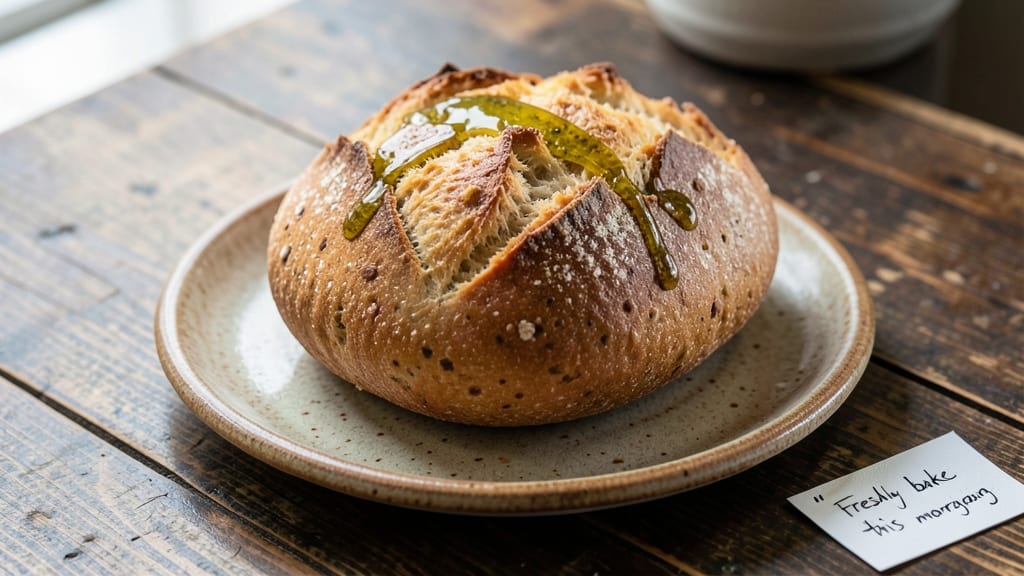
This gluten-free, grain-free bread delivers the same satisfying crust and airy crumb as traditional loaves—without triggering sensitivities. ✨ After years of experimenting with autoimmune protocol (AIP) baking, I've perfected a recipe that uses almond flour and coconut flour to create a loaf with real structure, not just a dense brick.
The secret lies in proper hydration and a slow bake that develops that coveted oven-spring.
What sets this recipe apart is its ability to mimic artisanal bread while meeting strict dietary needs. No gluten means no cross-contamination risks, and the combination of flours creates a texture that's both tender and sturdy enough to hold toppings.
I've tested this with everything from avocado toast to open-faced sandwiches—it holds up beautifully without crumbling. The recipe also avoids common irritants like nightshades and dairy, making it suitable for those with multiple sensitivities.
By the time you pull this loaf from the oven, you'll have a golden-brown crust with an interior that's properly airy, not gummy. The flavor is subtly nutty from the almond flour with just a hint of coconut sweetness—far from the bland aftertaste of many gluten-free alternatives.
This bread freezes exceptionally well too, so you can bake once and enjoy for weeks.
Perfect for breakfast, sandwiches, or serving alongside soups, this recipe proves you don't need gluten to enjoy a satisfying loaf of bread. The method is straightforward but requires patience during the proofing stage—trust me, it's worth the wait for that professional-quality result at home.
Ingredients for autoimmune bread
Nine ingredients, zero compromises—this gluten-free, grain-free loaf bakes up with restaurant-worthy texture.
| Ingredient | Amount | Notes |
|---|---|---|
| Almond Flour 🌰 | 2 ½ cups | Finely ground, unsweetened |
| Coconut Flour 🥥 | ½ cup | Sifted for even texture |
| Large Eggs 🥚 | 4 whole | Room temperature for blending |
| Extra-Virgin Olive Oil 🫒 | ⅓ cup | High quality, fruity |
| Psyllium Husk Powder 🌿 | 2 tbsp | Key for structure and binding |
| Baking Soda 🧂 | ½ tsp | Pure, non-aluminum |
| Sea Salt 🧂 | 1 ½ tsp | Fine grain preferred |
| Apple Cider Vinegar 🍎 | 1 tbsp | Unfiltered for tang |
| Water 💧 | 1 ¼ cups | Room temperature |
| Large Egg Whites 🥚 | 2 whole | Separated for stability |
| Tapioca Flour 🌾 | 1 tbsp | For improved elasticity |
| Sunflower Seeds 🌻 | ¼ cup | Toasted for flavor |
The almond flour is the backbone here—Bob's Red Mill or Anthony's Goods are my go-tos for consistency. Coconut flour absorbs moisture like crazy, so measure it by weight if possible—it's lighter than it looks. Psyllium husk is non-negotiable for that artisanal crumb; NOW Foods sells it in bulk online. For the olive oil, California Avocado Society or Colavita brands deliver that fruity depth without bitterness. The sunflower seeds? Toast them yourself—it takes two minutes in a dry pan and makes all the difference.
No psyllium husk? Flaxseed meal at double the amount works in a pinch, though texture won't be identical. Substituting coconut flour? Use 1:1 with extra egg whites—it's drier. The apple cider vinegar adds tang without nightshades; Bragg's is my go-to, but any unfiltered brand works. For the egg whites, pasteurized works too if you're avoiding raw eggs. The tapioca flour can be swapped for arrowroot powder, though it binds slightly differently. And if you're avoiding seeds entirely, extra ground flaxseed adds fiber without texture changes.
Mix the dry ingredients first—whisk the coconut flour with the almond flour to prevent clumping. The batter will be thick; don't panic. For proofing, use a lightly oiled bowl (I use avocado oil spray) and let it rise at room temp for 1-2 hours. Shape gently—this dough isn't stretchy. The loaf keeps 3 days wrapped at room temp or 1 week in the fridge. Freeze for up to 3 months—thaw overnight in the fridge before toasting. Slice with a serrated knife for clean cuts.
Why You'll Love This Recipe
- No-Fuss Mixing: I swear by the psyllium husk powder—it’s the secret to that perfect crumb without overworking the dough. Just toss everything in a bowl, stir, and let it sit. Honestly, my hands are usually still clean by the time it’s ready to bake.
- Rich Nutty Depth: That combo of almond and coconut flour? It’s like a warm hug in every bite—earthy, slightly sweet, and just crisp enough on the outside. The olive oil ties it all together with a buttery richness that surprises me every time.
- Meal-Prep MVP: This bread holds up like a champ in the fridge for days, so I bake a loaf on Sundays and toast slices all week. It’s my go-to for quick breakfasts, sandwiches, or even dipping in soups—no sad, dry leftovers here.
- Budget-Friendly Staple: Almond and coconut flour might seem pricey, but a little goes a long way, and eggs stretch the dough further than you’d think. I’ve made this recipe for years, and it’s always cheaper than buying specialty bread—plus, I know exactly what’s in it.
Step-by-step instructions for autoimmune bread
This gluten-free, grain-free loaf delivers restaurant-quality texture without compromising flavor or nutrition.
👨🍳 Step 1: Mix Dry Ingredients for Perfect Texture
In a large mixing bowl, whisk together the 2.5 cups almond flour and 0.5 cup coconut flour until completely combined. Sift in the 2 tbsp psyllium husk powder and 1 tbsp tapioca flour, then add the 0.5 tsp baking soda and 1.5 tsp sea salt. This dry blend forms the structural backbone of our bread—psyllium husk creates that signature chewy texture while tapioca adds elasticity.
Use a whisk to break up any lumps in the coconut flour (it's notorious for clumping). I like to press the mixture through a fine-mesh sieve to ensure even distribution—this prevents dense pockets in the final loaf. Set this bowl aside for now; we'll come back to it after preparing the wet ingredients.
🍳 Step 2: Combine Wet Ingredients for Light Battering
In a separate bowl, beat the 4 whole large eggs with the 0.33 cup extra-virgin olive oil until fully emulsified. The mixture should thicken slightly and become pale yellow. Add the 1 tbsp apple cider vinegar and 1.25 cups water, whisking until smooth—this creates a tangy base that mimics traditional bread's acidity.
Here's the thing—don't rush this step. The vinegar reacts with the baking soda to create lift, but you need proper emulsification first. I stir in the 2 whole large egg whites last, reserving them for when we fold everything together. The whites add stability without making the dough too dense.
🥘 Step 3: Hydrate the Dough and Rest for Maximum Rise
Gradually pour the wet mixture into the dry ingredients while stirring with a silicone spatula. You'll notice the dough becomes thick and sticky—this is normal. Let it sit for 5 minutes to hydrate fully. The psyllium husk will begin absorbing moisture, transforming the mixture from a paste into a workable dough.
After resting, fold in the 0.25 cup toasted sunflower seeds (I toast them separately in a dry pan for 2 minutes until golden). The seeds add crunch and nutritional depth. Transfer the dough to a parchment-lined loaf pan and smooth the top with a wet spatula—this prevents cracking during baking.
🔥 Step 4: Bake Low and Slow for Perfect Crust
Preheat your oven to 350°F and bake the loaf for 50-55 minutes until the top is deep golden brown and a toothpick inserted in the center comes out clean. The low temperature ensures even cooking without burning the exterior before the interior sets.
I cover the pan loosely with foil after 30 minutes to prevent over-browning while allowing steam to escape. The bread is done when it sounds hollow when tapped on the bottom—this indicates proper internal structure. Let it cool in the pan for 10 minutes before transferring to a wire rack.
⏰ Step 5: Rest and Slice for Optimal Texture
Allow the bread to cool completely before slicing—this can take up to 2 hours. The internal structure needs time to fully set, preventing a gummy texture. When ready, slice with a serrated knife dipped in hot water for clean cuts.
Each slice should reveal a tender crumb with slight chewiness from the psyllium, a crisp crust, and visible sunflower seeds throughout. Store wrapped at room temperature for 3 days or freeze slices for up to 3 months. This bread reheats beautifully—just warm slices in a toaster or oven for 5 minutes at 325°F to restore freshness.
Pro Tips For Making Autoimmune Bread
- Mix the psyllium first: The psyllium husk powder is the glue that holds this bread together—don’t just toss it in dry. Whisk it with the warm water (or broth) for at least 3 minutes until it turns into a thick, gel-like paste. I used to skip this, and my loaves would either fall apart or taste chalky. Trust me, that extra time makes a real difference.
- Weigh your flours: Almond flour and coconut flour are not interchangeable by volume—packing them differently changes moisture and texture. Use a kitchen scale for precision: 1 cup almond flour is about 120g, but coconut flour is only 100g. I learned this the hard way when my first loaf turned out dense as a brick.
- Bake low and slow: This isn’t regular bread—rushing it in a hot oven will leave the center gummy and the crust burnt. Preheat to 350°F (175°C) and bake for 45–55 minutes, checking at 40 minutes. If the top browns too fast, tent it with foil. Patience here keeps the crumb light and the texture perfect.
- Add olive oil last: The extra-virgin olive oil is best mixed in just before baking, not during the dry ingredient phase. If you add it too early, the almond flour absorbs it unevenly, making the bread greasy in spots. Stir it in right before pouring the batter into the pan—your bread will thank you.
Creative variations of these flavors
Seed-Free Savory Loaf
Skip the sunflower seeds entirely and add 2 tbsp ground flaxseed to the dry ingredients for fiber and binding. For extra flavor, stir in 1 tsp dried rosemary or thyme with the seeds.
This version works perfectly for garlic bread—brush slices with melted ghee and minced garlic before baking at 375°F for 5 minutes until golden. 🌿
Sweet AIP Banana Bread
Transform this into a moist, sweet loaf by replacing 1 cup almond flour with 1 cup mashed ripe banana and adding ¼ cup maple syrup to the wet ingredients. Fold in ½ cup chopped walnuts (if tolerated) for crunch.
Bake at 350°F for 45-50 minutes until a toothpick comes out clean. The natural sweetness of bananas balances the nutty almond flavor beautifully. 🍌
Herbed Olive Oil Loaf
Infuse the olive oil with flavor by adding 1 tsp dried oregano and ½ tsp red pepper flakes to the ⅓ cup olive oil before mixing. For extra richness, replace 1 egg white with 1 tbsp olive oil.
This Mediterranean-inspired variation pairs perfectly with roasted vegetables or as a base for bruschetta. The herbs add depth without overpowering the bread's subtle sweetness. 🌿
Cinnamon-Raisin Adaptation
Create a dessert-style loaf by adding ½ cup raisins (soaked in warm water for 10 minutes) and 1 tsp cinnamon to the dry ingredients. Reduce the sunflower seeds to 2 tbsp and replace 1 tbsp apple cider vinegar with 1 tbsp vanilla extract.
Bake as directed, then drizzle with melted coconut oil after cooling for a sweet finish. This version is perfect for breakfast or dessert! 🍯
High-Protein Pumpkin Loaf
Boost protein by replacing ½ cup almond flour with ½ cup pumpkin puree (unsweetened) and adding 2 tbsp collagen peptides to the wet ingredients. For extra flavor, stir in ½ tsp pumpkin pie spice with the seeds.
This hearty loaf holds together beautifully for sandwiches and adds a seasonal twist. The pumpkin adds natural sweetness without refined sugar. 🎃
Everything Bagel Style
Create a bagel-inspired version by adding 1 tbsp sesame seeds, 1 tbsp poppy seeds, and 1 tbsp dried onion flakes to the dry ingredients. After baking, brush the cooled loaf with melted ghee and sprinkle with extra seeds.
For a true bagel experience, shape the dough into a ring and bake in a 400°F oven for 10 minutes before finishing in the 350°F oven. 🥯
Nutrition facts
Frequently asked questions
Can I make this bread without eggs for an egg-free autoimmune diet?
Yes! Replace the 4 whole eggs with 4 tbsp ground flaxseed mixed with 12 tbsp water (let sit for 5 minutes to gel). For the 2 egg whites, use ¼ cup aquafaba (chickpea brine) or ¼ cup unsweetened applesauce. The texture will be slightly denser but still sturdy. The psyllium husk helps compensate for the lack of egg structure.
Why does my bread turn out dense instead of light and airy?
Dense bread usually comes from one of three issues: underproofing, insufficient psyllium husk, or overmixing. First, ensure you're proofing for the full 1-2 hours at room temperature. Second, measure your psyllium husk by weight (2 tbsp = 10g)—too little means less structure. Finally, mix just until combined; overworking the batter develops gluten-like proteins that make it tough. The dough should be thick but pourable, not elastic.
How do I store this bread to keep it fresh longer?
Store wrapped tightly in an airtight container at room temperature for up to 3 days. For longer storage, slice and freeze individual portions on a tray before transferring to a bag (prevents freezer burn). Thaw overnight in the fridge or warm for 5 minutes at 325°F to restore freshness. The coconut flour absorbs moisture quickly, so avoid storing in humid environments like the fridge for more than 1 week.
Can I substitute coconut flour with another grain-free flour?
While coconut flour is ideal for its binding properties, you can swap it for ½ cup almond flour plus 1 tbsp tapioca starch (already in the recipe). For a nut-free version, use ½ cup sunflower seed flour—just add 1 extra tbsp water since it absorbs less. Avoid rice flour; it creates a gummy texture. Always sift your flours to prevent lumps that ruin the crumb structure.
Why does my crust crack or burn before the bread is fully baked?
Cracking usually happens from rapid oven heat or uneven dough distribution. For a 350°F oven, cover the loaf loosely with foil after 30 minutes to slow browning while the center cooks. To prevent cracks, smooth the top with a wet spatula before baking and avoid overfilling the pan. If your oven runs hot, lower the temp to 325°F and bake for 60-65 minutes instead.