
Snacks
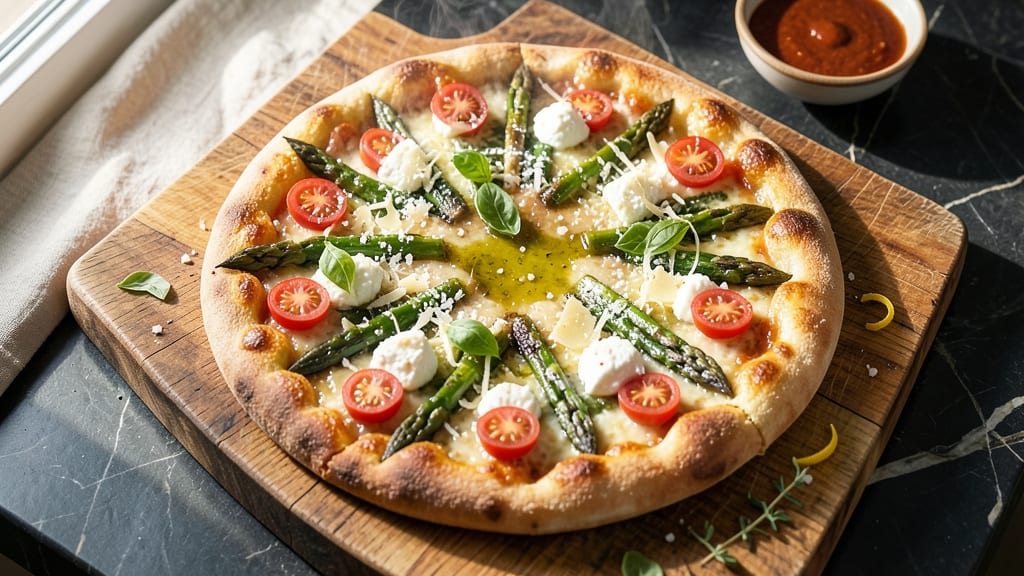
This asparagus flatbread pizza recipe delivers a restaurant-quality crust with tender, grilled asparagus and bold toppings—perfect for a quick yet impressive meal. The secret lies in a crispy, chewy flatbread base that holds up to charred veggies and melty cheese, all baked to golden perfection in just 20 minutes.
I developed this recipe after craving something lighter than traditional pizza but still packed with flavor and texture contrast.
The foundation is a simple flatbread dough that transforms into a crispy, airy crust when baked, while the asparagus—grilled until tender-crisp—adds a fresh, slightly smoky element. Topped with tangy tomato sauce, sharp cheese, and optional protein, this pizza balances hearty and healthy effortlessly.
The beauty of this recipe is its flexibility: swap cheeses for vegan options, add roasted red peppers, or keep it minimalist with just olive oil and herbs.
What sets this apart is the crispy-yet-chewy crust that stays sturdy enough to slice without falling apart, while the asparagus maintains its vibrant color and satisfying bite. The high-heat baking technique ensures the crust develops a golden, slightly blistered surface—just like a wood-fired pizza, but achievable in any home oven.
It’s the kind of dish that feels indulgent yet light enough for a weeknight dinner.
Serve with a drizzle of balsamic glaze or fresh basil to elevate the flavors further. This recipe proves that pizza can be both nutritious and satisfying, with every bite offering a mix of textures and tastes. Let’s get started on creating your perfect flatbread pizza!
Ingredients for asparagus flatbread pizza
Restaurant-quality crust meets fresh asparagus and bold toppings in this vegetarian flatbread pizza.
| Ingredient | Amount | Notes |
|---|---|---|
| All-Purpose Flour 🌾 | 2 cups | High-protein for chewy texture |
| Active Dry Yeast 🍞 | ¼ tsp | Or 1 packet instant yeast |
| Granulated Sugar 🍚 | ½ tsp | Feeds yeast for activation |
| Warm Water 💧 | ¾ cup | 105-110°F for yeast activation |
| Extra-Virgin Olive Oil 🫒 | ½ cup | High-quality for richness |
| Salt 🧂 | 1 ½ tsp | Diamond Crystal kosher salt |
| Fresh Asparagus 🌱 | 1 lb | Medium spears, trimmed ends |
| Extra-Virgin Olive Oil 🫒 | 1 tbsp | For grilling asparagus |
| Garlic Cloves 🧄 | 2 cloves | Minced for asparagus marinade |
| Salted Butter 🧈 | 2 tbsp | Melted for crust brushing |
| San Marzano Tomato Sauce 🍅 | ½ cup | High-quality canned tomatoes |
| Fresh Mozzarella 🧀 | 4 oz | Shredded by hand |
| Fresh Basil Leaves 🌿 | ¼ cup | Chopped for garnish |
| Balsamic Glaze 🍷 | 2 tbsp | For finishing drizzle |
| Red Pepper Flakes 🌶️ | ½ tsp | Optional for heat |
The foundation starts with high-protein flour—look for King Arthur or Caputo for that perfect chewy-yet-crispy texture. Diamond Crystal kosher salt is non-negotiable here; its flaky crystals dissolve better than table salt. For yeast, Saf-Instant is my go-to because it activates without waiting for water to warm. The San Marzano tomatoes are worth the splurge—their sweet, low-acid flavor elevates the sauce without overpowering. Fresh mozzarella is a must; pre-shredded contains anti-caking agents that ruin the melt. If you can't find fresh, Whole Foods' fresh mozzarella in the deli section is a solid backup.
No fresh mozzarella? Fresh ricotta or fontina cheese shred beautifully and add a creamy contrast. Swap the San Marzano for high-quality crushed tomatoes if needed, but add a pinch of sugar to balance acidity. The asparagus can be roasted instead of grilled—toss with olive oil, salt, and pepper, then roast at 425°F for 12-15 minutes. For a nutritional boost, add roasted red peppers or sun-dried tomatoes to the sauce. The balsamic glaze can be substituted with aged balsamic vinegar reduced with a pinch of sugar if you're in a pinch. Red pepper flakes? Aleppo pepper adds a milder, more complex heat if you prefer.
The dough keeps best in the fridge for up to 24 hours, wrapped tightly in plastic. Let it come to room temperature before rolling—cold dough tears easily. Grilled asparagus holds its vibrant color for 2-3 days in the fridge, stored in a sealed container with a paper towel to absorb moisture. Prep the sauce ahead and store it in the fridge for up to 5 days; reheat gently before using. For a make-ahead shortcut, assemble the pizza (without cheese) and refrigerate overnight—bake straight from the fridge at 450°F for 15-18 minutes. The crust reheats beautifully in a 400°F oven for 5-7 minutes if you've made extras.
Why You'll Love This Recipe
- No-Yeast Panic: Honestly, I’ve burned more yeast than I’d admit—but this dough forgives me. Just mix the flour, sugar, and yeast with warm water and olive oil, let it sit while you prep the asparagus, and boom. No kneading, no waiting hours, just a quick rise that actually works.
- Asparagus Magic: Between us, roasted asparagus on flatbread is ridiculously good. The crispy spears cut through the soft dough, and the olive oil ties it all together like a hug from your favorite chef. (Yes, even on a Tuesday night.)
- Leftovers? More Like Leftovers: This pizza reheats like a dream—crispy edges stay crispy, the asparagus doesn’t get soggy, and I’ve sent it to work lunches without a single complaint. Pack it cold or warm it up; it’s the kind of dish that just works for the next day.
- Budget Win: Flour, yeast, and asparagus in season? This is my go-to when I’m broke but still want to feel fancy. The olive oil makes it taste luxurious, but the ingredients won’t break the bank—especially if you grab asparagus on sale.
Step-by-step instructions for asparagus flatbread pizza
Master this technique and you'll achieve a perfectly crisp crust with tender grilled asparagus every time.
Prepare the Yeast Dough Base
In a large mixing bowl, combine the 2 cups all-purpose flour with the 1.5 tsp salt. Create a well in the center and add the 0.25 tsp active dry yeast and 0.5 tsp granulated sugar. Pour in the 0.75 cup warm water (tested at 105-110°F) and 0.5 cup extra-virgin olive oil, then mix with a wooden spoon until a shaggy dough forms.
Transfer the dough to a lightly floured surface and knead for 8-10 minutes until smooth and elastic. The dough should spring back when pressed gently. If it's too sticky, add 1-2 tablespoons flour at a time. Place the dough in a lightly oiled bowl, cover with a damp towel, and let rise in a warm place for 1-2 hours or until doubled in size. This resting period develops gluten for that signature crispy texture we're after.
Grill the Asparagus with Garlic
While the dough rises, trim the tough ends from the 1 lb fresh asparagus and cut each spear into 2-inch pieces. In a small bowl, whisk together the 1 tbsp extra-virgin olive oil, minced 2 cloves garlic, and a pinch of salt. Toss the asparagus pieces in this marinade and let sit for 10 minutes to infuse flavors.
Heat a grill pan or skillet over medium-high heat until hot. Add the asparagus in a single layer and cook for 3-4 minutes per side until tender with visible grill marks. The asparagus should be bright green with slightly charred edges. Transfer to a plate and sprinkle with 0.5 tsp red pepper flakes if using for added heat.
Shape and Pre-Bake the Flatbread
Preheat your oven to 425°F with a pizza stone or baking sheet inside. Roll out the risen dough on a lightly floured surface to about 1/8-inch thickness and 12 inches in diameter. Transfer to a piece of parchment paper for easy handling.
Brush the dough lightly with 2 tbsp melted salted butter, leaving a 1-inch border uncovered for that crispy crust. Bake for 8-10 minutes until the edges begin to golden. Remove from oven and immediately spread 0.5 cup San Marzano tomato sauce over the surface, leaving the butter border clear.
Assemble and Finish with Toppings
Sprinkle the grilled asparagus evenly over the sauce, followed by the 4 oz fresh mozzarella shredded by hand. Return to the oven for 5-7 minutes until the cheese is bubbly and golden. Watch closely—the crust should be crisp while the cheese melts completely.
Remove from oven and let rest for 2 minutes. Drizzle with 2 tbsp balsamic glaze and top with 0.25 cup chopped fresh basil leaves. For maximum crispiness, slide the pizza back onto the baking sheet and broil for 1-2 minutes until the cheese is perfectly melted and the crust is deeply golden.
Serve Immediately for Optimal Texture
Slice the pizza into 4 equal wedges using a sharp pizza cutter. Serve immediately while the crust remains crisp and the cheese is still warm and stretchy. The contrast between the crispy edges and tender asparagus creates the perfect texture combination.
Pair with a simple arugula salad and enjoy the vibrant flavors of spring. The key to success lies in the pre-baking step—this ensures that crispy crust you're after while preventing a soggy base from the tomato sauce.
Pro Tips For Making Asparagus Flatbread Pizza
- STRETCH THE DOUGH LONG: Flatbread pizza dough needs patience—roll it thin (about ⅛-inch) and stretch it by hand for the last 30 seconds. That extra pull makes it crispy enough to hold toppings without turning soggy. (Yes, it’ll look uneven, but that’s the charm.)
- USE COLD ASPARAGUS: Blanch asparagus in ice water for 2 minutes, then shock it in cold water again. Cold spears char better on the pizza stone and won’t wilt into mush while the crust finishes baking. (Trust me, room-temp asparagus turns to sad, limp sticks.)
- SALT THE OIL: Drizzle your olive oil on the dough before adding toppings, then sprinkle a pinch of flaky salt right on top. The salt caramelizes during baking, giving the crust a nutty crunch that cuts through the asparagus’s bitterness. (It’s the one step I never skip anymore.)
- BAKE IN STAGES: Start the flatbread on high heat for 2 minutes to crisp the edges, then lower the oven to 375°F (190°C) and finish baking with toppings. This two-step method prevents the crust from burning while the asparagus steams into oblivion. (I learned this after one very sad, charred attempt.)
Serving suggestions for this asparagus flatbread pizza
Spring Salad Pairing
Brighten your meal with a spring-inspired arugula salad tossed with 1 tbsp lemon juice, 2 tbsp extra-virgin olive oil, and 1 tbsp shaved Parmesan. The peppery bite of arugula cuts through the richness of the pizza while complementing the asparagus's earthy flavor.
For extra crunch, add ¼ cup toasted pine nuts or crumbled feta cheese. 🌱
Wine Pairings
A crisp Italian Pinot Grigio from Alto Adige balances the pizza's tangy tomato sauce and fresh asparagus. Its citrus notes refresh your palate between bites. For red wine lovers, try a light Chianti—its acidity and cherry undertones enhance the grilled asparagus.
Avoid heavy reds like Cabernet Sauvignon, which can overpower the delicate flavors. 🍷
Beer Complements
A Belgian-style witbier like Hoegaarden adds a citrusy contrast with its coriander and orange peel notes. For a lighter option, a crisp Italian lager such as Peroni cleanses the palate without competing. Avoid hoppy IPAs, which can clash with the pizza's bright, fresh toppings. 🍺
Dessert Balance
Conclude your meal with a lemon ricotta cake or dark chocolate-dipped strawberries to contrast the pizza's savory notes. The tartness of lemon or berries refreshes your palate, while the richness of chocolate satisfies any lingering cravings. For a lighter option, serve honey-drizzled yogurt with toasted almonds. 🍋
Garnish Upgrades
Elevate your pizza with microgreens or edible flowers for a pop of color. A sprinkle of crispy fried shallots adds crunch, while flaky sea salt enhances all flavors. For a smoky touch, finish with a pinch of smoked paprika or a drizzle of chili oil. 🌸
Make-Ahead Serving
Assemble the pizza ahead of time (without cheese) and refrigerate for up to 12 hours. Bake straight from the fridge at 450°F for 15-18 minutes—the cold start ensures an extra-crispy crust.
Store leftovers in an airtight container for up to 3 days, reheating at 350°F for 5-7 minutes to restore crispiness. 💡
Nutrition facts
Frequently asked questions
Can I make this flatbread pizza without yeast?
Yes! For a quick version, replace the yeast dough with a 1/2 cup olive oil and 1 cup warm water flatbread mix. Combine with 2 cups flour and 1.5 tsp salt, then rest for 30 minutes before rolling. The texture will be denser but still delicious. For extra crispiness, brush with melted butter before baking.
How do I keep the crust from getting soggy?
The pre-baking step is key! After brushing with butter, bake the crust alone for 8-10 minutes at 425°F to create a barrier. Also, use hand-shredded mozzarella (not pre-shredded) and avoid overloading toppings. For extra insurance, sprinkle 1/4 cup cornmeal on the baking surface before adding the pizza.
What's the best way to grill the asparagus?
Use a grill pan or cast-iron skillet over medium-high heat for even cooking. For extra flavor, add 1/2 tsp smoked paprika to the garlic marinade. If your asparagus is thick, cut it into 1.5-inch pieces to ensure even charring. The goal is 3-4 minutes per side—bright green with slight blackened edges.
Can I make this pizza gluten-free?
Replace the all-purpose flour with a 1:1 gluten-free flour blend (like Bob's Red Mill) and add 1 tsp xanthan gum to improve texture. Let the dough rest 15 minutes longer before rolling, as gluten-free dough is stickier. The crust will be slightly denser but still crispy when pre-baked. For extra stability, use a gluten-free pizza crust mix.
What if I don't have a pizza stone?
No problem! Use a baking sheet or cast-iron skillet instead. For best results, preheat it in the oven for 15 minutes before adding the pizza. If your oven runs hot, reduce temperature to 400°F to prevent burning. A dark-colored metal pan works almost as well as a stone for crispy edges.