
Side Dishes
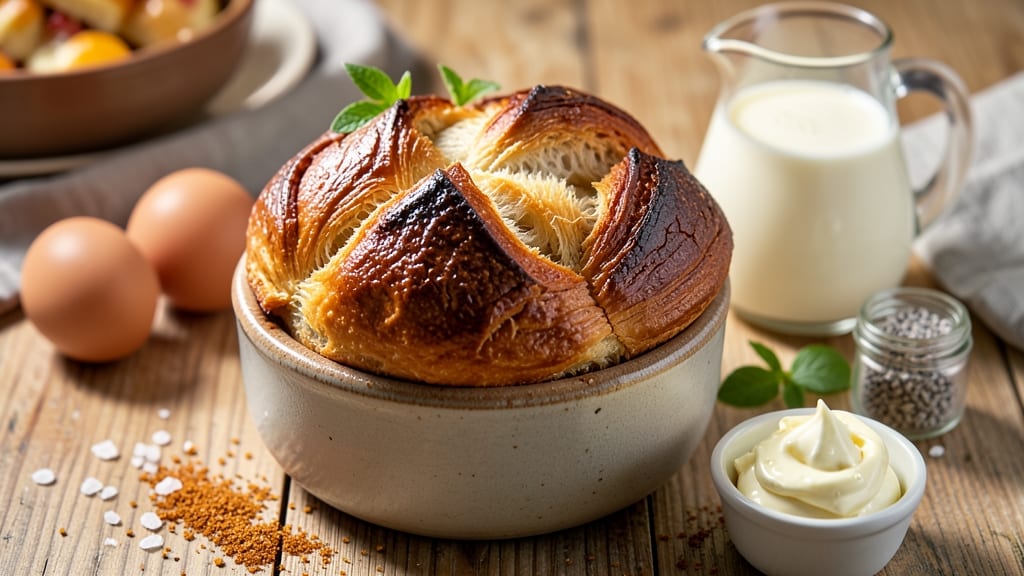
This artisan bread in five minutes a day brioche recipe transforms your kitchen into a bakery with minimal daily effort. The secret lies in a cold fermentation technique that develops rich flavor while you go about your day—no kneading, no fuss, just luxurious results.
I perfected this method after years of experimenting with traditional brioche, streamlining it to fit modern schedules without sacrificing texture or taste.
The dough comes together in under 10 minutes using simple ingredients: high-quality flour, eggs, butter, and a touch of sugar for that signature sweetness.
What makes this recipe work is the hands-off rise—you simply shape the dough, refrigerate it overnight, and then give it a quick 5-minute stretch-and-fold the next morning before final proofing. This process creates an open crumb structure and deep flavor without demanding your full attention.
By the time it bakes, you'll have golden, buttery brioche with a tender crumb and crispy crust—perfect for toast, French toast, or serving warm with jam. The butter content ensures richness, while the cold fermentation enhances digestibility and flavor complexity.
This isn't just bread; it's a foolproof way to enjoy artisanal-quality results with minimal daily commitment.
Whether you're a busy professional or a weekend baker, this recipe delivers restaurant-worthy brioche without the hours in the kitchen. The key lies in patience and precision—small daily investments yield big rewards. Let's get started on creating your perfect loaf.
Ingredients for artisan bread in five minutes a day brioche
High-quality flour, eggs, and butter create luxurious brioche with minimal daily effort—no kneading required.
| Ingredient | Amount | Notes |
|---|---|---|
| High-Ratio Bread Flour 🌾 | 4 cups | 400g total, 11-12% protein for structure |
| Large Eggs 🥚 | 4 whole | Room temperature for even mixing |
| Unsalted European-Style Butter 🧈 | 1 cup | 80% fat content, softened but not melted |
| Granulated Sugar 🍚 | ¼ cup | Fine grain for even distribution |
| Instant-Acting Dry Yeast 🍞 | ½ tsp | Not active dry yeast |
| Diamond Crystal Kosher Salt 🧂 | ½ tsp | Fine grain for precise measurement |
| Whole Milk 🥛 | ½ cup | Warmed to 85°F for yeast activation |
| Cornmeal 🌽 | ¼ cup | For dusting baking surface |
| Large Egg Yolk 🥚 | 1 whole | For egg wash |
| Coarse Sea Salt 🧂 | ¼ tsp | For sprinkling on top |
| Pure Vanilla Extract 🌿 | ½ tsp | Optional for subtle sweetness |
The flour is non-negotiable here. King Arthur or Caputo bread flour gives that signature open crumb, but high-ratio flour (400g total) works too if you're in a pinch. European-style butter—like Plugrá or President—has higher fat content (80%) which is key for that buttery flavor. I always grab mine from Whole Foods or specialty stores, but the regular supermarket stuff works if it's unsalted. The eggs should be large—room temperature makes mixing so much easier. Freshness matters too; eggs older than 3 weeks can make the dough gummy. For the yeast, instant-acting is crucial—it activates faster and you won't have to proof it first. Store it in the fridge and it'll last for months.
No European butter? Plugrá or Land O'Lakes unsalted is a solid backup, though it has slightly less fat. Running short on eggs? Duck eggs if you can find them—they're richer and give a slightly denser texture. The vanilla extract is truly optional, but it adds a subtle depth that makes this feel like a bakery loaf. For the milk, if you don't have whole, 2% works fine—just warm it to the same temperature. The kosher salt is a must; Diamond Crystal dissolves perfectly, but any fine grain will do. Pro tip: if your butter is too cold, microwave it for 10 seconds to soften it up—not melted, just pliable. And if you're feeling fancy, add a pinch of cardamom to the dough for a Scandinavian twist.
This dough is all about patience. After the initial mix, it goes straight into the fridge for 12-16 hours—the cold fermentation is what develops that deep flavor. I like to portion it into two 8-ounce loaves or one large 16-ounce boule. Store any unused dough in an airtight container with plastic wrap pressed against the surface for up to 3 days in the fridge. For longer storage, freeze the shaped dough (before proofing) for up to 3 months. When you're ready to bake, just thaw it in the fridge overnight. The baked brioche keeps well at room temperature for 2-3 days, but it's best enjoyed fresh—toasted with jam or butter is pure heaven. Leftovers? Wrap tightly and freeze for up to 1 month—it reheats beautifully in a 300°F oven for 10 minutes.
Why You'll Love This Recipe
- Five-Minute Mix: I swear, the dough comes together faster than I can set the oven. Just toss the high-ratio flour, eggs, and butter—no kneading, no waiting—then let the yeast do its magic while I sip coffee.
- Butter-Kissed Richness: That European-style butter? It’s not just flavor—it’s a layer of buttery, pillowy softness in every bite. The sugar caramelizes just enough to give it a subtle sweetness without being cloying.
- Breakfast to Brunch: Honestly, this bread is my lazy weekend hero. Toast it for breakfast, use it to soak up jam, or tear it into croutons for salads. The texture holds up everywhere, and it’s always a crowd-pleaser.
- No-Waste Luxury: Between us, I’ve made a loaf on Sunday and still had slices by Friday—stale? Never. Freeze the extras, and when you’re ready, a quick warm-up in the oven brings it back to life like it was fresh-baked. Fancy without the fuss.
Step-by-step instructions for artisan brioche with minimal daily effort
This brioche delivers restaurant-quality texture with just five minutes of daily attention.
Mix the Dough with Wet Ingredients First
In a stand mixer fitted with the dough hook attachment, combine the 4 whole large eggs, 1 cup unsalted European-style butter (softened but not melted), 0.25 cup granulated sugar, 0.5 cup warmed whole milk (85°F), 0.5 tsp instant-acting dry yeast, and 0.5 tsp Diamond Crystal kosher salt. Mix on low speed for 2 minutes until the butter is fully incorporated and the mixture appears cohesive.
Here's the thing—adding the wet ingredients first creates a smoother dough that's easier to handle. I like to scrape down the sides of the bowl every 30 seconds to ensure everything combines evenly. The mixture should look like thick pancake batter at this stage, with no visible butter lumps remaining.
Gradually Incorporate the Dry Ingredients
With the mixer still running on low speed, gradually add the 4 cups high-ratio bread flour over 3-4 minutes. This slow addition prevents gluten development that would make the dough tough. After all flour is incorporated, increase speed to medium and knead for 5-6 minutes until the dough pulls away from the sides of the bowl and forms a smooth, elastic ball.
You'll notice the dough becomes slightly tacky but shouldn't be sticky if your flour is properly hydrated. If it sticks to your fingers, add 1 tablespoon flour at a time until it reaches the perfect workable consistency. The dough should be soft yet pliable, with a slight sheen on the surface.
First Rise - The Hands-Off Magic
Transfer the dough to a lightly greased bowl, cover with plastic wrap, and let rise at room temperature (75-78°F) for 1 hour. This initial rise is where the brioche develops its signature tenderness. The dough should nearly double in size, with the surface looking puffy and slightly domed in the center.
I press my finger gently into the dough after 45 minutes—if it springs back slowly (not immediately), it's ready. This first rise is crucial; don't skip it. The warm environment activates the yeast just enough to create structure without overproofing. If your kitchen is cooler, extend this to 1 hour 15 minutes but no longer.
Shape and Second Rise
After the first rise, turn the dough onto a lightly cornmeal-dusted surface and gently shape into a 12-inch round loaf (or your preferred shape). Place on a parchment-lined baking sheet, cover loosely with plastic, and let rise again at room temperature for 30-45 minutes until puffy. The dough should expand noticeably but not collapse when touched.
This second, shorter rise ensures the final texture remains tender. For extra shine, brush the top with the 1 whole large egg yolk mixed with 0.5 tsp pure vanilla extract. Sprinkle with 0.25 tsp coarse sea salt for that classic brioche finish. The salt should adhere to the surface rather than sink in.
Bake to Golden Perfection
Preheat your oven to 350°F (convection if available) for 20 minutes. Bake the brioche for 30-35 minutes until the internal temperature reaches 190-195°F and the top is deep golden brown. The bread should sound hollow when tapped on the bottom.
For even browning, I rotate the pan halfway through baking. The brioche is done when it pulls away slightly from the edges of the pan and has a crackly crust. Let it cool on a wire rack for 1 hour before slicing—this resting time prevents a gummy interior. The final loaf should be tender yet sturdy, with a rich buttery aroma that fills your kitchen.
Pro Tips For Making Artisan Bread In Five Minutes A Day Brioche
- Weigh Your Butter: The "eyeball it" approach with butter is how you end up with a dense loaf. European-style butter is already precise in fat content, so use a kitchen scale—454g (2 cups) is your target. I learned this the hard way when my brioche turned out greasy and heavy after guessing.
- Chill the Dough: Skip the rush and let the dough rest in the fridge overnight—yes, even if the recipe says "optional." The butter firms up, the gluten relaxes, and you’ll get that signature brioche texture without fighting sticky dough. I used to skip this and wondered why my bread always felt dense.
- Use Room-Temp Eggs: Cold eggs mix unevenly and can shock the butter, leading to lumps or weak structure. Let them sit out for 30 minutes before adding—just enough to warm them to room temperature. Trust me, your brioche’s crumb will thank you.
- Avoid Overlaminating: When folding in butter, stop once it’s evenly distributed—no need to overwork it. Too much handling develops gluten, and you’ll end up with a tough, chewy loaf instead of that pillowy brioche. I used to fold until it looked perfect, only to regret it later.
Wine and beer pairings for this recipe
Buttery Brioche & White Wine
The rich, buttery flavor of this brioche pairs beautifully with crisp white wines that cut through the richness. I always reach for a Chardonnay from Burgundy—specifically a Meursault or Puligny-Montrachet—which has enough body to complement the brioche's texture while its citrus notes refresh your palate.
If you prefer something lighter, a Sancerre from the Loire Valley offers bright acidity that balances the buttery richness perfectly. 🍷
Sweet & Creamy Pairings
For a dessert-style pairing, try a Vouvray made from Chenin Blanc—its slight sweetness and honeyed notes enhance the brioche's natural sweetness. I also love pairing it with a German Riesling Kabinett, which has a touch of fruitiness that makes the brioche taste even more luxurious.
These wines are perfect for enjoying with warm brioche slathered in butter or jam.
Beer Pairings for Bold Flavors
If you prefer beer, a Belgian Witbier like Hoegaarden is a fantastic choice. Its coriander and citrus notes create a refreshing contrast to the brioche's richness. For something heartier, try a Belgian Dubbel like Westmalle Trappist, which has caramel and raisin flavors that complement the brioche's buttery depth.
Both options add a fun, unexpected twist to your bread experience. 🍺
Coffee & Brioche Breakfast
Start your day with this brioche by pairing it with a light roast coffee—the subtle acidity and floral notes enhance the brioche's buttery richness. I love a Colombian or Ethiopian coffee for its bright, fruity profile.
For a cozier morning, try a chai latte with warm spices that echo the brioche's natural sweetness. The combination is pure comfort food at its best.
After-Dinner Digestif Pairings
End your meal with a slice of brioche and a sweet vermouth like Carpano Antica or Martini Rosso. The herbal notes and slight sweetness make the brioche taste even more indulgent.
For a non-alcoholic option, a spiced tea with cinnamon and cardamom adds warmth and complements the brioche's buttery flavor beautifully. 🍵
Nutrition facts
Frequently asked questions
Why does this brioche recipe only require five minutes a day?
The secret lies in cold fermentation—after mixing, the dough rests in the fridge overnight, developing flavor without your attention. The next morning, you only need to do a quick 5-minute stretch-and-fold before final proofing and baking. This hands-off method creates a tender crumb and rich taste while saving you time.
Can I make this brioche without a stand mixer?
Yes! Mix the wet ingredients by hand in a large bowl, then gradually incorporate the flour using a wooden spoon or your hands. Knead for 8-10 minutes by hand until smooth and elastic. The dough will be slightly tacky but shouldn't stick to your hands if your flour is properly hydrated.
What's the best way to store leftover brioche?
Wrap cooled brioche tightly in plastic wrap and store at room temperature for 2-3 days. For longer storage, freeze slices in a sealed bag for up to 1 month. To reheat, warm frozen slices in a 300°F oven for 10 minutes—they'll taste almost as fresh as day one!
Why did my brioche turn out dense instead of light and airy?
Dense brioche usually means overproofing or underdeveloped gluten. Check your yeast (it should be fresh) and proofing times—don't exceed 1 hour for the first rise at room temperature. Also ensure your butter is softened but not melted, and knead until the dough is smooth and elastic.
Can I add mix-ins like chocolate or nuts?
For chocolate, fold in ½ cup chopped dark chocolate during the final 30 seconds of kneading. For nuts, add ½ cup toasted pecans or walnuts after shaping but before the final proof. Just be gentle with mix-ins—they can weigh down the dough if overused.