
Side Dishes
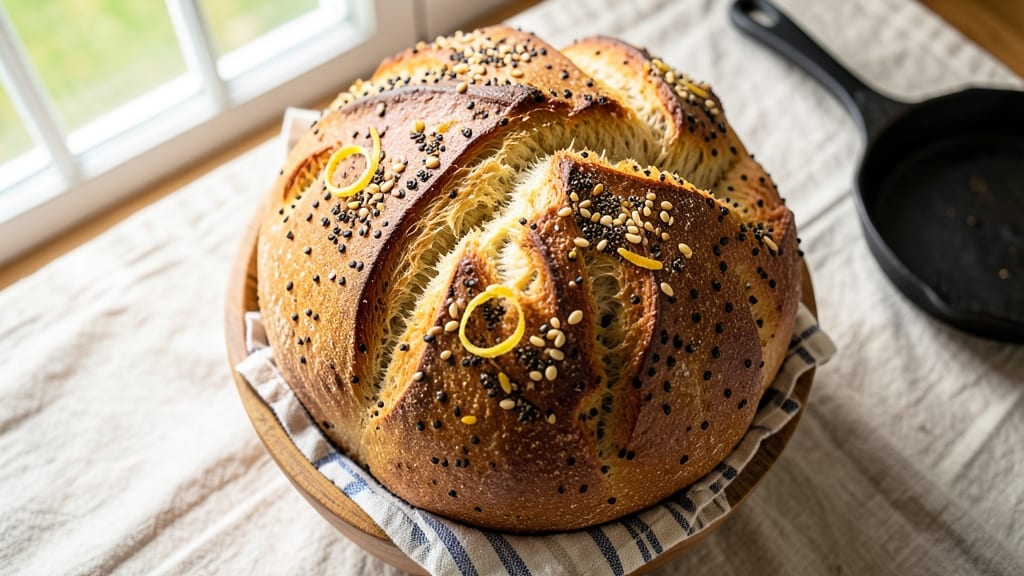
This artisan seed bread recipe delivers a rustic loaf with a crackling spice-infused crust and pockets of nutty seeds throughout. The key lies in a precise dough formula—high hydration, minimal yeast, and a blend of whole grains—that creates an open crumb and deep flavor.
I developed this after years of experimenting with traditional sourdough techniques, but without the long fermentation. What sets this bread apart is the seed mixture: toasted sesame, flax, and sunflower seeds add texture and nutrition while complementing the warm cinnamon and coriander in the crust.
The dough requires careful handling—kneading just until smooth, followed by a gentle shaping to preserve those air pockets—but the results are worth the effort.
By the time it emerges from the oven, you'll have a loaf with a golden, crisp exterior that gives way to a tender crumb studded with seeds. The aroma alone will transform any kitchen into a bakery.
This bread keeps beautifully for days, perfect for toast, sandwiches, or simply enjoyed with butter.
The secret to success begins with the dough's hydration level—too much water makes it sticky, too little creates a dense loaf. I recommend using bread flour for structure while reserving some for the crust, where it forms that signature crackly top.
The seeds should be toasted lightly before mixing to enhance their flavor and prevent them from absorbing too much moisture during baking.
Common challenges like uneven baking or seed clustering are easily avoided with proper technique. A steam bath during the first 10 minutes of baking ensures a crisp crust without burning, while gently pressing seeds into the dough before shaping distributes them evenly.
The proofing stage is critical—wait until the dough has nearly doubled before baking for that perfect rise.
This recipe yields a loaf that's both visually stunning and deeply satisfying. The combination of toasted seeds, warm spices, and airy crumb creates a bread that's equally at home on a breakfast table or as an accompaniment to hearty soups.
Once you try this artisan seed bread, store-bought versions will never measure up.
Ingredients for artisan seed bread
Six cups of flour, three kinds of seeds, and a touch of spice—this is your artisan seed bread pantry kit.
| Ingredient | Amount | Notes |
|---|---|---|
| Bread Flour 🌾 | 4 cups | High-protein for structure |
| Whole Wheat Flour 🌾 | 1 cup | Adds nutty depth |
| Active Dry Yeast 🍞 | 1 tsp | Instant yeast works too |
| Granulated Sugar 🍚 | 1 tbsp | Feeds yeast for rise |
| Salt 🧂 | 1 ½ tsp | Diamond Crystal preferred |
| Sesame Seeds 🌱 | ½ cup | Toasted lightly first |
| Flax Seeds 🌱 | ⅓ cup | Toasted for nutty flavor |
| Sunflower Seeds 🌻 | ⅓ cup | Toasted lightly |
| Extra-Virgin Olive Oil 🫒 | ½ cup | For dough and brushing |
| Warm Water 💧 | 1 ¾ cups | 105°F-110°F ideal |
| Ground Cinnamon 🌶️ | 1 tsp | For crust spice blend |
| Ground Coriander 🌿 | ½ tsp | Adds citrusy warmth |
| Cornmeal 🌽 | ¼ cup | For dusting loaf pan |
The flours are the foundation. King Arthur bread flour gives that signature open crumb, while the whole wheat adds depth—don't skip it. For yeast, Saf-Instant is my go-to since it doesn't need activation. Toast your seeds in a dry pan for 3-4 minutes until fragrant (that's the secret to preventing moisture loss during baking). The sesame seeds should be lightly toasted—just until they smell nutty, not browned. Trader Joe's sells pre-toasted seeds if you're in a hurry, but fresh toasted always tastes better.
No sesame seeds? Pumpkin seeds work beautifully—just toast them longer for similar nutty flavor. Short on flax? Chia seeds at the same amount give you that same omega boost. The spices are non-negotiable though—cinnamon and coriander together create that warm, aromatic crust. For the crust spice mix, I like to toast the spices in the same pan as the seeds to deepen their flavor. Penzeys has great whole spices if you want to grind your own. The olive oil matters too—use something fruity and peppery, not that bland supermarket stuff.
This dough is sticky—embrace it. Line a bowl with plastic wrap, spray it with oil, then dump the dough in to prevent sticking. For storage, wrap tightly in plastic and keep at room temp for 2-3 days or freeze for 3 months. To revive frozen bread, wrap in a towel and warm in a 200°F oven for 10 minutes. The crust gets even better the next day—perfect for toast or French toast. I always make two loaves so I have one ready for breakfast the next morning.
Why You'll Love This Recipe
- No-Knead Magic: I swear by the slow rise—just mix, wait, and bake. The whole wheat and bread flour blend gives it that perfect chew, while the yeast does all the heavy lifting. Honestly, I set it and forget it, then come back to golden perfection.
- Nutty Crunch Surprise: Between us, the seeds (if you add them—totally optional) turn this into a crunchy, savory dream. The whole wheat adds earthiness, but the bread flour keeps it light. Toast it? Heaven. Slather it? Even better.
- Weeknight Workhorse: This bread feeds a crowd but costs less than takeout. I make a double batch on Sundays—some for toast, some for sandwiches—and it lasts all week. No sad, dried-out loaves here; it stays fresh like it’s fresh-baked.
- Budget-Friendly Staple: Five ingredients, zero frills, maximum flavor. The whole wheat stretches my grocery budget, and the yeast ensures no waste. I’ve given loaves to neighbors, and they’ve all asked for the recipe—because it’s that good without being fancy.
Step-by-step instructions for artisan seed bread
Here's how to craft a rustic loaf with a crackly crust and nutty seed studded interior.
Activate the Yeast and Mix the Dough
In a large bowl, combine the 1.75 cups warm water with the 1 tbsp granulated sugar and 1 tsp active dry yeast. Let it sit for 5-10 minutes until it becomes frothy—this tells you your yeast is alive and ready to work. If it doesn't bubble, start over with fresh yeast.
Add the 4 cups bread flour and 1 cup whole wheat flour to the bowl. Stir in the 1.5 tsp salt, 1 tsp ground cinnamon, and 0.5 tsp ground coriander. The spices will infuse the dough with warm, earthy notes that complement the seeds perfectly. Mix until a shaggy dough forms, then drizzle in the 0.5 cup extra-virgin olive oil and stir until fully incorporated.
Knead the Dough Until Smooth
Turn the dough onto a lightly floured surface and knead for 8-10 minutes until it becomes elastic and smooth. You'll know it's ready when it springs back slowly when poked. I like to use a bench scraper to help fold and turn the dough—it makes the process easier and prevents sticking.
If the dough feels too sticky, add 1 tablespoon of flour at a time until it's just slightly tacky but not wet. This high-protein dough needs time to develop gluten for that perfect oven-spring. Once kneaded, place the dough in a lightly oiled bowl, cover with a damp towel, and let it rise in a warm place for 1-2 hours or until doubled in size.
Toast the Seeds and Prepare the Dough for Shaping
While the dough rises, toast the 0.5 cup sesame seeds, 0.33 cup flax seeds, and 0.33 cup sunflower seeds in a dry skillet over medium heat for 3-4 minutes until fragrant and lightly golden. This step enhances their nutty flavors and prevents them from becoming bitter during baking. Let them cool completely before adding to the dough.
Once the dough has doubled, punch it down to release air, then turn it out onto a lightly floured surface. Gently shape it into a 12-inch log, about 3 inches in diameter. The goal is to create a smooth, taut surface without overworking the dough—this ensures a crackly crust without tearing.
Shape and Proof the Loaf
Place the shaped dough seam-side down in a 9x5-inch loaf pan that's been lightly dusted with 0.25 cup cornmeal. The cornmeal prevents sticking and adds a subtle crunch to the bottom crust. Cover the pan with a damp towel and let it rise again for 30-45 minutes until it's just slightly puffed above the pan.
Preheat your oven to 375°F and place a small baking sheet on the lower rack. This creates steam, which is essential for that crackly crust. Brush the top of the dough with a little more extra-virgin olive oil and sprinkle the toasted seeds evenly over the surface, pressing them lightly into the dough. This ensures they stay put during baking.
Bake to Golden Perfection
Bake the loaf for 35-40 minutes until the top is deep golden brown and the internal temperature reaches 190-200°F. Tap the bottom of the loaf—it should sound hollow. If the top browns too quickly, tent it loosely with aluminum foil to prevent over-browning.
Remove the bread from the oven and let it cool in the pan for 10 minutes before transferring it to a wire rack. This resting period allows the bread to set and prevents a gummy interior. Once cooled, slice it thickly to showcase those beautiful seed pockets and crispy crust. The warm spices and nutty seeds will make every bite worth the effort!
Pro Tips For Making Artisan Seed Bread
- Mix the Yeast Last: I learned this the hard way—adding yeast to the wet ingredients too early kills its energy. Wait until all your dry ingredients (bread flour, whole wheat flour, salt) are in the bowl first, then sprinkle the yeast on top of the sugar and warm water. That way, it gets activated right when it hits the liquid, not before.
- Use Room-Temp Water: Cold water shocks yeast and slows fermentation, which is especially bad when mixing whole wheat flour (it’s heavier and needs all the help it can get). Fill your measuring cup with water and let it sit for 10 minutes before using—yeast works best when the water’s just shy of warm, like a warm bath.
- Don’t Over-Knead the Dough: Whole wheat flour is tougher than bread flour, and it’s easy to overwork the dough when you’re excited. Stop when the dough pulls cleanly away from the bowl and springs back slowly when poked—about 8-10 minutes by hand. Over-kneading makes the bread dense and chewy, not light and airy.
- Add Seeds Gradually: Dumping all your seeds at once can weigh down the dough and sink the loaf. Sprinkle them in layers—half during the initial knead, the rest when shaping—and press them lightly into the surface. This keeps the crumb even and prevents a heavy bottom. (Yes, even if you’re impatient like me.)
Troubleshooting this recipe
Dense or Gummy Bread
If your bread turns out dense or gummy, you likely overworked the dough or didn’t proof it long enough. This dough is delicate—knead it just until smooth (8-10 minutes), not until it’s tough. Also, ensure the yeast is active by testing it in warm water first.
If the dough didn’t double in size during proofing, your yeast may have been dead or the environment too cold. Try proofing in a slightly warmer spot, like near the oven with the light on. 💡
Flat or Underproofed Loaf
A flat loaf usually means the dough didn’t rise enough. Double-check your yeast—it should bubble vigorously within 5-10 minutes when mixed with warm water. If it didn’t, toss it and start fresh. Also, ensure your dough is in a warm place (75-80°F) during proofing.
A digital thermometer helps track this. If the oven isn’t preheated long enough, the bread may collapse. Let the oven preheat for at least 30 minutes before baking. ✨
Seeds Not Distributed Evenly
Seeds clustering on top? Press them gently into the dough before shaping, then roll the log to spread them evenly. For extra security, sprinkle a few seeds into the dough before the final shaping.
If seeds burn or taste bitter, they were likely over-toasted. Toast them just until fragrant (3-4 minutes) over medium heat, then cool completely before adding. 🌱
Pale or Soft Crust
A pale crust often means insufficient steam or baking time. Place a small baking sheet on the lower oven rack to create steam, which helps form that crackly crust. Brush the top with extra-virgin olive oil before baking, then sprinkle seeds on top.
If the crust still feels soft after baking, increase the temperature to 375°F and bake for an additional 5-10 minutes until golden. 🔥
Bread Sticks to the Pan
To prevent sticking, dust the loaf pan generously with cornmeal before shaping the dough. Cornmeal adds texture and prevents adhesion. If the bread still sticks, your pan may not be well-seasoned.
Lightly grease it with olive oil after dusting with cornmeal for extra insurance. Avoid overgreasing, as this can make the crust soggy. 🌽
Nutrition facts
Frequently asked questions
Can I make this artisan seed bread without a loaf pan?
Shape the dough into a free-form boule or batard instead. Place it on a parchment-lined baking sheet, score the top with a sharp knife, and bake at 425°F for 25-30 minutes with steam for a rustic crust. The seeds will still distribute beautifully when pressed into the dough before shaping.
How do I store leftover seed bread?
Wrap tightly in plastic or place in an airtight container to keep fresh for 3-4 days at room temperature. For longer storage, freeze slices in a bag for 3 months. To revive, warm frozen slices in a 350°F oven for 5-7 minutes or toast directly from frozen. The crust stays crispy even when reheated!
Can I substitute the seeds with nuts?
Yes, but toast chopped nuts (walnuts or pecans) for 5-6 minutes until golden—they're larger than seeds and should be used at ⅓ the quantity. Chop them finely to avoid uneven texture. For extra flavor, mix nuts with seeds (e.g., ½ cup seeds + ¼ cup nuts).
Why does my dough feel too sticky?
This high-hydration dough is designed to be slightly tacky—it's normal! Use a damp towel to handle it instead of extra flour, which can make the bread dense. If absolutely necessary, add 1 tablespoon flour at a time, but avoid overworking it. The stickiness ensures a tender crumb.
Can I make this gluten-free?
While possible, the texture will differ significantly. Replace flours with a 1:1 gluten-free bread flour blend (like Bob's Red Mill) and add 1 tsp xanthan gum. Expect a denser crumb and shorter rise time. The seeds and spices will still shine, but the crust may lack crackle.