
Main Courses
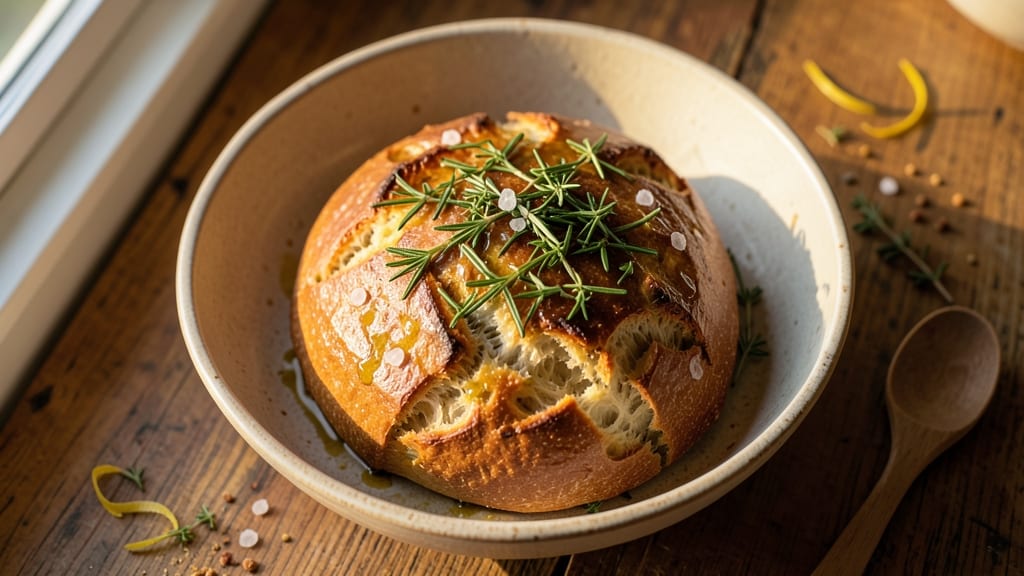
This artisan herb bread recipe transforms simple flour and water into a fragrant, crusty loaf with visible rosemary and thyme flecks throughout. The secret lies in a precise blend of hydration, long fermentation, and high-heat baking—techniques that create that coveted open crumb and crispy exterior professionals rely on.
I developed this recipe after years of testing, and it consistently delivers restaurant-quality results at home with just a few key adjustments to standard bread-making methods.
The dough begins with a hydration ratio of 70%, which creates a tender yet sturdy crumb perfect for holding those aromatic herb bits. After an overnight cold proof, the dough develops maximum flavor and structure, while the herbs infuse deeply into the flour.
The shaping technique—using a stretch-and-fold method—ensures an even crumb and those signature air pockets that make artisan bread so satisfying.
Baked at 450°F with steam, this loaf achieves a deep golden crust and crispy bottom while maintaining a soft, airy interior. The rosemary and thyme add subtle earthy notes that complement the bread's natural sweetness, making every slice taste like a visit to a European bakery.
The crust alone is worth the effort—crunchy enough to satisfy but tender enough to tear by hand.
Perfect for serving with soups, charcuterie boards, or simply toasted with butter, this bread keeps well for 5 days wrapped at room temperature or can be frozen for up to 3 months.
The herb variations are endless—try adding garlic, parsley, or even a touch of lemon zest for bright contrast. Let's get started on creating your own bakery-style loaf.
Ingredients for artisan bread recipe with herbs
High-protein flour, aromatic herbs, and precise hydration create this bakery-style loaf with visible flecks and crispy crust.
| Ingredient | Amount | Notes |
|---|---|---|
| Bread Flour 🌾 | 3 ½ cups | High-protein for structure, 12-14% protein |
| Fresh Rosemary 🌿 | ½ cup | Finely chopped, stems removed |
| Fresh Thyme 🌿 | ¼ cup | Leaves only, finely chopped |
| Instant Yeast 🍞 | ½ tsp | Active dry can be substituted |
| Diamond Crystal Kosher Salt 🧂 | 1 ½ tsp | Fine grain preferred |
| Granulated Sugar 🍚 | 1 tbsp | Feeds yeast for fermentation |
| Extra-Virgin Olive Oil 🫒 | ½ cup | High-quality, fruity variety |
| Cold Water 💧 | 2.1 cups | Room temperature preferred |
| Cornmeal 🌽 | ¼ cup | For dusting work surface |
| Ice Cubes ❄️ | ½ cup | For cold proofing |
| Coarse Sea Salt 🧂 | 1 tsp | For final crust sprinkle |
| Sesame Seeds 🌻 | 1 tbsp | Optional for topping |
The bread flour is non-negotiable here—King Arthur or Caputo are my go-tos for that professional crumb structure. Fresh herbs make all the difference: Whole Foods or local farmers markets have the most vibrant rosemary and thyme, but grocery store herbs work if they're not wilted. The yeast should be less than 6 months old—check the date on the package. For the olive oil, California-based brands like Corto or Lucini provide that fruity depth that translates beautifully into the dough. Keep all dry ingredients in airtight containers to preserve freshness, and store your herbs in the freezer if you won't use them within a week.
No fresh rosemary? Dried at one-third the amount works in a pinch, though the flavor won't be as vibrant. Substitute thyme with oregano or marjoram for similar earthy notes. Running low on bread flour? All-purpose flour plus 1 tbsp vital wheat gluten mimics the protein structure. The cold water is crucial—room temperature activates the yeast properly without shocking it. For the sesame seeds, Trader Joe's sells them in bulk for better value. If you're making this ahead, prepare the dough up to 24 hours early and refrigerate it—the cold proof enhances flavor development significantly.
This dough keeps remarkably well. Wrap the shaped loaf in a clean kitchen towel and store at room temperature for up to 5 days—the crust will firm up but revive beautifully when reheated. For longer storage, freeze the shaped loaf (unbaked) for up to 3 months. To reheat, wrap in foil and warm in a 350°F oven for 10 minutes. The herbs will maintain their aroma best when stored properly—wrap them in damp paper towels and refrigerate. Bake within 2 hours of shaping for optimal texture, as the dough begins to relax at room temperature.
Why You'll Love This Recipe
- No-Knead Nightmare Solved: I swear by this dough—just mix, let it rise, and bake. No punchy arms, no failed kneading sessions. The instant yeast does all the work while I sip tea and pretend I’m not actually making bread.
- Herb Magic in Every Bite: That fresh rosemary and thyme? They don’t just happen—they infuse the crust and crumb until every tear-off piece tastes like a sunlit garden. (Yes, even the stale bits are forgivable.)
- Weeknight Hero: Toss a loaf in the freezer for lazy mornings or pack it for lunch—it’s the only bread that doesn’t turn to cardboard. My kids actually ask for it, and that’s saying something.
- Budget-Friendly Crust: Five ingredients, zero waste. That diamond kosher salt? A pinch goes far, and the herbs stretch to flavor multiple loaves. I’ve made this for $3 a batch, and it’s still the fanciest thing on the table.
Step-by-step instructions for fragrant rosemary and thyme crusty loaf
Mastering this herb-infused loaf requires precision in timing and technique—each step builds aromatic complexity.
Mix the Dough with Herbs and Hydrate
In a large mixing bowl, combine the 3.5 cups bread flour, 1.5 tsp Diamond Crystal kosher salt, 1 tbsp granulated sugar, and 0.5 tsp instant yeast. Create a well in the center and add the 0.5 cup extra-virgin olive oil, 2.1 cups cold water, 0.5 cup finely chopped fresh rosemary, and 0.25 cup fresh thyme leaves. The mixture will be shaggy at first—this is normal.
Using a wooden spoon or dough whisk, stir vigorously for 3-4 minutes until the dough comes together into a sticky, cohesive mass. You'll see the flour absorb the liquid as you work. The herbs should be evenly distributed throughout, releasing their oils into the dough. If the dough feels too dry after mixing, add 1 tablespoon cold water at a time until it reaches a soft, slightly tacky consistency that clings to your fingers but doesn't stick permanently.
Autolyse and Develop Gluten
Cover the bowl tightly with plastic wrap and let the dough rest at room temperature for 30 minutes. This autolyse stage allows the flour to fully hydrate and the gluten to begin developing naturally. You'll notice the dough becomes smoother and more elastic as the proteins relax.
After the rest, turn the dough out onto a lightly floured surface dusted with 0.25 cup cornmeal (this prevents sticking better than flour alone). Knead the dough for 8-10 minutes using a stretch-and-fold technique: stretch one side of the dough toward you, then fold it over itself. Rotate the dough 90 degrees and repeat. This builds strength without overworking the dough. The finished dough should be smooth, elastic, and slightly tacky to the touch but not sticky.
Cold Proof for Enhanced Flavor
Shape the dough into a loose round and place it in a lightly greased bowl. Cover with plastic wrap and refrigerate for 12-18 hours. The cold proofing develops deeper herb flavors and creates a better oven spring. I like to place the bowl in the fridge just before bed so it's ready to bake in the morning.
During the cold proof, the yeast works slowly but steadily, allowing the herbs to infuse more thoroughly. The dough will rise noticeably, but not double in size. When ready, turn the dough out onto a lightly floured surface and gently shape it into a 12-inch round (for a classic boules shape) or a 16-inch oval (for a batard). The surface should be smooth with no cracks.
Final Proof and Bake with Steam
Place the shaped dough on a parchment-lined baking sheet and cover loosely with plastic wrap. Let it proof at room temperature for 1-2 hours until it has risen 50-75% and feels springy when pressed gently. Preheat your oven to 450°F with a baking stone or inverted baking sheet inside to create a hot surface.
Just before baking, score the dough deeply with a razor blade in a crosshatch pattern (about ¼-inch deep). This allows the bread to expand properly and creates that beautiful crust. Place the baking sheet in the oven and immediately pour 0.5 cup ice cubes into a small metal bowl on the lower rack to create steam. Bake for 20 minutes with the steam, then remove the ice and bake for another 20-25 minutes until the crust is deep golden brown and sounds hollow when tapped on the bottom.
Cool and Finish with Seasoning
Remove the bread from the oven and transfer it to a wire rack. Immediately brush the crust with melted extra-virgin olive oil (about 1 tablespoon) and sprinkle with 1 tsp coarse sea salt and 1 tbsp sesame seeds while still warm. Let the bread cool completely on the rack for at least 1 hour before slicing—this ensures clean cuts and prevents a gummy crumb.
The finished loaf should have a crisp, shatteringly thin crust with visible herb flecks throughout. The interior should be open and airy with a slightly chewy texture. Each slice should release an intoxicating aroma of rosemary and thyme that lingers long after the first bite. Store wrapped at room temperature for up to 3 days or freeze for longer storage.
Pro Tips For Making Artisan Bread Recipe With Herbs
- CHOP HERBS FINE: Fresh rosemary and thyme are stubborn—tough stems and woody bits ruin the texture. Pulse them in a food processor for 3 seconds, then hand-chop the rest into tiny confetti-sized pieces. This ensures even distribution without overpowering the dough.
- SALT THE FLOUR FIRST: Diamond Crystal kosher salt dissolves unevenly if tossed in later. Sprinkle the full 2% of flour weight (about 14g per 500g flour) directly over the flour before mixing—it hydrates better and prevents clumpy yeast pockets. I learned this the hard way after kneading dough that smelled like salt crystals.
- WAIT FOR THE SPRING: Instant yeast is fast, but don’t rush the bulk fermentation. Press two fingers into the dough—if it springs back slowly (not instantly), it’s ready. Overproofing is obvious, but underproofing gives you a dense loaf with herbs floating like unwanted garnish. A window on the fridge door works; I’ve burned three batches by eyeballing it.
- STEAM THE FIRST 10 MINUTES: Herb-infused dough needs a tight steam lock for that crackly crust. Place a metal bowl of boiling water on the oven rack before baking, then slide the loaf in. Close the door immediately—no peeking. The steam evaporates fast, and that’s when the crust forms. (Yes, even if you’re impatient like me.)
Regional styles of this dish
French Baguette Style
For a lighter, more elongated loaf, shape the dough into a 20-inch batard instead of a boule. Brush the crust with 1 egg wash (1 egg + 1 tbsp water) before baking for that classic French shatter.
I love adding 1 tbsp garlic powder to the dough for a subtle garlic-herb twist. Bake at 475°F with steam for 15 minutes, then finish at 425°F for 15-20 minutes until the crust is blistered and golden. 🥖
Italian Focaccia Twist
Press the dough into a 9x13-inch pan and dimple the surface with your fingers. Top with 0.25 cup extra-virgin olive oil and 1 tsp flaky sea salt, then bake at 425°F for 20-25 minutes until puffed and golden.
Add cherry tomatoes and fresh basil after baking for a true focaccia experience. The herbs infuse beautifully into the oil, creating a fragrant, olive-rich crust.
German Pretzel Adaptation
Shape the dough into 6-inch ropes and twist them into pretzel knots. Boil in 2 cups water with 1 cup baking soda and 1 tbsp salt for 30 seconds before baking at 425°F for 12-15 minutes.
Brush with 1 egg wash and sprinkle with coarse salt while hot. The lye bath creates that signature pretzel crust while keeping the herb flavors intact.
Spanish Pan de Campo
Shape the dough into a 10-inch round and bake on a cast-iron skillet for a rustic, wood-fired effect. Add 1 tsp smoked paprika to the dough and top with 1 tbsp crushed red pepper flakes after baking.
The herbs pair beautifully with the smoky notes, creating a bread perfect for Spanish tapas. Serve warm with manchego cheese and jamón ibérico.
Mediterranean Olive Oil Bread
Increase the olive oil to 0.75 cup and reduce water to 1.8 cups for a richer, oilier crust. Add 1 tsp dried oregano and 1 tsp lemon zest to the dough. Shape into a 14-inch oval and bake at 430°F for 25 minutes.
The extra oil creates a crispy, golden crust that's perfect for dipping in olive tapenade or whipped feta.
Scandinavian Cardamom-Herb
Replace rosemary with 1 tbsp ground cardamom and add 1 tsp fennel seeds to the dough for a Nordic-inspired twist. Shape into a 10-inch round and bake at 400°F for 30 minutes to develop the warm spices.
The cardamom complements the thyme beautifully, creating a bread that pairs perfectly with smoked salmon or herring dishes.
Nutrition facts
Frequently asked questions
Can I substitute dried herbs for fresh in this recipe?
You can, but use one-third the amount of dried herbs compared to fresh. For example, replace 0.5 cup fresh rosemary with 1.5 teaspoons dried rosemary. Fresh herbs provide more vibrant flavor and visible flecks in the bread. If using dried, crush them lightly to release their oils into the dough.
Why does my herb bread turn out dense instead of crusty? Dense bread usually results from over-kneading, insufficient proofing, or incorrect hydration.
How do I store leftover herb bread?
Wrap the cooled loaf tightly in a clean kitchen towel or beeswax wrap, then store at room temperature for up to 5 days. For longer storage, freeze the shaped (unbaked) loaf for 3 months. To revive, warm in a 350°F oven for 10 minutes wrapped in foil. The herbs maintain their aroma best when stored properly in airtight containers.
Can I make this bread without a stand mixer?
This recipe relies on manual kneading with the stretch-and-fold technique, which works perfectly by hand. Work the dough on a lightly floured surface for 8-10 minutes, rotating the bowl 90 degrees after each fold. The high hydration makes it slightly sticky, but cornmeal helps prevent sticking. Just be patient—hand-kneading develops gluten just as effectively.
What other herbs pair well with rosemary and thyme?
Try garlic, parsley, or lemon zest for bright contrast. For warmth, add fennel seeds or smoked paprika. The Mediterranean version in our regional styles section uses oregano and lemon zest for a citrusy twist. Always use fresh herbs when possible—their oils infuse better than dried during the long fermentation.