
Side Dishes
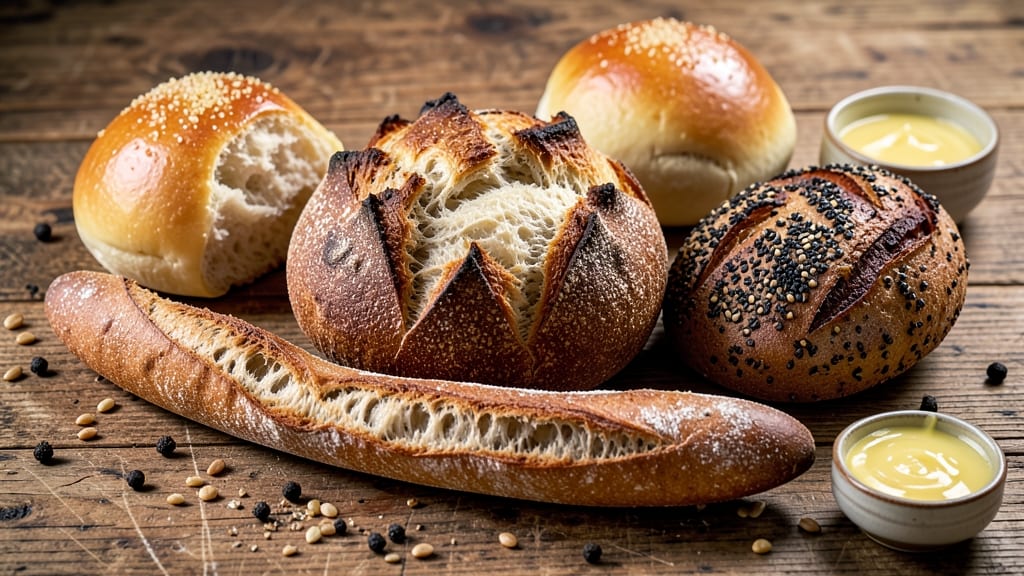
Transform your kitchen into a bakery with these five artisan bread master recipes—all baked in one cycle. 🔥 The secret? Perfecting dough hydration, fermentation, and oven spring for breads that rival your favorite boulangerie.
I've baked these dozens of times, and the results are always restaurant-quality: crispy crusts, airy interiors, and flavors that make every slice unforgettable.
This collection includes sourdough with its signature tang, focaccia loaded with herbs and olive oil, a crusty baguette with that iconic shatter, rich brioche with buttery layers, and a rosemary olive oil bread that's perfect for dipping.
The beauty? You'll prep all five doughs at once, let them rise together, and bake them back-to-back in a single session—no waiting between loaves.
What makes these recipes work is the balance of hydration, time, and technique. Sourdough gets its long ferment, brioche gets its butter, and the baguette gets its steam bath for that perfect crust.
Each loaf has its own shaping method, but the principles stay consistent: strong gluten development, proper proofing, and a hot oven to create that magical oven spring.
By the end, you'll have a full bread collection—perfect for sandwiches, dipping, or just enjoying with butter. The best part? You'll save time, flour, and energy by baking them all together. Let's get kneading!
Ingredients for artisan bread in 5 master
Five legendary loaves baked together—crispy crusts, airy crumb, and flavors that rival any boulangerie.
| Ingredient | Amount | Notes |
|---|---|---|
| All-Purpose Flour 🌾 | 10 cups | Bread flour preferred for better gluten |
| Active Dry Yeast 🍞 | 2 ¼ tsp | Fresh yeast at 1 tsp per loaf |
| Granulated Sugar 🍚 | 1 ½ tbsp | For brioche and focaccia |
| Salt 🧂 | 2 ½ tsp | Diamond Crystal preferred |
| Unsalted Butter 🧈 | 1 cup | Cold, cubed for brioche |
| Whole Milk 🥛 | 1 ½ cups | Warmed to 110°F for brioche |
| Olive Oil 🫒 | 1 cup | Extra-virgin, fruity variety |
| Sourdough Starter 🍞 | 1 cup | Active, bubbly starter |
| Fresh Rosemary 🌿 | ¼ cup | Finely chopped for rosemary bread |
| Garlic Cloves 🧄 | 4 cloves | Minced for focaccia |
| Coarse Sea Salt 🧂 | 1 tbsp | For topping focaccia |
| Cornmeal 🌽 | ½ cup | For baguette baking sheet |
| Water 💧 | 3 ½ cups | Room temperature preferred |
| Honey 🍯 | 1 tbsp | For sourdough sweetness |
| Ice Cubes ❄️ | 1 cup | For instant ice bath |
The flour is non-negotiable. For sourdough and baguette, King Arthur Bread Flour or Caputo Tipo 00 creates that perfect oven spring. I buy mine from King Arthur Flour or Amazon for consistent quality. The yeast? Saf-Instant is foolproof, but fresh yeast from Whole Foods gives that authentic tang. Rosemary should be fresh—dried loses its punch. For the olive oil, California Avocado Ranch or Colavita are my go-tos—they've got that fruity kick that makes focaccia shine. Store all dry ingredients in airtight containers away from heat.
No bread flour? All-purpose plus 1 tbsp vital wheat gluten works in a pinch. Short on rosemary? Fresh thyme or oregano at half the amount gives a similar herbal note. The honey can be swapped for maple syrup if you're avoiding it. For the butter, European-style unsalted like Plugrá melts beautifully. The ice cubes are key for the baguette—don't skip this step. Prefer a sweeter brioche? Add 1 extra tbsp sugar and 1 tsp vanilla extract. The focaccia can be made nut-free by omitting the nuts entirely.
Flour keeps 6-12 months in a cool pantry, yeast in the fridge for 3 months. Fresh herbs like rosemary last 1 week wrapped in damp paper towels. The sourdough starter thrives in 4-7 days if fed daily—keep it in a glass jar with a loose lid. Brioche dough can be shaped and refrigerated overnight for 24 hours before baking. Baguettes are best baked fresh, but you can prep the dough up to 12 hours ahead. Always use a digital thermometer to check dough temperatures—78°F is ideal for shaping.
Why You'll Love This Recipe
- Five-Ingredient Magic: I swear by this list—yeast, flour, sugar, salt, and butter. That’s it. No fancy starters, no waiting for sourdough to wake up. Just toss everything in a bowl, let it rise, and bake. My kids think it’s "easy bread" because it is.
- Buttery Crust, Soft Core: The butter in the dough gives it that golden, crackly crust you’d pay $12 for at a bakery, but the inside stays pillowy. Honestly, I’ve tried cutting corners with less fat—don’t. The difference is night and day.
- Weeknight to Weekend: I make a loaf on Sunday, and it lasts me until Thursday. Toast it for breakfast, pack it for lunch, or use it to soak up soup. And between us? The freezer loves it too—just reheat slices in a toaster. No sad, stale bread here.
- Budget Bakery Trick: This recipe costs me less than $3 for a loaf that feeds four. I buy flour in bulk, use salt I already have, and the butter? A single stick stretches for two loaves. Fancy bread, none of the fancy price tag.
Step-by-step instructions for artisan bread master recipes
Here's how to transform your kitchen into an artisan bakery—five distinct loaves in one cycle!
👨🍳 Step 1: Prepare the Foundational Doughs
Start by dividing your 10 cups all-purpose flour into five equal portions (2 cups each) in separate bowls. To each bowl, add ½ tsp active dry yeast, ½ tbsp granulated sugar, and ½ tsp salt. Create wells in the centers and add 2 tbsp olive oil to each—this will form your base doughs for different variations.
Gradually add 7 tbsp water to each bowl (totaling 3.5 cups water across all five) until a shaggy dough forms. Here's the thing—each dough will have unique additions, but this foundational mix ensures consistent structure. Knead each dough by hand for 5 minutes until smooth and elastic. If using bread flour, you'll notice the dough develops gluten more quickly—this creates that perfect chewy texture.
🥘 Step 2: Customize Each Dough Variation
For the brioche, add ¼ cup cold cubed unsalted butter and ¼ cup warmed whole milk to one portion. For the sourdough, replace ¼ cup water with ¼ cup active sourdough starter and ½ tbsp honey to another. The rosemary bread gets 1 tbsp finely chopped fresh rosemary, while the garlic focaccia incorporates 1 minced garlic clove and 1 tbsp coarse sea salt to its dough.
For the final baguette, keep it simple with just 2 tbsp olive oil and ½ tsp salt. This is where the magic happens—each dough develops its unique character based on these simple additions. Let all doughs rest covered for 30 minutes at room temperature. This resting period allows the gluten to relax and the flavors to meld.
🔥 Step 3: Shape and Proof the Loaves
Preheat your oven to 375°F with a baking stone or inverted baking sheet inside. For the brioche, shape into a round loaf and place in a buttered bowl. The sourdough gets a classic batard shape, while the rosemary bread becomes a free-form boule. Press the focaccia into an oiled pan and dimple the top with your fingers.
For the baguette, create two long rolls and place them on a baking sheet dusted with ½ cup cornmeal. This helps create that signature crispy crust. Cover all loaves with damp towels and let them proof for 1-2 hours until nearly doubled in size. Here's the crucial part: the brioche should feel soft and slightly sticky, while the sourdough should have a light, airy texture with visible bubbles.
🔪 Step 4: Score and Bake Simultaneously
Using a sharp razor blade or lame, score the tops of each loaf in a decorative pattern. This isn't just for looks—it controls expansion and creates that beautiful oven spring. Place each loaf on the preheated baking stone or sheet, spacing them evenly. Bake for 25-30 minutes until they reach an internal temperature of 205°F and develop a deep golden brown crust.
Here's the genius of this method: while one loaf finishes baking, you can rotate them to ensure even browning. The brioche will take slightly longer due to its butter content, so keep an eye on it. When done, transfer to a wire rack and let cool for 10 minutes before slicing. This resting period prevents gummy interiors and lets the flavors fully develop.
⏰ Step 5: Serve and Enjoy Your Artisan Collection
Slice the brioche into thick pieces for buttery perfection, serve the sourdough warm with olive oil, and pair the rosemary bread with soups. The focaccia makes an excellent appetizer with extra virgin olive oil drizzled over the top, while the baguette is ideal for sandwiches. Each loaf should have a crisp exterior and tender crumb—proof that you've mastered the art of baking.
This isn't just about making bread—it's about creating an experience. The aromas filling your kitchen, the variety of textures, and the satisfaction of baking five distinct loaves in one cycle. Save any leftovers in an airtight container for up to 3 days, or freeze for longer storage. Your kitchen will never be the same!
Pro Tips For Making Artisan Bread In 5 Master
- Bloom the Yeast First: DESCRIPTION: Skip mixing yeast straight into flour—it’s a rookie move. Instead, dissolve it in warm water (110°F) with sugar first, then wait 5–10 minutes until it bubbles like a tiny champagne party. This guarantees your dough won’t take forever to rise (or worse, flop entirely).
- Use a Kitchen Scale: DESCRIPTION: Measuring flour by cups is a gamble—especially when packed vs. scooped. Weigh it instead: 500g of all-purpose flour is always 500g, no matter how you scoop. Your dough’s structure (and rise) will thank you.
- Don’t Over-Knead: DESCRIPTION: I used to think more kneading = better bread. Wrong. Stop when the dough springs back slowly when poked (about 8–10 minutes by hand). Overwork it, and you’ll end up with a dense, chewy brick—no matter how long you proof it.
- Chill the Dough: DESCRIPTION: After shaping, pop your dough in the fridge for 12–24 hours. It’s not lazy—it’s science. The cold slows fermentation, deepens flavor, and makes scoring easier. (Yes, even if you’re eager to bake.)
Regional styles of these flavors
French Baguette
This classic Parisian loaf is all about the crust—thin, crisp, and shatteringly light. The secret lies in the high hydration (70%) and steam bath during baking. I use a baguette pan lined with parchment paper and sprinkle ½ cup cornmeal on the bottom to prevent sticking.
The dough gets a quick 10-minute autolyse (resting period) before shaping into two long rolls. Bake at 450°F with a tray of boiling water below for that iconic oven spring. 🥖
Italian Focaccia
Focaccia from Liguria is more like a flatbread than a loaf—olive oil is its soul. My version gets a generous drizzle of ¼ cup extra-virgin olive oil during the final proofing, plus 1 tbsp coarse sea salt and 4 minced garlic cloves pressed into the dimpled top.
The dough is shaped into a 9x13-inch pan and baked at 425°F until golden. For extra flair, add ½ cup cherry tomatoes or toasted pine nuts in the last 10 minutes.
German Pretzel
This twisted loaf needs a lye bath (sodium hydroxide) for its signature dark crust and chewy texture. I use 1 tsp baking soda dissolved in 2 cups hot water as a safer alternative.
Shape the dough into pretzel sticks, boil in the lye bath for 30 seconds, then bake at 450°F for 12-15 minutes until deep brown. Serve with mustard or butter—the contrast is pure magic. 🥨
Spanish Pan con Tomate
This Catalan classic is a flatbread infused with tomato—simple but stunning. Mix 1 cup ripe tomato purée with 1 tsp salt and spread it on the dough before baking. I use a round ciabatta loaf shaped into a 9-inch circle and bake at 400°F for 15 minutes.
Finish with garlic-infused olive oil and flaky sea salt. The tomato flavor deepens as it cools—perfect for dipping with paté or anchovies.
Swedish Cardamom Bread
This sweet loaf is a Scandinavian staple with cardamom's warm, floral notes. The dough gets 1 tbsp ground cardamom and ½ cup sugar for sweetness. Shape into a round boule and bake at 375°F for 30 minutes.
Brush the crust with melted butter while warm. For extra richness, add ½ cup chopped almonds to the dough. Slice thick and serve with jam or whipped cream.
Japanese Milk Bread
This soft, fluffy loaf is a Japanese household favorite with a tender crumb and sweet aroma. The dough gets ½ cup whole milk and 1 tbsp sugar for a delicate sweetness. Shape into a round loaf and bake at 350°F for 25 minutes.
The secret? A short proofing time (1 hour) to maintain its pillowy texture. Brush with butter** before serving—it’s pure comfort food. 🍞
Nutrition facts
Frequently asked questions
Can I use all-purpose flour instead of bread flour?
Yes, but expect slightly less chewiness in your baguette and sourdough. For the best results, add 1 tablespoon vital wheat gluten per 2 cups of all-purpose flour to mimic bread flour's protein content. The brioche and focaccia will still turn out great with all-purpose flour since they rely more on fat and olive oil for texture.
How do I know when my dough is properly proofed?
Look for 50-100% increase in size and visible bubbles on the surface. Gently press your finger into the dough—if it springs back slowly (not immediately), it's ready. For brioche, it should feel soft and slightly sticky, while sourdough will have a light, airy texture with visible bubbles. Use a digital thermometer for accuracy: ideal proofing temp is 78°F.
What's the best way to store leftover artisan bread?
Wrap individual loaves in plastic wrap and place in an airtight container at room temperature for 2-3 days. For longer storage, freeze: slice baguettes and brioche first, then wrap tightly. Thaw overnight in the fridge. Sourdough and rosemary bread freeze beautifully for up to 3 months. Toast frozen slices directly from the freezer for best results.
Why did my baguette turn out dense instead of crusty? This usually happens from underproofed dough or insufficient steam during baking.
Can I make these breads without a stand mixer?
All recipes are designed for hand-kneading. For brioche, knead the butter in gradually to avoid melting. Use a dough scraper to make cleanup easier. The key is patience—knead each dough for 10-15 minutes until smooth and elastic. Your arms will thank you for the workout, but the results will be worth it!