
Side Dishes
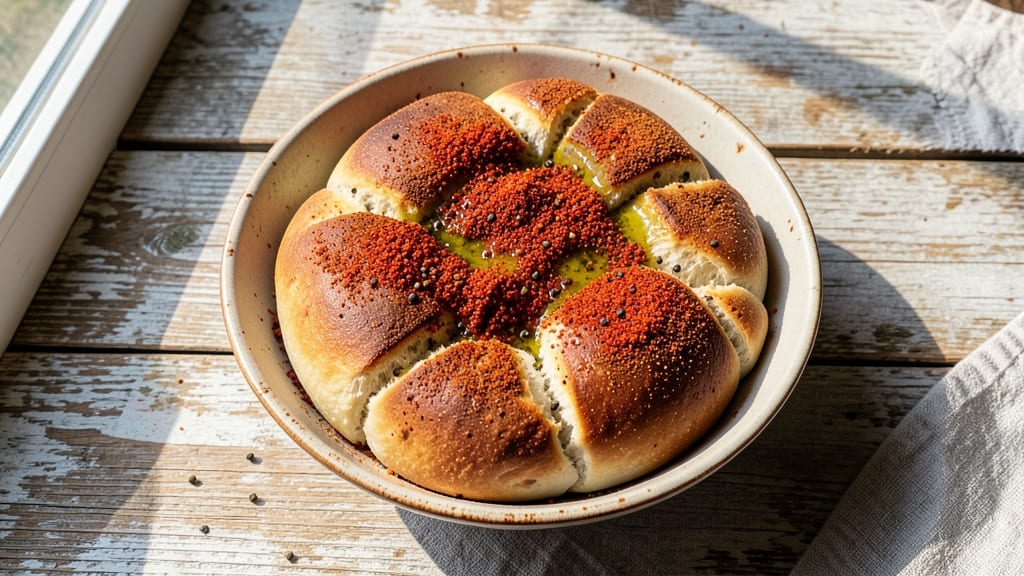
This Ethiopian Ambasha bread recipe transforms simple flour into a fragrant, spice-kissed flatbread that’s the perfect side for hearty Ethiopian dishes. The secret lies in the dough’s gentle fermentation and the subtle warmth of berbere spice, which infuses every bite with earthy depth.
Unlike ordinary flatbreads, Ambasha develops a tender yet slightly chewy texture that pairs beautifully with rich stews like shiro or misir wat—making it a staple in Ethiopian cuisine.
What sets this recipe apart is its balance of tradition and approachability. You’ll work with just five core ingredients—flour, yeast, water, salt, and optional berbere—but the technique ensures a foolproof rise and even baking.
The dough rests overnight, allowing flavors to meld and gluten to relax, which guarantees a light, airy crumb. No special equipment is needed beyond a bowl and a skillet, making it perfect for home cooks.
When baked, the bread emerges with a golden crust and a fragrant aroma that fills your kitchen. Its mild spice notes complement the bold flavors of Ethiopian dishes without overpowering them.
Serve it warm alongside tikil gomen (collard greens) or use it to scoop up stews—each bite is a testament to how simple ingredients can create something extraordinary.
The beauty of Ambasha lies in its versatility. While the traditional version includes berbere, you can easily adapt it for a milder flavor by omitting the spice or using a pinch of garlic powder instead.
The dough can also be shaped into rounds or triangles, depending on your preference. Once mastered, this recipe will become a weekly staple in your kitchen.
Ingredients for ambasha bread
Five core ingredients transform into fragrant Ethiopian flatbread with tender spice-infused texture.
| Ingredient | Amount | Notes |
|---|---|---|
| All-Purpose Flour 🌾 | 5 cups | High-protein for better structure |
| Active Dry Yeast 🍞 | 1 tsp | Ensure it's fresh and active |
| Warm Water 💧 | 1 ½ cups | 110°F for optimal yeast activation |
| Fine Sea Salt 🧂 | 1 ½ tsp | Diamond Crystal preferred |
| Berbere Spice Blend 🌶️ | 1 ½ tbsp | Traditional Ethiopian blend |
| Olive Oil 🫒 | 1 tbsp | Extra-virgin for flavor |
| Honey 🍯 | 1 tsp | For subtle sweetness |
| Garlic Powder 🧄 | ½ tsp | Mild alternative to berbere |
The flour is the foundation—King Arthur or Caputo bread flour yields the best texture, but all-purpose works in a pinch. Berbere spice is non-negotiable for authentic flavor; seek it at specialty markets or Ethiopian stores like African & Caribbean Foods in major cities. If unavailable, blend 1 tsp paprika + ½ tsp each cumin, coriander, and cardamom. The yeast must be active dry—never instant—since this recipe relies on overnight fermentation. For the water, aim for 110°F (like warm bathwater) to activate yeast without killing it. Diamond Crystal sea salt dissolves cleanly, but any fine sea salt works.
No berbere? Garlic powder + smoked paprika mimics its depth. Short on olive oil? Melted coconut oil maintains neutrality. The honey can be swapped for maple syrup (equal parts). For a gluten-free version, King Arthur gluten-free flour blend replaces all-purpose, but texture will differ. Pre-ferment the yeast by mixing with warm water and 1 tsp sugar first—it should foam in 5-10 minutes. If your kitchen runs hot, place the dough in a cooler area to prevent overproofing. The dough’s resting time is critical: 12-16 hours at room temperature develops maximum flavor.
Store shaped dough balls in an airtight container with a damp towel for up to 3 days in the fridge. For longer storage, freeze dough balls for 3 months—thaw overnight before baking. Baked bread keeps at room temperature for 2 days, wrapped in a clean kitchen towel to maintain softness. Reheat briefly in a dry skillet over medium heat to restore crispness. The aroma alone makes this worth the wait—plan ahead for maximum impact.
Why You'll Love This Recipe
- No Yeast Stress: Mixing this dough takes less than 5 minutes—just flour, water, salt, and a pinch of berbere to wake up the yeast. Honestly, I’ve made bread where I overproofed or under-kneaded, but this? Just fold once, let it rise, and you’re golden.
- Berbere Magic: That spice blend—paprika, fenugreek, cayenne—turns ordinary bread into something ridiculously good. The first bite has this warm, slightly smoky kick that pairs perfectly with stews or just butter.
- Weeknight Hero: Freezes like a dream, so I bake a batch on Sundays and pull out slices whenever I’m in a rush. Toss it in a toaster or oven, and you’ve got dinner in minutes—no fancy prep, no stress.
- Budget-Friendly Staple: Uses pantry basics, and one loaf stretches across breakfasts, lunches, or as a side for weeks. Between us, this is the kind of bread that makes grocery bills feel lighter while keeping your kitchen full.
Step-by-step instructions for Ethiopian spice-infused flatbread
Master this traditional Ethiopian bread with a perfect balance of aromatic berbere and tender texture.
Activate the Yeast for Maximum Rise
In a small bowl, combine the 1.5 cups warm water (between 110-115°F) with the 1 tsp honey and 1 tsp active dry yeast. Let it sit for 5-10 minutes until frothy—this confirms the yeast is alive and ready to work. The mixture should bubble vigorously and develop a light, airy foam.
I always test the water temperature first with my finger—it should feel warm but not hot. If it's too hot, you'll kill the yeast; if too cold, it won't activate properly. Once properly activated, the yeast mixture will smell slightly sweet and yeasty, with visible bubbles forming on the surface.
Mix the Dough with Berbere for Authentic Flavor
In a large mixing bowl, combine the 5 cups all-purpose flour with the 1.5 tbsp berbere spice blend, 1.5 tsp fine sea salt, and 0.5 tsp garlic powder. Mix these dry ingredients thoroughly to distribute the spices evenly throughout the flour. This step ensures every bite carries that signature Ethiopian warmth.
Make a well in the center and pour in the yeast mixture along with the 1 tbsp olive oil. Using a wooden spoon or dough whisk, gradually incorporate the liquids into the dry ingredients, mixing until a shaggy dough forms. Avoid using a stand mixer at this stage—hand-mixing helps develop the gluten structure essential for that signature chewy texture.
Knead Until Smooth and Elastic
Turn the dough onto a lightly floured surface and knead for 8-10 minutes until smooth and elastic. You're looking for a dough that springs back slowly when poked and feels slightly tacky but not sticky. The berbere will make the dough slightly darker than usual, which is completely normal.
I press down gently on the dough during the first minute—this prevents it from curling and ensures even contact with the surface. As you knead, you'll notice the dough becomes more uniform and develops a satiny sheen. If it feels too dry, add 1 teaspoon warm water at a time; if too sticky, add 1 tablespoon flour—but don't overdo it, as this can affect the final texture.
First Rise for Light, Airy Texture
Lightly oil a large bowl, place the dough inside, and cover with a damp kitchen towel. Let it rise in a warm place for 1-2 hours or until doubled in size. The dough should feel light and springy when pressed gently with one finger—this indicates proper fermentation and air development.
I place my dough in a slightly warm oven with the light on (about 70°F) for more consistent rising. The berbere spices will make the dough smell intensely aromatic—this is your assurance that the flavors are properly infusing. If the dough doesn't rise significantly after 2 hours, it may need more time or a warmer environment to activate fully.
Shape and Second Rise for Perfect Flatbread
Punch down the risen dough to release air, then divide it into 8 equal pieces (about 4-ounce each). Roll each piece into a 6-inch circle, about ¼-inch thick, on a lightly floured surface. The edges should be slightly thicker than the center for that traditional ambasha shape.
Place the shaped dough on a parchment-lined baking sheet, cover with a damp towel, and let rise for another 30-45 minutes. The dough should puff up slightly and develop small air pockets. This second rise is crucial—it ensures the bread maintains its structure during baking and develops that signature open crumb. If you're short on time, you can skip this rise, but the texture won't be as light.
Bake Until Golden and Crisp
Preheat your oven to 425°F with a baking stone or inverted baking sheet on the middle rack. This creates steam for even baking. Bake the ambasha for 10-12 minutes until the edges are golden brown and the tops develop a crispy crust with small bubbles.
The berbere spices will create an intense aroma in your kitchen—this is your signal that the bread is developing its signature Ethiopian character. For extra crispiness, I brush the tops with a little olive oil after baking. Let the bread cool on a wire rack for 5 minutes before serving—this prevents the bottoms from becoming soggy and allows the flavors to fully develop.
Pro Tips For Making Ambasha Bread
- Bloom That Yeast: Don’t just toss the yeast into the water and hope for the best—proof it first in a small cup of warm water (110°F) with a pinch of sugar or flour for 5-10 minutes until it’s frothy and bubbly. I learned this the hard way when my dough took forever to rise because the yeast was sluggish.
- Mix Berbere Last: Add the berbere spice blend after the dough has risen, right before shaping. Sprinkling it in early can mute its flavor and make the bread taste flat. Plus, it’s easier to distribute evenly when the dough is soft and pliable.
- Handle Dough Gently: Overworking the dough after the first rise is a fast track to tough, dense bread. Once you’ve mixed in the berbere, knead just enough to combine—about 2-3 minutes by hand or 3-4 pulses in a stand mixer. Less is more here.
- Steam the First 10 Minutes: Pop a metal bowl of boiling water in your oven before baking, then slide the shaped dough in. The steam keeps the crust from drying out too fast, especially with berbere’s moisture-stealing spices. I was skeptical until I tried it—now it’s non-negotiable.
Dietary considerations for this dish
Gluten-Free Adaptations
For a gluten-free version, replace the 5 cups all-purpose flour with 5 cups King Arthur gluten-free flour blend—it mimics wheat flour's structure best. Add 1 extra tablespoon of xanthan gum to improve elasticity, as gluten-free doughs lack natural gluten.
The berbere and honey remain the same, but reduce the warm water to 1 cup since gluten-free flours absorb less moisture. Let the dough rest 30 minutes after mixing before kneading, as gluten-free doughs can be more fragile. 🌾
Low-Carb/Keto Options
This recipe isn't naturally keto-friendly, but you can create a lower-carb version by using almond flour instead of wheat flour. Mix 2.5 cups almond flour with 2.5 cups coconut flour (both have lower carbs) and increase the olive oil to 2 tablespoons for moisture.
Replace the yeast with 1 tablespoon psyllium husk powder (acts as a binder) and reduce the honey to ½ teaspoon. The texture will be denser, but it pairs well with Ethiopian stews. 🥑
Allergen-Free Adjustments
For nut-free kitchens, swap almond flour with sunflower seed flour, which has a neutral taste and similar texture. If avoiding honey, use maple syrup in equal amounts—it adds subtle sweetness without allergens.
For egg-free binding, add 1 tablespoon ground flaxseed mixed with 3 tablespoons water to the dough. Always check labels on berbere blends, as some contain traces of nuts or dairy. 🌱
Dairy-Free Considerations
Ambasha bread is naturally dairy-free, but if you're using store-bought berbere, verify it contains no butter or milk powder. The olive oil and honey are already dairy-free, and the recipe avoids all dairy ingredients.
For extra richness, brush baked bread with melted coconut oil instead of butter. The berbere's spicy depth shines even without dairy—it's what makes this bread uniquely Ethiopian. 🧀
Spice-Free Modifications
Skip the berbere entirely for a milder version, but boost flavor with 1 teaspoon garlic powder and ½ teaspoon smoked paprika. The honey and olive oil still add depth, while the yeast fermentation creates natural complexity.
For a sweeter profile, increase honey to 1.5 teaspoons—this balances the lack of spice beautifully. The bread will taste more like a neutral flatbread but still pairs wonderfully with Ethiopian dishes. 🌶️
Nutrition facts
Frequently asked questions
What makes Ambasha bread different from regular flatbread?
Ambasha bread stands out with its spiced dough—infused with berbere, a traditional Ethiopian chili blend that gives it a warm, aromatic depth. Unlike plain flatbreads, it undergoes an overnight fermentation, creating a lighter, airier texture with subtle sweetness from honey. The dough also includes olive oil, which keeps it tender and slightly crispy when baked.
Can I make Ambasha bread without berbere spice?
If you can't find berbere, substitute with 1 tsp garlic powder + ½ tsp smoked paprika + ¼ tsp cumin for a milder flavor. For extra depth, add ½ tsp ground ginger. The bread will still be delicious—just more neutral in taste. The honey and olive oil will still provide richness, while the yeast fermentation adds natural complexity.
How do I know when the dough is properly risen?
The dough is ready when it doubles in size and feels light and springy when pressed gently with one finger. For the first rise, this takes about 1-2 hours in a warm place. The berbere will make the dough smell intensely aromatic—this is your cue that fermentation is working! If it doesn't rise after 2 hours, try a warmer spot or check your yeast is active.
What's the best way to store leftover Ambasha bread?
Keep baked bread wrapped in a clean kitchen towel at room temperature for up to 2 days to maintain softness. For longer storage, freeze shaped dough balls for 3 months—thaw overnight before baking. To revive stale bread, warm it in a dry skillet over medium heat for 1-2 minutes per side until crispy again.
Can I make Ambasha bread in a toaster oven?
Yes! Preheat your toaster oven to 425°F and bake the bread for 8-10 minutes, checking frequently to prevent over-browning. The smaller space may require closer monitoring than a full oven. For even baking, place the bread on a baking sheet with a light dusting of flour underneath. The texture will be slightly denser than oven-baked, but still delicious.