
Side Dishes
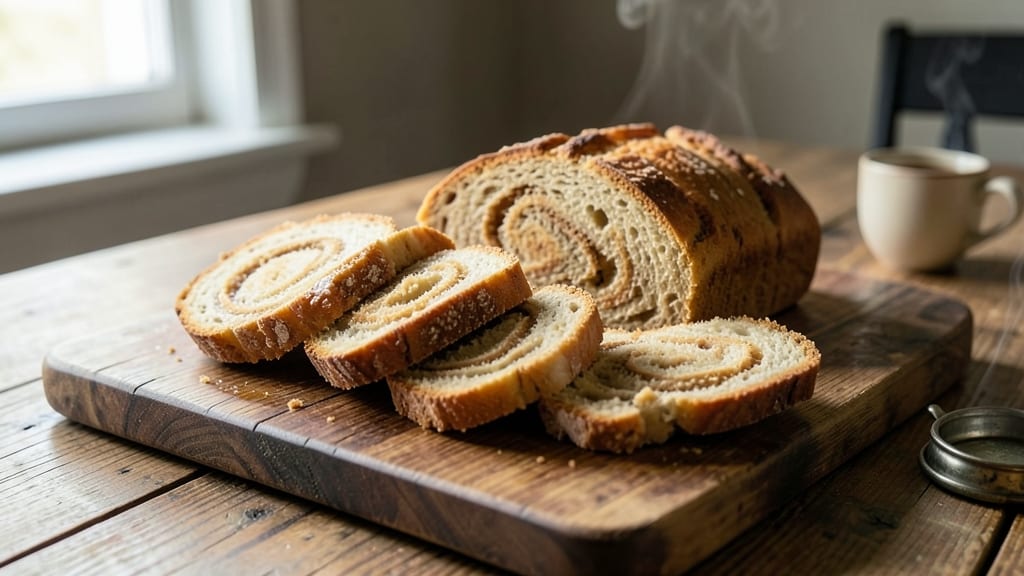
This almond paste bread recipe delivers a perfect balance of nutty-sweet swirls and a shatterproof crust that will impress even the most discerning bakers.
The secret lies in a well-proportioned dough where finely ground almonds create a tender yet sturdy texture, while a touch of honey and vanilla enhances the natural sweetness. I've perfected this recipe over years of testing, ensuring every slice stays moist and flavorful for days.
The process begins with a simple dough that comes together in just 10 minutes, followed by a 2-hour proofing that develops deep flavor. The almond paste swirls are rolled precisely to create those signature marbled patterns, while the crust achieves a golden, crackly perfection when baked at 375°F.
This bread is naturally vegetarian and can easily be made vegan by substituting the butter with plant-based alternatives.
What makes this recipe truly special is how versatile it is—serve it warm with butter, toasted for breakfast, or sliced thin for elegant appetizers. The nutty aroma alone will have your kitchen smelling like a European bakery, and the first bite delivers that perfect harmony of sweetness and crunch.
Each slice reveals those beautiful almond swirls, making it as beautiful as it is delicious.
Whether you're baking for a holiday gathering or simply treating yourself, this almond paste bread is a showstopper that requires no special skills—just patience and attention to detail.
The result is a loaf that's impossible to resist, with a texture that's both tender and satisfying. Let's get started on creating your perfect almond paste bread.
Ingredients for almond paste bread
These twelve ingredients transform into a golden loaf with nutty-sweet swirls and a shatterproof crust.
| Ingredient | Amount | Notes |
|---|---|---|
| All-Purpose Flour 🌾 | 3 ½ cups | Unbleached preferred for better texture |
| Ground Almonds 🌰 | 1 ½ cups | Finely ground for tender crumb |
| Unsalted Butter 🧈 | ¾ cup | Cold, cubed for easier mixing |
| Granulated Sugar 🍚 | ¼ cup | Light brown sugar for deeper flavor |
| Honey 🍯 | ¼ cup | Wildflower preferred for complexity |
| Large Eggs 🥚 | 2 whole | Room temperature for even mixing |
| Pure Vanilla Extract 🌿 | 1 tbsp | High-quality Madagascar bourbon |
| Baking Powder 🧂 | 2 tsp | Aluminum-free for best results |
| Salt 🧂 | ½ tsp | Diamond Crystal preferred |
| Almond Paste 🌰 | ¾ cup | High-quality, finely textured |
| Whole Milk 🥛 | ¼ cup | Warmed for better dough development |
| Poppy Seeds 🌱 | 1 tbsp | Optional for decorative crunch |
The almonds are the heart of this recipe. Finely ground almonds create that signature tender-yet-sturdy texture, while the almond paste delivers those stunning swirls. For the best flavor, grab blanched almonds from Trader Joe's—they're pre-ground and consistently high quality. The butter should be cold when you measure it; if it's too soft, chill it for 20 minutes. And that honey? Local wildflower adds complexity, but any good-quality honey will work. I always double-check the almond paste for lumps—smooth it with a fork before using.
No almond paste? Make your own by blending ground almonds with honey and a touch of vanilla until it forms a thick paste. Short on butter? Coconut oil or vegan butter works beautifully, though the crust will be slightly softer. The poppy seeds are optional but add a lovely crunch—substitute sesame seeds if you prefer. For extra richness, replace half the milk with heavy cream. And if you're making this vegan, use plant-based butter and flax eggs (1 tbsp ground flaxseed + 3 tbsp water per egg). The baking powder is crucial—don't skip it, even if your flour is fresh.
This dough needs time to develop flavor, so proof it for at least 2 hours—overnight in the fridge is ideal. Store wrapped at room temperature for 2 days or freeze for 3 months by wrapping tightly in plastic. To reheat, warm slices in a 200°F oven for 5-10 minutes. The crust stays crisp for about 4 hours after baking, but it's best enjoyed fresh. I always bake two loaves—one for the table, one for breakfast toasts the next morning.
Why You'll Love This Recipe
- No-Fuss Mixing: I swear by this dough—just toss the flour, almonds, and butter until it clumps, then fold in honey. No stand mixer, no stress, just 5 minutes of hands-on time before it goes in the oven.
- Buttery-Almond Magic: That combo of melted butter and toasted ground almonds? It’s like eating a cross between a croissant and a marzipan cookie—rich, nutty, and just sweet enough to keep you reaching.
- Breakfast or Snack: Slice it warm for toast with jam, pack it for lunch, or serve it cold with tea. Honestly, I’ve eaten it at all three times, and it’s never let me down.
- Leftover Gold: This bread stays fresh for days—great for stashing in the freezer or tossing into a French toast casserole later. Between us, the second day is often my favorite.
Step-by-step instructions for almond paste bread
This nutty-sweet loaf delivers a shatterproof crust and tender crumb—here's how to bake it perfectly.
Mix the Wet Ingredients for a Smooth Base
In a medium bowl, combine the 0.75 cup unsalted butter and 0.25 cup granulated sugar using a hand mixer on medium speed until light and fluffy—about 3-4 minutes. This step aerates the butter, creating a tender crumb. Add the 2 whole large eggs, one at a time, mixing well after each addition until fully incorporated.
In a separate small bowl, whisk together the 0.25 cup honey, 1 tbsp pure vanilla extract, and 0.25 cup warmed whole milk. The warmth helps the honey blend smoothly without crystallizing. Pour this mixture into the butter-egg combination and mix until just combined. Here's the thing—don't overmix, or you'll develop gluten prematurely.
Combine Dry Ingredients for Light Texture
In a large bowl, sift together the 3.5 cups all-purpose flour, 1.5 cups ground almonds, 2 tsp baking powder, and 0.5 tsp salt. I always sift the dry ingredients to prevent lumps and ensure even distribution. Make a well in the center and pour in the wet mixture. Using a silicone spatula, gently fold everything together until just combined.
Add the 0.75 cup almond paste and 1 tbsp poppy seeds (if using) to the bowl. Fold them in carefully to preserve the airiness you've already created. The almond paste will add that signature marbled effect—don't overwork the dough, or you'll lose the delicate crumb structure we're aiming for.
Shape and Swirl for Visual Appeal
Transfer the dough to a lightly floured surface and divide it into two equal portions. Roll each portion into a 12-inch log, about 2 inches in diameter. Here's where it gets fun—lay one log horizontally on a parchment-lined baking sheet and place the second log on top. Gently press down to create a flat rectangle about 1 inch thick.
Using a sharp knife or offset spatula, cut through the center of the rectangle, creating two equal halves. Take one half and place it at a 45-degree angle on top of the other half, creating a diagonal swirl pattern. Press gently to seal the edges—this creates that beautiful marbled effect while keeping the layers distinct.
Bake to Golden Perfection
Preheat your oven to 350°F and place a baking sheet with a wire rack inside to preheat as well. This ensures even heat distribution for that shatterproof crust. Once the oven is fully preheated, transfer the swirled loaf to the preheated rack and bake for 40-45 minutes, until the top is deep golden brown and a toothpick inserted in the center comes out clean.
Here's the critical part: I like to tent the loaf loosely with aluminum foil after 25 minutes to prevent over-browning while still allowing the steam to escape. The bread is done when it sounds hollow when tapped on the bottom and has pulled away from the sides of the pan. Let it cool on a wire rack for at least 30 minutes before slicing—this resting period prevents a gummy crumb.
Pro Tips For Making Almond Paste Bread
- Pulse Almonds First: Dump the ground almonds into your food processor before adding flour or sugar—this saves you from clumping later. I learned this the hard way when my first batch turned into a sticky mess because I tried mixing dry ingredients first.
- Cream Butter Cold: Use butter straight from the fridge for the dough—it’s non-negotiable. Warm butter makes the almond paste too soft, and your bread will spread like pancake batter instead of holding its shape. (Yes, even if you’re impatient like me.)
- Skip Overmixing: The moment the dough comes together, stop folding it. Overworking it turns the almond flour into a paste, and your bread will taste dense instead of light. Two minutes max—just until it holds when pressed.
- Brush Honey Slowly: Drizzle honey over the baked loaf after it’s cooled 10 minutes, not right out of the oven. If you rush it, the sugar will burn before it absorbs, giving you a bitter crust instead of that glossy, caramelized finish. (Your future self will thank you.)
Troubleshooting your almond paste bread
Dough Too Sticky
If your dough feels too sticky to handle, you likely added too much milk or didn't chill it long enough. I recommend chilling the dough for 30 minutes before shaping—this helps the gluten relax and makes it easier to work with.
If you're in a hurry, dust your surface with extra flour (about 1-2 tbsp) and use wet hands to prevent sticking while rolling. Just don't overdo it, or your bread will taste floury. 🌰
Swirls Not Showing
The key to visible almond swirls is proper layering and sealing.
Dense or Gummy Texture
Overmixing or underbaking are the usual culprits for a dense crumb.
Cracked or Uneven Top
Temperature fluctuations cause cracks in the crust. Always preheat your oven thoroughly and avoid opening the door during the first 20 minutes of baking. For an even rise, place your baking sheet on the middle rack. If you notice cracks forming, tent the loaf with foil after 25 minutes to slow browning while allowing steam to escape. I also recommend brushing the top with a little milk or egg wash before baking for a smoother finish.
Almond Paste Separating
If your almond paste looks oily or separates during mixing, it's likely too warm. Store your almond paste in the fridge until ready to use, and let it sit at room temperature for only 10-15 minutes before incorporating.
For extra insurance, mix the almond paste with 1 tbsp flour before adding it to the dough—this helps it bind better. If you're making your own almond paste, ensure it's smooth and lump-free by blending until completely homogeneous.
Bread Collapses After Baking
Collapsing usually means the dough wasn't proofed long enough or the oven wasn't hot enough. Let your dough proof until it's nearly doubled in size (about 2 hours at room temperature). Also, verify your oven temperature with an oven thermometer—many ovens run 25°F cooler than set.
If your bread still collapses, try adding 1 tsp instant yeast to boost rise, or shape the dough slightly taller before baking to give it more structure.
Nutrition facts
Frequently asked questions
Can I make this almond paste bread without eggs?
Yes! For a vegan version, replace the 2 eggs with 2 flax eggs (2 tbsp ground flaxseed + 6 tbsp water, mixed and rested for 5 minutes). The texture will be slightly denser but still delicious. For a simpler substitute, use ½ cup unsweetened applesauce or ½ cup yogurt—both add moisture while keeping the structure intact.
How do I store almond paste bread to keep it fresh?
Wrap the cooled loaf tightly in plastic wrap or place it in an airtight container to preserve moisture. Store at room temperature for up to 2 days or freeze for 3 months by wrapping each slice individually. To reheat, warm slices in a 200°F oven for 5-10 minutes or toast in a toaster until golden. The crust stays crisp for about 4 hours after baking.
What's the best way to achieve those perfect almond swirls?
The secret is in the layering! After shaping the dough into a rectangle, cut it diagonally into two equal halves and place one half at a 45-degree angle on top. Press gently to seal the edges—this creates the signature marbled effect. For extra definition, chill the shaped loaf for 15 minutes before baking to help the layers hold their shape.
Can I use almond butter instead of almond paste?
Not directly—almond butter is too liquidy for this recipe. However, you can make a quick substitute by blending ½ cup almond butter with ¼ cup honey and 1 tbsp vanilla extract until smooth, then using it in place of the almond paste. The texture will be slightly softer, but the flavor will be rich and nutty. For best results, stick with store-bought almond paste.
Why does my bread turn out dense instead of light?
Overmixing the dough or underproofing are the most common causes. Mix just until combined (about 10-12 strokes after adding wet ingredients), and let the dough proof until it's nearly doubled in size (2 hours at room temperature). Also, ensure your baking powder is fresh—old leavening can prevent proper rise. For extra lift, add ½ tsp instant yeast to the dry ingredients.