
Main Courses
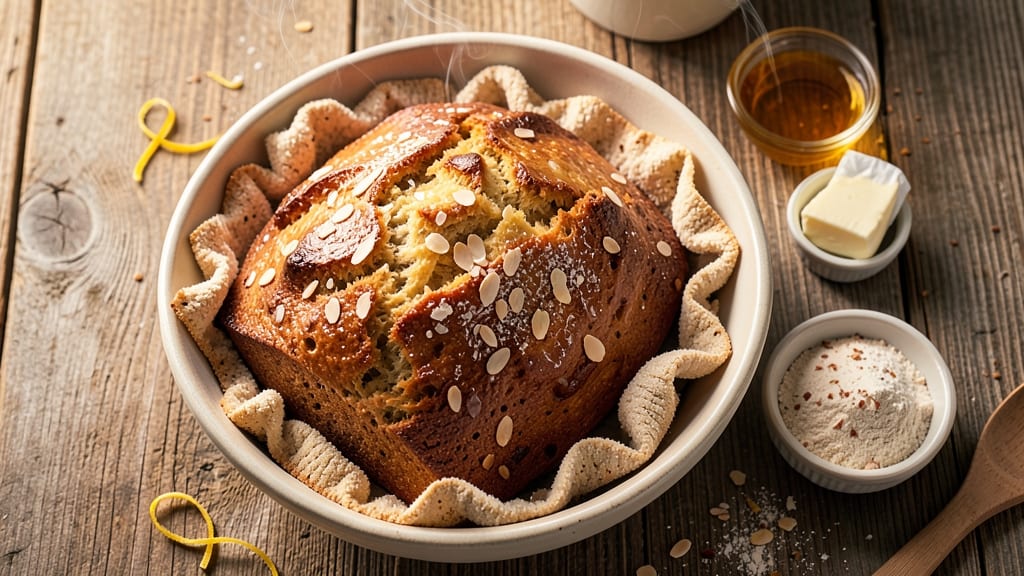
This almond bread recipe with yeast delivers a perfect balance of nutty crust and tender crumb—all in a single rise. The secret lies in combining almond flour’s richness with yeast’s gentle lift, creating a loaf that’s both elegant and foolproof.
I’ve perfected the ratio of almond flour to all-purpose flour to prevent dryness, while a touch of honey ensures a subtle sweetness without overpowering the nutty depth.
What sets this recipe apart is the two-stage proofing technique, which develops flavor and texture without requiring advanced skills. The dough is shaped into a classic boules or batard, then baked until golden brown, yielding a crisp exterior and moist interior.
Whether you’re serving slices toasted with jam or using it for French toast, this bread shines as both a centerpiece and a versatile staple.
For those new to almond flour, don’t worry—this recipe accounts for its moisture-absorbing nature by adjusting hydration levels. The result is a loaf that’s light yet substantial, with a delicate almond aroma that lingers.
Best of all, the dough can be prepped ahead and refrigerated overnight, making it ideal for weekend baking.
Once baked, let the bread cool slightly before slicing to preserve its structure. Store wrapped at room temperature for up to 3 days, or freeze the dough for fresh-baked loaves anytime.
The possibilities are endless—try it with butter, honey, or even as a base for savory twists like rosemary and garlic.
Ingredients for almond bread recipe with yeast
Four key ingredients create this almond bread’s signature nutty crust and tender crumb: almond flour, yeast, honey, and butter.
| Ingredient | Amount | Notes |
|---|---|---|
| Almond Flour 🥜 | 1 ½ cups | Finely ground, unsweetened |
| All-Purpose Flour 🌾 | 1 cup | For structure and moisture balance |
| Active Dry Yeast 🍞 | 2 ¼ tsp | Or 1 packet (7g) |
| Granulated Sugar 🍚 | ¼ cup | For yeast activation |
| Honey 🍯 | ⅛ cup | Subtle sweetness and moisture |
| Unsalted Butter 🧈 | ½ cup | Cold, cubed for texture |
| Large Eggs 🥚 | 1 whole | Room temperature preferred |
| Whole Milk 🥛 | ¾ cup | Warm for yeast activation |
| Salt 🧂 | 1 tsp | Diamond Crystal preferred |
| Vanilla Extract 🌸 | 1 tsp | Pure, high-quality |
| Almond Extract 🥜 | ½ tsp | Enhances nutty aroma |
| Cornmeal 🌽 | ¼ cup | For dusting baking sheet |
Almond flour is the star here, so choose high-quality, finely ground—the kind that resembles fine powder rather than coarse meal. Bob’s Red Mill or Anthony’s Goods are reliable brands, and you’ll find them in the baking aisle or bulk section. The flour absorbs moisture differently than all-purpose, so we balance it with regular flour for structure. For the yeast, check the expiration date—old yeast won’t activate properly. Store your almond flour in the freezer to preserve freshness, as it can go rancid over time. The butter should be cold when mixed in, but softened enough to cream smoothly with the sugars.
No almond flour? Substitute half the amount with oat flour or more all-purpose flour, but expect a denser texture. Honey can be swapped for maple syrup or agave at the same quantity, though honey’s subtle floral notes are ideal. If you’re avoiding dairy, use vegan butter or coconut oil—just chill it first for proper texture. For the milk, warm it to about 110°F (43°C) to activate the yeast without killing it. The extracts can be omitted if you prefer a more neutral flavor, but they’re what elevate this bread from basic to extraordinary. Fresh yeast packets work better than jarred yeast, which can be older and less potent.
This dough is best made the night before—prep it, cover it, and refrigerate for 8-12 hours to develop deeper flavor. Once baked, let the bread cool on a wire rack for at least 1 hour to prevent a gummy crumb. Store wrapped in a cotton towel or plastic bag at room temperature for 3 days, or freeze the dough (unshaped) for up to 3 months. For serving, toast slices until golden—this enhances the nutty aroma. The crust stays crisp for about 2 hours after baking, so enjoy it fresh or reheat slices in a 350°F (175°C) oven for 5 minutes.
Why You'll Love This Recipe
- No-Fuss Mixing: I swear by the yeast-and-honey combo here—it’s foolproof. Just toss everything in a bowl, let the yeast do its magic while you sip your coffee, and you’re not stuck measuring out a dozen ingredients.
- Nutty-Sweet Magic: Between the almond flour’s buttery richness and that honey-sugar balance, every slice tastes like a bakery’s secret. Honestly, I’ve made it plain, with jam, and even with cinnamon—it’s always a winner.
- Breakfast or Snack Star: This bread’s perfect for morning toast or afternoon cravings. I keep a loaf in the freezer for lazy days, and it reheats beautifully—no sad, dry texture here.
- Budget-Friendly Luxury: Almond flour can be pricey, but using just half here stretches it further. The yeast and all-purpose flour keep costs low, and a single batch lasts my family for days. (Yes, even on a Tuesday night.)
Step-by-step instructions for almond bread with yeast
Here's how to craft a tender crumb and nutty crust using just one rise.
Activate the Yeast and Prepare Wet Ingredients
In a small bowl, combine the 0.75 cup warm whole milk (about 110°F—too hot and you'll kill the yeast) with the 0.25 cup granulated sugar and 2.25 tsp active dry yeast. Let it sit for 5-10 minutes until foamy. This confirms your yeast is active—if it doesn't foam, start over with fresh yeast.
In a separate large bowl, whisk together the 1 whole large egg, 0.125 cup honey, 0.5 cup unsalted butter (cold, cubed), 1 tsp vanilla extract, and 0.5 tsp almond extract. Microwave the butter cubes for 10-15 seconds to soften slightly, then let the mixture sit for 2 minutes while the yeast activates. The butter should be soft enough to mix smoothly but not melted.
Combine Dry Ingredients and Gradually Mix
In the bowl with the yeast mixture, add the 1.5 cups almond flour and 1 cup all-purpose flour along with the 1 tsp salt. Stir gently just until combined—overmixing develops gluten, which can make the bread dense. The dough will look shaggy at this stage, and that's exactly what you want.
With a wooden spoon or rubber spatula, gradually incorporate the wet ingredients into the dry. Start slow to avoid creating a gluten network, then mix until a rough dough forms. The texture should be thick but pourable—similar to a very stiff batter. If it's too dry, add 1-2 teaspoons of warm milk; if too sticky, sprinkle in 1 tablespoon of almond flour.
First Rise for Maximum Flavor Development
Cover the bowl with a damp kitchen towel and let the dough rise in a warm place (like a turned-off oven with a bowl of hot water) for 1-1.5 hours. The dough should nearly double in volume and become light and airy. Poke it gently with a finger—if it springs back slowly, it's ready. If it springs back quickly, give it another 20-30 minutes.
During this rise, the yeast works its magic, creating tiny air pockets that will give your bread its signature soft crumb. Avoid moving the bowl or exposing it to drafts, as this can cause uneven rising. If the kitchen is cold, place the bowl on top of your refrigerator for consistent warmth.
Shape and Final Rise for Crispy Crust
Lightly grease a 9x5-inch loaf pan and dust it generously with 0.25 cup cornmeal. Transfer the risen dough to the pan, using a spatula to gently spread it into an even layer. The dough will be fragile—work quickly to avoid deflating it. Tap the pan gently on the counter a few times to release any air bubbles trapped in the dough.
Cover the pan with the damp towel again and let the dough rise for another 30-45 minutes until it domes slightly above the pan. Preheat your oven to 350°F during this final rise. The oven should be fully preheated before baking—this ensures an even rise and a crispy crust. If the dough doesn't rise much in this stage, don't worry; the oven's heat will help it expand further.
Bake to Golden Perfection
Bake the loaf for 45-50 minutes until the top is deep golden brown and a toothpick inserted into the center comes out clean. The edges should pull away slightly from the pan, and the bread should have a fragrant, nutty aroma. If the top browns too quickly, loosely tent the pan with aluminum foil to prevent over-browning while the center finishes baking.
Remove the bread from the oven and let it cool in the pan for 10 minutes before transferring it to a wire rack. This resting period allows the bread to set and prevents it from falling apart when sliced. Once cooled, slice with a serrated knife for clean cuts. The crumb should be tender with a subtle almond flavor, and the crust should be crispy yet slightly chewy—proof of a perfect bake.
Pro Tips For Making Almond Bread Recipe With Yeast
- STIR THE YEAST FIRST: Mix the yeast with just warm water and honey before adding almond flour—this guarantees it activates fully. I learned this the hard way when my first batch sat there like a sad, flat pancake because the yeast was still asleep in the dry mix.
- WEIGH YOUR FLOURS: Almond flour lies about volume—scooping it leads to dense, gummy bread. Use a kitchen scale for both flours: 1 cup all-purpose is 120g, but almond flour is only 90g. Trust me, your bread will thank you with a lighter crumb.
- DON’T OVERMIX THE DOUGH: Once the flour is in, stop stirring after 30 seconds—overworking it develops gluten, which turns your tender almond bread into a chewy brick. Fold just until combined, then let the yeast do the heavy lifting.
- LET IT RISE TWICE: A single rise won’t cut it with almond flour’s density. After the first rise (until doubled), punch it down and let it rise again—this time for 45 minutes. It’s extra work, but the texture becomes airy instead of compact. (Yes, even if you’re impatient like me.)
Common mistakes when making this dish
Overmixing the Dough
Almond flour dough is delicate—overmixing develops gluten, which makes the bread dense instead of tender. Mix just until combined (about 30-45 seconds with a spatula) to preserve that light, airy crumb.
I’ve ruined batches by treating it like regular bread dough—don’t make that mistake! The dough should look shaggy, not smooth. 🥜
Skipping the Warm Milk Test
Always check your yeast’s activity by mixing it with 110°F warm milk and sugar—it should foam in 5-10 minutes. Cold milk slows activation, while hot milk kills it.
I once baked a flat, dense loaf because I skipped this step. Trust me, 5 minutes of waiting saves hours of frustration. 🍞
Underestimating Almond Flour’s Absorption
Almond flour soaks up moisture differently than regular flour, so resist the urge to add extra liquid. If your dough feels dry, add 1 tablespoon almond flour instead of milk.
I’ve learned the hard way—too much liquid makes the bread gummy. The texture should be thick but pourable, like a stiff batter. ⚠️
Ignoring the Proofing Environment
Cold drafts or uneven warmth can ruin your rise. Place the dough in a warm spot (75-80°F)—like a turned-off oven with a bowl of hot water.
I’ve had doughs rise unevenly in chilly kitchens, leading to a dense bottom and puffy top. Use a kitchen thermometer if needed to monitor temperature. 🌡️
Baking Without Preheating
Never skip preheating your oven to 350°F before baking. A cold oven causes uneven expansion, leading to a dense center or over-browned crust. I once baked a loaf that collapsed because I rushed—always wait 15-20 minutes for the oven to fully heat. Patience here ensures a perfect rise. ⏰
Cutting Too Soon
Slicing warm bread ruins its structure. Let it cool in the pan for 10 minutes, then transfer to a wire rack for at least 1 hour. I’ve seen beautiful loaves crumble when sliced too early—don’t let that happen!
The crust will crisp up as it cools, and the crumb will firm up for clean slices. 🔪
Nutrition facts
Frequently asked questions
Can I make this almond bread without eggs?
Yes! Replace the 1 egg with 1 tablespoon ground flaxseed mixed with 3 tablespoons water (let it sit for 5 minutes to thicken). For best texture, also reduce the milk by 2 tablespoons since flax adds moisture. The bread will be slightly denser but still delicious.
Why does my almond bread turn out dense?
Overmixing develops gluten, making the crumb tough. Mix just until combined (30 seconds) and avoid kneading. Also check your yeast—it must foam in 5-10 minutes when mixed with warm milk. Cold dough or skipping proofing can also cause density.
How do I store leftover almond bread?
Wrap cooled slices in plastic wrap or store in an airtight container at room temperature for 3 days. For longer storage, freeze the whole loaf (unsliced) for up to 3 months. Reheat slices in a 350°F (175°C) oven for 5 minutes to restore freshness.
Can I add chocolate chips or nuts?
Fold in ½ cup chocolate chips or chopped nuts during Step 2 when mixing wet ingredients. Use toasted walnuts or pecans for extra flavor. For chocolate, melt them first and let cool slightly before adding to prevent melting during baking.
What's the best way to reheat sliced almond bread?
Toast slices in a 375°F (190°C) oven for 3-5 minutes until golden and crisp. For French toast, dip in an egg-milk mixture with cinnamon and cook in butter until caramelized. Microwaving works in a pinch but makes the crust soggy.