
Side Dishes
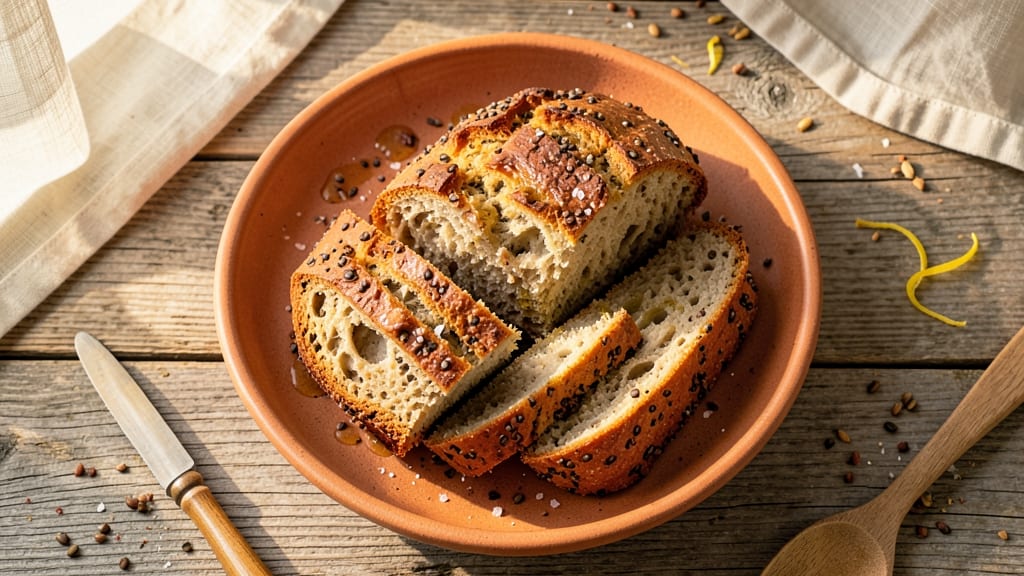
This 6-grain bread recipe delivers a hearty loaf packed with nutty depth and satisfying texture—perfect for sandwiches, toast, or serving alongside soups. The blend of whole grains creates a dense, flavorful crumb that stays fresh for days, making it ideal for meal prep.
I’ve perfected this recipe over years of baking, ensuring a foolproof method that yields a golden crust and tender interior every time.
The secret lies in balancing moisture and grain types—whole wheat, rye, barley, and more—to create a loaf that’s both nutritious and delicious. With a simple 5-ingredient dough and 30 minutes of prep, this recipe is beginner-friendly but delivers restaurant-quality results.
The slow fermentation process enhances flavor, while scoring the loaf before baking ensures a crispy crust.
By the time it emerges from the oven, you’ll have a loaf with a rich, earthy aroma and a satisfying crunch that gives way to a soft, chewy interior. The grains add a subtle sweetness and hearty texture, making every slice worth savoring.
Whether toasted with butter, paired with soup, or used for sandwiches, this bread elevates any meal.
For best results, let the dough rise overnight in the fridge for deeper flavor development. The recipe scales easily, so double the batch for sharing or meal prep. Here’s how to craft this hearty, whole-grain masterpiece—step by step.
Ingredients for 6 grain bread
Six whole grains blend with simple dough essentials for a loaf rich in texture and flavor.
| Ingredient | Amount | Notes |
|---|---|---|
| Whole Wheat Flour 🌾 | 2 cups | High-protein, unbleached preferred |
| Rye Flour 🌾 | 1 ½ cups | Dark rye for robust flavor |
| Barley Flour 🌾 | ½ cup | Ground from pearled barley |
| Spelt Flour 🌾 | ½ cup | For nutty undertones |
| Buckwheat Flour 🌾 | ½ cup | Rich, earthy character |
| Milk 🥛 | 1 ½ cups | Whole milk for richness |
| Active Dry Yeast 🍞 | 2 tsps | Fresh yeast for faster rise |
| Granulated Sugar 🍚 | 1 tbsp | Feeds yeast activation |
| Unsalted Butter 🧈 | ½ cup | Cold, cubed for dough |
| Sea Salt 🧂 | 1 ½ tsp | Fine grain preferred |
| Honey 🍯 | 1 tbsp | Wildflower for depth |
| Olive Oil 🫒 | 1 tbsp | Extra-virgin for flavor |
| Cornmeal 🌽 | ¼ cup | For bread pan coating |
The grain selection drives this recipe's character. Bob's Red Mill offers pre-ground flours for convenience, but grinding your own at a local grain mill ensures peak freshness. Look for whole wheat flour labeled 'high-protein'—it yields a better crumb structure. Rye flour should be dark, not light, for robust flavor development. For buckwheat, ensure it's 100% flour (not groats) to avoid gritty texture. Store flours in airtight containers away from heat sources—they oxidize quickly and lose flavor. The yeast is the workhorse here: always check the expiration date, and if using fresh yeast, make sure it's active by testing in warm water with sugar.
No rye flour? Substitute with extra whole wheat at the same ratio, though flavor will differ. Buckwheat flour unavailable? All-purpose flour works in a pinch, but you'll lose that distinctive earthy note. For the milk, unsweetened almond milk reduces fat but may yield a slightly drier crumb. The honey can be swapped for maple syrup at equal measure, though it adds subtle sweetness. If your kitchen lacks cornmeal, semolina or crushed graham crackers work equally well for dusting the pan. The butter is crucial for tenderness—vegan butter maintains texture if needed, though flavor will differ slightly. Always measure flours by weight if possible for consistency, though the cup measurements here work well for home baking.
This dough thrives on slow fermentation. For best results, shape the loaf and refrigerate overnight—24 hours develops maximum flavor complexity. Once baked, let the loaf cool completely on a wire rack before slicing to prevent gumminess. Wrap cooled loaves in beeswax wrap or foil and store at room temperature for 5-7 days. For longer storage, freeze sliced bread in airtight bags for up to 3 months. The crust stays crisp for 2 days when stored properly, but toaster or oven reheating revives it instantly. Double batches freeze beautifully—portion before freezing for convenient single-slice toasting.
Why You'll Love This Recipe
- No-Knead Magic: I swear by this—just mix, let it rise overnight, and bake. The rye and buckwheat do all the work while you sleep, so you’re not stuck in the kitchen for hours. (Yes, even on a Tuesday night.)
- Earthy, Nutty Crunch: That blend of barley and spelt? It’s got a deep, toasty flavor that’s way more interesting than your basic white bread. Honestly, I reach for this before any store-bought loaf.
- Meal Prep MVP: Slice it fresh, toast it later—this bread stays crisp for days. I keep a batch in the freezer for lazy mornings or last-minute sandwiches. No sad, soggy bread here.
- Budget-Friendly Staple: Whole grains are cheap, and this recipe stretches further than any artisanal loaf. I make two loaves for the price of one, and it’s still packed with fiber and protein. Win-win.
Step-by-step instructions for 6-Grain bread
Master the art of blending diverse flours for a loaf with complex flavor and satisfying texture.
Activate the Yeast with Warm Milk and Honey
In a small bowl, combine the 1.5 cups milk with the 1 tbsp granulated sugar and 1 tbsp honey. Warm this mixture in the microwave for 30 seconds until it reaches 105-110°F—it should feel pleasantly warm to the touch but not hot. Sprinkle the 2 tsps active dry yeast over the surface and let it sit for 5-10 minutes until frothy bubbles form across the top.
This activation step is critical for ensuring your yeast works efficiently. If no bubbles appear after 10 minutes, your yeast may be inactive—start fresh with a new packet. The warm temperature and honey provide the perfect environment for yeast to multiply, creating the foundation for a light, airy crumb.
Mix the Flour Blend and Hydrate the Dough
In a large mixing bowl, combine the 2 cups whole wheat flour, 1.5 cups rye flour, 0.5 cup barley flour, 0.5 cup spelt flour, and 0.5 cup buckwheat flour. Create a well in the center and pour in the yeast-milk mixture along with the 1 tbsp olive oil and 1.5 tsp sea salt. Using a wooden spoon or dough whisk, gradually incorporate the liquids into the dry ingredients until a shaggy dough forms.
The diversity of flours here creates a complex flavor profile, but it also makes the dough heavier than standard bread dough. Add the 0.5 cup cold cubed unsalted butter at this stage and work it in with your hands until the butter begins to soften and blend uniformly. This step ensures the butter distributes evenly, contributing to a tender crumb.
Knead the Dough Until Elastic
Turn the dough onto a lightly floured surface and knead vigorously for 8-10 minutes by hand, or use a stand mixer with a dough hook attachment on medium speed for 6-8 minutes. The dough should become smooth, elastic, and slightly tacky but not sticky. If it feels too dry, add 1 tsp milk at a time until it reaches the right consistency.
This kneading step develops gluten, which gives the bread its structure. The combination of flours makes the dough denser, so resist the urge to add extra flour—it will inhibit the rise. When the dough springs back slowly when poked, it's ready for the next step. Shape it into a round loaf and place it back in the bowl.
First Rise and Shaping
Lightly oil the surface of the dough and cover the bowl with a damp kitchen towel. Let it rise in a warm place for 1-1.5 hours, or until it has nearly doubled in size. The dough should feel light and airy when pressed gently with a finger.
Punch down the dough to release air, then transfer it to a lightly floured surface. Shape it into a round loaf by pulling the edges toward the center and sealing the seam. Place the loaf seam-side down in a 9x5-inch loaf pan that has been lightly coated with 0.25 cup cornmeal. This coating prevents sticking and adds a subtle crunch to the crust.
Second Rise and Baking
Cover the loaf pan with a damp towel and let the dough rise again for 45-60 minutes, or until it has risen about 1 inch above the rim of the pan. Preheat your oven to 375°F with a baking stone or inverted baking sheet on the middle rack.
Bake the loaf for 35-40 minutes, until the top is deep golden brown and sounds hollow when tapped on the bottom. If the top browns too quickly, tent the loaf with aluminum foil to prevent over-browning while ensuring the interior cooks through. The internal temperature should reach 190-195°F when measured with an instant-read thermometer.
Cool and Slice for Maximum Flavor
Remove the loaf from the pan and transfer it to a wire rack to cool completely for at least 1 hour. This resting period allows the bread to set and the flavors to fully develop. Slice with a serrated knife for clean cuts that reveal the hearty, nutty crumb.
The bread will keep well at room temperature for 3-4 days wrapped in a clean kitchen towel or stored in an airtight container. For longer storage, freeze slices wrapped in plastic wrap for up to 3 months. The combination of flours creates a dense yet satisfying texture with layers of flavor that improve with a few days of storage.
Pro Tips For Making 6 Grain Bread
- Sift the Buckwheat First: Buckwheat flour is dense and gritty—if you mix it in dry, it’ll clump like stubborn glue. Lightly sift it through a fine-mesh sieve before combining with the other flours. I learned this the hard way after kneading a dough that felt like sandpaper.
- Hydrate the Rye Separately: Rye flour absorbs water like a sponge and can turn your dough into a sticky mess. Mix it with just the water first, let it sit for 5 minutes, then fold it into the rest. This keeps the whole wheat and spelt from turning gummy too soon.
- Don’t Over-Knead the Barley: Barley flour develops gluten fast, but too much handling makes the dough tough. Stop when it’s just cohesive—about 8-10 minutes by hand or 4-5 minutes in a mixer. Overworked barley dough tastes like chewy cardboard, not bread.
- Steam the Loaf Early: Six-grain bread dries out fast, especially with rye and buckwheat. Place a metal bowl of boiling water in the oven when you bake, then slide the dough in. The steam locks in moisture for a softer crumb—no sad, crusty outsides hiding dry centers.
Wine and beer pairings for this 6 grain bread
Crisp Whites
This hearty bread pairs beautifully with crisp, dry white wines that cut through its rich, nutty flavors. A Sauvignon Blanc from New Zealand—like Cloudy Bay—offers bright citrus and herbal notes that refresh your palate after each bite.
The wine’s acidity balances the bread’s earthiness, making it ideal for sandwiches or charcuterie boards. 🍷
For a more aromatic option, try a German Riesling with off-dry sweetness, such as Dr. Loosen Blue Slate. The subtle fruitiness complements the bread’s honeyed undertones while adding a touch of complexity. Serve slightly chilled to enhance its crispness and let the flavors dance together.
Malty Beers
Beer lovers will adore pairing this bread with amber ales or brown ales, which share its malty, caramel-rich profile. A Belgian Dubbel like Westmalle Trappist 8 delivers deep, toasty notes that mirror the bread’s roasted grain flavors.
The beer’s slight sweetness enhances the bread’s nutty depth, creating a harmonious match. 🍺
For a lighter option, a honey wheat beer such as Allagash White with its citrus and spice notes provides a refreshing contrast. The effervescence cleanses the palate, allowing you to savor each bite of the bread’s complex texture.
Look for beers with low bitterness to avoid overpowering the bread’s delicate crust.
Rich Reds
If you prefer red wine, opt for a Pinot Noir with earthy, fruity undertones, like Oregon’s Domaine Serene. The wine’s bright acidity and red fruit flavors echo the bread’s nutty, slightly sweet character. This pairing works exceptionally well with soup pairings or as a standalone snack. 🍇
Avoid heavy, tannic reds like Cabernet Sauvignon—they can clash with the bread’s delicate crust and soft crumb. Instead, choose a light-bodied red with subtle spice notes to let the bread’s natural flavors shine. Serve the wine at 55-60°F to preserve its freshness and balance.
Nutrition facts
Frequently asked questions
Can I substitute any of the grains in this recipe?
Yes, but adjust for flavor and texture. For example, swap buckwheat flour with all-purpose flour (same amount) if unavailable, though you'll lose its earthy depth. Replace rye flour with extra whole wheat flour (1:1 ratio), but expect a milder taste. For a lighter loaf, reduce barley flour by half and add white whole wheat flour. Always measure by weight for consistency.
Why does my 6-grain dough feel too dense or sticky?
This happens when the grain blend absorbs more moisture than standard flour. If too sticky, knead longer or add 1 tsp flour at a time until smooth. For dense dough, ensure you kneaded for 8-10 minutes—the grains need thorough gluten development. The dough should feel elastic but slightly tacky. If still dry, add 1 tsp warm milk during kneading. Patience is key with whole grains!
How do I store this bread to keep it fresh longest?
Wrap the cooled loaf in a clean kitchen towel or beeswax wrap, then store at room temperature for 5-7 days. For longer storage, slice and freeze portions in airtight bags for up to 3 months. To revive stale slices, warm for 10-15 seconds in the microwave or toast until golden. The crust stays crisp for 2 days when stored properly.
Can I make this bread without a stand mixer?
This dough is perfect for hand-kneading. Work the dough on a lightly floured surface for 8-10 minutes, using the heel of your hand to push and fold. The dense grain blend requires more effort than all-purpose dough, but the result is worth it. For extra strength, use a dough scraper to help turn and fold the dough during kneading.
What's the best way to reheat sliced 6-grain bread?
For crispy crust: Toast slices in a toaster or 375°F oven for 5-7 minutes until golden. For soft warmth: Wrap slices in a damp paper towel and microwave for 10-15 seconds. For maximum flavor, try the "sandwich method"—place bread between two plates and heat in a 350°F oven for 5 minutes to restore texture without drying.