
Side Dishes
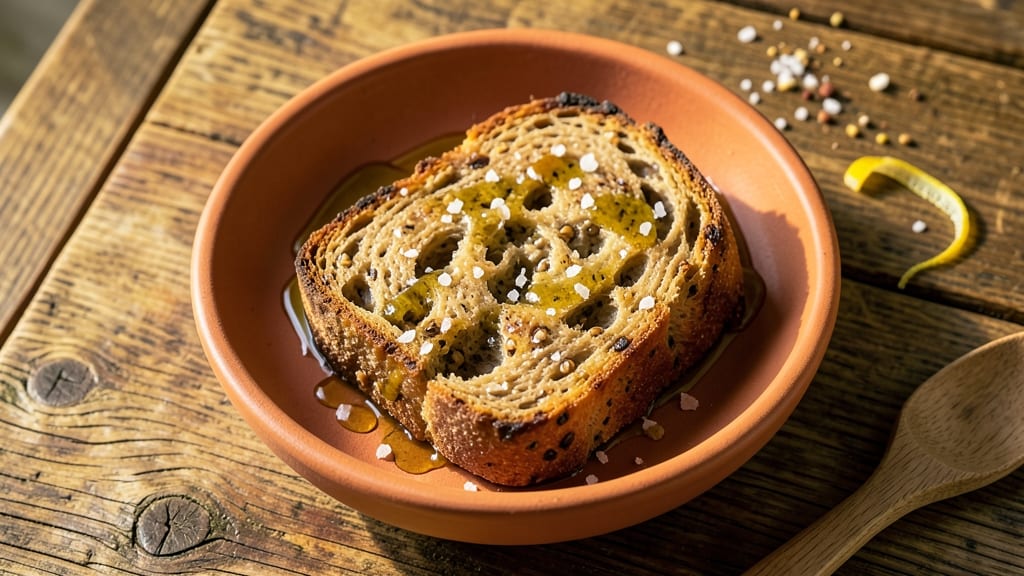
This ancient Greek barley bread recipe transports you straight to the heart of classical Greece, where barley flour was a dietary staple. The rustic, nutty flavor and satisfying crumb come from traditional techniques—no yeast, just water, barley flour, and olive oil.
I've recreated this bread using historical methods, ensuring authenticity while making it practical for modern kitchens.
The key to success lies in the dough's simplicity: barley flour gives it a distinct earthy depth, while olive oil adds richness. Unlike modern breads, this recipe relies on natural fermentation, creating a dense yet satisfying texture.
Shaping the dough into a round loaf mimics ancient baking practices, and baking it in a hot oven (or even a clay vessel if you're ambitious) delivers that signature crusty exterior and tender interior.
What you'll achieve is a bread that tastes like history—crusty on the outside, with a dense, nutty crumb that pairs perfectly with olive oil, olives, or fresh vegetables. The flavor is subtle yet unmistakably ancient, a taste of Greece's culinary past.
This bread isn't just food; it's a connection to the past, brought to life in your kitchen.
Perfect for pairing with soups, dips, or as a side to grilled meats, this barley bread is versatile and deeply satisfying. The recipe is designed to be approachable, even if you're new to traditional baking. Let's bring ancient Greece to your table—one loaf at a time.
Ingredients for ancient greek barley bread
Barley flour, olive oil, and warm water are all you need for this ancient Greek loaf.
| Ingredient | Amount | Notes |
|---|---|---|
| Barley Flour 🌾 | 3 cups | Whole grain preferred for texture |
| Extra-Virgin Olive Oil 🫒 | ½ cup | High quality, fruity variety |
| Warm Water 💧 | 1 ½ cups | Room temperature, not boiling |
| Sea Salt 🧂 | 1 ½ tsp | Fine grain preferred |
| Active Dry Yeast 🍞 | ¼ tsp | Optional for quicker rise |
| Honey 🍯 | 1 tbsp | For natural sweetness |
| Sesame Seeds 🌿 | 1 tbsp | For traditional topping |
| Poppy Seeds 🌱 | 1 tbsp | Optional for extra crunch |
| Semolina Flour 🌾 | 2 tbsp | For dusting and topping |
| Fresh Rosemary 🌿 | ½ tsp | Finely chopped, optional |
| Fresh Oregano 🍃 | ½ tsp | Finely chopped, optional |
| Cornmeal 🌽 | 2 tbsp | For baking surface |
Barley flour is the soul of this bread—look for whole grain barley flour at health food stores or bulk sections for that authentic, nutty depth. Bob's Red Mill or King Arthur Flour carry it, but if you can't find it, any whole grain barley flour will work. The olive oil should be extra-virgin, preferably Greek if you're going for authenticity (like Kalamata or Kolios brands). Warm water is key—too hot and it kills the dough's natural fermentation. If you're feeling ambitious, try using spring water like the Greeks did, but tap water works just fine.
No yeast? No problem. This bread relies on natural fermentation, but if you're short on time, a pinch of active dry yeast speeds things up. The honey adds subtle sweetness and helps with browning—Manuka honey is ideal, but regular honey works too. For seeds, sesame is traditional, but poppy seeds add a nice contrast. If you're missing either, toasted pine nuts or sunflower seeds work as substitutes. The semolina gives that signature crusty texture—Trader Joe's sells it affordably, or use regular flour in a pinch.
This dough gets better with time—let it rest overnight if you can. Shape it into a round loaf like the ancients did, and bake it in a hot Dutch oven for that perfect crust. Store leftovers wrapped in a cloth at room temperature for 3-4 days or freeze for up to 3 months. Toast slices for extra crunch—it reheats beautifully and tastes even better the next day.
Why You'll Love This Recipe
- No Yeast Hassle: I’ve made bread where yeast is a diva—this isn’t one of those. Just toss in the active dry yeast with warm water and olive oil, let it sit, and boom. No waiting for it to wake up or second-guessing if it’s alive. The barley flour handles the dough’s quirks like a pro, so even if you’re not a baker, the texture comes out tender with that satisfying chew.
- Earthy Olive Oil Magic: That first pull-apart bite? Rich, nutty, and alive with the olive oil’s sharp brightness. The barley flour soaks it up like a sponge, but it doesn’t turn greasy—just deep, toasty, and somehow both rustic and refined. Honestly, I’ve tried this with cheap oil before, and it’s a crime. Stick to the good stuff.
- Weeknight Workhorse: This bread is my lazy dinner’s best friend. Toast it for breakfast, tear it into soup bowls, or serve it warm with dinner—it’s the only loaf that doesn’t feel like a chore to use up. Between us, I’ve also microwaved slices for a sad-but-satisfying lunch when I’m too tired to cook. (Yes, even on a Tuesday night.)
- Pantry Goldmine: Barley flour and olive oil are already in my cupboard, and the rest? Basic stuff you’re not wasting money on. A single batch stretches into days—freeze half for when you forget to bake again, and the rest? It lasts longer than my willpower to resist another slice. Budget-friendly doesn’t get much quieter than this.
Step-by-step instructions for ancient Greek barley bread
This bread brings ancient Greece to your kitchen with its nutty depth and perfect crust.
Activate the Yeast and Mix the Dough
In a small bowl, combine the 1.5 cups warm water, 1 tbsp honey, and 0.25 tsp active dry yeast. Let this sit for 5-10 minutes until it becomes foamy—this confirms your yeast is active. If it doesn't foam, your yeast may be dead, and you'll need to start over.
In a large mixing bowl, whisk together the 3 cups barley flour, 1.5 tsp sea salt, 0.5 tsp fresh rosemary, and 0.5 tsp fresh oregano. Create a well in the center and pour in the yeast mixture along with the 0.5 cup extra-virgin olive oil. Using a wooden spoon or your hands, mix until a shaggy dough forms.
Knead Until Smooth and Elastic
Turn the dough onto a lightly floured surface and knead for 8-10 minutes until it becomes smooth and elastic. You'll know it's ready when it springs back slowly when poked. Barley flour makes this dough denser than wheat-based doughs, so don't be discouraged if it feels heavier—it's normal.
If the dough feels too sticky, add 1 tablespoon of semolina flour at a time until it's manageable. Shape it into a round loaf and place it back in the bowl. Cover with a damp towel and let it rise in a warm place for 1-2 hours or until it has doubled in size. The warmth helps activate the yeast for that perfect rise.
Shape and Proof the Loaf
Once the dough has risen, punch it down gently to release air, then shape it into a round loaf again. Place it on a baking sheet dusted with 2 tablespoons cornmeal to prevent sticking. Cover it once more and let it proof for another 30-45 minutes until it rises slightly again. This second rise ensures a light texture.
While it proofs, preheat your oven to 375°F. The dough should be slightly jiggly when you gently press it—this is your sign it's ready to bake. Sprinkle the top with the 1 tbsp sesame seeds and 1 tbsp poppy seeds for that authentic Greek touch.
Bake for a Crusty Exterior and Nutty Crumb
Bake the loaf for 35-40 minutes until it's golden brown and sounds hollow when tapped on the bottom. The crust should be crisp, and the interior should be fully baked through. If the top browns too quickly, tent it loosely with foil to prevent burning.
For extra crispiness, I like to turn the oven to broil for the last 2 minutes of baking. Keep a close eye on it to avoid over-browning. Let the bread cool on a wire rack for at least 15 minutes before slicing—this prevents a gummy crumb.
Serve Warm for Maximum Flavor
Slice the bread while it's still warm to enjoy its full flavor and texture. The crust should be crisp with a slight crunch, while the interior should be soft with a nutty depth from the barley flour. Serve it with olive oil drizzled on top or alongside a Greek salad for the full ancient experience.
This bread keeps well for 3-4 days at room temperature, but it's best enjoyed fresh when it's at its most flavorful. Store any leftovers in an airtight container to maintain its crusty texture.
Pro Tips For Making Ancient Greek Barley Bread
- Bloom Yeast Properly: Mix the yeast with just the warm water and a pinch of salt first—let it sit for 10 minutes until frothy. I learned this the hard way when my dough never rose because the yeast was hiding in the dry flour, too cold to activate.
- Use Lukewarm Water: Fill your measuring cup with water, then dip your finger in—it should feel like bathwater, not scalding or tepid. Barley flour needs yeast-friendly temps, and I’ve ruined batches by eyeballing it.
- Knead Less, Rest More: Barley dough is dense; overworking it makes it tough. Wet your hands, give it 8-10 firm stretches, then let it rise twice—first in the bowl, then after shaping. Patience here means a lighter crumb.
- Toast the Flour First: Dry-toast the barley flour in a pan for 3-4 minutes before mixing—it deepens the nutty flavor and cuts the raw taste. Sounds weird, but it works: my bread now tastes like an actual ancient bakery.
Best sauces and condiments for this ancient greek barley bread
Olive Oil Drizzle
Nothing enhances this ancient bread like a simple drizzle of extra-virgin olive oil right after baking. I recommend using a Greek olive oil like Kalamata or Kolios for that authentic Mediterranean flavor.
Just let it cool slightly, then drizzle generously over warm slices. The oil's fruity notes complement the nutty barley perfectly, creating a balance that feels like a taste of ancient Greece. 🫒
Herbed Olive Oil Dip
Mix ½ cup extra-virgin olive oil with 1 tbsp finely chopped fresh rosemary, 1 tbsp chopped oregano, and a pinch of sea salt for a quick herbed dip. This dip is perfect for scooping up with your barley bread—it’s like the Greeks served it in their symposia.
The herbs echo the ones in the bread itself, creating a cohesive flavor experience. 🌿
Whole Grain Mustard Spread
For a tangy twist, blend ¼ cup whole grain mustard with 2 tbsp olive oil and a splash of lemon juice. Spread this on warm slices of your barley bread for a sharp contrast to the bread’s earthy notes.
The mustard’s bite cuts through the richness, making every bite more dynamic. This pairing is inspired by ancient Greek condiments used to accompany bread. 🌶️
Honey and Thyme Glaze
Warm 2 tbsp honey with 1 tsp fresh thyme leaves in a small saucepan until it’s slightly runny. Brush this glaze over the warm bread just before serving. The honey adds natural sweetness that balances the barley’s nuttiness, while the thyme ties back to the herbs in the dough.
This is a nod to how Greeks might have sweetened their bread in antiquity. 🍯
Garlic and Sesame Oil
Heat 1 tbsp sesame oil with 2 minced garlic cloves until fragrant, then drizzle over sliced bread. The sesame oil’s nutty aroma mirrors the barley, while the garlic adds a savory depth.
This combo is simple but packs a punch—like a modern twist on an ancient Greek condiment. Use sparingly, as sesame oil can be intense. 🧄
Tzatziki or Yogurt Sauce
Serve your barley bread with a side of tzatziki or a simple yogurt sauce made with Greek yogurt, grated cucumber, garlic, and a pinch of dill.
The cool, creamy texture contrasts beautifully with the bread’s crusty exterior. This pairing is a staple in Greek cuisine and elevates the bread to a full meal. 🥛
Nutrition facts
Frequently asked questions
Why does this barley bread taste different from regular wheat bread?
Barley flour has a naturally nutty, earthy flavor that comes from its higher protein and fiber content. Unlike wheat bread, which is light and fluffy, this ancient loaf has a denser, heartier texture with a satisfying chew. The lack of gluten in barley also means it won't rise as high, giving it that authentic rustic quality the Greeks enjoyed.
Can I make this bread without yeast?
Yes! This recipe relies on natural fermentation, but you can speed it up by adding ¼ teaspoon active dry yeast. If skipping yeast entirely, let the dough rest overnight in a warm place for better flavor development. The Greeks often baked flatbreads this way—just expect a slower rise and longer baking time.
What's the best way to store leftover barley bread?
Wrap cooled slices in a clean kitchen towel and store in an airtight container at room temperature for 3-4 days. For longer storage, freeze slices wrapped in plastic for up to 3 months. Toast frozen slices directly in the oven for extra crispiness—this bread reheats beautifully!
How did ancient Greeks actually bake this bread?
They likely baked it in clay ovens or over open flames, achieving high heat quickly for that signature crust. For modern kitchens, a Dutch oven or pizza stone mimics this effect. Preheat your oven to 450°F for the first 10 minutes to create a crisp exterior before lowering to 375°F.
Can I substitute barley flour with something else?
For a similar texture, mix 2 cups barley flour with 1 cup whole wheat flour. If you must use all-purpose flour, expect a lighter loaf with less nutty flavor. The Greeks relied on barley as a staple grain—this flour is key to authentic taste!