
Side Dishes
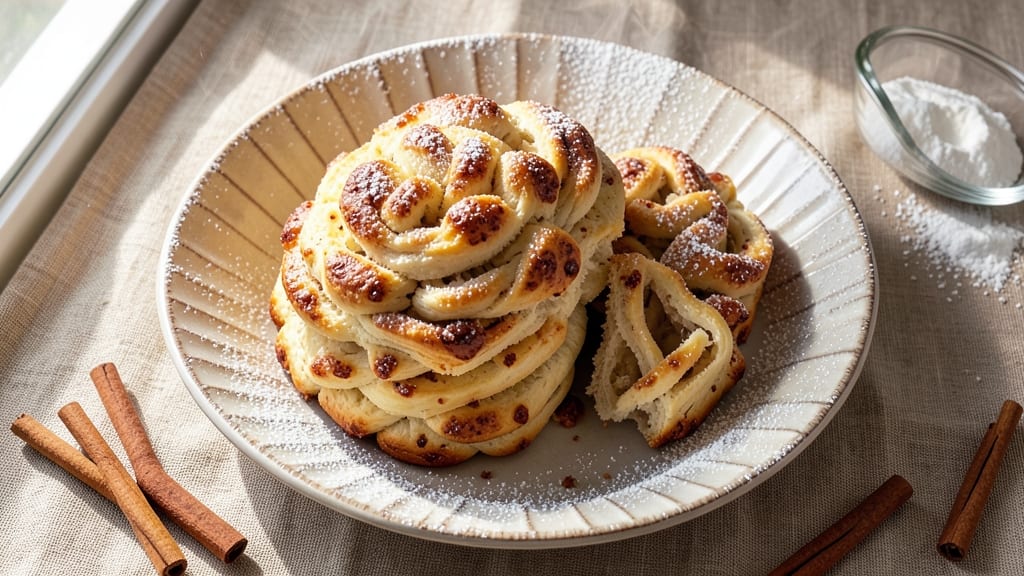
This 5-star monkey bread recipe delivers the ultimate comfort food experience with its signature buttery swirls and perfectly crispy crown. The secret lies in using flaky biscuit dough layered with rich butter, then coated in a sweet cinnamon sugar mixture that caramelizes beautifully in the oven.
I've perfected this Southern classic over years of baking—it's become a staple at my breakfast table and holiday gatherings alike.
The magic happens when you cut the dough into triangles, layer them with butter, and fold them into a round shape before baking. This creates those irresistible buttery pockets that melt in your mouth while the exterior develops a golden, crispy crown.
The cinnamon sugar coating adds just the right amount of sweetness to balance the richness, making every bite unforgettable.
What makes this recipe truly special is how versatile it is—serve it warm with a cup of coffee for a cozy breakfast, alongside ice cream for a decadent dessert, or as a showstopper at your next brunch.
The aroma alone will have everyone gathering around, and the first bite delivers that perfect combination of crispy, buttery, and sweet that defines this beloved Southern treat.
With just a few simple ingredients and a straightforward process, you'll have a restaurant-quality monkey bread that's sure to impress. The key is patience during the baking process to achieve that perfect golden-brown finish. Let's get started on creating this crowd-pleasing classic!
Ingredients for 5 star monkey bread
Buttery layers, crispy crown, and cinnamon-sugar magic—just 11 ingredients for showstopping monkey bread.
| Ingredient | Amount | Notes |
|---|---|---|
| All-Purpose Flour 🌾 | 4 cups | Spooned and leveled for accuracy |
| Unsalted Butter 🧈 | 1 cup | Cold and cubed for flaky layers |
| Granulated Sugar 🍚 | ¼ cup | For dough sweetness |
| Active Dry Yeast 🍞 | 2 ¼ tsp | One packet for convenience |
| Large Eggs 🥚 | 1 whole | Room temperature for best mixing |
| Whole Milk 🥛 | ½ cup | Warm to help yeast activate |
| Salt 🧂 | 1 tsp | Kosher or sea salt preferred |
| Cinnamon 🌿 | ½ cup | Ground for even coating |
| Granulated Sugar 🍚 | 1 cup | For sweet cinnamon coating |
| Melted Butter 🧈 | ¼ cup | Cooling slightly before brushing |
| Vanilla Extract 🌸 | 1 tsp | Pure vanilla for authentic flavor |
The butter is non-negotiable here—European-style unsalted butter gives the flakiest layers, but any good brand works. Trader Joe's or Land O'Lakes are my go-tos for reliability. The yeast? Fresh is best—check the expiration date, and if it's past its prime, your dough won't rise right. For the cinnamon coating, McCormick or Badia ground cinnamon delivers consistent flavor. Pro tip: keep your butter cold when cutting it into the dough—warm butter makes the layers tough instead of flaky.
No vanilla extract? Vanilla bean paste works in a pinch, or even a dash of vanilla sugar if you're desperate. Short on butter for the coating? Melted coconut oil gives a similar shine, though it won't be quite as rich. The dough can handle a 1-inch thick fold for the classic look, but if you're short on time, a half-inch fold still works—just watch the bake time. And if your kitchen is hot, chill the dough 30 minutes before baking to prevent spreading.
This keeps beautifully—3 days at room temperature wrapped in foil, or 1 week refrigerated in an airtight container. For longer storage, freeze the baked loaf for up to 3 months. The best part? It reheats like a dream—10 minutes at 300°F brings back that crispy crown. I always slice mine 1 hour after baking when it's fully cooled—hot monkey bread is delicious, but warm slices are the real star.
Why You'll Love This Recipe
- No Yeast Fuss: I’ll be real—this dough only needs a warm bowl and 10 minutes to proof. No fancy kneading, no waiting hours; just toss in the yeast, let it bubble, and move on. That buttery dough? Ready in half the time my usual rolls take.
- Buttery-Sweet Magic: The secret’s in the layers—soft, pillowy dough wrapped in melted butter until it’s crispy and golden. That caramelized sugar crust? It’s like a cross between cinnamon rolls and a scone, but better because it’s all in one bite.
- Breakfast or Dessert: Honestly, I make this for both—drizzle with honey for breakfast or dust with powdered sugar for a quick dessert. It’s the kind of thing that works anytime, whether it’s a lazy Sunday morning or a last-minute dinner when you forgot to plan.
- Budget-Friendly Crowd-Pleaser: Five dollars’ worth of ingredients feeds six people. The leftovers? Toast them the next day—crunchy edges, gooey inside, no one complains. My college roommates called it “poor man’s bakery,” but they were wrong—it’s just smart cooking.
Step-by-step instructions for buttery swirls and crispy crown in one bake
Here's how to create that perfect golden crust and gooey cinnamon center everyone loves.
Mix the Yeast Dough for Maximum Rise
In a large mixing bowl, combine the 4 cups all-purpose flour, 1 tsp salt, and 2.25 tsp active dry yeast. Make a well in the center and add the 1 whole large egg, 0.5 cup warm whole milk, 0.25 cup granulated sugar, and 1 tsp vanilla extract. I like to use a wooden spoon first to break up the dry ingredients before switching to a stand mixer fitted with the dough hook attachment.
Mix on low speed for 2 minutes until the dough begins to come together, then increase to medium speed for another 5-6 minutes until the dough pulls away from the sides of the bowl and forms a smooth, elastic ball. The dough should be slightly tacky but not sticky—if it's too wet, add 1 tablespoon more flour at a time until it reaches the right consistency. This initial mix creates the foundation for that perfect rise and texture.
Knead and Shape for Perfect Texture
Turn the dough onto a lightly floured surface and knead it for 5-7 minutes until smooth and elastic. I press down firmly with the heels of my hands and fold the dough over itself, rotating it as I go. This develops the gluten, which gives the monkey bread its signature tender yet slightly chewy texture. The dough should be soft but not sticky—if it sticks, add just a bit more flour.
Once kneaded, shape the dough into a 12-inch circle about 1 inch thick. Place it on a parchment-lined baking sheet and cover it with a clean kitchen towel. Let it rise in a warm place for 1 hour, or until it has nearly doubled in size. I like to place my oven on its lowest setting with a bowl of hot water inside to create a warm, humid environment that encourages even rising. The dough should spring back slowly when pressed gently with a finger.
Create the Signature Cinnamon Swirls
After the dough has risen, roll it out again into a 12-inch circle on a lightly floured surface. In a small bowl, mix together the 0.5 cup cinnamon and 1 cup granulated sugar. Using a pastry brush, spread the 0.25 cup melted butter evenly over the entire surface of the dough. Then, sprinkle the cinnamon-sugar mixture evenly over the butter, making sure to cover every inch.
Starting from one edge, carefully roll the dough into a tight log, sealing the edge as you go. The cinnamon-sugar mixture should be completely enclosed within the dough. Place the log seam-side down on the same parchment-lined baking sheet and cover it again with the kitchen towel. Let it rise for another 30-45 minutes until it has puffed up slightly. This second rise ensures the cinnamon filling stays gooey and the bread maintains its height.
Cut and Bake for a Crispy Crown
Preheat your oven to 375°F. Using a sharp chef's knife, cut the log into 12 equal slices, about 1 inch thick each. Arrange the slices in a circular pattern on the same baking sheet, slightly overlapping them so they form a wreath shape. This arrangement creates that iconic "crown" look and ensures even browning.
Bake for 20-25 minutes until the monkey bread is deep golden brown and the edges are crispy. The center should still look slightly soft—this is where the magic happens. The cinnamon filling will be gooey and warm, while the exterior becomes perfectly crisp. If the top browns too quickly, tent it loosely with aluminum foil for the last 5-10 minutes of baking to prevent over-browning.
Cool and Serve for Maximum Enjoyment
Remove the monkey bread from the oven and let it cool on the baking sheet for 10 minutes. This brief rest allows the filling to set slightly, making it easier to serve without losing any of that delicious cinnamon butter. Once cooled, transfer it to a wire rack to finish cooling completely. The contrast between the crispy exterior and the warm, gooey center is what makes this recipe a showstopper.
Serve warm with a dusting of additional cinnamon-sugar mixture or a scoop of vanilla ice cream for the ultimate indulgence. The bread should be soft and pillowy inside with a crisp, caramelized crust that shatters slightly when you bite into it. Each slice delivers that perfect balance of sweet, spiced cinnamon and buttery richness—just like a five-star bakery!
Pro Tips For Making 5 Star Monkey Bread
- SOFTEN THE BUTTER FIRST: Cold butter makes tough, greasy layers—this isn’t a biscuit. Cut the butter into tiny cubes and let it sit at room temp for 20-30 minutes until it’s pliable but not melted. I used to skip this, and my monkey bread turned out like a sad, greasy brick. Trust me, the flaky, buttery layers are worth the wait.
- WEIGH YOUR FLOUR: Scooping flour from the bag packs in air, and your dough will end up dry and crumbly. Use a kitchen scale for precision—1 cup of all-purpose flour is about 120 grams. I learned this the hard way after my first batch collapsed into a dense mess. A little extra effort here keeps the texture light and airy.
- DON’T OVERMIX THE DOUGH: Once you add the yeast and eggs, mix just until combined—stop when the dough clumps together. Overworking it develops gluten, and your monkey bread will turn out tough instead of tender. I’ve seen people punch and fold like they’re kneading bread, and it’s a crime against this recipe.
- BAKE UNTIL GOLDEN, NOT JUST SET: Pull it out when the top is deep golden brown, not when it looks done. The edges should be caramelized, and the center should spring back slowly when pressed. I’ve rushed this step before, and the bread stayed pale and starchy. Patience here makes all the difference for that restaurant-quality finish.
Regional styles of this recipe
Southern Comfort Classic
This recipe originated in the American South, where it became a beloved breakfast staple and holiday treat. The name "monkey bread" comes from its shape resembling a monkey's face when sliced, though the origins of the name are debated.
In Southern kitchens, it's traditionally baked in a cast-iron skillet with a buttery, cinnamon-sugar coating that creates that signature crispy crown. 🌟
My grandmother used to make this every Christmas morning, serving it warm with strong black coffee. The key to her version was always using the coldest butter possible for those perfect flaky layers.
She'd say, "Butter's the secret ingredient—never cut corners there!" This Southern tradition has evolved into countless regional variations, but the core technique remains the same.
Midwest Sweet Twist
The Midwest puts its own spin on monkey bread by adding a layer of cream cheese or maple syrup to the cinnamon-sugar mixture. In Wisconsin and Minnesota, you'll often find versions with a brown sugar crust instead of white sugar, giving it a deeper caramel flavor.
Some bakers even add chopped pecans or walnuts for texture. This regional adaptation keeps the buttery base but adds a nutty, maple-forward sweetness that's perfect with morning coffee.
I tried a Midwest-style version once with ½ cup brown sugar in the coating and ¼ cup chopped pecans mixed into the dough. The result was a richer, more complex flavor that held up beautifully for days.
The pecans added a satisfying crunch that balanced the soft, gooey center. This variation is especially popular during fall harvest festivals.
Modern Fusion Takes
Chefs today are putting creative twists on this classic dessert. You'll find versions with chocolate hazelnut spread instead of butter, or even a matcha powder infusion in the dough for an Asian-inspired twist.
Some bakers are experimenting with gluten-free flour blends to make it accessible to more people while maintaining that signature texture. The key to these modern adaptations is keeping the buttery layers intact while adding unexpected flavor combinations.
One of my favorite modern takes uses almond butter instead of regular butter in the filling, paired with a coating of cinnamon and turbinado sugar for a crunchy texture. The almond butter adds a nutty depth that complements the cinnamon beautifully.
This fusion version works equally well as a breakfast treat or dessert, proving how versatile this classic recipe can be when you're willing to experiment.
Breakfast vs Dessert
While monkey bread is often served for breakfast with coffee, its rich sweetness makes it an excellent dessert too. In the South, it's common to serve it warm with vanilla ice cream or whipped cream during summer gatherings.
The contrast between the warm, gooey center and cold ice cream creates an unforgettable combination. For a lighter dessert version, some bakers reduce the sugar slightly and add fresh fruit like strawberries or blueberries to the cinnamon coating.
My personal favorite way to serve it as dessert is with a scoop of homemade vanilla bean ice cream and a drizzle of caramel sauce. The warm bread melts the ice cream slightly, creating a decadent, creamy experience.
This dessert-style presentation elevates the humble monkey bread to something truly special for any occasion.
Nutrition facts
Frequently asked questions
Why does my monkey bread turn out dense instead of fluffy?
The most common reason is over-kneading the dough or using warm butter. The butter should be cold and cubed when cutting it into the dough—this creates those signature flaky layers. Also, knead just until smooth (5-7 minutes) and avoid adding too much flour, which can make the texture tough.
Can I make monkey bread without yeast?
Yes! Use a 1:1 baking powder substitution (about 2 tsp total) for the yeast. Mix it directly with the flour and follow the same shaping and baking instructions. The texture will be slightly denser but still delicious—perfect for those who want a quicker version without yeast rising time.
How do I prevent the cinnamon sugar from leaking out?
Seal the edges tightly when rolling the log and press the slices together firmly when arranging them in a circle. For extra security, chill the assembled bread for 15 minutes before baking. This helps the dough hold its shape and keeps the filling contained until it melts perfectly in the oven.
What's the best way to reheat leftover monkey bread?
Wrap individual slices in foil and warm at 300°F for 10-12 minutes until crispy again. For a quick fix, pop them in the toaster oven for 3-4 minutes—this restores that perfect golden crust without drying out the center.
Can I make this gluten-free?
Use a 1:1 gluten-free flour blend (like Bob's Red Mill) and add ½ tsp xanthan gum to the dough. The texture will be slightly different but still delicious. Let the dough rest 10 minutes after mixing to help the blend hydrate properly before shaping.