
Desserts
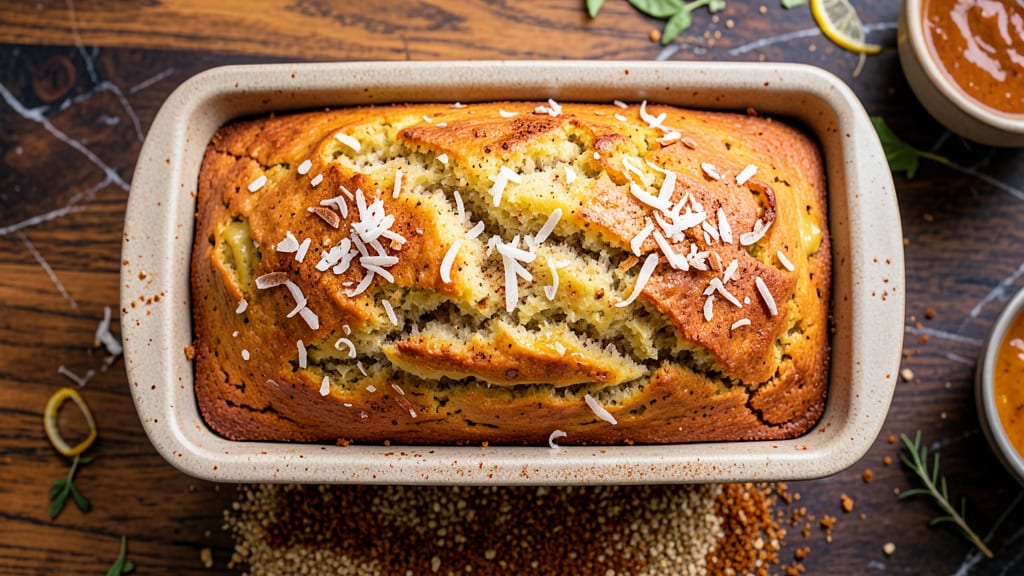
This Ayurvedic banana bread recipe transforms overripe bananas into a nutrient-packed, spice-infused loaf that aligns with ancient wellness principles. The secret lies in balancing warming spices like cinnamon and cardamom with cooling coconut oil and jaggery, creating a moist, fragrant bread that supports digestion and energy.
I developed this version after years of experimenting with traditional Ayurvedic baking techniques—no refined sugar or artificial ingredients here, just wholesome goodness.
The foundation starts with whole wheat flour and mashed bananas for natural sweetness, while ghee or coconut oil adds richness without heaviness. Turmeric and ginger boost circulation, and a touch of black salt (kala namak) enhances mineral content.
Unlike conventional banana bread, this recipe focuses on moisture that lasts for days, thanks to a unique soaking method for the flour and a precise baking technique that ensures a tender crumb.
What makes this Ayurvedic banana bread special is its adaptability—gluten-free, vegan, or nut-free options are all possible with simple swaps. The aroma alone will fill your kitchen with warmth, while each bite delivers balanced flavors and digestive benefits.
Whether you're baking for wellness or craving a comforting treat, this recipe delivers restaurant-quality results at home.
Perfect for breakfast, snacks, or gifting, this loaf stays fresh for up to 5 days when stored properly. Pair it with herbal tea or a dollop of coconut yogurt for the ultimate Ayurvedic-inspired meal. Let's get baking!
Ingredients for ayurvedic banana bread
Whole wheat flour meets warming spices and tropical sweetness in this Ayurvedic-inspired loaf.
| Ingredient | Amount | Notes |
|---|---|---|
| Overripe Bananas 🍌 | 2 cups | Mashed, no brown spots |
| Whole Wheat Flour 🌾 | 2 ½ cups | Unbleached, sifted preferred |
| Unsweetened Coconut Flakes 🥥 | ½ cup | Shredded, for moisture |
| Organic Jaggery 🍯 | ¾ cup | Granulated, natural sweetener |
| Extra-Virgin Coconut Oil 🫒 | ½ cup | Melted, not refined |
| Ground Cinnamon 🌿 | 2 tbsp | Ceylon preferred for purity |
| Ground Cardamom 🌿 | 1 ½ tsp | Freshly ground for aroma |
| Fresh Turmeric 🧄 | 1 tsp | Grated, vibrant color |
| Fresh Ginger 🌿 | 1 tbsp | Grated, no stems |
| Black Salt (Kala Namak) 🧂 | ½ tsp | For sulfuric mineral boost |
| Baking Soda 🧂 | 1 tsp | Aluminum-free preferred |
| Pure Vanilla Extract 🌸 | 1 tsp | Alcohol-free if preferred |
| Warm Water 💧 | ½ cup | Room temperature |
| Unsweetened Almond Milk 🥛 | ¼ cup | For moisture balance |
The foundation starts with overripe bananas—their natural sweetness eliminates added sugar while boosting potassium. Look for bananas with brown speckles on the peel, not blackened. Whole Foods or Trader Joe's often have organic varieties perfect for this. The whole wheat flour should be freshly milled if possible, as pre-milled flour loses nutrients quickly. For the jaggery, Indian grocery stores carry authentic varieties like Bengal jaggery, which has a complex caramelized flavor. If unavailable, unrefined cane sugar works in a pinch, though it lacks the mineral content of jaggery.
No coconut oil? Melted ghee adds richness without dairy, though it's not vegan. Substitute avocado oil for a neutral flavor, but reduce to 0.4 cup to prevent heaviness. The spices are non-negotiable—cardamom must be freshly ground for maximum aroma, and Ceylon cinnamon (not cassia) avoids coumarin concerns. For black salt (kala namak), Indian markets or Amazon are best sources—it's essential for that signature Ayurvedic mineral kick. The baking soda should be aluminum-free to avoid metallic aftertaste, and Bob's Red Mill brand is a reliable choice.
This loaf stays moist for 5 days when wrapped tightly in beeswax wrap or foil. For longer storage, freeze slices in a single layer on a tray before transferring to a bag—prevents freezer burn. The coconut flakes can be toasted separately for added crunch if desired. Pair with chai tea or golden milk for an authentic Ayurvedic experience. Leftovers reheat beautifully in a 200°F oven for 10 minutes to restore moisture.
Why You'll Love This Recipe
- No Waste, All Flavor: I swear by this trick—mash those brown bananas instead of tossing them. The deeper sweetness from overripe fruit means you can cut back on jaggery, and the whole wheat flour keeps it hearty without tasting dry. (Yes, even my banana-hating husband asks for seconds.)
- Coconut Crunch Magic: That toasted coconut flake topping isn’t just pretty—it’s ridiculously good. The jaggery caramelizes into little pockets of sweetness while the coconut oil keeps the bread moist without being greasy. Honestly? It’s the kind of texture that makes you slow down and take another bite.
- Breakfast or Snack Hero: I keep a loaf wrapped in the fridge for days—slice it warm with a smear of almond butter for breakfast, or pack it cold for lunch. The nutty jaggery and coconut combo even holds up when reheated, so it’s my go-to when I’m too tired to cook.
- Budget-Friendly Staples: Whole wheat flour and overripe bananas? Those are pantry lifesavers. Jaggery’s cheaper than sugar and lasts forever, and coconut oil’s a one-buy-for-many-usages wonder. Between us, this recipe’s my secret weapon when grocery money’s tight—but it still tastes like a treat.
Step-by-step instructions for Ayurvedic banana bread
This method delivers a dense, moist loaf with balanced sweetness and warming spices.
Mash the Overripe Bananas Thoroughly
Begin by peeling and mashing the 2 cups of overripe bananas in a medium bowl. I use a potato masher here—it creates just the right texture without incorporating excess air. You want the mash to be completely smooth with no visible lumps, as this ensures even distribution of moisture throughout the bread.
Here's the thing—overripe bananas with brown spots work best because they contain more natural sugars that caramelize beautifully during baking. If your bananas are too firm, let them sit at room temperature for 10 minutes to soften slightly before mashing. Set the mashed bananas aside while you prepare the other ingredients.
Combine Wet Ingredients and Infuse with Warm Spices
In a separate large bowl, melt the 0.5 cup of extra-virgin coconut oil over low heat until completely liquid, then let it cool for 5 minutes. Add the melted coconut oil to the mashed bananas along with the 0.75 cup of organic jaggery, 0.5 cup of warm water, and 0.25 cup of unsweetened almond milk. Stir until the jaggery is fully dissolved and the mixture is smooth.
Now add the fresh ingredients: the grated 1 tsp of turmeric, 1 tbsp of fresh ginger, and 0.5 tsp of black salt (kala namak). The turmeric will give the bread its characteristic golden hue, while the ginger and kala namak add depth and a subtle sulfuric note that balances the sweetness. Mix well and let the spices infuse for 2 minutes—they'll release their aromatic oils during this time.
Blend Dry Ingredients and Fold Gently
In a separate bowl, whisk together the 2.5 cups of whole wheat flour, 2 tbsp of ground cinnamon, 1.5 tsp of ground cardamom, 1 tsp of baking soda, and 0.5 cup of unsweetened coconut flakes. Sift the flour mixture once to aerate it slightly—this helps create a lighter texture in the finished bread. The coconut flakes will add moisture and a delightful texture contrast.
Make a well in the center of the dry ingredients and pour in the wet banana mixture. Using a spatula, gently fold everything together until just combined. Avoid overmixing—you should still see some flour streaks. The goal is to create a thick, cohesive batter that holds its shape when dropped from a spoon. If the batter seems too stiff, add 1 tablespoon of warm water at a time until it reaches a smooth consistency.
Bake Until Golden and Springy
Preheat your oven to 350°F and grease an 8x4-inch loaf pan thoroughly with coconut oil. Pour the batter into the prepared pan and smooth the top with a spatula. The batter will fill about 2/3 of the pan—this ensures a dense, moist loaf rather than a tall, dry one.
Bake for 45-50 minutes, or until a toothpick inserted into the center comes out clean and the top is golden brown. I like to tent the pan loosely with foil after 30 minutes to prevent over-browning while still allowing steam to escape. The bread is done when it springs back slightly when pressed gently in the center—this indicates proper doneness.
Rest and Serve for Maximum Moisture
Remove the bread from the oven and let it cool in the pan for 10 minutes. Then transfer it to a wire rack to cool completely. This resting period allows the moisture to redistribute, resulting in a perfectly tender crumb. I know it's tempting to slice immediately, but resisting this urge makes all the difference in texture.
Once fully cooled, slice with a serrated knife for clean cuts. The interior should be dense yet moist, with visible flecks of coconut and a subtle marbled effect from the spices. Serve warm with a pat of coconut oil or a sprinkle of cinnamon for an authentic Ayurvedic touch. This bread keeps well at room temperature for 2 days or can be refrigerated for up to 5 days—just reheat slices in a toaster or oven to restore moisture.
Pro Tips For Making Ayurvedic Banana Bread
- Mash Bananas Until Smooth: I learned this the hard way—lumpy banana puree makes for a dense, uneven crumb. Use a fork first to break them down, then blend with a hand mixer for 30 seconds until it’s silky. Whole wheat flour needs that smooth texture to avoid a gritty texture, especially when paired with jaggery’s natural graininess.
- Preheat Pan 10 Minutes: Sounds odd, but trust me—this banana bread recipe relies on coconut oil, which melts fast. A properly heated pan (around 350°F/175°C) ensures the bread rises evenly and doesn’t sink in the middle. I used to skip this, and my loaves always came out with a sunken top.
- Toast Coconut Flakes First: Skip the raw flakes—they’ll soak up moisture and turn mushy. Toast ¼ cup of unsweetened coconut flakes in a dry pan over medium heat for 3–4 minutes until golden. Sprinkle them over the batter last, or fold in gently so they stay crisp. (Yes, even if you’re impatient like me.)
- Weigh Jaggery Accurately: Jaggery’s density varies wildly—packed cups mean uneven sweetness. Use a kitchen scale for ½ cup (100g) and tap the measuring cup firmly to settle it. Too little, and the bread tastes bland; too much, and it’ll crystallize. My grandmother swore by this, and she was right: precision matters with jaggery.
Flavor customization for these flavors
Sweet Variations
Swap jaggery for date paste (blend 1 cup pitted Medjool dates with 2 tbsp warm water) for a caramelized depth. Or try maple syrup (½ cup) for a smoother, less grainy texture—reduce almond milk to 0.125 cup to balance moisture.
I’ve found date paste creates a chewier crumb, while maple syrup keeps the bread lighter. 🍯
Spice Intensifiers
Boost warmth with ½ tsp freshly grated nutmeg or ¼ tsp cloves—both deepen the Ayurvedic profile. For cooling contrast, add ½ tsp fennel seeds (lightly toasted) to the dry mix.
Nutmeg pairs beautifully with cinnamon, while fennel’s licorice note cuts through sweetness. Toast spices in a dry pan for 30 seconds to heighten aroma before mixing. 🌿
Texture Twists
For extra crunch, fold in ¼ cup chopped walnuts or pumpkin seeds (toasted with ½ tsp cinnamon). Or try chocolate chips—use 60% dark cacao (like Lindt 70%), not milk chocolate, to keep it Ayurvedically aligned.
I prefer nuts for their healthy fats, but chocolate adds decadence for special occasions. 🌰
Dairy-Free Adaptations
Replace almond milk with oat milk (same quantity) for creaminess, or coconut milk (reduce to 0.125 cup) for richness. For the coconut oil, avocado oil works in a pinch—just reduce by 1 tbsp. I’ve tested this swap and found oat milk keeps the moisture balance perfectly. 🥛
Gluten-Free Swap
Replace whole wheat flour with a 1:1 gluten-free blend (like Bob’s Red Mill 1-to-1), but add 1 tbsp psyllium husk powder to the dry mix for structure. The bread will be slightly denser but equally moist.
I’ve baked this version with almond flour (reduce to 2 cups) for a grain-free option—just expect a nuttier flavor. 🌾
Seasonal Add-Ins
In summer, fold in ½ cup diced fresh mango (peeled) for tropical brightness. For winter, try ½ cup sautéed apples (with ½ tsp cinnamon) for warmth. I love the mango version with chai tea—it’s like a dessert that’s secretly nutritious. 🍎
Nutrition facts
Frequently asked questions
Why does this recipe use jaggery instead of regular sugar?
Jaggery is a traditional Ayurvedic sweetener that maintains natural minerals and enzymes lost in refined sugar. It has a lower glycemic index and contains iron, potassium, and magnesium—perfect for balancing Pitta dosha. Plus, its caramelized flavor enhances the banana's natural sweetness without overpowering the spices.
Can I make this banana bread without coconut oil?
Yes! For a dairy-free option, use melted ghee (non-vegan) or avocado oil (reduce by 1 tablespoon). If avoiding all plant oils, try unsalted butter (reduce by 1 tbsp) or applesauce (reduce by 2 tbsp) for moisture. The texture will be slightly less rich but still delicious.
How do I know when my Ayurvedic banana bread is fully baked?
The bread is done when a toothpick inserted in the center comes out clean and the edges pull away slightly from the pan. Tap the top gently—it should sound hollow. The internal temperature should reach 205°F. Overbaking dries it out, so remove it when it's just springy to touch (about 45-50 minutes).
What's the best way to store this banana bread?
Wrap tightly in beeswax wrap or foil and store at room temperature for 2 days. For longer storage, refrigerate for up to 5 days or freeze slices (wrapped individually) for 3 months. Reheat slices in a 200°F oven for 10 minutes to restore moisture. Never store in the fridge longer than 5 days—it dries out!
Can I add nuts or chocolate to this recipe?
For Ayurvedic alignment, use 60% dark cacao chips (like Lindt 70%) or toasted walnuts/pumpkin seeds. Add ¼ cup chopped nuts or ½ cup chocolate chips to the batter. Toast nuts with ½ tsp cinnamon first to enhance flavor. Avoid milk chocolate—it's too heavy for Ayurvedic digestion.