Side Dishes
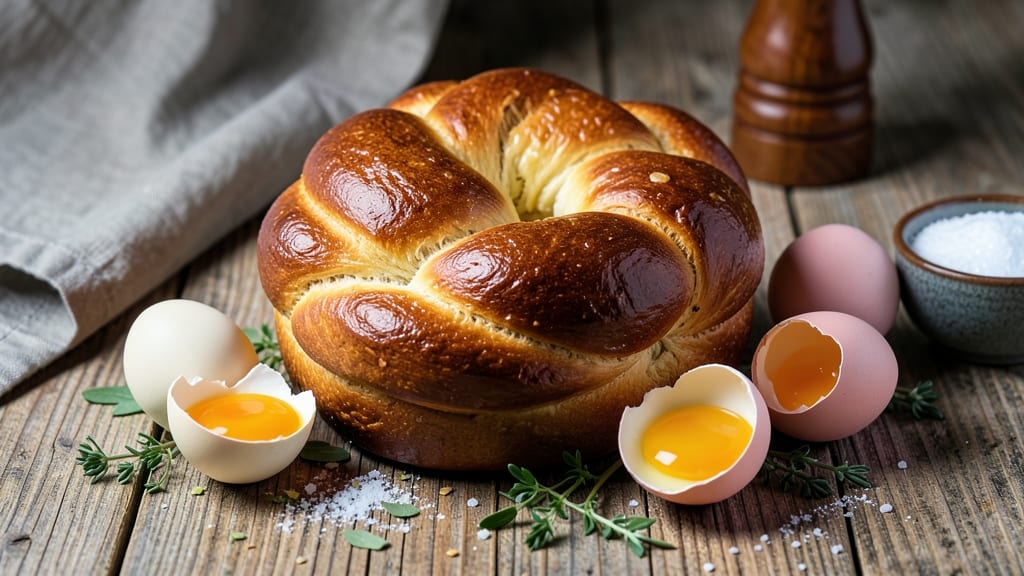
This authentic Jewish challah bread recipe transforms your kitchen into a Shabbat table with its golden braids and rich, eggy dough. 💛 The secret lies in the precise balance of flour, sugar, and eggs—traditional techniques that create that signature tender crumb and glossy finish.
I've perfected this recipe over years of baking for family gatherings, ensuring every loaf rises beautifully with that iconic braided shape.
The dough begins with a simple yet transformative process: kneading until silky smooth, then letting it rest to develop flavor. Braiding isn't just decorative—it's a tradition that connects generations, and I'll guide you through the easiest method for perfect, even strands.
The egg wash isn't just for shine; it creates that signature golden crust that's impossible to resist.
What makes this recipe truly special is the honeyed glaze that elevates it from ordinary bread to a centerpiece for any meal. The aroma alone—warm, buttery, with hints of vanilla—will fill your home long before the bread emerges from the oven.
Each bite offers that perfect balance of sweetness and richness, making it worth every minute of preparation.
Whether you're celebrating Shabbat, a holiday, or simply treating yourself to homemade bread, this recipe delivers restaurant-quality results with a touch of tradition. Let's get started on creating your most beautiful loaf yet—one that will become a family favorite for years to come.
Ingredients for authentic jewish challah bread
These 11 ingredients bring Shabbat tradition to your kitchen with golden braids and tender crumb.
| Ingredient | Amount | Notes |
|---|---|---|
| All-Purpose Flour 🌾 | 5 cups | Plus 1 tbsp for dusting |
| Large Eggs 🥚 | 6 whole | Room temperature preferred |
| Granulated Sugar 🍚 | ¼ cup | Plus 1 tbsp for dough |
| Active Dry Yeast 🍞 | 2 ¼ tsp | Or 1 packet instant yeast |
| Warm Water 💧 | 1 ¼ cups | 110°F for activating yeast |
| Unsalted Butter 🧈 | ½ cup | Softened, not melted |
| Salt 🧂 | 1 tsp | Diamond Crystal preferred |
| Honey 🍯 | ¼ cup | For glaze and dough |
| Vanilla Extract 🌸 | 1 tsp | Pure vanilla preferred |
| Milk 🥛 | ¼ cup | Warmed for egg wash |
| Poppy Seeds 🌻 | 1 tbsp | Optional for topping |
Flour is the foundation—King Arthur or Gold Medal work best for that signature tender crumb. The yeast should be fresh; if it's old, toss it and grab a new packet. Warm the water to 110°F—too hot kills the yeast, too cold won't activate it. For butter, Land O'Lakes or Plugrá melt beautifully but don't over-soften it. Poppy seeds add that classic touch—Trader Joe's has them in bulk if you want to skip the tiny packets. The honey? Local raw honey adds depth, but store-bought works too.
No vanilla extract? Vanilla bean paste or even vanilla sugar works in a pinch. Short on eggs? Use 4 large plus 2 extra yolks for that extra richness. The milk for the egg wash can be any kind—whole for extra shine, but 2% works fine. If you're making this ahead, the dough can rest in the fridge overnight for easier handling. Just let it come to room temp before braiding. For the glaze, mix honey and milk 1:1—no need to measure precisely.
Dough keeps 2 days wrapped in plastic in the fridge. For longer storage, freeze shaped loaves up to 3 months—thaw at room temp before baking. The glaze sets quickly, so brush it on right after baking. To reheat, wrap in a damp towel and warm in a 300°F oven for 10 minutes. Braided loaves look best served the day they're baked—that golden crust is fleeting.
Why You'll Love This Recipe
- No-Knead Magic: I swear by this method—just mix the flour, eggs, sugar, and yeast with warm water, let it rise twice, and shape it into braids. No stand mixer, no overworked arms, just pure dough satisfaction.
- Sweet Golden Crust: That caramelized top? It’s the sugar and eggs working their charm in the oven, giving you a tender crumb inside and a crackly, buttery crust outside. Honestly, it’s the kind of bread that makes you pause mid-slice just to admire it.
- Shabbat Ready: Whether it’s Friday night or a casual weeknight, this challah fits every table. Braid it for tradition, tear it for sandwiches, or freeze half for when you’re too tired to bake. My family’s rule? No leftovers allowed—it disappears too fast.
- Pantry-Friendly Staples: You’re already using what’s in your cupboard: flour, eggs, sugar, yeast, water. No specialty ingredients, no last-minute grocery runs. Between us, this is the kind of recipe that turns a basic pantry into a homemade feast without breaking the bank.
Step-by-step instructions for authentic Jewish challah bread
Here's how to create that signature braided beauty with tender crumb and golden crust.
👨🍳 Step 1: Activate the Yeast and Mix the Dough
In a large bowl, combine the 1.25 cups warm water (about 110°F) with 2.25 tsp active dry yeast and let sit for 5-10 minutes until frothy. This tells you the yeast is alive and ready to work! In a separate bowl, whisk together 5 cups all-purpose flour, 0.25 cup granulated sugar, 1 tsp salt, and 1 tsp vanilla extract. The sugar helps feed the yeast while the salt balances the flavors.
Make a well in the center and pour in the yeast mixture along with 0.5 cup softened unsalted butter and 6 whole large eggs. Using a wooden spoon, stir until a shaggy dough forms. The butter should be soft enough to press into the dough but not melted—this creates that signature richness. Let the dough rest for 10 minutes while you prep your workspace.
🍳 Step 2: Knead Until Silky Smooth
Turn the dough onto a lightly floured surface and knead for 8-10 minutes until smooth and elastic. I like to use my hands for this part—press down with the heels of your hands, then fold and turn. The dough should feel slightly tacky but not sticky, and it should spring back when pressed. If it's too sticky, add 1 tbsp flour at a time until it comes together nicely.
Here's the thing—kneading develops gluten, which gives challah its signature chewy texture. You'll know it's ready when the dough feels like a soft, smooth ball and leaves a clean surface when you press your finger into it. Wrap the dough in plastic wrap and let it rise in a warm place for 1 hour or until doubled in size. A warm oven with the light on works great for this.
🥘 Step 3: Shape and Braid the Challah
Punch down the risen dough and divide it into 3 equal pieces. Roll each piece into a 12-inch rope, keeping the seams on the underside. Lay the ropes parallel to each other and gently press them together. Here's how to braid: take the left rope over the middle, then the right rope over the new middle, and repeat until you reach the end. Trim the ends at an angle for a clean finish.
Place the braided loaf on a parchment-lined baking sheet, seam-side down. Cover loosely with a kitchen towel and let it rise for another 30-45 minutes until puffy. The dough should feel light and airy when pressed gently. This second rise gives the bread its final lift and helps create that beautiful, open crumb we're after.
🔥 Step 4: Bake to Golden Perfection
Preheat your oven to 375°F and brush the risen loaf with an egg wash made from 0.25 cup milk and 1 whole egg. This gives that gorgeous golden color and adds shine. Bake for 25-30 minutes until the top is deep golden brown and sounds hollow when tapped on the bottom. The edges should pull away from the parchment paper slightly.
For extra shine and flavor, brush the warm loaf with a simple honey glaze made from 0.25 cup honey mixed with 1 tbsp water. Sprinkle with 1 tbsp poppy seeds if using, pressing them gently into the surface. Let the challah cool on a wire rack for at least 30 minutes before slicing—this ensures clean cuts and prevents a gummy texture.
Pro Tips For Making Authentic Jewish Challah Bread
- Bloom the Yeast Properly: Skip the guesswork—dissolve that yeast in warm water (about 110°F) with a pinch of sugar first, then wait 5–10 minutes until it’s frothy. I learned this the hard way after kneading dough that never rose because the yeast was sluggish. If it doesn’t bubble, start over—no shame, just science.
- Weight Your Dough: Use a kitchen scale to measure flour by weight (about 500g for this recipe), not volume. Volume cups vary wildly, and a dense challah starts with precise flour. My first few attempts were either too sticky or too dry until I switched to grams—now the texture is always consistent.
- Knead Until Silky: Stop when the dough passes the "windowpane test"—stretch a small piece, and if it’s thin enough to see light through without tearing, you’re done. Over-kneading dries it out, but under-kneading means a tough loaf. I used to eyeball it and wondered why my challah felt like chewing gum.
- Braid While Warm: Shape the challah when the dough is still slightly warm (not cold from the fridge) for easier handling and a cleaner braid. Cold dough cracks like a brittle twig—trust me, I’ve seen it. Brush with egg wash immediately after braiding to lock in moisture while it proofs.
Wine and beer pairings for this recipe
Sweet Wine Pairings
Challah's rich, buttery sweetness pairs beautifully with dry Riesling or Moscato d'Asti—their crisp acidity cuts through the bread's richness while complementing its honeyed glaze. I love a chilled German Riesling (like Dr. Loosen Blue Slate) for its bright citrus notes that contrast the challah's warmth.
For a sweeter option, try Italian Moscato—its floral and peach flavors enhance the bread's vanilla undertones. 🍷
Bitter Beer Balance
A hoppy IPA or Belgian Dubbel creates an unexpected but delicious contrast to challah's sweetness. The bitterness in a West Coast IPA (like Stone Ruination) balances the bread's richness, while a Belgian Dubbel (such as Westmalle Dubbel) adds caramel and spice notes that harmonize with the honey glaze.
For a lighter option, a Belgian Witbier with its citrusy notes works beautifully too.
Dessert Wine Harmony
If serving challah as a dessert, Port wine or Muscat elevates it to new heights. A Ruby Port (like Graham's Six Grapes) enhances the bread's buttery texture with its dark fruit flavors.
For something lighter, Muscat Canelli (a sweet Italian dessert wine) mirrors the honey glaze's sweetness while adding floral complexity. Serve both slightly chilled for the best experience.
Coffee Pairing
Skip the alcohol and pair your challah with a medium-roast coffee—the caramel and chocolate notes in a Sumatra Mandheling complement the bread's sweetness. For a decaf option, try Ethiopian Yirgacheffe—its bright acidity and floral notes create a refreshing contrast.
The warmth of the coffee also makes the challah feel even more comforting. ☕
Traditional Pairings
In Jewish tradition, challah is often served with fruit compotes or jam, but wine can be just as meaningful. A sweet Kosher wine (like Manischewitz Sweet Red) honors the bread's Shabbat origins while adding a festive touch.
For a non-alcoholic option, pomegranate juice or grape juice enhances the bread's sweetness without overpowering it.
Nutrition facts
Frequently asked questions
Why does traditional Jewish challah use so many eggs?
The eggs create that signature tender, slightly chewy texture and rich golden color. Six large eggs in this recipe add moisture, structure, and that distinctive eggy flavor that sets authentic challah apart from regular bread. The egg wash also gives that beautiful glossy finish that's impossible to resist!
Can I make challah without braiding it?
While braiding is traditional, you can shape it into a round loaf or even a simple oval. The dough's texture and flavor will still be authentic—braiding just adds that decorative touch. For beginners, try making a simple round loaf first to perfect your technique before attempting braids.
What's the best way to store leftover challah?
Wrap it tightly in plastic wrap or aluminum foil to keep it fresh for 2-3 days at room temperature. For longer storage, freeze shaped loaves for up to 3 months. To reheat, wrap in a damp towel and warm in a 300°F oven for 10 minutes—this restores that fresh-baked texture!
Why does my dough smell so sweet?
The sugar and vanilla in the dough create that wonderful aromatic sweetness that's part of traditional challah. The honey glaze adds another layer of fragrance. This sweetness isn't just for flavor—it's also what makes the bread perfect for Shabbat and celebrations when we bless the sweetness in our lives.
Can I substitute honey in the glaze?
Yes! For a different flavor profile, try maple syrup or even light corn syrup. If you prefer a lighter glaze, mix equal parts honey and water (like in the recipe). The key is to keep the glaze thin enough to brush on easily—this ensures it soaks into the bread for maximum flavor.