
Side Dishes
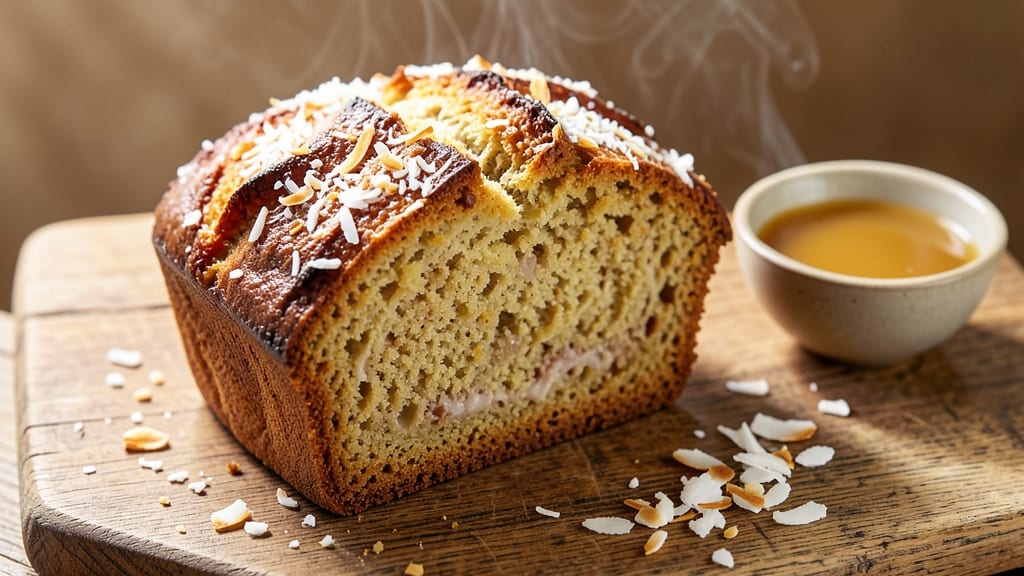
This authentic coco bread recipe brings the tropical charm of Filipino kitchens to your table with its signature swirls and irresistible moist crumb. The secret lies in freshly grated coconut and coconut milk, which infuse every bite with that signature tropical aroma and tender texture.
I’ve perfected this recipe over years of baking, ensuring the bread rises just right and develops that golden crust while staying soft inside.
What sets this coco bread apart is the traditional method of steaming the bread during baking, which creates that signature moistness and delicate crumb.
The batter comes together with simple ingredients—flour, sugar, baking powder, and coconut milk—but the magic happens in the swirling technique, where shredded coconut is folded in just before baking. This isn’t just bread; it’s a celebration of texture and flavor that transports you to a tropical paradise.
The result is a loaf with a golden, slightly crisp exterior and a tender, fluffy interior, all infused with the natural sweetness of coconut. Each slice reveals those beautiful swirls of coconut, making it as visually appealing as it is delicious.
Whether you’re serving it with coffee, tea, or as a snack on its own, this coco bread is a crowd-pleaser that never disappoints.
For an extra touch of authenticity, consider brushing the top with a light coconut milk glaze before serving. This recipe delivers on both tradition and taste, ensuring your coco bread is as close to the original as possible. Let’s get baking!
Ingredients for authentic coco bread
Freshly grated coconut and coconut milk transform simple pantry staples into tropical magic.
| Ingredient | Amount | Notes |
|---|---|---|
| All-Purpose Flour 🌾 | 3 ½ cups | Sifted for lighter texture |
| Granulated Sugar 🍚 | ¾ cup | White or light brown |
| Unsalted Butter 🧈 | ½ cup | Cold, cubed for creaming |
| Coconut Milk 🥥 | 1 ¼ cups | Full-fat, canned preferred |
| Shredded Coconut 🥥 | 1 ½ cups | Freshly grated, unsweetened |
| Baking Powder 🧂 | 2 tbsp | Diamond Crystal preferred |
| Salt 🧂 | ½ tsp | Fine sea salt |
| Large Eggs 🥚 | 2 whole | Room temperature |
| Vanilla Extract 🌿 | 1 tsp | Pure vanilla preferred |
| Milk 🥛 | ¼ cup | Any variety |
The coconut milk and shredded coconut are non-negotiable for that authentic tropical flavor. Canned full-fat coconut milk from brands like Goya or Thai Kitchen works best—avoid the light versions. For shredded coconut, freshly grating a whole coconut at an Asian market gives the best texture, but the pre-shredded kind from Trader Joe's is a solid shortcut. The baking powder matters too—Diamond Crystal is more reliable than double-acting brands. Store your shredded coconut in the freezer to keep it fresh longer, and always measure your flour by spooning it into the cup and leveling off.
No coconut milk? Substitute with equal parts evaporated milk and water, though the flavor won't be identical. Running out of fresh coconut? Toasted desiccated coconut works in a pinch, but it loses moisture faster. The butter should be cold when creaming—take it out of the fridge 10 minutes before mixing for easier handling. For a richer flavor, swap half the milk for coconut cream, but expect a denser crumb. The vanilla extract can be omitted if needed, but trust me on this—it makes a difference.
This batter keeps in the fridge for 2 days if covered tightly, but it's best baked fresh. The baked loaf stays moist for 3 days at room temperature, wrapped in plastic. For longer storage, slice and freeze—up to 3 months. Reheat slices in a toaster or oven for that fresh-from-the-oven texture. The swirls are delicate, so handle the batter gently when folding in the coconut. A light mist of coconut milk glaze before serving? Worth the extra minute.
Why You'll Love This Recipe
- No Mixer Needed: I swear by this recipe because it’s actually one-bowl—just fold the shredded coconut into the batter at the end. No electric mixer, no sticky hands from overworking the dough. The sugar and butter create a tender crumb that practically melts in your mouth, and the coconut milk keeps it moist without tasting heavy.
- Tropical Comfort Bite: That first pull-apart moment? Chef’s kiss. The sugar caramelizes just enough to give it a subtle golden-brown crust, while the coconut milk adds a rich, almost custardy depth. Honestly, it’s the kind of bread that makes you want to eat it straight from the pan—no shame.
- Breakfast to Dessert: I make this for brunch, toast it with jam for a lazy Sunday, and even serve it with coffee. The shredded coconut gives it texture that works everywhere: crumbled over yogurt, paired with spiced tea, or just eaten as-is. (My kids sneak slices when they think I’m not looking.)
- Pantry Goldmine: Here’s what sold me—it uses ingredients you already have. Coconut milk? Check. Butter and sugar? Always on hand. The leftovers stay fresh for days, and if you freeze slices, they toast up like they’re fresh-baked. Plus, it’s cheaper than buying fancy bread, and you’ll end up with twice as much.
Step-by-step instructions for authentic coco bread
This method delivers the signature tropical swirl and ultra-moist crumb of traditional coco bread.
Cream Butter and Sugar for Light Texture
In a stand mixer fitted with the paddle attachment, beat the 0.5 cup unsalted butter (cold and cubed) and 0.75 cup granulated sugar on medium speed for 3-4 minutes. The mixture should become pale and fluffy, nearly doubling in volume. This creaming process incorporates air, which creates the bread's signature tender crumb.
I always press down on the butter mixture with a spatula during the first minute to break it down completely. This prevents pockets of unmixed butter that could lead to dense spots in the finished bread. Scrape down the sides of the bowl every 30 seconds to ensure even mixing.
Add Eggs and Dry Ingredients
Add the 2 whole large eggs (room temperature) one at a time, mixing on low speed for 30 seconds after each addition until fully incorporated. Then add the 1 tsp vanilla extract and mix for another 10 seconds. The mixture will look slightly curdled, but that's normal.
In a separate bowl, whisk together the 3.5 cups all-purpose flour (sifted), 2 tbsp baking powder, and 0.5 tsp salt. Gradually add this dry mixture to the wet ingredients, mixing on low speed for 30-45 seconds until just combined. You should still see a few flour streaks—overmixing develops gluten and makes the bread tough. Stop mixing as soon as everything comes together.
Incorporate Coconut Milk and Shredded Coconut
Add the 1.25 cups coconut milk and 0.25 cup milk to the mixer, mixing on low speed for 20 seconds until fully combined. The batter will be thick but pourable. Remove the bowl from the mixer and gently fold in 1 cup of the 1.5 cups shredded coconut using a silicone spatula, being careful not to overmix.
Real talk: this is where the authentic tropical flavor comes through. The coconut milk adds richness while keeping the bread moist, and the shredded coconut creates those signature swirls. Set aside half of the remaining shredded coconut (about 0.5 cup) for the topping later.
Prepare the Swirl and Bake
Preheat your oven to 350°F. Grease an 8x4-inch loaf pan and line it with parchment paper, leaving an overhang on the sides for easy removal. Pour half of the batter into the prepared pan, then sprinkle evenly with the reserved 0.5 cup shredded coconut. Pour the remaining batter over the coconut, then gently swirl with a knife or spatula to create the classic tropical pattern.
Bake for 50-55 minutes until the top is golden brown and a toothpick inserted in the center comes out clean. The bread is done when the internal temperature reaches 205°F—this ensures it's fully baked without being dry. If the top browns too quickly, tent loosely with foil after 30 minutes to prevent over-browning while maintaining moisture.
Rest and Serve for Perfect Texture
Remove the bread from the oven and let it cool in the pan for 10 minutes, then transfer to a wire rack to cool completely. This resting period allows the crumb to set properly and prevents it from becoming gummy. The bread should have a moist, slightly dense crumb with pockets of tender coconut throughout.
For the best results, serve the bread at room temperature. It's perfect on its own, with butter, or as a side to meals. If storing, keep it wrapped in plastic at room temperature for up to 3 days or freeze for up to 3 months. The flavor actually improves slightly as it sits, developing deeper coconut notes.
Pro Tips For Making Authentic Coco Bread
- STEAM THE BREAD: Bake it in a water bath—place the pan in a larger roasting tray with 1 inch of boiling water below. The steam keeps the crumb tender and prevents that dry, rubbery texture I used to hate. (Yes, even if you’re impatient like me.)
- TOAST THE COCONUT: Spread shredded coconut on a baking sheet and toast it at 350°F (175°C) for 5–7 minutes until golden and fragrant. Fresh coconut burns easily, so watch it like a hawk—over-toasted coconut tastes bitter, and that’s a flavor crime in this recipe.
- DON’T OVERMIX THE DOUGH: Mix just until the flour is barely incorporated—lumps are fine. Overworking the dough makes coco bread dense and chewy. I learned this the hard way after kneading like I was making bread dough. Stop when the wet ingredients are mostly combined.
- USE FULL-FAT COCONUT MILK: Skip the light version—it’s the fat that gives coco bread its rich, moist texture. If you’re out of full-fat, mix light coconut milk with 1–2 tablespoons of melted butter to compensate. (Your future self will notice the difference.)
Serving suggestions for this dish
Morning Coffee Pairing
Coco bread is my go-to breakfast companion with a hot cup of Filipino-style coffee or Kopi Luwak. The bread's moist texture soaks up the rich, slightly bitter notes perfectly. For an extra tropical touch, try a coconut milk latte—the double coconut flavor creates a harmonious balance.
I love serving it with butter or a thin layer of honey for that perfect sweetness. ☕
Afternoon Tea Service
Transform your tea time with coco bread as the star. Pair it with Earl Grey or jasmine tea for an elegant touch. The coconut's natural sweetness complements the floral notes beautifully. For a modern twist, serve with matcha green tea—the earthy flavors create a surprising but delicious contrast.
I always slice it thin and arrange it on a tiered stand for a visually stunning presentation. 🍵
Dessert Showstopper
Warm coco bread makes an incredible dessert when served with vanilla ice cream or coconut whipped cream. The contrast of warm bread and cold cream is pure comfort food magic.
For a festive touch, drizzle with caramel sauce or sprinkle with toasted coconut flakes. I've even served it as a mini loaf dessert at parties—everyone loves the tropical swirls. 🌟
Savory Contrast
Don't limit coco bread to sweet pairings! It works beautifully with savory dishes too. Try it alongside grilled meats like pork adobo or beef rendang, where the coconut flavor complements the spices.
For a vegetarian option, pair with mango salsa or spicy tomato salad. The bread's moisture helps balance rich, spicy, or acidic flavors. 🥗
Cocktail Companion
Coco bread is the perfect snack for tropical cocktails. Pair it with piña coladas, mai tais, or rum punch for a beachy vibe. The bread's sweetness enhances the fruity flavors while providing a satisfying crunch.
For a non-alcoholic option, try it with coconut water or mango lassi. I always keep a plate of warm slices nearby when hosting summer parties. 🍹
Breakfast Sandwiches
Make a delicious breakfast sandwich by layering coco bread with scrambled eggs, cheddar cheese, and ham. The bread's moisture prevents the sandwich from becoming dry. For a vegetarian option, use avocado and fried egg.
Toast the bread lightly before assembling to enhance its flavor. This combo is a game-changer for quick mornings. 🍳
Nutrition facts
Frequently asked questions
Why does authentic coco bread have swirls?
The signature swirls come from layering batter and shredded coconut in the pan before baking. This technique creates visual appeal while distributing coconut evenly throughout each slice. The swirls are traditional in Filipino coco bread, adding both beauty and texture contrast to every bite.
Can I make coco bread without a loaf pan?
Yes! Use a round cake pan or even a pie dish for a different shape. Line it with parchment paper and adjust baking time by 5-10 minutes—smaller pans may need less time. For a rustic look, try baking in a cast-iron skillet with a lid for extra moisture. Just monitor closely to prevent over-browning.
What makes this coco bread different from regular bread?
The coconut milk and fresh shredded coconut give it a moist, slightly sweet flavor with tropical notes. Traditional coco bread also uses a steaming technique (via the loaf pan's moisture) that keeps it tender longer. The swirls and golden crust set it apart from plain breads.
How do I prevent my coco bread from being too dense?
Don't overmix the batter—stop as soon as dry ingredients disappear. Use cold butter for proper creaming, and measure flour accurately (spoon & level). Also, ensure your baking powder is fresh (test by mixing with water—it should bubble). For extra lightness, fold in whipped egg whites at the end.
Can I substitute coconut milk with something else?
For a similar texture, use equal parts evaporated milk + water. For flavor, try coconut cream (richer) or even Greek yogurt (tangier). Just note the flavor will differ—coconut milk is essential for authentic taste. The batter will still work, but the tropical aroma will be milder.