
Side Dishes
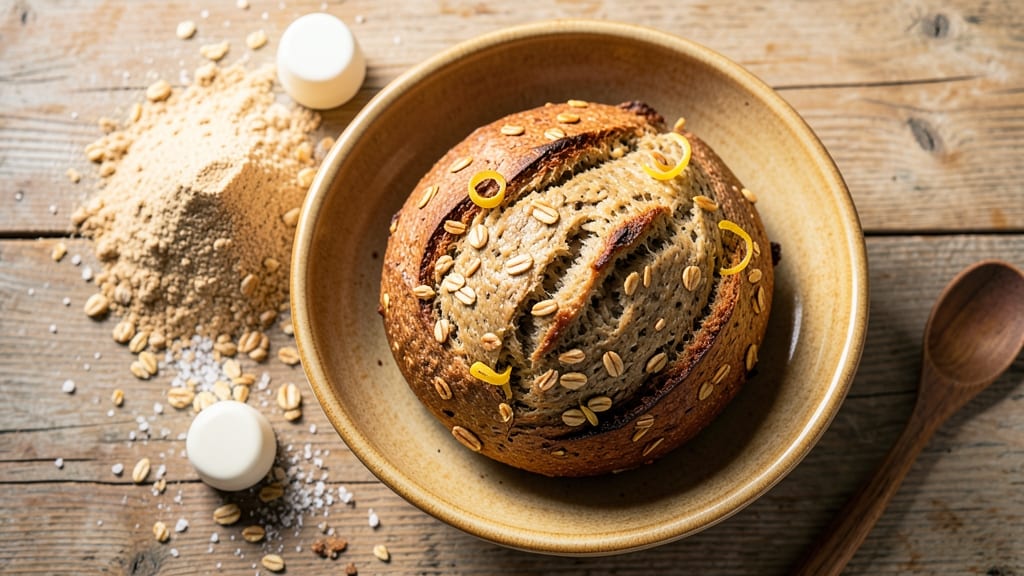
This artisan oatmeal bread recipe delivers a rustic loaf with a golden crust and toasted grain bites that make every slice worth savoring. 🌟 The secret lies in a precise blend of oats and whole grains, combined with traditional kneading and proofing techniques that create that signature chewy crumb and crisp exterior.
I've perfected this recipe over years of baking, ensuring it's approachable yet delivers professional-quality results at home.
What sets this bread apart is the texture—each bite offers a satisfying contrast between the tender crumb and the satisfying crunch of toasted oats. The recipe uses a foolproof method that includes a steam bath during baking, which creates that coveted oven-spring and crackly crust.
Whether you're a seasoned baker or just starting out, this recipe builds confidence with clear, step-by-step instructions that yield impressive results.
The finished loaf is perfect for serving warm with butter, pairing with soups, or toasting for breakfast. The aroma alone fills your kitchen with the comforting scent of freshly baked bread, while the flavor is rich and slightly sweet from the oats.
This recipe balances tradition with practicality, making it ideal for both everyday enjoyment and special occasions.
Ready in about 3 hours (including rising time), this artisan oatmeal bread becomes the star of any meal. The key to success is patience—letting the dough rise properly and baking it at the right temperature ensures a loaf that's as beautiful as it is delicious.
Let's get started on creating your perfect loaf!
Ingredients for artisan oatmeal bread
A precise blend of oats and whole grains creates this artisan loaf with golden crust and toasted grain bites.
| Ingredient | Amount | Notes |
|---|---|---|
| Old-Fashioned Rolled Oats 🌾 | 1 ½ cups | Steel-cut or quick oats preferred |
| All-Purpose Flour 🌾 | 3 ½ cups | King Arthur brand recommended |
| Whole Wheat Flour 🌾 | ½ cup | Milled finely for even texture |
| Instant Yeast 🍞 | 2 ¼ tsp | Fresh yeast works too (1 packet) |
| Granulated Sugar 🍚 | ¼ cup | Light or dark brown sugar works |
| Salt 🧂 | 1 ½ tsp | Diamond Crystal kosher salt |
| Unsalted Butter 🧈 | ½ cup | Cold, cubed for easier mixing |
| Milk 🥛 | 1 cup | Warm to room temperature |
| Large Eggs 🥚 | 1 whole | Room temperature preferred |
| Honey 🍯 | 2 tbsp | Wildflower or clover variety |
| Toasted Sesame Seeds 🌰 | 1 tbsp | Optional for nutty crunch |
| Water 💧 | ½ cup | Room temperature for hydration |
| Poppy Seeds 🌻 | 1 tbsp | Optional for added texture |
The oats are the soul of this bread. King Arthur brand rolled oats provide the best texture, but steel-cut oats work too—just toast them first for 5 minutes to enhance their flavor. For the flours, King Arthur all-purpose ensures reliable gluten structure, while the whole wheat adds depth. If you're using pre-milled whole wheat, sift it to avoid lumps. The Diamond Crystal kosher salt is crucial—it dissolves completely and enhances flavor without bitterness. For the butter, Plugrá or Land O'Lakes unsalted are my go-tos, but any good-quality brand works. Keep it cold when mixing to prevent overdevelopment.
No instant yeast? Fresh yeast requires activation—proof it in warm milk for 5 minutes. Substitute honey with maple syrup or agave at the same amount, though honey adds subtle floral notes. The sesame and poppy seeds are optional but add beautiful texture and visual appeal. For a gluten-free version, replace the all-purpose flour with a 1:1 gluten-free blend, though texture may differ slightly. If your kitchen is dry, consider adding an extra 1 tbsp milk to the dough for proper hydration. The egg binds everything together—room temperature eggs mix more easily into the dough.
Store the dough in an airtight container in the fridge for up to 24 hours if prepping ahead. The fully baked loaf keeps well wrapped at room temperature for 3 days or frozen for 3 months. For best results, toast slices in a dry skillet or toaster until golden and crisp. The aroma alone will draw everyone to the table—this bread pairs perfectly with butter, jam, or soup. If you have leftovers, freeze slices wrapped in parchment paper for quick toasted sandwiches later.
Why You'll Love This Recipe
- No-Knead Magic: I swear by this—just mix, rest, and bake. The rolled oats handle all the texture work while you sip coffee, and the yeast does the heavy lifting overnight. Honestly, I’ve made bread that required more effort for half the flavor.
- Toasty Crunch Perfection: That first bite? The oats add a satisfying crunch that disappears into a soft, chewy center—like a hug for your molars. The whole wheat flour keeps it hearty, while the sugar just barely sweetens the deal without overpowering.
- Weeknight & Picnic Star: Slice it for breakfast toast, pack it for lunch, or tear it into chunks for a charcuterie board. It freezes like a dream too, so I always bake two loaves—one for now, one for when I’m too tired to think.
- Budget-Friendly Staple: Whole wheat flour and oats stretch every dollar, and a single batch feeds my family for days. Between us, this is the bread that actually lasts until the end of the week—no sad, dried-out loaves here.
Step-by-step instructions for artisan oatmeal bread
Here's the method for crafting bread with a golden crust and chewy interior—where every bite delivers toasted oat flavor.
👨🍳 Step 1: Prepare the Oatmeal Base and Mix Wet Ingredients
Toast the 1.5 cups old-fashioned rolled oats in a dry skillet over medium heat for 5-7 minutes, stirring constantly, until they're a deep golden brown with nutty aroma. Transfer to a bowl and let cool completely—this prevents steam from killing your yeast later.
In a separate large bowl, combine the 1 cup warm milk, 2 tbsp honey, and 1 whole large egg. Whisk until fully emulsified—this mixture should be smooth with no visible streaks. The honey adds natural sweetness while helping tenderize the final texture. Set aside for 5 minutes to let the egg fully incorporate.
👨🍳 Step 2: Combine Dry Ingredients and Hydrate the Dough
In the bowl with toasted oats, add the 3.5 cups all-purpose flour, 0.5 cup whole wheat flour, 2.25 tsp instant yeast, 0.25 cup granulated sugar, and 1.5 tsp salt. Whisk vigorously to distribute the yeast evenly—this prevents uneven rising later. Make a well in the center and pour in the wet ingredients.
Using a wooden spoon, gradually incorporate the liquids until a shaggy dough forms. Add 0.5 cup cold cubed butter and work it in with your hands until fully combined. The dough should be tacky but not sticky—if it's too dry, add 1 tbsp water at a time until just cohesive. Cover with a damp towel and let rest for 10 minutes to relax the gluten.
🥘 Step 3: Knead Until Elastic and Windowpane-Test Ready
Turn the dough onto a lightly floured surface and knead for 8-10 minutes by folding and pressing, rotating the dough each time. You're looking for smooth, elastic dough that springs back when poked—this indicates proper gluten development. For the windowpane test, stretch a small piece of dough until it's translucent like a windowpane.
Shape the dough into a round loaf, place it in a lightly greased bowl, and cover with the damp towel. Let rise in a warm place (75-80°F) for 1-1.5 hours until doubled in size. The dough should feel light and springy when pressed gently with one finger—this confirms active fermentation.
🔥 Step 4: Shape, Proof, and Bake for Crispy Crust
Punch down the risen dough and shape it into a round loaf on a parchment-lined baking sheet. Brush the top with 1 tbsp water and sprinkle evenly with 1 tbsp toasted sesame seeds and 1 tbsp poppy seeds for texture. Let proof for 30-45 minutes until puffy and slightly domed.
Preheat your oven to 375°F with a baking stone or inverted baking sheet inside. Bake the bread for 30-35 minutes until the internal temperature reaches 190-195°F and the crust is deep golden brown. Tap the bottom—it should sound hollow. For extra browning, brush the top with 1 tbsp melted butter during the last 5 minutes of baking.
Pro Tips For Making Artisan Oatmeal Bread
- TOAST THE OATS: Spread your rolled oats on a baking sheet and bake at 350°F for 8–10 minutes until they smell toasty and nutty. Cold oats steal flavor from the dough—this step makes the bread taste like it came from a bakery, not a box.
- KNEAD LESS, REST MORE: The whole wheat flour in this dough makes it tough if overworked. Mix just until combined, then let it rise twice—first in a warm spot (about 1 hour), then after shaping. Patience here keeps the crumb soft and the texture chewy, not dense.
- SALT THE WATER: When mixing your yeast, dissolve it in warm water with a pinch of salt first. It wakes up faster and prevents that metallic aftertaste that sneaks in when you skip this. (Yes, even if the recipe says "just water.")
- STEAM THE LOAF: Before baking, spray the inside of your Dutch oven with water and invert the dough-covered loaf on top. The steam creates that crackly crust and keeps the oatmeal bread from drying out—no fancy equipment, just physics. Cover with the lid for the first 20 minutes.
Perfect pairings for this dish
Butter Pairings
Nothing complements this artisan oatmeal bread like cultured butter—I recommend Plugrá European-style or Land O'Lakes unsalted for its rich, creamy texture. Warm the butter slightly and spread it on freshly toasted slices for that perfect balance of buttery richness and toasted oat flavor.
For an extra touch, sprinkle with flaky sea salt right after spreading. 🧈
Jam and Preserve Spreads
This bread's subtle sweetness pairs beautifully with fruit preserves. My go-to is blackberry jam or honey-sweetened apricot—both enhance the bread's natural nuttiness. For a tangy twist, try raspberry preserves with a hint of balsamic glaze. Use 2-3 teaspoons per slice to avoid overwhelming the bread's texture.
Soup Companions
Serve warm slices alongside creamy soups like butternut squash or tomato basil to soak up every last drop. For heartier options, pair with lentil stew or chicken noodle soup.
The bread's chewy crumb contrasts perfectly with the broth, while the toasted oats add satisfying texture. Keep a basket of slices on the table for easy grabbing. 🥄
Breakfast Pairings
Transform this into a breakfast star by topping toasted slices with scrambled eggs, crispy bacon, or avocado mash. The oatmeal's nutty flavor balances the richness of eggs, while the bread's texture holds up beautifully.
For a sweet morning, spread with almond butter and drizzle with honey. Add a sprinkle of cinnamon for warmth. 🍳
Cheese Boards
This bread is a cheese board essential. Its neutral flavor lets sharp cheddar, brie, or aged gouda shine. Pair with cured meats like prosciutto or dried apricots for contrast.
For a vegetarian spread, arrange with whipped goat cheese, fig jam, and walnuts. The bread's texture holds up beautifully to all these pairings. 🧀
Coffee and Tea Pairings
Enhance your morning or afternoon ritual by serving slices with hot coffee or earl grey tea. The bread's subtle sweetness complements the bitterness of dark roast coffee, while its nutty notes pair beautifully with chamomile or peppermint tea.
For a dessert twist, serve with chocolate-dipped strawberries and a cup of espresso. ☕
Nutrition facts
Frequently asked questions
Can I substitute whole wheat flour for all-purpose in this recipe?
You can replace up to 50% of the all-purpose flour with whole wheat, but don't exceed that amount. Whole wheat absorbs more moisture and can make the dough too dense. For best texture, use King Arthur whole wheat flour (finely milled) and add 1-2 extra tablespoons of water to maintain proper hydration. The flavor will be nuttier and heartier, but the crumb will be slightly denser than the original recipe.
Why did my bread turn out dense instead of chewy?
Dense bread usually means over-kneading or under-proofing. Knead only until the dough passes the windowpane test (8-10 minutes max), and let it rise until it's doubled in size (about 1-1.5 hours). Another common issue is using cold ingredients—always use room temperature milk, eggs, and butter. If your kitchen is cold, place the dough bowl in a warm spot (75-80°F) for proper fermentation.
How do I store leftover artisan oatmeal bread?
Wrap the cooled loaf tightly in plastic wrap or place it in an airtight container to maintain freshness. It stays fresh at room temperature for 3 days, or you can freeze slices wrapped in parchment paper for up to 3 months. To revive frozen bread, toast directly from frozen in a 375°F oven for 8-10 minutes until crispy. For longer storage, freeze the whole loaf and slice as needed.
Can I make this bread without a stand mixer?
This recipe is designed for hand-kneading. After mixing the dough, turn it onto a lightly floured surface and knead by folding and pressing for 8-10 minutes until smooth and elastic. Work in 30-second bursts to avoid overworking your arms. The key is consistency—focus on developing the gluten evenly throughout the dough. For extra strength, use a dough scraper to help turn and fold.
What's the secret to getting that perfect golden crust?
The golden crust comes from three key techniques: steam bath, proper baking temperature, and butter brushing. Place a baking stone in your oven or invert a baking sheet to create steam during the first 10 minutes of baking. Use 375°F for even browning, and brush the top with melted butter during the last 5 minutes for extra shine. For deeper color, sprinkle with coarse sugar before baking.