
Side Dishes
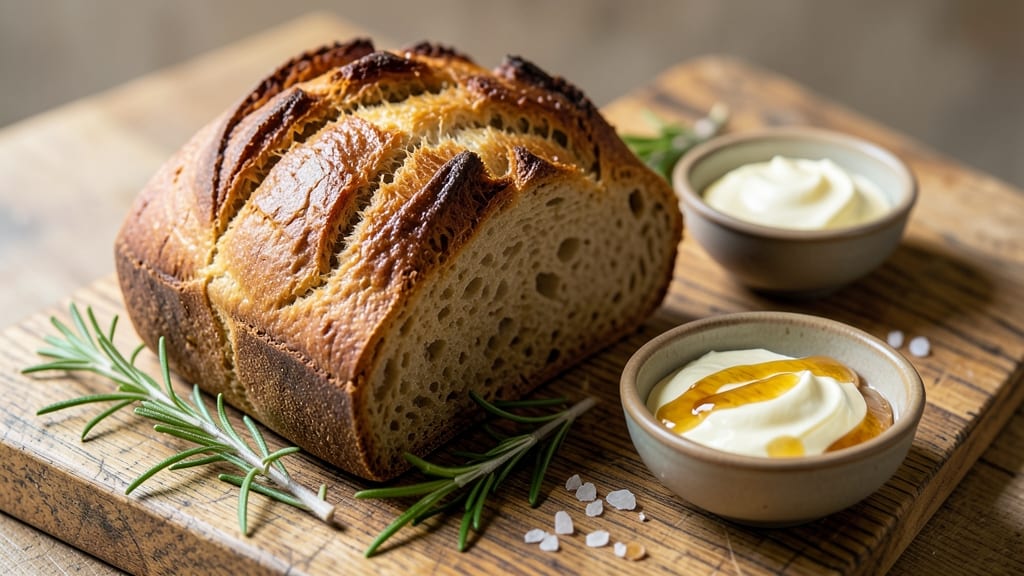
This Anova bread recipe delivers restaurant-quality crusty bread with golden, nutty swirls—all without a single knead. 🌟 The secret lies in a simple dough that develops flavor overnight while you sleep, resulting in an open crumb structure and irresistible aroma that transforms any meal.
Perfect for sandwiches, toast, or serving alongside soups, this bread is foolproof for home bakers.
What makes this recipe stand out is the no-knead method combined with a traditional approach to shaping and scoring. The dough rests overnight, allowing gluten to relax naturally, which eliminates the need for vigorous kneading while creating that signature open crumb.
The nutty swirls come from a simple butter and sugar mixture folded into the dough, adding both flavor and visual appeal.
By the time you pull it from the oven, you’ll have a loaf with a crispy, golden crust and tender interior—just like your favorite bakery. The butter swirls melt slightly, creating pockets of flavor that make every bite satisfying.
This recipe is designed to be simple, reliable, and delicious, ensuring you’ll never buy store-bought bread again.
Whether you’re a beginner or an experienced baker, this method is straightforward and delivers consistent results. The dough is forgiving, and the baking process is hands-off, making it perfect for any skill level. Let’s get started on creating your perfect loaf!
Ingredients for anova bread
Restaurant-quality bread with golden swirls—just 10 simple ingredients transform your kitchen into a bakery.
| Ingredient | Amount | Notes |
|---|---|---|
| All-Purpose Flour 🌾 | 5 cups | Plus 1 tbsp for dusting |
| Unsalted Butter 🧈 | ½ cup | Cold, cubed for swirls |
| Granulated Sugar 🍚 | ¼ cup | For butter swirls |
| Instant Yeast 🍞 | 2 ¼ tsp | Or active dry (use 1.75 tsp) |
| Salt 🧂 | 1 ½ tsp | Diamond Crystal preferred |
| Warm Water 💧 | 1 ½ cups | 110°F for yeast activation |
| Honey 🍯 | 1 tbsp | For yeast feeding |
| Cornmeal 🌽 | ¼ cup | For dusting baking sheet |
| Coarse Sea Salt 🧂 | ½ tsp | For crust sprinkle |
| Large Egg 🥚 | 1 whole | Optional for egg wash |
The flour is the foundation, so grab King Arthur or Gold Medal—they're reliable for no-knead dough. Instant yeast is a game-changer here (no waiting to proof), but if you only have active dry, just proof it first. The butter matters too—unsalted lets you control the saltiness, and cold cubes create those perfect swirls. For the sugar, granulated dissolves smoothly in the butter mixture. Pro tip: measure your flour by weight if you have a kitchen scale—500g total is ideal for perfect texture. The honey? Any brand works, but local raw honey adds extra depth of flavor.
No instant yeast? Active dry works—just mix it with the warm water and honey first, let it foam for 5 minutes before adding to flour. Running out of honey? Maple syrup in a 1:1 swap keeps things sweet. The egg wash is optional but worth it for that golden, bakery-style crust—just beat the egg with a splash of water. Short on time? The dough can go straight into the oven after the overnight rise (though it won't be quite as flavorful). For the butter swirls, room temperature butter spreads easier, but cold cubes create more dramatic swirls when folded in. The coarse sea salt? Maldon or Jacobsen flakes melt beautifully on top.
This dough is a set-and-forget masterpiece—mix it in the evening, let it rise overnight, and bake in the morning. Store any leftovers in a bread bag at room temperature for up to 3 days, or freeze slices for up to 3 months. For reheating, wrap slices in foil and warm in a 350°F oven for 5 minutes—nothing beats fresh-baked bread. The butter swirls keep best when the bread is slightly warm, so slice while it's still on the cooling rack. Make a double batch—this bread disappears faster than you can say 'no-knead'!
Why You'll Love This Recipe
- No-Knead Magic: I swear by this dough—just mix, let it rise, and bake. No standing at the counter for hours, no overworked arms. That sugar and butter combo makes the crust golden and the crumb so tender it practically melts.
- Buttery Sweet Payoff: That sugar isn’t just for looks—it caramelizes into a crispy crust while keeping the inside pillowy. Honestly? The first slice out of the oven is my favorite part. Warm, buttery, and just a little sweet—like a hug in bread form.
- Weeknight Workhorse: I make this on Fridays for sandwiches all week, or freeze the leftovers for toast in a hurry. It’s the base for grilled cheese, French toast, or just slathered with jam. Versatile enough for breakfast or dinner without trying too hard.
- Budget-Friendly Staple: Five ingredients, minimal waste, and it stretches to feed four for days. The butter makes it feel special, but the flour and yeast keep it affordable. Between us? This is the kind of bread that makes grocery night less stressful.
Step-by-step instructions for Anova bread recipe
Let's make this no-knead bread with golden swirls and a crispy crust—easy as pie!
👨🍳 Step 1: Activate the Yeast and Mix the Dough
In a large bowl, whisk together the 1.5 cups warm water (about 110°F—it should feel warm to your wrist but not hot) with the 1 tbsp honey and 2.25 tsp instant yeast. Let this sit for 5-10 minutes until it becomes frothy—this means your yeast is alive and ready to work. If it doesn't bubble, your yeast might be dead, and you'll need to start over.
Add the 5 cups all-purpose flour and 1.5 tsp salt to the bowl. Mix with a wooden spoon until a shaggy dough forms. The dough will be sticky, but don't worry—this is normal for no-knead bread. Let it rest for 10 minutes while you prepare the butter swirls.
👨🍳 Step 2: Create the Butter Swirls
In a small bowl, mix together the 0.5 cup unsalted butter (cold, cubed) and 0.25 cup granulated sugar until combined. This mixture will create those gorgeous, nutty swirls throughout the bread. If your butter is too soft, chill it for 10 minutes to make it easier to handle.
After the dough rests, gently press it into a rectangle on a lightly floured surface. Spread the butter mixture evenly over the dough, leaving a ½-inch border around the edges. Starting from the long side, tightly roll the dough into a log, pinching the seams to seal. This step is all about creating those beautiful swirls when the bread bakes!
🥘 Step 3: Shape and Proof the Dough
Place the dough seam-side down in a greased 9x5-inch loaf pan. Cover the pan loosely with plastic wrap and let it proof at room temperature for 1-2 hours, or until the dough has risen to about 1 inch above the rim of the pan. You'll know it's ready when the dough feels springy to the touch and has puffed up noticeably.
While the dough proofs, preheat your oven to 375°F. Sprinkle the 0.25 cup cornmeal evenly over the bottom of a baking sheet—this prevents sticking and adds a nice crunch to the crust. If you're using the optional 1 whole large egg for an egg wash, beat it lightly and set it aside for later.
🔥 Step 4: Bake to Golden Perfection
Carefully transfer the proofed dough to the prepared baking sheet. If using the egg wash, brush it lightly over the top of the dough. Sprinkle the 0.5 tsp coarse sea salt evenly over the top for that classic breadhouse flavor. Bake for 45-50 minutes until the bread is deep golden brown and sounds hollow when tapped on the bottom.
Here's the thing—don't open the oven during baking. The steam is what creates that beautiful, crispy crust. If you peek, you risk losing that moisture and ending up with a dry loaf. When the bread is done, remove it from the oven and let it cool in the pan for 10 minutes before transferring to a wire rack to cool completely.
⏰ Step 5: Rest and Slice for Maximum Flavor
Let the bread cool completely before slicing—this is crucial for clean cuts and maximum flavor development. The swirls will be soft and gooey when first baked, but as the bread cools, they'll firm up into those perfect, nutty pockets you're craving.
Slice the bread into ½-inch thick pieces and serve warm. The crust should be crispy and golden, while the inside should be soft and slightly chewy with those delicious butter swirls throughout. Store any leftovers in an airtight container at room temperature for up to 3 days, or freeze for up to 3 months for fresh bread anytime!
Pro Tips For Making Anova Bread
- Cream Butter Properly: Use a wooden spoon or your fingers to rub softened unsalted butter into the flour until it resembles coarse crumbs—no bigger than peas. I learned this the hard way when I skipped it, and my bread turned out dense instead of fluffy. The butter needs to coat every flour particle for that signature tender crumb.
- Measure Sugar Accurately: Pack your granulated sugar into the measuring cup and level it off with a knife—don’t scoop and shake. Too little sugar means a bland crumb, and too much makes the bread gummy. I was skeptical until I tried it: the texture changes noticeably when you nail this step.
- Let Dough Rest Fully: After mixing, let the dough sit covered at room temp for at least 30 minutes before shaping—yes, even if you’re eager. This relaxes the gluten, so your bread holds together when baking and doesn’t collapse. I used to rush it, and my loaves would spread into pancakes.
- Bake with Steam: Place a metal tray on the oven rack before preheating, then pour ½ cup hot water into it when you load the bread. The steam mimics a bread basket and guarantees a crisp, golden crust instead of a sad, dry top. Sounds weird, but it works—every time.
Perfect pairings for these flavors
Breakfast Pairings
This bread is a breakfast game-changer! Serve warm slices with scrambled eggs and crispy bacon for a hearty morning meal. The buttery swirls melt beautifully into the eggs, creating a rich, satisfying bite. For something lighter, try Greek yogurt with honey and walnuts—the crust adds a satisfying crunch. 🍳
Soup Companions
Pair your Anova bread with creamy tomato basil soup or French onion soup for a cozy meal. The crusty exterior soaks up the broth perfectly, while the soft interior balances the richness.
For a lighter option, try minestrone soup—the bread adds a comforting element without overpowering the vegetables. I love sprinkling extra coarse sea salt on top before serving.
Cheese and Charcuterie
Elevate your charcuterie board with this bread! Its crispy crust holds up well against sharp cheddar, brie, and provolone. Pair with prosciutto, salami, and fig jam for a sweet-savory contrast.
The nutty swirls add a delightful texture that complements the creamy cheeses beautifully. For a veggie option, add hummus and roasted red peppers.
Sandwich Perfection
This bread makes grilled cheese sandwiches next-level. Use sharp cheddar and Gruyère for a melty, flavorful bite. For a savory twist, try turkey, avocado, and balsamic glaze.
The crust stays crispy even when toasted, while the soft interior holds up to fillings. I often make a double batch just for sandwiches—they disappear fast! 🥪
Dessert Pairings
Yes, bread can be dessert! Serve warm slices with warm apple butter or peanut butter for a sweet treat. For something fancier, drizzle with melted dark chocolate and sea salt.
The buttery swirls add richness that pairs perfectly with vanilla ice cream or whipped cream. It’s a simple but impressive way to end a meal.
Drink Pairings
Complement your bread with a bold black coffee or chai latte to cut through the richness. For a lighter option, try sparkling lemonade or iced tea. If you prefer beer, a crisp lager or wheat beer balances the bread’s buttery notes beautifully.
Wine lovers can enjoy a dry Riesling or Sauvignon Blanc—the acidity cleanses the palate between bites. 🍷
Nutrition facts
Frequently asked questions
Can I make this bread without the overnight rise?
The overnight rise is what develops the deep flavor and open crumb structure, but you can make it in a hurry! If you skip the overnight proof, mix the dough in the evening, let it rise for 2-3 hours at room temperature, then refrigerate overnight. Bake it the next morning for similar results—just expect slightly less flavor development.
Why does my dough look too sticky?
No-knead dough is naturally sticky—that's normal! To make handling easier, wet your hands slightly before shaping. If it's extremely sticky, add 1-2 tablespoons of flour at a time while mixing. The dough should be tacky but not dripping—this ensures the perfect texture after baking.
Can I add other flavors to the butter swirls?
Swap the sugar for brown sugar (for caramel notes) or add 1 tsp cinnamon to the butter mixture. For savory bread, try garlic powder or dried herbs like rosemary. Just keep the ratio the same—½ cup butter to ¼ cup sweetener/herbs works perfectly.
How do I know when the bread is fully baked?
Your bread is done when it's deep golden brown and sounds hollow when tapped on the bottom. For extra certainty, use an instant-read thermometer—it should reach 190-200°F internally. The crust should be crisp, and the swirls should be just starting to set but still soft. Never open the oven during baking!
Can I use whole wheat flour instead of all-purpose?
You can substitute half the flour with whole wheat for a nuttier flavor, but the texture will be denser. For best results, use 2.5 cups all-purpose and 2.5 cups whole wheat flour. Add 1 extra tablespoon of water since whole wheat absorbs more moisture. The crust may brown faster, so watch closely after 35 minutes of baking.