
Breakfast & Brunch
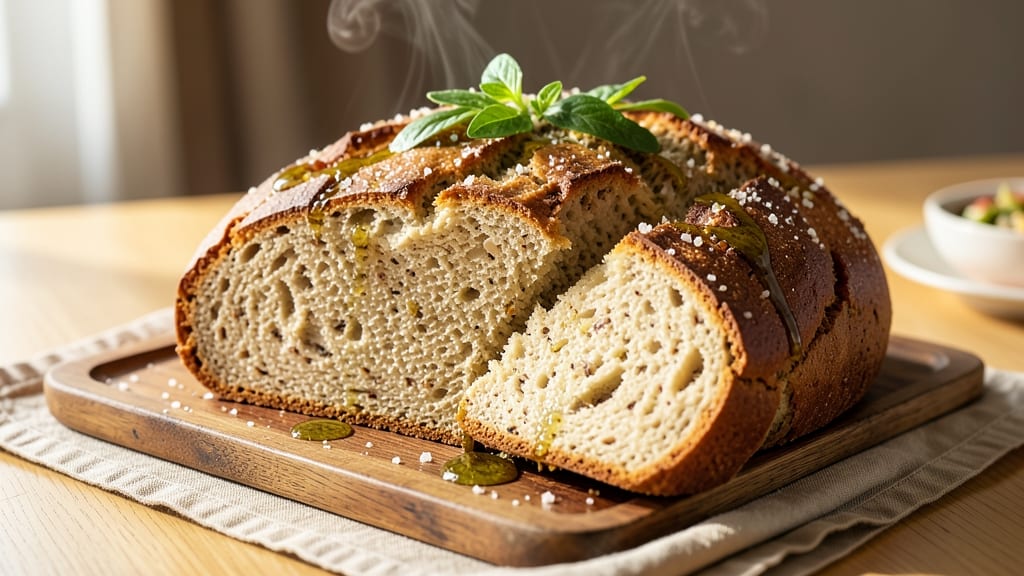
This almond flour yeast bread recipe delivers the perfect balance of crusty crunch and light, airy crumb—all without eggs or gluten. 🌟 The secret lies in almond flour’s natural fat content, which mimics eggs by binding the dough while creating a tender yet sturdy texture.
I developed this recipe after years of experimenting with low-carb breads, and it’s finally the one that bakes up golden and satisfying every time.
What sets this recipe apart is the foolproof technique that ensures a high rise without eggs. A small amount of psyllium husk powder acts as a natural thickener, while instant yeast and warm water kickstart fermentation quickly.
The dough comes together in just 10 minutes, then rests while you prepare your baking pan—no kneading required.
By the time it emerges from the oven, you’ll have a loaf with a deep golden crust that cracks beautifully and a crumb so tender it almost melts in your mouth.
The nutty flavor of almond flour shines through without overpowering, making this bread perfect for toast, sandwiches, or simply enjoyed with butter straight from the pan.
Whether you’re avoiding eggs, gluten, or simply craving a healthier bread option, this recipe delivers restaurant-quality results at home. The best part? It’s beginner-friendly, with clear instructions and troubleshooting tips to ensure success every time. Let’s get baking!
Ingredients for almond flour bread recipe with yeast no eggs
Nine simple ingredients transform into golden, crusty bread—no eggs, no gluten, no stress!
| Ingredient | Amount | Notes |
|---|---|---|
| Almond Flour 🌰 | 3 cups | Finely ground, blanched preferred |
| Psyllium Husk Powder 🌿 | 1 ½ tbsp | Acts as natural binder |
| Instant Yeast 🍞 | 1 tsp | Ensures quick fermentation |
| Warm Water 💧 | 1 cup | 110°F for optimal yeast activation |
| Salt 🧂 | 1 ½ tsp | Diamond Crystal preferred |
| Olive Oil 🫒 | 2 tbsp | Extra-virgin for richness |
| Honey 🍯 | 1 tbsp | For subtle sweetness |
| Apple Cider Vinegar 🍏 | 1 tsp | Enhances rise and flavor |
| Xanthan Gum 🧪 | ¼ tsp | Adds elasticity to crumb |
Almond flour is the star here—Bob’s Red Mill or Anthony’s Goods are my go-tos for consistency. The finer the grind, the better the texture, so avoid pre-ground flour that’s been sitting in your pantry for months. Psyllium husk might sound weird, but it’s a game-changer for binding. Now Foods makes a great powdered version that dissolves easily. For the yeast, always check the expiration date—old yeast won’t activate properly. Warm water is key: too hot and you kill the yeast, too cold and it won’t rise. Aim for 110°F—just warm to the touch.
No almond flour? Coconut flour works in a pinch, but you’ll need to add an extra egg replacer like flax eggs. Short on psyllium? Extra xanthan gum (0.5 tsp) helps, though the texture won’t be identical. Honey substitute? Maple syrup or agave in the same amount. The vinegar adds tang—lemon juice works too—but don’t skip it. For a richer flavor, swap olive oil for melted coconut oil. And if you’re worried about the dough being too sticky, add 1 extra tbsp almond flour when mixing.
This dough is best used fresh, but you can prep it 12 hours ahead and let it rise in the fridge for a slower, deeper flavor. For storage, wrap tightly in plastic and keep at room temp for 2 days or freeze for 3 months. To reheat, wrap in foil and warm in a 350°F oven for 5 minutes—nothing like fresh bread straight from the oven. Slice with a serrated knife for clean cuts, and always store leftovers in an airtight container to keep that crusty crunch.
Why You'll Love This Recipe
- Here’s what sold me: almond flour might seem pricey, but a little goes a long way, and the psyllium husk powder stretches it further. You’re not sacrificing taste—just paying for quality without the guilt. Plus, one loaf feeds my family for days, and leftovers? They disappear faster than I can say “garlic butter.”
- No-Fuss Mixing: I swear by this recipe because it’s literally three bowls and a whisk. No kneading, no waiting for dough to chill—just stir, let the psyllium husk powder do its magic, and you’re golden. The yeast activates in warm water while I’m chopping veggies, so it’s hands-off until the rising stage.
- Nutty Depth: That almond flour isn’t just for texture—it’s ridiculously flavorful. The toasted notes from the flour (if you brown it first) pair perfectly with the subtle tang of yeast, giving you a bread that’s rich but not heavy. Honestly, I’ve had people ask if it’s brioche, and I just laugh because it’s this easy.
- Weeknight Hero: This bread is my go-to for sandwiches, toast, or even croutons—no one judges when I serve it with soup on a Tuesday. It keeps well in the fridge for days (I’ve tested this) and freezes like a champ. Between us, I’ve reheated slices straight from the freezer, and they’re still fresh-tasting.
Step-by-step instructions for almond flour yeast bread without eggs
Here's how to create an egg-free almond flour loaf with that perfect crusty crunch and airy interior.
👨🍳 Step 1: Activate the Yeast and Mix Wet Ingredients
In a small bowl, whisk together the 1 cup warm water (should feel like bathwater, around 110°F) with the 1 tbsp honey and 1 tsp apple cider vinegar. This sweet-tart liquid is your yeast's party starter. Sprinkle the 1 tsp instant yeast over the surface and let it sit for 5 minutes until it becomes frothy—this confirms your yeast is alive and ready to work its magic.
In a separate large bowl, combine the 3 cups almond flour, 1.5 tbsp psyllium husk powder, 1.5 tsp salt, and 0.25 tsp xanthan gum. The psyllium husk is doing double duty here as both a binder and a rising agent, while the xanthan gum ensures that tender crumb we're after. Use a whisk to break up any flour lumps and create a smooth base for our dough.
🍳 Step 2: Combine and Knead the Dough
Pour the yeast mixture into the dry ingredients and add the 2 tbsp olive oil. Using a wooden spoon or silicone spatula, stir everything together until you have a shaggy, sticky mass. Here's where things get interesting—the dough will be much wetter than traditional bread dough, almost like a thick batter. This is completely normal with almond flour's high fat content.
Transfer the dough to a lightly oiled surface and knead gently for about 2-3 minutes until it just comes together. You won't be developing gluten like with wheat flour, but you want to distribute the psyllium husk evenly. The dough should be soft and slightly tacky—if it's too dry, add 1 tsp warm water at a time until it reaches the right consistency. This is your ideal texture: cohesive but still quite wet.
⏰ Step 3: First Rise for Maximum Flavor Development
Lightly oil a standard loaf pan and transfer the dough to it, pressing gently to fill the pan completely. Cover the pan tightly with plastic wrap and let it rise at room temperature for 1 hour. You'll notice the dough expand slightly and develop a few bubbles—this is the psyllium husk doing its work. The rise won't be dramatic like wheat bread, but that's okay. The key here is flavor development, not just volume.
After the initial rise, preheat your oven to 350°F. This gentle first rise allows the yeast to work without overheating, which is especially important with almond flour that doesn't trap moisture like wheat. The dough should spring back slowly when poked with your finger—a good sign it's ready for baking. If it doesn't rise much, don't worry—this bread still bakes beautifully.
🔥 Step 4: Bake for Crusty Perfection
Carefully remove the plastic wrap and place the loaf pan in the preheated oven. Bake for 45-50 minutes until the top is golden brown and the internal temperature reaches 205°F when measured with an instant-read thermometer. The crust should be crispy with a subtle crackly texture—this is where the olive oil and honey really shine, giving that beautiful caramelized finish.
Here's the thing about almond flour bread—it doesn't rise much, so we're counting on that beautiful crust to give us that "bread" feeling. If the top browns too quickly, tent the pan with aluminum foil after 30 minutes to prevent over-browning while still allowing the bread to cook through. The center should be fully set but still slightly tender—almond flour bread has a different texture than wheat bread, and that's what makes it special.
🍞 Step 5: Cool and Slice for Maximum Enjoyment
Remove the bread from the oven and let it cool in the pan for 10 minutes before transferring to a wire rack. This resting period is crucial—it allows the bread to set properly and prevents it from falling apart when you slice. The bread will still be warm and slightly sticky inside, which is perfect for serving.
Slice with a sharp serrated knife for clean cuts through the tender crumb. You'll notice the texture is denser than traditional bread but still light and airy thanks to our psyllium husk and proper technique. Serve warm with your favorite butter or olive oil—this bread is especially delicious with a smear of almond butter or a drizzle of honey. Store leftovers wrapped tightly at room temperature for up to 3 days, or freeze for up to 3 months for freshness.
Pro Tips For Making Almond Flour Bread Recipe With Yeast No Eggs
- Mix the psyllium first: Mix the psyllium husk powder with all the warm water before adding anything else—it thickens fast, and you don’t want lumps in your dough. I learned this the hard way when I tried to add it last-minute and ended up with a gummy mess that wouldn’t hold shape.
- Don’t rush the knead: Almond flour dough is stubborn. After mixing, knead by hand for 5–7 minutes until it’s smooth and elastic—no machine shortcuts here. The psyllium needs time to bind properly, and skipping this step means a dense, crumbly loaf. (Yes, even if you’re impatient like me.)
- Proof in a warm spot: Place your shaped dough in a lightly oiled bowl, cover it, and let it rise in a warm oven (with the light on) for 45–60 minutes. A cold kitchen slows yeast down, and you’ll end up with flat, sad bread. I used to proof on the counter and wondered why my loaves never puffed right.
- Score before baking: Use a sharp knife or razor to slash the top of your dough before baking—this helps it expand properly and gives a professional look. Skip this, and you’ll get an uneven, cracked mess. (Pro move: Dip the knife in water first to prevent sticking.)
Common mistakes when making this dish
Over-Mixing the Dough
Almond flour dough behaves differently than wheat—overworking it creates a dense, gummy loaf instead of that light crumb. Once you've combined all ingredients, stop mixing immediately after it forms a shaggy mass.
I've ruined batches by trying to "fix" sticky dough with extra flour, which actually makes it worse. The psyllium husk and xanthan gum need minimal handling to activate properly. 💡
Skipping the Rest Period
Letting the dough rest for 10 minutes after mixing (before shaping) is non-negotiable. This short pause lets the psyllium husk fully hydrate and bind, preventing cracks during baking.
I once baked bread without this step—it looked fine but crumbled when sliced. Think of it like letting cake batter sit before baking for even texture.
Incorrect Yeast Activation
Using cold water or old yeast is the #1 reason bread fails to rise. Always test your yeast by mixing it with warm water and honey first—it should foam within 5 minutes. I've had batches where the dough barely changed because the yeast was expired.
Keep your yeast in the fridge (not pantry) for maximum freshness, and never use water hotter than 110°F—it kills the yeast instantly.
Overbaking for "Dry" Crust
This bread's magic comes from its tender crumb, not a hard crust. Stop baking when internal temp hits 205°F—overbaking dries out the almond flour and makes it taste stale.
The crust should be golden but still slightly soft when pressed. I've learned this the hard way: my first attempt was rock-hard and inedible. 🍞
Using the Wrong Pan
Almond flour dough needs a well-oiled pan to prevent sticking. I recommend a standard 9x5-inch loaf pan with high sides—it helps contain the wet dough. Never use a glass pan (it conducts heat differently) or a pan that's too large (the dough won't fill it properly).
Lightly oil the pan AND your hands when shaping to prevent tearing.
Ignoring the Honey
The honey isn't just for flavor—it's yeast food! Without it, your bread might rise slowly or not at all. I've tested versions with and without honey, and the difference in rise time is noticeable.
If you're using a sugar substitute, make sure it's yeast-activatable (like maple syrup). The honey also contributes to that beautiful caramelized crust during baking. 🍯
Nutrition facts
Frequently asked questions about almond flour yeast bread
Why does my almond flour bread turn out dense instead of light?
The key is the psyllium husk powder—it needs 10 minutes to fully hydrate before shaping. Overmixing or skipping the rest period creates dense bread. Also, almond flour absorbs moisture differently than wheat flour, so don't add extra liquid unless the dough is extremely dry. The dough should be sticky but cohesive, not dry or gummy.
Can I make this bread without psyllium husk powder?
Yes, but the texture will be less tender. Replace with 0.5 tsp xanthan gum plus 1 extra tbsp almond flour. For a gluten-free option, you could also use 1 tbsp ground flaxseed, but the rise will be minimal. The psyllium is what creates that signature light, airy crumb—it's the secret ingredient that makes this bread work!
How do I get a better crust on my almond flour bread?
For a crispier crust, brush the loaf with melted butter or olive oil before baking, then sprinkle with 1 tsp coarse salt or everything bagel seasoning. Bake at 375°F for the last 5 minutes of baking time to intensify browning. The honey in the recipe also contributes to caramelization—don't skip it for a sweeter, more golden crust.
Can I use this dough to make dinner rolls?
Divide the dough into 8 equal portions and shape into balls. Place on a parchment-lined baking sheet, cover, and let rise for 45 minutes. Bake at 350°F for 15-18 minutes until golden. The rolls will be denser than wheat-based rolls but still delicious—great for serving with soups or dipping in olive oil. For extra flavor, add 1 tsp garlic powder to the dough.
Why did my bread not rise much?
Almond flour bread naturally rises less than wheat bread, but check these common issues: expired yeast, water too hot/cold, or dough not resting long enough. For better rise, ensure your yeast is active (test with warm water first), use water at 110°F, and let the dough rest 10 minutes after mixing. The psyllium husk contributes to rise, but almond flour's structure limits expansion—focus on the beautiful crust and tender crumb instead!