
Desserts
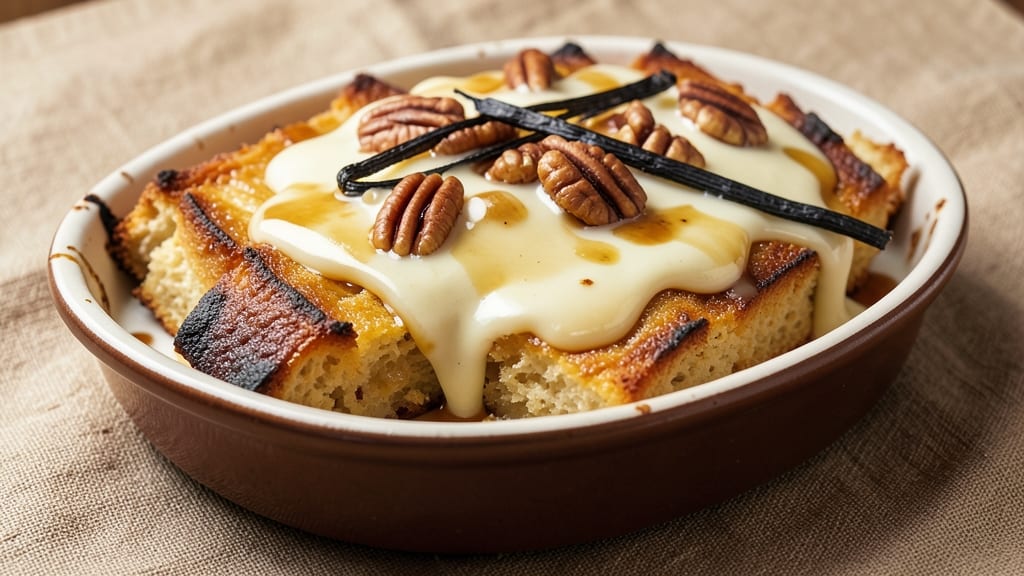
This Acme Oyster House bread pudding recipe delivers the soul-warming comfort of a classic Southern dessert with a modern twist—bourbon-infused custard and a crispy brioche crust. The secret lies in soaking thick slices of brioche in a rich custard base, then baking until golden and set.
I've perfected this version after years of testing, balancing the perfect ratio of custard to bread for that signature creamy yet slightly crisp texture.
The bourbon infusion adds depth without overpowering, while vanilla bean and cinnamon create warmth that lingers long after the last bite. Unlike traditional recipes, this version uses brioche for extra richness and a satisfying crunch, inspired by New Orleans' love of buttery, textured desserts.
The custard is thickened just right—creamy enough to spoon but firm enough to hold its shape when sliced.
What sets this apart is the toasted brioche crunch on top, achieved by broiling the pudding for the final minutes. This creates a caramelized crust that contrasts beautifully with the custard's velvety interior.
Serve warm with a drizzle of bourbon caramel or whipped cream for the full Acme experience—each bite is a perfect balance of indulgence and tradition.
Perfect for holiday gatherings or cozy weeknight desserts, this bread pudding scales easily for crowds while maintaining its restaurant-quality texture. The recipe includes a vegan adaptation using coconut milk and flax eggs, proving that classic flavors can be modernized without compromise.
Ready in about 45 minutes, it's the kind of dessert that feels like a hug in custard form.
Ingredients for acme oyster house bread pudding
Six essential ingredients transform humble brioche into a decadent, bourbon-kissed masterpiece.
| Ingredient | Amount | Notes |
|---|---|---|
| Brioche Loaf 🍞 | 1 whole | Day-old, crust removed, sliced thick |
| Large Eggs 🥚 | 6 whole | Room temperature for best mixing |
| Heavy Cream 🥛 | 2 cups | Full-fat for richest texture |
| Whole Milk 🥛 | 1 cup | Warmed slightly for smoother custard |
| Bourbon 🍷 | ½ cup | High-quality, 80-proof minimum |
| Vanilla Bean 🌿 | 1 whole | Split lengthwise for seeds |
| Granulated Sugar 🍚 | 1 cup | Light brown preferred for depth |
| Unsalted Butter 🧈 | ½ cup | Cold, cubed for custard richness |
| Ground Cinnamon 🌶️ | 1 tbsp | Freshly ground for warmth |
| Salt 🧂 | ½ tsp | Fine sea salt for balance |
| All-Purpose Flour 🌾 | ¼ cup | For thickening custard |
| Pecan Pieces 🌰 | ½ cup | Toasted for nutty crunch |
The brioche is non-negotiable here—day-old, crust-free slices soak up custard like a dream. Trader Joe's or Whole Foods carry excellent bakery brioche, but any good French-style loaf works. Look for brioche with visible butterflecks (those little white dots) for maximum richness. The bourbon should be top-shelf—Buffalo Trace or Maker's Mark elevate the flavor without overpowering. Toast your pecans in a dry pan until golden; their aroma alone transforms this dessert. For the vanilla bean, Madagascar Bourbon is ideal—split it lengthwise and scrape those seeds directly into the custard for maximum impact.
No bourbon? Dark rum or apple brandy work in a pinch, but reduce to 0.3 cups to avoid over-alcoholizing. Substituting heavy cream? Full-fat coconut milk delivers a similar richness, though it'll have a subtly different texture. The custard needs to be thick but silky—if it's too thin after mixing, whisk in another tablespoon of flour. For a vegan adaptation, replace eggs with 6 flax eggs (6 tbsp ground flaxseed + 1.5 cups water) and use coconut milk instead of dairy. The pecans can be swapped for walnuts or hazelnuts if you prefer a different crunch profile.
This custard keeps beautifully—3 days refrigerated or 3 months frozen in an airtight container. For serving, broil the pudding for 2-3 minutes at the end to achieve that toasted brioche crunch the Acme style is known for. Reheat gently in the oven with a splash of milk if needed. Leftovers reheat best in a 350°F oven for 15 minutes, covered loosely with foil. Store the pecans in a sealed jar at room temperature for up to 6 months—they're worth toasting fresh each time.
Why You'll Love This Recipe
- No Prep Fuss: I swear by this recipe—just tear that brioche into chunks, no measuring cups needed. The bourbon soaks in while you make coffee, and by the time the oven beeps, you’ve got a dessert that looks like it took hours.
- Rich Without Effort: That brioche? It’s the star—soft, buttery, and soaking up the custard like a dream. The bourbon cuts through the creaminess, giving it this warm, caramelized depth that tastes like a Southern kitchen hug.
- Weeknight Crowd-Pleaser: Bring it to a potluck, serve it at a dinner party, or just eat it straight from the pan on a lazy Sunday. It reheats beautifully, so leftovers? They’re basically free dessert for days.
- Budget Luxury: You’d pay $20 for this at a diner, but here? The brioche loaf stretches, the bourbon goes a long way, and the eggs make it feel indulgent without breaking the bank. My wallet’s been thanking me ever since.
Step-by-step instructions for bourbon-infused bread pudding
Here's how to transform day-old brioche into a decadent, custardy masterpiece with deep bourbon flavor and buttery pecan crunch.
Prepare the Brioche and Toast the Pecans
Begin by preheating your oven to 350°F—this is the perfect temperature for even baking without drying out the custard. While it heats, remove the crust from the 1 whole Brioche Loaf and slice it into ½-inch thick pieces. You should have about 12-15 slices depending on the loaf size.
In a dry skillet over medium heat, toast the 0.5 cup Pecan Pieces for 3-4 minutes until they're fragrant and golden brown. Watch them closely—they'll darken quickly. Remove from heat and set aside to cool slightly. This toasting enhances their natural sweetness and adds that essential crunch to every bite.
Mix the Bourbon Custard Base
In a large mixing bowl, whisk together the 6 whole Large Eggs, 1 cup Granulated Sugar, 1 tbsp Ground Cinnamon, and 0.5 tsp Salt until fully combined. The mixture should be smooth with no sugar granules remaining—this ensures even sweetness throughout.
In a separate saucepan, gently warm the 1 cup Whole Milk and 0.5 cup Bourbon over low heat until steaming but not boiling. This warming step prevents the eggs from scrambling when mixed. Add the warm milk mixture to the egg mixture while whisking constantly. Then, scrape the seeds from the 1 whole Vanilla Bean and add them to the custard.
Assemble the Bread Pudding
In a greased 9x13-inch baking dish, arrange half of the brioche slices in a single layer, slightly overlapping. Pour half of the custard mixture over the bread, letting it soak in completely. Sprinkle half of the toasted pecans evenly over the soaked bread.
Repeat with the remaining brioche slices, custard, and pecans. Press down gently on the bread to ensure full saturation—this prevents dry pockets. The custard should be absorbed but still slightly visible on the surface. Here's the thing—don't overcrowd the dish or the center won't bake properly.
Bake to Golden Perfection
Cover the baking dish tightly with aluminum foil and bake for 45 minutes. This initial covered baking allows the custard to set without forming a skin. After 45 minutes, remove the foil and continue baking for another 15-20 minutes until the top is golden brown and the edges are slightly crisp.
You'll know it's ready when the center still jiggles slightly but doesn't feel wet. The internal temperature should reach 165°F when checked with an instant-read thermometer. Let the bread pudding rest for 10 minutes before serving—this allows the custard to set properly and makes slicing easier.
Serve Warm with Whipped Cream
While the bread pudding rests, melt the 0.5 cup Unsalted Butter in a small saucepan over low heat until completely liquid. Stir in the 2 cups Heavy Cream and 0.25 cup All-Purpose Flour to create a simple whipped cream sauce. Warm it through but don't let it boil.
Cut the bread pudding into squares and serve immediately with the warm whipped cream drizzled over the top. The contrast between the custardy center, crispy brioche edges, and buttery pecans makes each bite unforgettable. For an extra touch, dust with powdered sugar or serve with a dollop of vanilla ice cream on the side.
Pro Tips For Making Acme Oyster House Bread Pudding
- Soak the Brioche Properly: This isn’t just "soak the bread"—it’s submerge it fully in the custard mixture for at least 30 minutes (up to 2 hours if you’re not in a rush). I learned this the hard way: dry spots turn to gummy, sad pockets. Let it sit until the brioche absorbs most of the liquid—it should feel heavy, not just damp. (Yes, even if you’re impatient like me.)
- Whisk Eggs Until Ribbon Stage: Don’t just crack and stir the eggs—whisk them vigorously until they form a thick ribbon when you lift the whisk. This ensures a silky texture, not a lumpy mess. I used to skip this, and the pudding always ended up with that weird, grainy bite. Trust me, the extra 2 minutes now save you from regret later.
- Use Room-Temp Bourbon: Cold bourbon sinks to the bottom and pools, making your pudding taste like it got a shot of liquor only in spots. Warm the bourbon slightly (just enough to take the chill off) before mixing it into the custard. It blends smoother and infuses evenly—no boozy surprises when you cut into it.
- Bake at 350°F, Not Higher: The Acme version relies on a slow, even bake to get that custardy center without a burnt crust. I’ve burned three batches trying to rush it at 375°F—don’t repeat my mistake. Stick to 350°F and bake it covered for the first 20 minutes to trap steam, then uncover for the last 10-15 to let the top brown just enough to be golden, not crispy.
Common mistakes when making perfect results
Over-Soaking the Bread
One common mistake is letting the brioche soak up too much custard before baking. When the bread absorbs all the liquid, you end up with a dry, crumbly texture instead of that perfect custardy bite.
To avoid this, arrange the brioche slices in a single layer and pour just enough custard to saturate them—about ½ cup per layer. Press down gently to help the liquid distribute evenly without over-saturating. 💡
Skipping the Vanilla Bean
Using vanilla extract instead of a whole vanilla bean changes the texture and depth of flavor dramatically. The seeds from a vanilla bean add tiny specks of flavor that create complexity in every bite.
If you're using extract, use 2 teaspoons of high-quality pure extract instead of the whole bean, but know the flavor will be less nuanced. For the Acme-style authenticity, the vanilla bean is non-negotiable.
Underbaking the Center
Many home cooks pull bread pudding out of the oven too soon, resulting in a jiggly, undercooked center. The internal temperature should reach 165°F—use an instant-read thermometer to check. If the center still feels wet or wobbly, return it to the oven for another 5-10 minutes.
Patience here ensures a perfect set without drying out the edges. Trust the thermometer, not just the appearance.
Ignoring the Resting Time
Cutting into bread pudding immediately after baking causes it to collapse or release custard everywhere. The 10-minute rest allows the custard to fully set and redistribute, giving you clean slices with that perfect custard-to-bread ratio.
This is especially important when serving to a crowd—waiting ensures each portion holds its shape beautifully. ⏰
Using Low-Quality Bourbon
Substituting cheap bourbon or skipping it entirely robs your bread pudding of its signature depth. The alcohol cooks off, leaving behind complex caramel and vanilla notes that elevate the dish. Use 80-proof or higher bourbon like Buffalo Trace or Maker's Mark—these deliver the richest flavor without overpowering.
If you must substitute, dark rum or apple brandy work, but reduce the amount to 0.3 cups to avoid an alcohol-forward taste.
Overcrowding the Baking Dish
Packing too many brioche slices into the dish creates steam pockets that prevent even cooking. Arrange the slices in a single layer with slight overlaps, and don't exceed 15 slices in a 9x13-inch baking dish.
Overcrowding leads to uneven baking—some slices may stay moist while others dry out. This simple adjustment ensures every bite has that ideal custard-to-bread texture. 🍞
Nutrition facts
Frequently asked questions
Can I make this bread pudding with regular bread instead of brioche?
The brioche is key for that signature Acme texture—its buttery richness and soft crumb create the perfect custard-to-bread balance. For a substitute, try challah or brioche-style challah, which have similar density. Avoid dense breads like sourdough or whole wheat, as they'll absorb too much custard and become gummy. If you must use regular bread, soak it for only 10 minutes before assembling.
How can I make this recipe vegan?
Replace the eggs with 6 flax eggs (6 tbsp ground flaxseed + 1.5 cups water), use full-fat coconut milk instead of heavy cream, and warm plant-based milk for the custard. The bourbon can be omitted or replaced with 0.3 cups apple cider for depth. For richness, add 2 tbsp vegan butter to the custard. The texture will be slightly denser but still delicious—just serve warm with coconut whipped cream.
Can I prepare this ahead of time?
This bread pudding tastes even better the next day. Assemble it completely (including baking), then refrigerate for up to 3 days in an airtight container. Reheat covered at 350°F for 20-25 minutes until warmed through. For make-ahead serving, you can even bake it 1 day ahead, then reheat before serving. The flavors meld beautifully overnight, making it perfect for holiday prep.
What's the best way to store leftovers?
Store leftovers in an airtight container in the refrigerator for up to 4 days. Reheat slices in a 350°F oven for 10-15 minutes covered with foil, then broil for 1-2 minutes to restore the crispy top. For freezing, wrap individual portions tightly in plastic wrap and place in a freezer bag. Frozen bread pudding maintains quality for 3 months—thaw overnight in the fridge before reheating.
Why does my bread pudding look dry after baking?
Dryness usually means the bread soaked up too much custard or wasn't baked long enough. For the Acme method, arrange slices in a single layer and use just enough custard to saturate them—about ½ cup per layer. If your oven runs hot, reduce temperature to 325°F and bake 10-15 minutes longer. Always check internal temperature—it should reach 165°F. The secret is balance: moist center with slightly crisp edges.