
Side Dishes
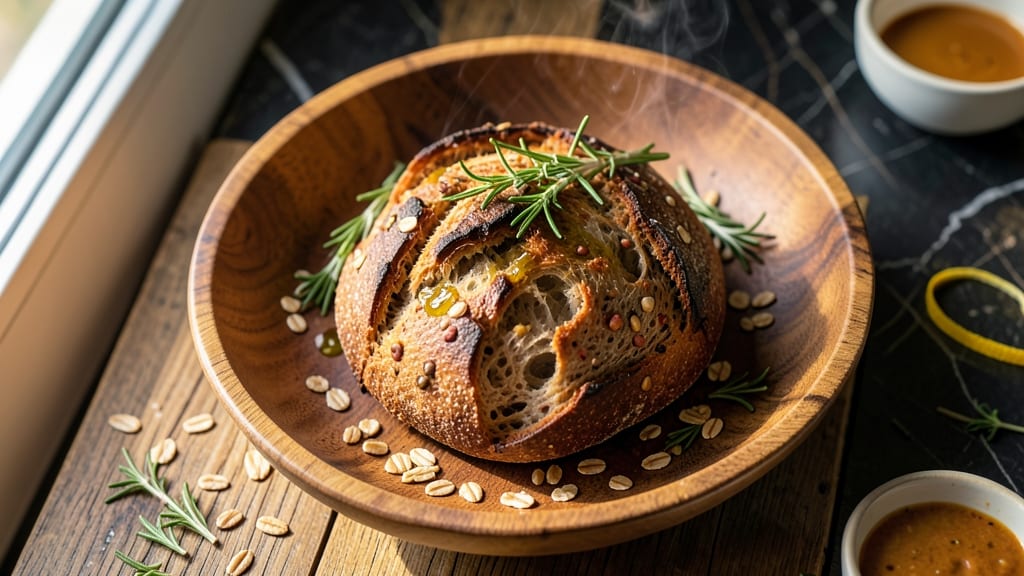
This 9-grain sourdough bread recipe transforms ancient grains into a crusty, nutty masterpiece that rivals artisan bakeries. The secret lies in balancing hydration and fermentation—each grain (spelt, rye, einkorn) contributes texture and depth, while the sourdough starter unlocks complex flavors.
I’ve perfected this method over years of experimentation, ensuring a loaf with a crispy crust and an open crumb structure that’s impossible to resist.
What sets this recipe apart is the patient fermentation process, where folds every 30 minutes for 2 hours develop gluten and flavor. The dough’s higher hydration (75%) creates a sticky, elastic texture, but the grains absorb moisture perfectly when handled gently.
No kneading required—just time and technique. For best results, bake at 450°F with steam to achieve that golden, blistered crust we all crave.
The reward is a loaf with chewy yet airy crumb, packed with nutty, earthy notes from the grains. Slice it fresh for sandwiches or toast it until crispy—every bite delivers that satisfying crunch and depth.
This recipe isn’t just bread; it’s a textural and flavorful experience that elevates any meal.
Store wrapped at room temperature for 3 days or freeze for up to 3 months. Reheat slices in a dry pan for that fresh-baked aroma. Whether you’re a seasoned baker or new to sourdough, this method delivers restaurant-quality results at home.
Ingredients for 9 grain sourdough bread
Nine ancient grains and a patient starter—this is your ticket to restaurant-quality sourdough.
| Ingredient | Amount | Notes |
|---|---|---|
| Active Sourdough Starter 🍞 | ½ cup | Unfed, bubbly starter |
| Spelt Flour 🌾 | 1 cup | Stone-ground preferred |
| Rye Flour 🌾 | ½ cup | Dark rye for depth |
| Einkorn Flour 🌾 | ½ cup | Freshly milled if possible |
| Whole Wheat Flour 🌾 | ½ cup | Unbleached preferred |
| Oat Flour 🌾 | ¼ cup | Blended from rolled oats |
| Buckwheat Flour 🌾 | ¼ cup | Rich, earthy flavor |
| Amaranth Flour 🌾 | ¼ cup | Finely ground |
| Quinoa Flour 🌾 | ¼ cup | Lightly toasted |
| White Bread Flour 🌾 | 1 ½ cups | High-protein preferred |
| Water 💧 | 1 ¾ cups | Room temperature |
| Sea Salt 🧂 | 1 ½ tsp | Fine grain preferred |
| Instant Yeast 🍞 | ¼ tsp | Optional for boost |
| Cornmeal 🌽 | ¼ cup | For dusting loaf pan |
| Ice Cubes ❄️ | ¼ cup | For scoring crust |
The grains are the heart of this loaf, so source them carefully. King Arthur or Bob’s Red Mill carry excellent pre-ground flours, but for maximum flavor, grind your own using a high-quality mill. Spelt and einkorn should be stone-ground to preserve their delicate textures. Rye flour adds depth—dark rye is non-negotiable for that authentic tang. If using whole grains, soak them overnight for better hydration. The sourdough starter must be active and bubbly; feed it 12 hours before mixing to ensure peak performance.
No spelt flour? Substitute whole wheat at the same ratio, though texture will differ slightly. Buckwheat can be swapped for sorghum flour, but expect a milder flavor profile. For a lighter crumb, reduce oat flour by half and add all-purpose flour instead. The instant yeast is optional but helpful if your starter is sluggish—use it only if the dough isn’t rising vigorously after 4 hours. For scoring, a razor blade creates cleaner cuts than a lame, but a sharp knife works in a pinch. The ice cubes aren’t just for show—they create dramatic steam when baking, ensuring that signature blistered crust.
This dough is best baked within 12 hours of mixing—longer fermentation risks overproofing. Store wrapped in a clean kitchen towel at room temperature for up to 3 days; the flavor deepens over time. For longer storage, freeze the loaf in slices wrapped in parchment—3 months is standard, but it’ll stay fresh indefinitely if properly sealed. To revive, toast slices in a dry pan for 2 minutes per side. The crust freezes beautifully too; just reheat in a 375°F oven for 5-7 minutes to restore its crispness.
Why You'll Love This Recipe
- No-Fuss Mixing: I’ll be real—this dough comes together in five minutes of stirring. Just toss in your active starter, those hearty flours (spelt, rye, einkorn—don’t skip the whole wheat for that chew), and water. No kneading, no fuss, no second-guessing.
- Earthy Depth: That rye and einkorn? They turn this into a bread with layers—crusty outside, tender crumb, and a subtle tang that lingers. Honestly, it’s the kind of flavor that makes you slow down and actually taste your toast.
- Weeknight Hero: I keep a loaf in the freezer for lazy mornings—just slice and toast. Or use it to soak up soups, mop up sauces, or even make croutons. Between us, it’s the one bread that does it all without trying too hard.
- Budget-Friendly Staple: Whole grains and sourdough stretch my grocery budget further than store-bought. A single batch feeds my family for days, and the leftovers? Perfect for sandwiches, garlic toast, or even breadcrumbs. (Yes, even on a Tuesday night.)
Step-by-step instructions for 9 grain sourdough bread
This ancient grain sourdough delivers complex flavor and perfect crust through precise technique.
Mix the Dough with Ancient Grains
In a large mixing bowl, combine the 0.5 cup active sourdough starter with 1.75 cups water at room temperature. Let it sit for 5 minutes while you prepare the flours. This hydration jumpstarts fermentation in your ancient grains.
Add the 1 cup spelt flour, 0.5 cup rye flour, 0.5 cup einkorn flour, 0.5 cup whole wheat flour, 0.25 cup oat flour, 0.25 cup buckwheat flour, 0.25 cup amaranth flour, and 0.25 cup quinoa flour to the bowl. Mix with a wooden spoon until no dry spots remain. The dough will be thick and shaggy at this stage.
Add the 1.5 cups white bread flour and 1.5 tsp sea salt, mixing until fully incorporated. The dough should be stiff but manageable. If using, sprinkle in the 0.25 tsp instant yeast now and mix lightly. Cover with a damp towel and let rest for 30 minutes at room temperature.
Develop the Dough Through Autolyse
After the initial rest, perform a series of stretch-and-folds every 30 minutes for 2 hours. Wet your hands and grab one section of dough, stretching it upward while folding it over itself. Rotate the bowl and repeat this motion in four directions. This builds gluten structure in the ancient grains while maintaining their delicate textures.
During the final stretch-and-fold, add the remaining 1.5 cups white bread flour if needed to achieve proper texture. The dough should be smooth, elastic, and slightly tacky but not sticky. If it's too dry, add 1 tablespoon water at a time until it reaches the ideal consistency.
Let the dough rest for 15 minutes after the final fold. This brief pause allows the gluten strands to relax before shaping. The dough should now be ready for bulk fermentation with a windowpane test confirming proper gluten development.
Bulk Ferment at Controlled Temperature
Place the dough in a lightly oiled bowl, cover with a damp towel, and ferment at 75°F for 4-6 hours or until it has doubled in size. The dough should show 50-75% increase in volume and exhibit bubbles along the surface. For best results, use a dough proofer or place the bowl in a warm oven with the light on.
Check the dough's readiness by performing a poke test: press your finger gently into the dough. If it springs back slowly (within 1-2 seconds) and leaves a slight indentation, it's ready. If it springs back immediately, it needs more time. The ancient grains will ferment more slowly than white flour alone, so patience is key.
Once fully proofed, shape the dough into a batard (oval loaf) by gently rounding it into a ball and tucking the edges underneath. Place it seam-side up in a floured proofing basket or bowl. Cover and let it rest for 30 minutes before final proofing.
Final Proof and Bake for Crusty Perfection
Preheat your oven to 450°F with a Dutch oven inside for 45 minutes. Remove the Dutch oven and dust it generously with 0.25 cup cornmeal. Transfer the shaped dough to the Dutch oven and score the top with a razor blade using a ½-inch deep pattern. This allows proper expansion and creates an attractive crust.
Bake the bread covered for 30 minutes, then remove the lid and bake for an additional 15-20 minutes until the crust is deep golden brown and the internal temperature reaches 205°F. The ancient grains will contribute to a slightly denser crumb but maintain excellent texture.
Remove the bread from the Dutch oven and cool on a wire rack for at least 1 hour before slicing. The crust should be crisp and shatterable, while the interior reveals an open crumb with visible pockets from the fermentation. The combination of ancient grains creates a complex flavor profile that's both nutty and slightly sweet.
Score and Serve for Maximum Flavor
Before serving, use the 0.25 cup ice cubes to create a decorative score pattern on the cooled loaf. The ice creates a crisp, clean cut that's perfect for presentation. Each slice should reveal the beautiful open crumb structure created by the ancient grains and proper fermentation.
This 9-grain sourdough delivers the perfect balance of ancient grain nutrition and artisanal baking quality. The rye and einkorn contribute depth, while the white bread flour ensures proper structure. The result is a bread that's both visually stunning and packed with complex flavors from each individual grain.
Pro Tips For Making 9 Grain Sourdough Bread
- Hydrate Each Flour Separately: The rye and einkorn soak up water like sponges while spelt stays dry—mix them all together and you’ll end up with a gummy mess. Weigh each flour separately, add water to the rye and einkorn first (let them sit 20 minutes), then combine with the rest. This keeps your dough from turning into a gluey disaster.
- Skip the Pre-Shape Stress: I used to fight my 9-grain dough like it owed me money, but this stuff’s dense and stubborn. After the bulk ferment, just gently stretch and fold once—no need for a tight pre-shape. Let it relax in the fridge overnight, then shape it right before baking. Your hands (and your dough) will thank you.
- Proof in a Cool Place: Your starter’s wild, but the whole-wheat and spelt in this mix slow down fermentation faster than you’d expect. If your kitchen’s warm, proof the dough in the fridge for 8–12 hours instead of rushing it at room temp. The crust will be crispier, and the flavor deeper—no sad, dense loaves here.
- Steam the First 10 Minutes: This isn’t your light white bread—it’s got dense, heavy grains that need help browning. Toss a metal bowl of boiling water in your oven, then slide your loaf in. The steam fights the dryness of the rye and einkorn, giving you that golden crust without burning the top. (Yes, even if you’re impatient like me.)
Troubleshooting this recipe
Dense Crumb Fix
If your loaf turns out too dense, the issue is likely underproofed dough or insufficient gluten development. Ancient grains absorb moisture differently, so extend bulk fermentation by 1-2 hours at 75°F—the dough should rise 50-75% and pass the poke test (slow spring-back).
For extra insurance, perform one additional set of stretch-and-folds during bulk fermentation to strengthen gluten. 💡
Flat or Underproofed Loaf
Flat bread with poor rise? Your starter may be too weak or the environment too cold. Feed your starter 12 hours before mixing and verify it’s bubbly and active. Use a dough proofer or place the bowl in a warm oven (75°F) to speed fermentation.
If using instant yeast, reduce it to 0.125 tsp—too much can overpower the sourdough’s natural rise. 🌡️
Sticky Dough Nightmare
Ancient grains like buckwheat and amaranth absorb more moisture, making dough extra sticky. To tame it, add 1-2 tbsp white bread flour during stretch-and-folds or dust your work surface with semolina (not cornmeal).
If the dough feels unmanageable, let it rest 10 minutes uncovered—surface tension will help. A lightly floured dough scraper is your best friend for shaping. ✨
Pale or Soft Crust
A pale crust usually means insufficient steam during baking. Preheat your Dutch oven 45 minutes with the lid on, then ice the loaf before scoring—this creates dramatic steam for a crispy crust.
Bake uncovered for the last 15-20 minutes at 450°F to deepen color. For extra crunch, broil for 1-2 minutes at the end (watch closely!). ❄️
Grain Separation
If grains separate during mixing or baking, they weren’t hydrated enough before mixing. Soak whole grains (if using) overnight or blend them into flours (like oat flour) to prevent clumping.
For a smoother texture, sift flours together before mixing. If separation happens during baking, try reducing oat flour by 2 tbsp—it’s the stickiest grain in this blend. 🌾
Overproofed Dough
An overproofed loaf collapses when baked. This happens if you ferment too long or let it rest too long after shaping. For ancient grains, limit bulk fermentation to 6 hours max at 75°F.
After shaping, final proof no longer than 2 hours—the grains ferment slower, so time them carefully. If in doubt, bake sooner—underproofed is easier to fix than overproofed. ⏰
Nutrition facts
Frequently asked questions
Can I substitute any of the 9 grains in this recipe?
Yes, but choose carefully! For spelt, use whole wheat flour (1:1 ratio) though texture will differ. Buckwheat can swap with sorghum flour (milder flavor), and quinoa flour works 1:1 with rice flour. Avoid heavy grains like millet—they can make the crumb too dense. The key is maintaining the nutty, earthy balance from the original blend.
How do I know when my sourdough starter is ready for this recipe?
Your starter should be bubbly, doubled in size, and have a light, airy texture—not dense or liquidy. Feed it 12 hours before mixing with equal parts flour and water (1:1:1 ratio) for peak activity. If it smells sour but pleasant (like yogurt), it's ready. For ancient grains, an active starter is critical—they ferment slower than white flour.
Why does my dough feel too sticky after mixing?
Ancient grains like buckwheat and amaranth absorb more moisture, creating extra stickiness. Dust your work surface with semolina (not cornmeal) and use a dough scraper instead of wet hands. If needed, add 1-2 tbsp white bread flour during stretch-and-folds. Let the dough rest 10 minutes uncovered—surface tension helps reduce stickiness.
Can I bake this bread without a Dutch oven?
Yes, but expect a less crispy crust. Preheat your oven to 450°F and place a baking steel or cast-iron skillet inside for 45 minutes. Bake the loaf on the hot metal, then transfer to a baking sheet for the last 10 minutes. For steam, place a metal bowl of boiling water on the lower rack. The crust won't blister as dramatically, but the crumb will still be excellent.
How long should I let this bread cool before slicing?
Wait at least 1 hour—patience prevents gummy crumb! The ancient grains release starches when hot, which turn gummy if sliced too soon. For faster cooling, place the loaf on a wire rack and use a fan. If you're impatient, slice after 30 minutes, but the texture won't be ideal. The crust will crisp up as it cools completely.