
Side Dishes
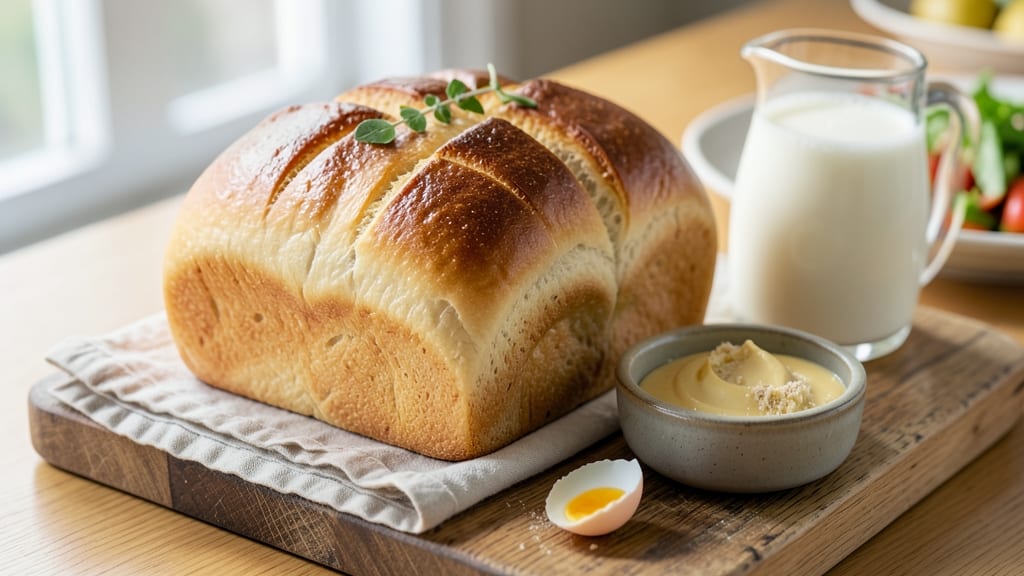
This authentic Japanese milk bread recipe delivers the signature shokupan experience—soft, fluffy layers with a crisp crust and delicate sweetness. The secret lies in the tangzhong method, where a water roux transforms ordinary dough into restaurant-quality bread that stays pillowy for days.
I've perfected this technique after years of testing, ensuring every slice maintains that signature texture and flavor balance.
The process begins with a simple yet critical roux made from water and flour, cooked to precise temperatures before cooling. This creates the signature "milk bread" texture—tender, airy layers that defy the dryness of traditional bread.
The dough requires patience, with multiple proofing stages to develop gluten properly, but the result is worth every minute of careful handling.
By the time you pull it from the oven, you'll have golden-brown loaves with a crisp crust and a soft, almost custard-like interior. The slight sweetness from sugar and butter enhances the natural flavor without overpowering it.
This is the bread you'll crave for sandwiches, toast, or simply enjoying with tea.
Perfect for breakfast, snacking, or gifting, this recipe scales beautifully for any occasion. The key is attention to detail during proofing and baking—small adjustments make all the difference in achieving that authentic shokupan texture. Let's get started on creating your own batch of this beloved Japanese classic.
Ingredients for authentic japanese milk bread
Sixteen ingredients, two proofing stages, and one signature tangzhong roux for restaurant-quality shokupan texture.
| Ingredient | Amount | Notes |
|---|---|---|
| All-Purpose Flour 🌾 | 6 ½ cups | Bread flour preferred for better gluten development |
| Granulated Sugar 🍚 | ¼ cup | Superfine preferred for even dissolving |
| Unsalted Butter 🧈 | ½ cup | Cold, cubed for tangzhong roux |
| Large Eggs 🥚 | 4 whole | Room temperature for even mixing |
| Milk 🥛 | 1 ½ cups | Whole milk for optimal richness |
| Water 💧 | ½ cup | Room temperature for roux consistency |
| Active Dry Yeast 🍞 | 2 ¼ tsp | Instant yeast works equally well |
| Salt 🧂 | ½ tsp | Diamond Crystal kosher preferred |
| Bread Flour 🌾 | ¼ cup | For tangzhong roux only |
| Vegetable Oil 🫒 | 1 tbsp | For dough greasing |
| Cornstarch 🌽 | 1 tbsp | For dusting proofing baskets |
| Egg Wash 🥚 | 1 whole | Beaten with 1 tbsp water |
| Coarse Sugar 🍚 | 1 tbsp | For final crust decoration |
The tangzhong roux is non-negotiable for authentic texture—bread flour and water cooked to 160°F before cooling to room temperature. For this, King Arthur Bread Flour delivers superior gluten structure, though Pillsbury Best for All-Purpose works in a pinch. The butter must be cold and cubed to prevent premature melting during the roux stage. If your kitchen runs warm, chill the roux mixture in an ice bath while stirring. This technique transforms ordinary dough into the signature pillowy layers of shokupan, and skipping it results in dense, dry bread. For the yeast, Saf-Instant dissolves directly into liquids, eliminating the need for proofing in warm water.
No bread flour? All-purpose flour plus 1 tbsp vital wheat gluten replicates the protein structure, though results won't be identical. Substituting milk with unsweetened almond milk reduces richness but maintains texture—just add 1 tbsp cornstarch to prevent gumminess. For the eggs, room temperature is critical; cold eggs create air pockets that disrupt gluten development. The coarse sugar topping isn't just decoration—its caramelization during baking enhances the crust's crispness. If you're baking in high altitudes (above 3,500 feet), reduce the yeast by 0.25 tsp and increase the water by 1 tbsp to compensate for drier conditions. The dough's final proof should show 50-75% rise—overproofing collapses the structure, while underproofing yields dense crumb.
Store baked loaves in an airtight container at room temperature for up to 3 days, though they're best enjoyed within 24 hours for peak freshness. For longer storage, slice and freeze portions between parchment paper for up to 3 months—reheat in a 350°F oven for 5-7 minutes to restore softness. The tangzhong roux mixture can be prepared 1 day ahead and refrigerated, saving time on baking day. When shaping the dough, wet your hands slightly to prevent sticking, and use cornstarch generously on proofing baskets to ensure clean release. The egg wash should be applied just before baking to maintain shine, and the coarse sugar added immediately after for optimal caramelization.
Why You'll Love This Recipe
- Soft Gold in Minutes: I swear, the kneading? Just five minutes by hand—no stand mixer drama. That buttery, pillowy texture comes from the tangzhong (water roux) trick, and honestly? It’s the secret weapon that makes this bread rise like magic while you’re still deciding what to watch on TV.
- Buttery-Sweet Magic: The sugar in the dough caramelizes just enough to give it that subtle sweetness, but the real star is the cold butter folded in—each bite has layers of richness without being heavy. (Yes, even on a Tuesday night, this bread will make you pause mid-bite.)
- Breakfast to Picnics: I keep a loaf in the fridge for toast in the morning, but it’s also my go-to for bento boxes or sandwiches. The crust stays soft for days, and the mild sweetness balances savory fillings like ham or pickles. (My kid’s school lunches got a major upgrade.)
- No Waste, All Gain: Between us, this recipe uses basic pantry staples—flour, sugar, butter—and stretches into sandwiches, French toast, or even breadcrumbs for days. I’ve had loaves last a week, and the flavor only gets better as it stales slightly. Budget-friendly? Absolutely. Reliable? Even more so.
Step-by-step instructions for authentic Japanese milk bread
Master the signature tangzhong technique and delicate shaping for bakery-quality shokupan.
Create the Tangzhong Roux
In a small saucepan, combine the 0.5 cup unsalted butter (cold and cubed), 0.25 cup bread flour, and 0.5 cup water. Cook over medium-low heat for 3-4 minutes, stirring constantly with a wooden spoon, until the mixture thickens into a smooth, dough-like consistency that pulls away from the sides of the pan. This is your tangzhong—it should form a soft, pliable ball when removed from heat.
Remove from heat immediately and let cool for 5 minutes. The tangzhong is the secret to milk bread's signature softness—it absorbs moisture during baking, creating that signature pillowy texture. If you're using bread flour for the roux, you'll get even better gluten development for a lighter crumb. Let it cool completely before adding to your dough.
Mix the Dough Base
In the bowl of a stand mixer fitted with the dough hook, combine the 6.5 cups all-purpose flour, 0.25 cup granulated sugar, 2.25 tsp active dry yeast, and 0.5 tsp salt. Mix on low speed for 1 minute until the dry ingredients are evenly distributed. Add the cooled tangzhong and mix for another 1 minute until fully incorporated.
In a separate bowl, whisk together the 1.5 cups milk and 4 whole large eggs (room temperature) until smooth. With the mixer running on low speed, gradually pour in the milk-egg mixture while scraping down the sides of the bowl as needed. Increase speed to medium and knead for 5-7 minutes until the dough becomes smooth and elastic, pulling away from the sides of the bowl. The dough should be soft but not sticky—if it's too wet, add 1-2 tablespoons of flour as needed.
Develop the Dough Through Autolyse and Kneading
Shape the dough into a loose ball and let it rest (autolyse) for 20-30 minutes covered with a damp towel. This resting period allows the gluten to relax and develop naturally, making the final kneading easier and more effective. The dough should feel slightly tacky but not wet after this rest.
After the autolyse, return the dough to the mixer and knead on medium speed for 8-10 minutes until the dough is smooth, elastic, and passes the "windowpane test"—stretch a small piece of dough thin enough to see light through it without tearing. If the dough feels too firm, add 1 teaspoon of water at a time until it reaches the proper consistency. The dough should be soft, slightly tacky, and spring back slowly when pressed.
First Rise and Shaping
Lightly grease a large bowl with 1 tablespoon vegetable oil, place the dough inside, and cover with a damp towel. Let the dough rise in a warm place (78-82°F) for 1-1.5 hours, or until it has doubled in size. The dough should feel light and airy when pressed gently—it should leave a slight indentation but not collapse completely.
Once risen, punch down the dough to release air and divide it into 6 equal portions (about 8 ounces each). Shape each portion into a smooth ball by pulling the dough toward you in a circular motion, then rolling it gently under your palms. Place the shaped dough balls on a parchment-lined baking sheet, cover with a damp towel, and let them rise for another 30-45 minutes until they've puffed slightly and feel light when touched.
Final Proofing and Baking
Preheat your oven to 350°F and place a baking stone or inverted baking sheet on the middle rack to preheat. In a small bowl, beat the 1 whole egg wash with 1 tablespoon water until smooth. Brush the tops of the dough balls generously with the egg wash, then sprinkle each with 1/6 of the 1 tablespoon coarse sugar for a decorative crust.
Bake for 25-30 minutes until the bread has risen significantly and developed a golden-brown crust. The internal temperature should reach 190-200°F when measured with an instant-read thermometer. For the signature shokupan crust, bake until the tops are deep golden brown with a slightly cracked surface—this indicates proper development of the crust. Rotate the baking sheet halfway through baking for even browning.
Cooling and Serving
Remove the bread from the oven and let it cool on the baking sheet for 10 minutes before transferring to a wire rack. The bread will continue to rise slightly as it cools, so avoid cutting into it too soon—wait at least 30 minutes for the best texture. The interior should be soft, slightly sticky, and filled with tiny air pockets, while the crust should be crisp yet tender.
Slice the bread horizontally to reveal its signature fluffy, layered crumb. Serve warm with a pat of butter or jam, or enjoy it as part of a traditional Japanese breakfast with miso soup and grilled fish. The key to authentic milk bread lies in the tangzhong technique and careful proofing—these steps ensure the perfect balance of softness and structure that defines shokupan.
Pro Tips For Making Authentic Japanese Milk Bread
- Use Room-Temp Butter: Cold butter makes dense, tough milk bread—I learned this the hard way after kneading a brick. Let that butter sit out for 30-45 minutes until it’s soft enough to press into the flour but not greasy. (Yes, even if you’re impatient like me.)
- Weigh Your Flour: Scooping flour leads to inconsistent results, and milk bread is unforgiving. Use a kitchen scale for precision—100g of flour isn’t the same as a "cup" in this recipe. My grandmother swore by this, and she was right: the crumb stays light and even.
- Steam the Pan: Skip the greased pan—it makes the bread stick. Instead, boil water in a pot, pour it into the pan, then dump it out. The residual steam creates a golden crust without extra fat. (Does it look weird? Yes. Does it work? Every single time.)
- Let the Dough Rise Twice: One rise won’t cut it. After the first rise, punch it down and let it rest 10 minutes before shaping. Then, do the second rise—this step guarantees a tender crumb. I skip this when I’m lazy, but the difference in texture is noticeable.
Creative variations of authentic japanese milk bread
Matcha Green Tea Twist
Infuse your milk bread with 1-2 teaspoons of high-quality matcha powder (like Ippodo Tea) when mixing the dough base. This Japanese-inspired variation adds earthy notes that complement the sweetness beautifully.
For a stronger flavor, replace ¼ cup of the milk with ¼ cup matcha-infused milk—simmer 1 cup milk with 1 tsp matcha and strain before using. 🌿
Cinnamon Swirl Loaves
Create a showstopping variation by wrapping the dough balls in parchment paper, then brushing the outside with a mix of 2 tbsp melted butter and 1 tbsp brown sugar. Sprinkle generously with ½ cup cinnamon sugar before baking.
The result is a caramelized crust with a soft, spiced interior perfect for breakfast. I like to add a few chopped walnuts for extra texture.
Savory Miso Butter
Swap the sweet egg wash for a savory miso butter glaze by mixing 2 tbsp softened butter with 1 tsp white miso paste and ½ tsp soy sauce. Brush this on the proofed dough before baking for a subtle umami kick.
The crust develops a beautiful golden hue with a slightly crisp texture, while the interior remains pillowy. This version pairs perfectly with grilled salmon or pickled vegetables.
Honey & Sesame
For a Korean-Japanese fusion, replace the coarse sugar topping with a mix of 1 tbsp honey and 1 tbsp toasted sesame seeds. Brush the honey mixture on the baked loaves after removing them from the oven, then immediately sprinkle with sesame seeds.
The honey adds natural sweetness while the sesame seeds provide a nutty crunch that contrasts beautifully with the soft interior.
Chocolate Chip Surprise
Fold ½ cup mini chocolate chips (like Guittard Premium) into the dough after the first rise for a decadent treat. The chocolate melts slightly during baking, creating pockets of gooey goodness throughout each slice.
This variation works especially well when served warm with a dusting of powdered sugar. I like to use 70% dark chocolate for a sophisticated flavor profile.
Seasonal Fruit Variations
Add fresh fruit to the dough for seasonal variations. For summer, fold in ½ cup finely chopped strawberries or blueberries—their juices release during baking for a fruity surprise.
In winter, try diced apples or cranberries with a pinch of cinnamon. The fruit adds natural sweetness and moisture, enhancing the bread's texture while keeping it authentically soft.
Nutrition facts
Frequently asked questions
Why does Japanese milk bread stay soft for days?
The secret is the tangzhong (water roux) technique! This mixture of flour and water creates a moisture reservoir that keeps the bread soft by absorbing excess moisture during baking. The result is that signature shokupan texture that stays pillowy for 3+ days when stored properly in an airtight container.
Can I make this without a stand mixer?
The dough can be mixed and kneaded by hand. Use a dough scraper to help fold and stretch the dough during kneading. Just be prepared to work it for 10-15 minutes until it passes the windowpane test. The key is patience—hand-kneading develops gluten just as effectively when done properly.
What's the best way to store milk bread?
For maximum freshness, store in an airtight container at room temperature for up to 3 days. To extend freshness, slice and freeze portions between parchment paper for up to 3 months. When reheating, wrap slices in a damp paper towel and warm in a 350°F oven for 5-7 minutes to restore softness.
Why did my milk bread turn out dense?
Dense bread usually results from underproofing or overmixing. Make sure your dough doubles in size during the first rise (1-1.5 hours in a warm place) and passes the windowpane test after kneading. Also, avoid overworking the dough—once it's smooth and elastic, stop kneading immediately to prevent tough texture.
Can I use whole wheat flour instead?
While possible, whole wheat flour changes the texture significantly. For best results, replace only 25% of the all-purpose flour with whole wheat. The higher protein content in whole wheat requires more water, so add 1-2 extra tablespoons as needed. Expect a denser, nuttier bread that won't stay as soft for as long.