
Side Dishes
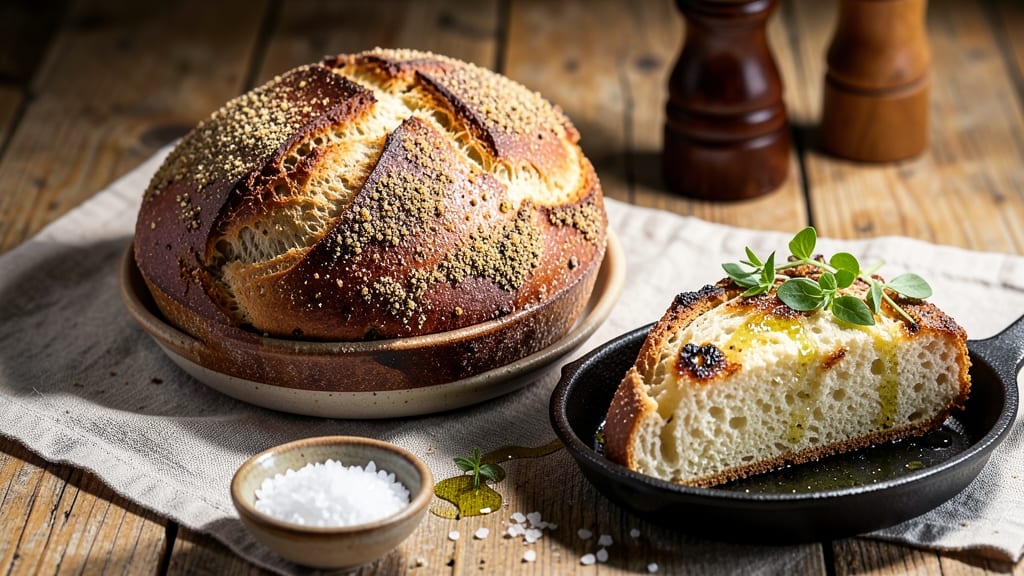
This authentic Italian semolina bread recipe brings the golden crust and nutty grain heart of traditional Pane di Semola straight to your kitchen. 🌟 Born from Southern Italian roots, this bread requires only four simple ingredients—semolina flour, water, yeast, and olive oil—but delivers restaurant-quality texture and flavor.
The key lies in the semolina’s coarse texture, which creates that signature crispy crust while keeping the interior tender and chewy.
What sets this recipe apart is the traditional kneading technique and slow fermentation, which develop deep flavor and an open, airy crumb. Unlike standard bread recipes, semolina bread relies on minimal handling and precise proofing times to achieve its signature texture.
The result? A loaf with a shatteringly crisp exterior and a soft, nutty interior that pairs perfectly with olive oil, tomatoes, or as a base for bruschetta.
Baking this bread at home is simpler than you think—just a home oven can replicate the wood-fired results when you follow the right steps. The semolina’s natural starch creates a golden crust that’s irresistibly crunchy, while the interior stays soft and slightly elastic.
This is the bread that makes Italian meals feel complete, whether served warm with dinner or toasted for breakfast.
Ready to master the art of Italian semolina bread? Let’s get started with the exact techniques that have been perfected in Sicilian kitchens for generations.
Ingredients for authentic italian semolina bread
Four core ingredients transform into golden Sicilian semolina bread with crisp crust and tender crumb.
| Ingredient | Amount | Notes |
|---|---|---|
| Semolina Flour 🌾 | 4 cups | Fine semolina for texture |
| Active Dry Yeast 🍞 | ¼ oz | Or 1 packet (2.25 tsp) |
| Extra-Virgin Olive Oil 🫒 | ½ cup | High quality for richness |
| Warm Water 💧 | 1 ½ cups | 105-115°F for activation |
| Diamond Crystal Kosher Salt 🧂 | 1 ½ tsp | Fine grain preferred |
| Cornmeal 🌽 | ½ cup | For dusting bread pan |
| Coarse Sea Salt 🧂 | 1 tsp | For crust sprinkle |
Semolina flour is the star—Barilla or Mulino Bianco brands deliver that authentic texture. Italian markets or specialty stores carry the finest grades, but the regular grocery store aisle works too if labeled 'fine semolina'. The yeast must be fresh: if it smells stale or doesn't activate within 5 minutes, toss it. For the olive oil, Colavita or Bertolli are reliable choices, but any extra-virgin with fruity notes will work. The water temperature is critical—too hot kills the yeast, too cold slows activation. Use an instant-read thermometer if you're unsure.
No semolina flour? Substitute half with all-purpose flour, but expect a softer crust. Running short on yeast? Instant yeast works 1:1, but let it dissolve completely in the water. The olive oil can be swapped for avocado oil in a pinch, though it lacks the same depth. For the salt, Diamond Crystal kosher is ideal, but any fine salt works—just adjust to taste. If your cornmeal is pre-mixed with salt, skip adding extra salt to the dough. The coarse sea salt for the crust? Maldon flakes are perfect, but any coarse salt will do.
Store semolina flour in an airtight container for up to 6 months to prevent rancidity. The yeast packet keeps for 3 months in the fridge once opened. This bread reheats beautifully—wrap in foil and warm for 10 minutes at 350°F to restore that fresh-baked crunch. For longer storage, freeze the cooled loaf wrapped in plastic for up to 3 months. Toast slices directly from frozen for crispy bruschetta.
Why You'll Love This Recipe
- No-Knead Magic: I swear by this dough—just mix, let it rise, and bake. The semolina’s coarse texture gives it a rustic crunch without a single punch or fold required.
- Golden Crust, Warm Heart: That olive oil-infused crust? Chef’s kiss. The semolina’s nutty bite pairs perfectly with the soft, airy interior—like a hug in bread form.
- Weeknight Workhorse: Toss it in a basket for breakfast, toast it for lunch, or serve it alongside dinner. It’s my go-to when I’m too tired to think, but too hungry to wait.
- Budget-Friendly Staple: Five ingredients, zero waste—this bread lasts days, freezes like a dream, and costs pennies per loaf. Honestly, it’s the kind of recipe that makes me feel like a genius.
Step-by-step instructions for authentic Italian semolina bread
Here's the traditional method for crafting that iconic Italian semolina bread with its signature nutty crunch.
👨🍳 Step 1: Activate the Yeast with Warm Water
In a large mixing bowl, combine the 1.5 cups warm water (between 105-115°F) with the 1.5 teaspoons Diamond Crystal kosher salt and 0.25 oz active dry yeast. Let it sit for 5-10 minutes until you see plenty of bubbles forming on the surface. This foamy action confirms your yeast is alive and ready to work.
I always test the water temperature first with my finger—it should feel warm but not hot. If it's too hot, you'll kill the yeast; if too cold, it won't activate properly. The bubbles should be vigorous and frequent, not just a few small ones. This activation step is where all the flavor development begins.
🍳 Step 2: Mix the Semolina Dough
Add the 4 cups semolina flour and 0.5 cup extra-virgin olive oil to the yeast mixture. Using a wooden spoon or dough whisk, stir vigorously for 3-4 minutes until you have a shaggy, sticky dough that pulls away from the bowl sides. Semolina flour is coarser than all-purpose, so it won't form a smooth dough like wheat flour.
The dough will be thick and resistant at first, but keep mixing—this is normal. The olive oil helps create that signature tender crumb while the semolina gives that distinctive nutty flavor and crunchy texture. Don't be tempted to add more water; the semolina absorbs moisture differently than wheat flour.
🥘 Step 3: Knead and Rest the Dough
Transfer the dough to a lightly floured surface and knead for 5 minutes using the "fold and press" method. Fold one-third of the dough toward you, then press down, rotate 90 degrees, and repeat. This develops gluten without overworking the dough. The texture should become slightly smoother but will still be denser than wheat dough.
Place the dough in a lightly oiled bowl, cover with plastic wrap, and let it rest at room temperature for 1 hour. This initial rest allows the gluten to relax and the flavors to meld. I like to set my bowl in a warm spot—near the oven with the light on works well. The dough won't rise much, but it will become more pliable.
🔥 Step 4: Shape and Proof the Loaf
Preheat your oven to 375°F and position a rack in the lower third. Lightly grease a 9x5-inch loaf pan and dust it generously with 0.5 cup cornmeal. Shape the rested dough into a rough rectangle, then fold it into the pan, pressing gently to fill all corners. The top should be slightly uneven—this creates more surface area for browning.
Cover the pan with a clean kitchen towel and let the dough proof in the warm oven for 30-40 minutes until it's puffed about 1 inch above the pan rim. The edges should look slightly rounded and the dough should feel springy when pressed gently with your finger. This proofing step is crucial for that authentic Italian texture—don't rush it.
🔪 Step 5: Bake to Golden Perfection
Remove the towel and sprinkle the 1 teaspoon coarse sea salt evenly over the top. Bake for 35-40 minutes until the bread is deeply golden brown and sounds hollow when tapped on the bottom. The internal temperature should reach 190-195°F—this ensures it's fully baked through.
Here's the thing about semolina bread—the crust should be thick and crackly, almost like a biscuit shell, while the interior remains tender. If it's browning too quickly, tent loosely with foil after 20 minutes to prevent over-browning. Let it cool in the pan for 10 minutes before transferring to a wire rack. The bread will continue to firm up as it cools, developing that perfect crunch.
Pro Tips For Making Authentic Italian Semolina Bread
- Mix the Dough Like a Pasta Maker: Semolina is stubborn—don’t just stir it. Use a wooden spoon or your hands to work the dough for 5–7 minutes until it pulls away from the bowl. I learned this the hard way when my first batch turned out gummy because I treated it like regular bread dough.
- Use Lukewarm Water, Not Warm: That yeast packet says "warm," but you’ll kill it if you go by feel. Test it with your wrist—it should be body temperature (around 100°F/38°C). Too hot, and your dough will rise fast but collapse later. Too cold, and it’ll take forever. Aim for a glass of water that’s just barely too hot to sip without wincing.
- Let the Dough Rise Twice: Skip the second rise, and you’ll end up with dense, chewy bread. After the first rise (1–2 hours), punch it down, shape it, then let it rise again—this time for 30–60 minutes. The second rise develops flavor and texture. I used to rush this, and my bread tasted flat until I stopped.
- Shape It Tight and Round: Semolina dough wants to spread. Roll it into a tight, smooth ball—not a loose mound—and tuck the edges under as you go. If it springs back when you press it, let it rest 10 more minutes. A loose shape = a flat, sad loaf. A tight shape = that perfect crunchy crust.
Dietary considerations for this recipe
Gluten-Free Adaptations
While traditional semolina bread relies on semolina's natural gluten for structure, you can create a gluten-free version by substituting ½ cup semolina with a gluten-free flour blend (like Bob's Red Mill 1:1).
Use xanthan gum (¼ teaspoon) to mimic gluten's binding properties. The texture will differ—expect a denser crumb—but the nutty flavor remains intact. 🌾
Low-Carb Options
For a lower-carb version, replace 1 cup semolina with almond flour (finely ground) and reduce the olive oil to ¼ cup. The result is a lighter loaf with a slightly chewier texture.
Keep the proofing time shorter (20 minutes) since almond flour absorbs moisture differently. This adaptation cuts carbs by about 30% while preserving the bread's signature crunch.
Vegan Substitutions
Swap the yeast for 1 tablespoon nutritional yeast plus 1 teaspoon apple cider vinegar to mimic the leavening effect. Use flaxseed meal (1 tablespoon ground flax + 3 tablespoons water) as an egg substitute if adding toppings like tomatoes.
The bread will have a slightly denser crumb but maintains its nutty essence. Proofing may take 10-15 minutes longer due to the lack of gluten elasticity.
Allergen-Friendly Notes
Semolina itself is derived from wheat, so this bread isn't inherently gluten-free—though it's naturally free of dairy, eggs, and nuts. For nut-free kitchens, ensure your olive oil is processed in a nut-free facility (many brands specify this).
If avoiding all wheat-related proteins, the gluten-free blend mentioned earlier is your best bet, though texture will shift noticeably. Always check labels on yeast packets for soy or dairy additives if sensitive.
Storage Flexibility
This bread freezes beautifully for up to 3 months—slice and toast directly from frozen for crispy bruschetta. For gluten-free versions, freeze in 1-inch thick slices to prevent drying. Reheat gluten-free adaptations at 325°F for 5-7 minutes to restore moisture.
The low-carb version benefits from being stored in an airtight container with a slice of apple to prevent staling. 💡
Nutrition facts
Frequently asked questions
Why does my semolina bread turn out dense instead of crispy?
Semolina bread needs proper hydration and proofing time. If your dough feels dry or didn't proof long enough (30-40 minutes in a warm oven), it won't develop that signature crisp crust. Try adding 1 tablespoon extra olive oil to the dough and ensuring your oven is fully preheated to 375°F before baking. The cornmeal coating on the pan also helps create that crunch.
Can I make this bread without a loaf pan?
Shape the dough into a round or oval on a parchment-lined baking sheet. Brush with olive oil and sprinkle with coarse salt before baking. For extra crispiness, bake on the middle rack at 400°F for 30-35 minutes, rotating halfway. The result will be more rustic but equally delicious—perfect for bruschetta!
How do I store semolina bread to keep it crispy?
Store it at room temperature in a paper bag or wrapped in a clean kitchen towel for 2-3 days to maintain crispness. For longer storage, freeze the cooled loaf for up to 3 months. Toast slices directly from frozen for that fresh-baked crunch. Never refrigerate—it makes the bread stale faster.
What's the secret to that authentic Italian flavor?
The combination of semolina flour and extra-virgin olive oil creates that nutty, rich taste. For extra depth, add 1 teaspoon dried rosemary or ½ teaspoon fennel seeds to the dough. Proofing in a warm oven also enhances flavor development. The longer you let it ferment (up to 1 hour before shaping), the more complex the taste becomes.
Can I substitute semolina flour with regular flour?
You can replace ½ cup semolina with all-purpose flour, but the texture will be softer and less crisp. For a closer match, use ½ cup semolina and ½ cup bread flour. The semolina's coarse texture is key for that signature crunch—don't skip it if you want authentic results. The flavor will also be less nutty without it.