
Side Dishes
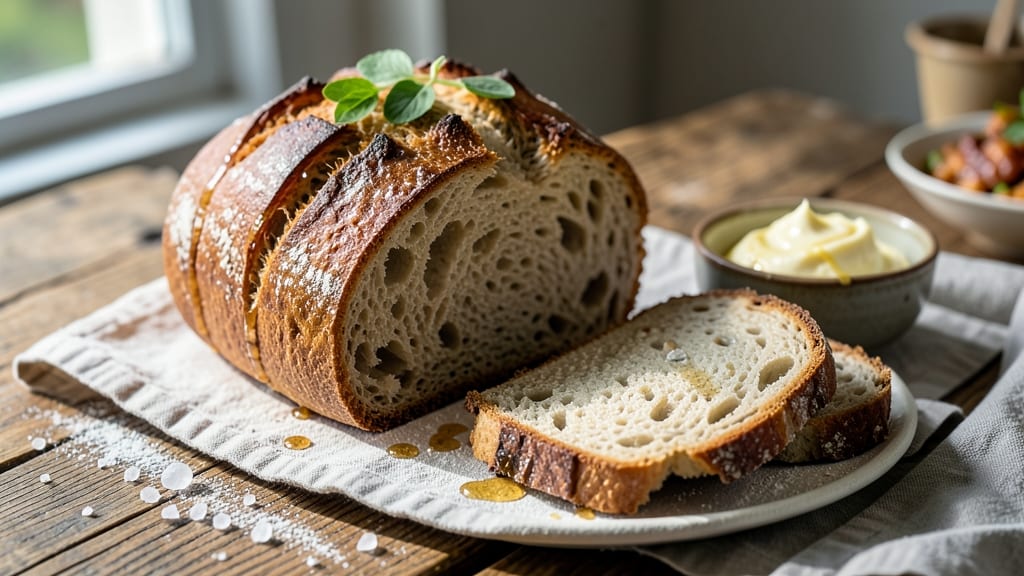
This Australian sourdough bread recipe delivers the perfect balance of crisp golden crust and an open, airy crumb—just like the artisan loaves from Sydney's best bakeries. 🌟 The secret lies in a well-maintained starter and a high-hydration dough that develops flavor over time, with steam during baking to create that iconic crackly exterior.
Australian sourdough often incorporates wholemeal flour or seeds for added texture and nutrition, but this classic white version captures the essence of traditional methods.
The long fermentation process—at least 8 hours—allows the dough to develop its signature tangy depth, while the final proof ensures a light, open crumb structure that's impossible to resist.
What sets this recipe apart is the focus on technique: proper starter feeding, gentle shaping, and precise baking with steam. The result is a loaf with a satisfying snap, a rich crust, and a tangy flavor that keeps you reaching for seconds.
Perfect for sandwiches, toast, or simply enjoying on its own with butter.
Whether you're a beginner or an experienced baker, this method is designed to deliver consistent, professional-quality results every time. Let's get started on creating your own crusty, golden loaf with that unmistakable Australian sourdough character.
Ingredients for australian sourdough bread
Your secret weapon for that iconic Australian sourdough: a lively starter and precise flour blend.
| Ingredient | Amount | Notes |
|---|---|---|
| Active Sourdough Starter 🍞 | ½ cup | Well-fed, bubbly starter |
| All-Purpose Flour 🌾 | 3 cups | High-protein for structure |
| Bread Flour 🌾 | 1 cup | For enhanced crust development |
| Filtered Water 💧 | 1 ¾ cups | Room temperature preferred |
| Kosher Salt 🧂 | 1 ½ tsp | Diamond Crystal preferred |
| Unsalted Butter 🧈 | 2 tbsp | Cold, cubed for lamination |
| Cornmeal 🌽 | 2 tbsp | For dusting parchment paper |
| Ice Water 💧 | ¼ cup | For final dough adjustment |
| Olive Oil 🫒 | 1 tbsp | For bowl and shaping |
The starter is non-negotiable—it needs to be bubbly and active with a 1:1:1 ratio (starter:flour:water). For the flours, King Arthur Bread Flour and AP flour give that perfect balance of chew and open crumb. If you're feeling adventurous, swap 1/4 cup of the AP flour for wholemeal—just know it'll darken the crust slightly. The water? Room temp is key—cold slows fermentation, hot kills the yeast. I always use filtered water to avoid weird flavors from chlorine or minerals.
No sourdough starter? Buy one from a trusted baker—or start your own with this recipe's starter. Swapping flours? Rye flour adds depth but can make the dough sticky; use 1/4 cup max. For the butter, European-style works best—it's higher in fat content. Short on time? Cold dough ferments slower, so plan ahead. The cornmeal? Bob's Red Mill is my go-to—it's fine enough to dust but not so fine it clogs. And that ice water? Only add if the dough feels too sticky—it tightens the gluten without killing fermentation.
Starter can be kept in the fridge for up to 2 weeks, but feed it 12 hours before baking. The dough ferments best at 75°F—use your oven with the light on if your kitchen is cold. Shape the loaf gently but firmly—overhandling develops gluten and tightens the crumb. For the golden crust, bake with steam: place a baking stone on the lowest rack and pour boiling water into a tray on the middle rack. This loaf keeps 3-4 days at room temp, but it's best enjoyed fresh—toasted with butter or sliced for sandwiches.
Why You'll Love This Recipe
- Just Five Ingredients: I swear, this bread is the definition of "simple but impressive." You’re basically mixing flour, water, salt, and your starter—no fancy techniques, no stress. The bread flour gives that perfect chew, while the all-purpose keeps it light, and honestly? That’s all you need.
- Tangy, Crusty Magic: Between us, the flavor is ridiculously good. The sourdough starter brings that bright, slightly tangy kick, while the crust gets this deep, caramelized crunch that’s impossible to resist. Toast it, and it’s like a warm hug in bread form—no butter required.
- Weeknight & Weekend Star: This bread is my secret weapon for everything. Use it for breakfast toast, sandwiches that actually hold up, or even as a base for open-faced meals. I’ll be real: I’ve made it on a Monday night when I was too tired to plan, and it still saved dinner.
- Stretches Your Dollar: A loaf costs me pennies to make, but it lasts forever. Freeze slices for toast later, or turn day-old bread into croutons or breadcrumbs—no waste, just smart baking. Plus, the starter? It’s a free, reusable resource that keeps giving.
Step-by-step instructions for Australian sourdough bread
Here's how to craft that iconic Australian sourdough with a shatteringly crisp crust and open, airy crumb.
👨🍳 Step 1: Mix the Dough with Precision
In a large mixing bowl, combine the 0.5 cup Active Sourdough Starter, 3 cups All-Purpose Flour, 1 cup Bread Flour, and 1.75 cups Filtered Water. I use a wooden spoon first to break up any dry pockets, then switch to my hands to work the dough until it comes together into a shaggy mass.
Add the 1.5 tsp Kosher Salt and 2 tbsp Unsalted Butter (cold, cubed), then continue kneading by hand for 8-10 minutes until the dough is smooth and elastic. You'll know it's ready when it springs back slowly when poked—this indicates proper gluten development. The dough should be slightly tacky but not sticky.
🥘 Step 2: Perform the Laminated Fold
Lightly oil your work surface with 1 tbsp Olive Oil and transfer the dough. This is where the magic happens: perform three sets of laminated folds, each separated by 30 minutes of rest. For each fold, stretch the dough into a rectangle, then fold it into thirds like a business letter.
After the third fold, shape the dough into a tight boule by pulling the edges toward the center and tucking them underneath. Place it seam-side up in a lightly oiled bowl, cover with a damp towel, and let it rise at room temperature for 1-2 hours or until it has nearly doubled in size. This long fermentation develops that signature tangy flavor.
🔥 Step 3: Shape and Score for the Perfect Crust
Turn the dough onto a floured surface and gently reshape it into a round boule. I like to use a bench scraper to create tension on the surface—this helps develop that open crumb. Place the shaped dough onto a parchment-lined baking sheet dusted with 2 tbsp Cornmeal.
Let the dough rest uncovered for 45-60 minutes while the oven preheats to 450°F. You'll know it's ready when the surface looks slightly puffed and has developed tension. Just before baking, score the top with a sharp razor at a 45-degree angle, cutting about ¼-inch deep. This controlled cut directs the oven spring and creates that beautiful open crumb.
🔥 Step 4: Bake with Steam for Maximum Crisp
Transfer the scored boule to the preheated oven. Immediately pour 0.25 cup Ice Water into a small oven-safe dish and place it on the lower rack—this creates steam that's crucial for that shatteringly crisp crust. Bake for 20 minutes with the steam, then remove the water dish and continue baking for another 20-25 minutes until the internal temperature reaches 205-210°F.
You'll know it's perfect when the crust is a deep golden brown with dark brown spots, and it sounds hollow when tapped on the bottom. The bread should have a pronounced aroma—slightly sweet with that unmistakable sourdough tang. Let it cool on a wire rack for at least 1 hour before slicing to allow the crumb to fully set.
Pro Tips For Making Australian Sourdough Bread
- STRETCH AND FOLD: Use a bench scraper or dough whisk to fold your dough in the mixing bowl—lift, fold, and rotate the dough against the bowl’s side. This builds gluten faster than stretching by hand, especially with the higher bread flour content in Aussie sourdough. (I used to waste 20 minutes kneading; folding in 3-minute bursts cuts that in half.)
- WEIGH YOUR STARTER: Scoop your active sourdough starter by weight, not volume—100g, not "a cup." Starters vary in density, and using too little (or too much) throws off hydration and fermentation timing. I learned this after baking a loaf that took 12 hours to rise because I eyeballed it.
- SALT THE WATER: Dissolve the kosher salt in the filtered water before mixing with flour—this ensures even distribution and prevents clumpy dough. Skip this, and you’ll end up with pockets of saltiness or bland spots. (Yes, it sounds basic, but I’ve seen it happen more than you’d think.)
- STEAM THE OVEN: Place a metal tray on the oven rack before preheating, then add 1-2 cups of boiling water when loading the Dutch oven. The sudden steam mimics a bakery’s deck oven and gives you that signature crisp crust without burning the bottom. (I used to rely on ice cubes—don’t do that.)
Serving suggestions for leftovers
Classic Australian Toast
Nothing beats fresh sourdough toast with butter and a sprinkle of flaky sea salt—this is how Aussies do it best. I love using Salted Butter from Plugrá for that perfect balance of richness and salt.
For extra indulgence, add a drizzle of honey or avocado—both pair beautifully with the bread's tangy crumb. 🥖
Sandwich Perfection
Australian sourdough is legendary for sandwiches. Try ham and cheese with mustard or a classic Vegemite spread (if you're feeling adventurous!). For a gourmet twist, layer prosciutto, ricotta, and roasted cherry tomatoes.
The bread's open crumb soaks up flavors beautifully, making every bite satisfying. Use a sharp knife and cut against the grain for the best texture.
Breakfast Pairings
Serve warm slices with scrambled eggs and sautéed mushrooms for a hearty breakfast. The bread's crust adds a satisfying crunch, while the tangy crumb balances the richness of eggs. For a lighter option, pair with Greek yogurt and sliced fruit—the acidity cuts through the bread's density.
I often add a sprinkle of everything bagel seasoning for extra flavor.
Cheese Board Essentials
Australian sourdough is a star on cheese boards. Pair it with aged cheddar, brie, and blue cheese for a mix of sharp, creamy, and bold flavors. Add cured meats like salami or prosciutto, olives, and fig jam for a well-rounded spread.
The bread's crusty exterior contrasts perfectly with the soft cheeses, making it a crowd-pleaser at any gathering.
Dipping Delights
Transform your loaf into dippers! Warm slices make perfect vessels for olive oil and balsamic vinegar, marinara sauce, or hummus. For a sweet twist, try Nutella or peanut butter with banana slices.
The bread's structure holds up well to dipping, making it ideal for sharing. Just be sure to slice it thick enough to avoid sogginess.
Meal Prep Strategy
Slice the cooled loaf and store in an airtight container with a paper towel to keep it fresh. Toast individual slices before serving to restore crispness. For sandwiches, assemble with fillings but skip the bread until ready to eat—this prevents sogginess.
Label containers with dates to track freshness. A loaf lasts 3-4 days at room temperature or up to 1 week in the fridge when properly stored. 💡
Nutrition facts
Frequently asked questions
How do I know my sourdough starter is ready for baking?
Your starter should be bubbly, doubled in size, and have a slightly domed top within 4-6 hours after feeding. It should also pass the float test—drop a small spoonful in water; if it floats, it's active and ready! For Australian-style sourdough, aim for a 1:1:1 ratio (equal parts starter, flour, and water) when feeding 12 hours before baking.
Why does my Australian sourdough crust turn out pale instead of golden?
Pale crusts usually mean insufficient steam during baking or an oven that's too cool. Preheat your oven to 450°F and use a baking stone with ice water in a tray on the lower rack for the first 20 minutes. Also ensure your dough has proofed enough—it should spring back slowly when poked before scoring.
Can I use wholemeal flour in this Australian sourdough recipe?
Replace up to 1/4 cup of the all-purpose flour with wholemeal for added nutrition and a nuttier flavor. Just be prepared for a slightly denser crumb and darker crust. For best results, increase hydration by 5-10% since wholemeal absorbs more water. The tangy flavor will be even more pronounced!
How long should I let the dough proof before baking?
For optimal flavor and texture, proof the shaped boule for 45-60 minutes at room temperature. You'll know it's ready when the surface looks slightly puffed and has developed tension. In cooler climates, extend proofing to 1-2 hours—just avoid overproofing, which causes a flat loaf. The final proof should be about 25-30% of the total fermentation time.
What's the best way to store leftover Australian sourdough?
Wrap cooled slices in an airtight container with a paper towel to prevent sogginess. Store at room temperature for 3-4 days or freeze for up to 3 months. For sandwiches, assemble without the bread until ready to eat. Toasting restores freshness—just 2-3 minutes in a dry pan or toaster works wonders!