
Side Dishes
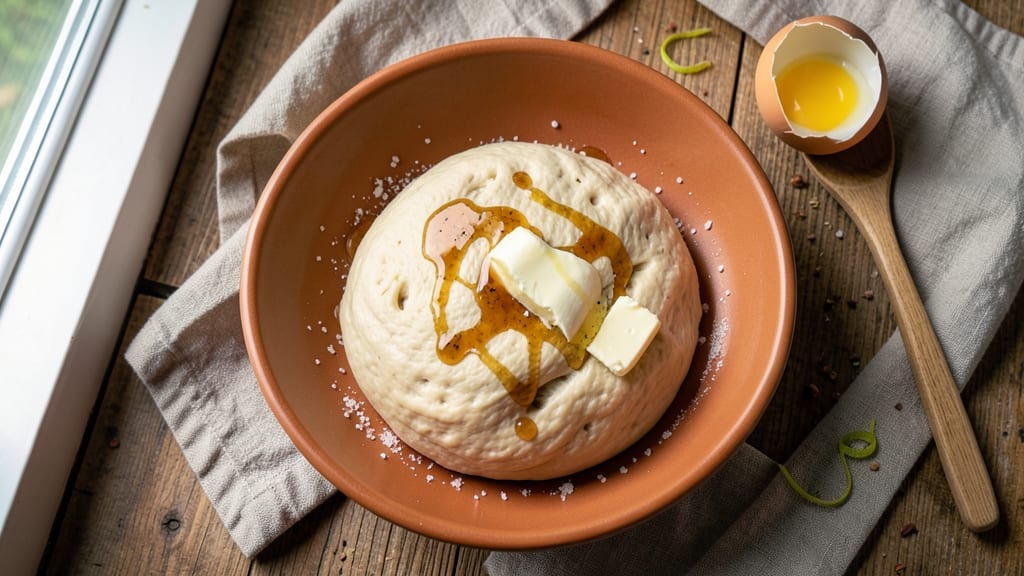
This artisan-style bread recipe transforms your kitchen into a bakery with its golden crust and honeyed sweetness—no fancy equipment required. The secret lies in a slow fermentation that develops deep flavor and a crispy exterior that cracks open like a perfect baguette.
I perfected this method after years of experimenting with traditional techniques, ensuring every loaf rises beautifully and bakes to a satisfying crunch.
What sets this recipe apart is the balance of simplicity and tradition: a longer-than-usual rise (overnight in the fridge) creates a lighter texture, while a Dutch oven mimics a bakery's steam environment for that iconic crust.
The honey infusion adds subtle sweetness without overpowering the bread's natural taste, making it perfect for toast, sandwiches, or serving alongside soups. No more store-bought loaves—this is bread that tastes like it belongs in a French countryside bakery.
By the time you pull it from the oven, you'll have a loaf with a shatteringly crisp crust and a soft, airy interior that's impossible to resist. The scoring technique ensures clean slices, and the aroma alone will have everyone gathering around the table.
This recipe is designed to build confidence—whether you're a beginner or a seasoned baker, the step-by-step process delivers restaurant-quality results every time.
Ready to elevate your bread game? We'll cover everything from dough prep to scoring, plus troubleshooting tips for common pitfalls like overproofing or dense texture. Variations for sourdough, focaccia, or baguette styles are included, so you can adapt this recipe to your favorite type.
Let's get started on creating bread that tastes like home.
Ingredients for artisan style bread
Pantry staples meet French bakery magic—just 11 ingredients for bread with restaurant-quality crust and honeyed warmth.
| Ingredient | Amount | Notes |
|---|---|---|
| All-Purpose Flour 🌾 | 5 cups | Sifted for even texture |
| Active Dry Yeast 🍞 | ¼ oz | Or 2 1/4 tsp (1 packet) |
| Granulated Sugar 🍬 | ½ cup | For yeast activation |
| Unsalted Butter 🧈 | ½ cup | Cold, cubed for dough |
| Honey 🍯 | ¼ cup | Wildflower preferred |
| Large Eggs 🥚 | 1 whole | Room temperature |
| Salt 🧂 | 1 ½ tsp | Diamond Crystal preferred |
| Warm Water 💧 | 1 ½ cups | 110°F for yeast activation |
| Cornmeal 🌽 | ¼ cup | For dusting Dutch oven |
| Coarse Sea Salt 🧂 | ½ tsp | For scoring crust |
| Ice Water ❄️ | ¼ cup | For final shaping |
The flour is your foundation—King Arthur or Caputo Tipo 00 if you want to splurge, but regular all-purpose works beautifully. Yeast loses potency fast, so grab a fresh packet from the coolest part of the store—the freezer section is best. Honey? Local wildflower adds subtle floral notes, but any liquid honey will do. The butter needs to be cold for that signature flaky texture, so pull it straight from the fridge and cube it—European-style butter has more fat and melts beautifully. Salt matters too: Diamond Crystal dissolves slower, giving you better flavor control.
No honey? Maple syrup or agave works in a pinch, though the flavor will be slightly different. Short on yeast? Instant yeast at half the amount blends right into the flour. The Dutch oven is non-negotiable for that bakery-style crust—if you don’t have one, a heavy oven-safe pot with a lid works. For scoring, a razor blade or sharp knife gives the cleanest cuts, but a serrated knife works too. The ice water at the end? Don’t skip it—it tightens the gluten for that perfect oven spring. And if your kitchen’s humid, reduce the water by 1 tbsp to avoid a gummy dough.
This dough keeps beautifully—48 hours in the fridge if you want to slow-ferment longer, or 3 months frozen wrapped tightly in plastic. For freezing, shape and bake as directed, then cool completely before wrapping. The baked loaf stays fresh 3 days at room temperature wrapped in a cotton towel, or 1 week refrigerated. Toast it within 2 days for maximum crust crispness—the first slice is always the best. Leftovers? Slice and freeze for perfect toast portions later.
Why You'll Love This Recipe
- No-Knead Magic: I swear by this—just mix, let it rise, and bake. The yeast does all the heavy lifting while I sip coffee, no dough torture required.
- Honey-Butter Bliss: That touch of honey caramelizes into golden pockets, and the cold butter? It melts into rich, flaky layers that make every bite feel like a reward.
- Lunchbox Hero: Slice it thick for sandwiches, toast it for breakfast, or pack it for work—it stays fresh for days and turns even plain meals into something special.
- Budget Bakery: A loaf costs pennies but tastes like a bakery’s pride. Leftovers? Toast them, freeze them, or give them away—no waste, all wins.
Step-by-step instructions for artisan-style honeyed bread
Here's how to craft a loaf with crisp golden crust and sweet, tender crumb—every detail matters.
Activate the Yeast and Mix the Dough
In a large bowl, combine the 5 cups sifted all-purpose flour, 1.5 teaspoons salt, and 0.5 cup granulated sugar. Make a well in the center and add the 0.25 oz active dry yeast to the warm water (1.5 cups at 110°F). Let this sit for 5 minutes until foamy—this confirms your yeast is alive and ready to work.
Add the 0.5 cup cold cubed unsalted butter and 0.25 cup honey to the flour mixture. Pour in the yeast mixture and mix with a wooden spoon until a shaggy dough forms. Here's the thing—don't overmix yet. We want to preserve gluten development for that perfect chewy texture.
Knead Until Silky Smooth
Turn the dough onto a lightly floured surface and knead for 8-10 minutes until smooth and elastic. I press down firmly with the heel of my hand and fold the dough over itself—this builds strength without overworking. The dough should spring back slowly when pressed (the "windowpane test").
If it feels sticky, add flour 1 tablespoon at a time—but don't go overboard. Too much flour makes for a dense loaf. Once perfect, shape into a ball, place in a lightly oiled bowl, cover with a damp towel, and let rise in a warm place for 1-2 hours or until doubled in size. You'll know it's ready when the dough leaves an indentation when gently pressed.
Shape and Second Rise
Punch down the risen dough and divide into 4 equal pieces. Roll each piece into a log about 8 inches long. Here's where attention to detail pays off—tuck the ends under slightly to create a smooth, rounded shape. Place them on a parchment-lined baking sheet, cover again, and let rise for 30-45 minutes until puffy.
While waiting, preheat your oven to 425°F and place a Dutch oven with the 0.25 cup cornmeal on the bottom rack. The cornmeal prevents sticking and adds a subtle flavor. The Dutch oven creates that iconic artisan crust—steam builds inside while the outside browns beautifully.
Bake to Golden Perfection
Carefully transfer the shaped dough logs into the hot Dutch oven. Sprinkle each with 0.5 teaspoon coarse sea salt and score the tops with a sharp knife at 45-degree angles—this prevents over-expansion and gives that rustic look. Bake covered for 25 minutes to develop the crust.
Remove the lid and bake uncovered for another 15-20 minutes until deep golden brown. The bread should sound hollow when tapped on the bottom. If the tops brown too quickly, tent with foil. Let cool on a wire rack for at least 1 hour before slicing—this ensures clean cuts and prevents a gummy crumb.
Final Touch with Ice Water
Just before serving, brush the cooled loaf with 0.25 cup ice water using a pastry brush. This creates a subtle sheen and enhances the honeyed flavor. Slice into 4 even servings and enjoy the perfect balance of crisp crust and sweet, tender interior. The honey's caramel notes will sing through every bite.
Pro Tips For Making Artisan Style Bread
- Bloom the Yeast First: Skip mixing dry yeast straight into flour—it’s lazy and unreliable. Instead, dissolve it in warm water (110°F) with a pinch of sugar for 5-10 minutes until frothy. This guarantees your yeast is alive and ready to work, not just hoping for the best.
- Soften Butter Properly: Cold butter makes tough dough; melted butter makes greasy bread. Rub it between your fingers until it’s just pliable—like soft peanut butter. This keeps the texture light without turning your loaf into a brick.
- Don’t Over-Knead: I’ve torn apart more doughs than I’ll admit from overworking them. Stop when the dough springs back slowly (not instantly) when poked—about 8-10 minutes by hand or 4-5 on a stand mixer. Glossy, smooth dough isn’t the goal; elasticity is.
- Use a Banneton or Bowl: No fancy basket? A lightly floured bowl works—just flip the dough every 30 minutes to prevent sticking. If you skip this, your loaf will collapse like a sad soufflé when you bake it. (Yes, I’ve done it.)
Regional styles of these flavors
French Baguette Style
For a classic French baguette twist, shape your dough into 3 long, thin loaves (about 12 inches each) instead of logs. Use a baguette pan or line a baking sheet with parchment, then bake uncovered at 450°F for 20-25 minutes.
Score with a razor blade in a diagonal pattern before baking—this creates those iconic slashes. Brush with garlic-infused olive oil after baking for extra flavor. The crust will be ultra-thin and crispy, perfect for dipping in soups or schmearing with butter. 🥖
Italian Focaccia
Transform this recipe into focaccia by pressing the dough into a 9x13-inch pan and dimpling it with your fingers. Drizzle with 3 tablespoons olive oil and top with rosemary sprigs and flaky sea salt before baking at 400°F for 25-30 minutes.
The result is a flat, olive-oil-rich loaf with a crispy top and tender crumb. Add cherry tomatoes and mozzarella for a bruschetta-style twist. 🌿
German Pretzel Loaf
Swap the honey for 2 tablespoons malt syrup and add 1 teaspoon baking soda to the dough. After shaping into a round loaf, boil it in water with 2 tablespoons baking soda for 30 seconds before baking.
Brush with butter and coarse salt after baking for that classic pretzel flavor. The crust will be dark and chewy, while the interior stays soft. Serve with mustard or beer cheese for a hearty meal. 🍺
Russian Rye Bread
Replace 2 cups all-purpose flour with 2 cups whole wheat flour and add 1 teaspoon caraway seeds to the dough. Shape into a round loaf and bake in a Dutch oven at 375°F for 40-45 minutes.
The result is a dense, nutty loaf with a deep crust—perfect for open-faced sandwiches or pairing with smoked fish. The caraway seeds add a distinct Eastern European flavor that pairs beautifully with the honey. 🌾
Spanish Pan de Cristal
For a translucent, airy loaf like Spanish pan de cristal, reduce the honey to 2 tablespoons and replace 1 cup flour with 1 cup bread flour for extra gluten.
Shape into a round boule and bake uncovered at 425°F for 20 minutes, then reduce heat to 375°F for 20-25 minutes until golden. The interior should be almost glass-like with tiny air pockets. Serve with manchego cheese and jamón ibérico for a Spanish-inspired feast. 🇪🇸
Nutrition facts
Frequently asked questions
Why does this recipe use honey instead of sugar?
The honey adds subtle sweetness while keeping the bread moist longer than sugar. It also feeds the yeast during fermentation, creating a lighter crumb. For a more pronounced flavor, try wildflower or clover honey—avoid dark varieties like buckwheat, which can overpower the dough.
Can I make this bread without a Dutch oven?
Yes! Use a heavy oven-safe pot with a lid or even a baking stone. Place a tray of boiling water in the oven to create steam. The crust won't be as crisp, but it'll still be delicious. For extra crunch, bake at 450°F for the first 10 minutes before reducing heat.
How do I know when the dough is fully proofed?
Press two fingers gently into the dough—if it springs back slowly (like Jell-O), it's ready. For visual confirmation, look for the dough to fill 75% of the bowl. Cold weather slows fermentation, so give it extra time (up to 3 hours
What's the best way to store leftover artisan bread?
Wrap cooled loaves in a cotton towel (not plastic) to preserve moisture. Store at room temperature for 2-3 days or freeze for up to 3 months. To revive frozen bread, warm it in a 200°F oven for 10 minutes—it'll taste fresh again!
Can I add seeds or nuts to this recipe?
Mix in 1/4 cup seeds (sunflower, sesame) or chopped nuts (walnuts, pecans) with the dry ingredients. Toast them first for deeper flavor. For even distribution, fold them in after the first rise. Just reduce the flour by 2 tablespoons to keep the dough from getting too dense.