
Side Dishes
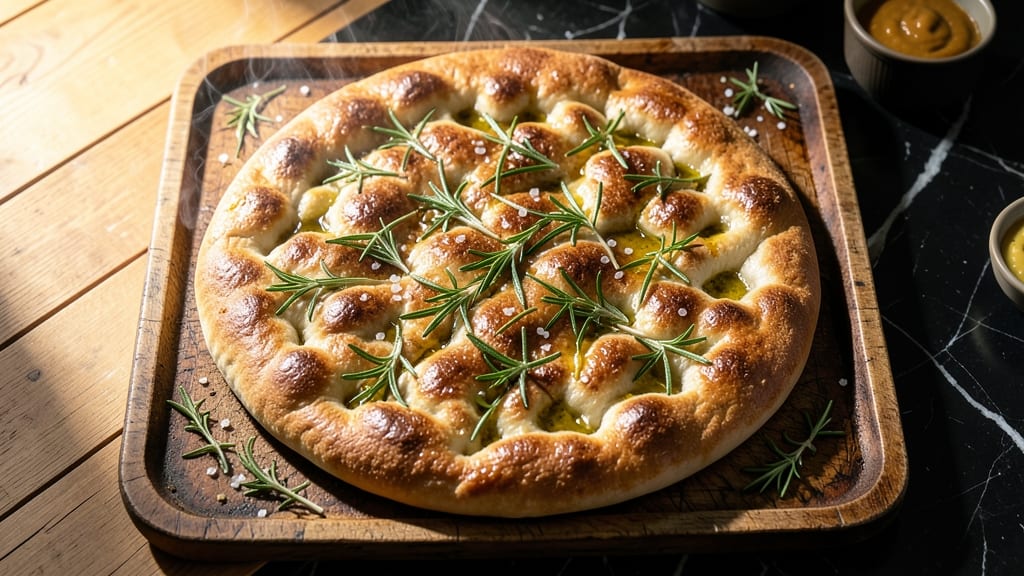
This artisan focaccia bread recipe transforms simple ingredients into a golden, fragrant loaf with a crisp crust and airy interior. The secret lies in dimpling the dough to create that signature olive oil pool, while rosemary and flaky salt elevate every bite to restaurant-quality.
I've perfected this technique through years of baking, and it delivers results that rival your favorite Italian bakery.
The process begins with a straightforward dough that requires just flour, yeast, water, and olive oil—no complicated ingredients or techniques. After kneading and shaping, the magic happens when you dimple the dough and drizzle it with olive oil, creating those coveted pockets that become crispy and golden during baking.
The rosemary infuses the crust with an aromatic depth that makes this focaccia unforgettable.
By the time it emerges from the oven, you'll have a loaf with a crisp, crackly crust that shatters at the edges while remaining tender inside. The olive oil pools add richness and visual appeal, while the rosemary leaves add bursts of herbal flavor.
This is the kind of bread that makes every meal feel special, whether served warm with olive oil or as a side to soups and salads.
For even more flavor, consider adding cherry tomatoes or flaky sea salt before baking. The possibilities are endless, but the foundation—this perfect focaccia—is what makes everything taste better. Let's get started on creating your own artisan masterpiece.
Ingredients for artisan focaccia bread
Simple flour, yeast, and olive oil create restaurant-quality focaccia with rosemary aroma.
| Ingredient | Amount | Notes |
|---|---|---|
| All-Purpose Flour 🌾 | 4 cups | Spooned and leveled, not packed |
| Active Dry Yeast 🍞 | ¼ oz | Or 2.5 tsp (1 packet) |
| Extra-Virgin Olive Oil 🫒 | ¾ cup | High quality, fruity variety |
| Warm Water 💧 | 1 ¼ cups | 110°F for optimal yeast activation |
| Kosher Salt 🧂 | 1 ½ tsp | Diamond Crystal preferred |
| Fresh Rosemary 🌿 | ¼ cup | Finely chopped stems included |
| Flaky Sea Salt 🧂 | 2 tbsp | Maldon or Jacobsen preferred |
| Cherry Tomatoes 🍅 | ½ lb | Halved, optional topping |
The flour is non-negotiable here—King Arthur or Caputo Tipo 00 if you want to splurge, but all-purpose works perfectly fine. I always grab my yeast from Trader Joe's—their packets are fresher than the bulk bins at most grocery stores. The olive oil matters too: California avocado or Italian varieties have that fruity punch that makes the pools sing. Rosemary? Fresh is non-negotiable—dried just won't cut it for that authentic aroma. If you can't find fresh, double the amount of dried, but trust me, it won't be the same.
No extra-virgin olive oil? Light olive oil works in a pinch, but you'll miss that fruity depth. Short on rosemary? Thyme or oregano at half the amount gives a different but still delicious vibe. The cherry tomatoes are optional—I skip them if I'm making this for a crowd, but they add that perfect pop of freshness when I'm baking for two. Sun-dried tomatoes make a great alternative if you want to go savory. And for the flaky sea salt? Regular salt at double the amount won't give you those gorgeous crystals, but it'll still taste amazing.
This dough keeps for 24 hours in the fridge before shaping—great for meal prep. Once shaped, cover tightly and let it proof at room temp for 1-2 hours, or overnight in the fridge if you're planning ahead. The baked loaf stays fresh for 3 days at room temp, wrapped in a clean kitchen towel. For longer storage, freeze slices wrapped in parchment—perfect for toast straight from the freezer.
Why You'll Love This Recipe
- Five-Ingredient Magic: I swear, you can’t mess this up—just flour, yeast, olive oil, water, and salt. That’s it. The yeast does all the work while you sip your coffee, and by the time you’re ready to bake, the dough’s already puffed and ready for the oven.
- Crispy-Gold Perfection: That first bite? The outside shatters with a satisfying crackle, while the inside stays soft and pillowy—all thanks to the olive oil’s richness and the kosher salt’s punch. Honestly, it’s the kind of bread that makes you pause mid-chew just to appreciate it.
- Every Meal’s Upgrade: Tear it into chunks for sandwiches, dip it in soup, or serve it warm with olive oil and flaky salt for breakfast. I’ve used it for everything from charcuterie boards to last-minute pasta sides, and it never lets me down.
- Leftovers That Last: A single batch feeds my family for days—freeze the extras, toast them later, and they’ll taste fresh. Between us, I’d rather bake this twice than buy store-bought once. It’s my budget-friendly secret weapon.
Step-by-step instructions for artisan focaccia bread
Here's how to create that irresistible olive oil pool and fragrant rosemary crust every time.
Activate the Yeast and Mix the Dough
In a large bowl, combine the 1.25 cups warm water (about 110°F) with the 0.25 oz active dry yeast. Let it sit for 5-10 minutes until frothy—this confirms the yeast is active. If it doesn't bubble, your yeast may be dead, and you'll need to start over.
Add the 4 cups all-purpose flour and 1.5 tsp kosher salt to the bowl. Stir with a wooden spoon until a shaggy dough forms. Then, drizzle in the 0.75 cup extra-virgin olive oil and mix until the dough comes together. It should be soft but not sticky—if it feels too dry, add 1-2 teaspoons warm water. Here's the thing—don't overwork the dough at this stage, or you'll develop too much gluten and lose that tender focaccia texture.
Knead and Let the Dough Rest
Turn the dough onto a lightly floured surface and knead gently for 3-4 minutes until smooth. You're not trying to build gluten like you would with bread—just enough to create a cohesive mass. Shape the dough into a loose rectangle about 12x8 inches and place it in a lightly oiled bowl.
Cover the bowl with a damp towel and let the dough rise in a warm place for 1-2 hours, or until it has nearly doubled in size. I like to place my oven on its lowest setting (170°F) with a pan of hot water inside to create a warm, moist environment. This helps the dough rise evenly without drying out. Poke the dough gently—if it springs back slowly, it's ready for shaping.
Shape and Season the Dough
Transfer the risen dough to a 9x13-inch baking pan that's been lightly oiled with extra-virgin olive oil. Press the dough out to fit the pan, using your fingers to create dimples all over the surface. This creates those signature air pockets that make focaccia so tender. Don't worry if it doesn't look perfect—it will expand as it bakes.
Drizzle the dough generously with more olive oil, about 2-3 tablespoons, and sprinkle evenly with the 0.25 cup finely chopped fresh rosemary. Press the rosemary sprigs lightly into the dough so they stick. This is where the magic happens—the rosemary will infuse the crust with its fragrant aroma while the olive oil creates that golden, crispy exterior. Let the dough rest uncovered for 30 minutes at room temperature while you preheat your oven.
Bake to Golden Perfection
Preheat your oven to 425°F with a rack positioned in the middle. Bake the focaccia for 20-25 minutes until the crust is deep golden brown and the top feels firm to the touch. The edges should pull away slightly from the pan, and you'll smell that irresistible aroma of baking bread and rosemary.
About 10 minutes before the focaccia is done, sprinkle the 2 tbsp flaky sea salt evenly over the top. The salt will melt slightly into the crust, creating those beautiful salt crystals that make focaccia so delicious. If you're using the 0.5 lb halved cherry tomatoes, add them to the pan during the last 5 minutes of baking so they soften slightly but don't turn to mush.
Cool and Serve
Remove the focaccia from the oven and let it cool in the pan for 5 minutes. This resting period allows the bread to set slightly, making it easier to slice. Then, carefully transfer it to a wire rack to cool completely. The bread will be at its best when served warm, but it's still delicious at room temperature the next day.
Slice into squares or rectangles and serve with your favorite dips, olives, or simply enjoy it as-is with a sprinkle of extra flaky sea salt. The olive oil pool in the center should be golden and fragrant, while the rosemary-infused crust adds a beautiful aroma and subtle piney flavor to every bite. This focaccia is perfect for sharing—just be prepared for everyone to ask for seconds!
Pro Tips For Making Artisan Focaccia Bread
- Mix Until Sticky: Stop when the dough clumps together and resists forming a smooth ball—this means you’ve hydrated it enough. Overmixing develops gluten and makes focaccia dense; underhydrated dough won’t spread properly. Trust your hands: if it’s tacky but not wet, you’re golden.
- Use Room-Temp Olive Oil: Cold oil from the fridge won’t emulsify into the dough like warm oil does—it just sits there, making the texture uneven. Let that extra-virgin olive oil sit out for 30 minutes before mixing, or even better, warm it slightly in a bowl of hot water. Your focaccia’s air pockets will thank you.
- Skip the Overproofing: I learned this the hard way—letting the dough rise past puffy peaks (when it’s about doubled) collapses the structure and makes it gummy. Aim for just under doubled, then dimple it. If you’re unsure, press a finger in: it should spring back slowly, not instantly.
- Preheat Pan and Oven: A cold pan steals heat from the oven, and your focaccia will bake unevenly. Slide your baking sheet (oiled or lined) into a preheated oven for 5 minutes before adding the dough—this guarantees a crispy, even crust from the get-go. (Yes, even if you’re impatient like me.)
Creative variations of this artisan focaccia bread
Herb Infusions
Swap rosemary for thyme, oregano, or basil—each brings a distinct aroma. I love using ½ cup fresh thyme for a more earthy flavor or ¼ cup basil for a brighter, Italian-inspired twist.
For a Mediterranean touch, combine 2 tbsp each of rosemary and oregano with a pinch of red pepper flakes for subtle heat. Fresh herbs infuse the crust beautifully, but if you're short on time, dried herbs at half the amount work in a pinch.
Cheese Variations
Add ½ cup grated Parmesan to the dough before shaping for a savory depth, or sprinkle ¼ cup ricotta cheese over the dimpled surface before baking. For a decadent twist, mix 2 tbsp chopped sun-dried tomatoes with the Parmesan.
I also love adding 2 oz shredded mozzarella in the last 5 minutes of baking for a gooey, melty center. Just be sure to bake it until the cheese is fully melted and golden.
Sweet Twists
Transform focaccia into a dessert by adding ¼ cup honey or maple syrup to the dough, or drizzle 2 tbsp honey over the dimpled surface before baking. For a fruity version, top with ½ cup sliced figs or pears in the last 10 minutes of baking.
A sprinkle of cinnamon or vanilla extract in the dough adds warmth. This sweet focaccia pairs perfectly with a cup of coffee or as a breakfast treat.
Global Flavors
Give your focaccia a global twist by adding 1 tsp smoked paprika and ½ tsp cumin for a Spanish-inspired version, or 1 tbsp za’atar for a Middle Eastern flair.
For a Mexican-inspired focaccia, mix 1 tsp chili powder and ½ tsp garlic powder into the dough, then top with ¼ cup crumbled cotija cheese and 2 tbsp chopped cilantro before baking. These variations add exciting new dimensions to a classic recipe.
Protein-Packed
Elevate your focaccia into a meal by adding protein toppings. Press ½ cup cooked chicken sausage or crumbled Italian sausage into the dimpled dough before baking. For a vegetarian option, top with ½ cup marinated artichoke hearts and ¼ cup kalamata olives in the last 5 minutes of baking.
A sprinkle of Parmesan cheese on top adds a salty, umami finish. These additions turn focaccia into a hearty appetizer or light main dish.
Seasonal Toppings
Adjust toppings based on what's fresh and in season. In summer, use halved cherry tomatoes, zucchini blossoms, or basil leaves. For fall, try roasted butternut squash cubes, sage leaves, or caramelized onions.
Winter calls for sautéed mushrooms, caramelized apples, or walnuts for crunch. These seasonal additions keep your focaccia exciting year-round while highlighting the best flavors of each season. 🌿
Nutrition facts
Frequently asked questions
Can I make focaccia without a baking pan?
Yes! Use a 12x16-inch sheet pan or even a well-oiled cast iron skillet for a rustic, free-form focaccia. The edges will be thicker and crispier, but the center will still have that tender texture. Just shape the dough slightly larger than your pan since it will shrink during baking.
Why did my focaccia turn out dense instead of airy?
Over-kneading or overproofing are the most common culprits. Focaccia dough needs minimal gluten development—just enough to hold together. If the dough rises too much before baking, it collapses because the structure can't support it. Always check for readiness by gently pressing the dough: if it springs back slowly, it's ready.
How do I store leftover focaccia?
Wrap it tightly in a clean kitchen towel or beeswax wrap to keep it fresh for 3 days at room temperature. For longer storage, slice and freeze individual portions on parchment paper. Toast frozen slices straight from the freezer for crispy results—no thawing needed!
Can I substitute butter for olive oil?
Not recommended! Olive oil's fruity flavor and high smoke point create that signature crispy crust and golden pools. If you must substitute, use melted ghee or avocado oil (both neutral flavors), but reduce the amount by 15% since they're less moist. The texture will be different, but still delicious.
What's the best way to reheat focaccia?
For crispy results, wrap cooled slices in foil and warm in a 350°F oven for 5-7 minutes. For a toasty texture, use a toaster oven or skillet over medium heat until golden brown. Avoid microwaving—it makes focaccia soggy. A quick broil for 1-2 minutes works too!