
Side Dishes
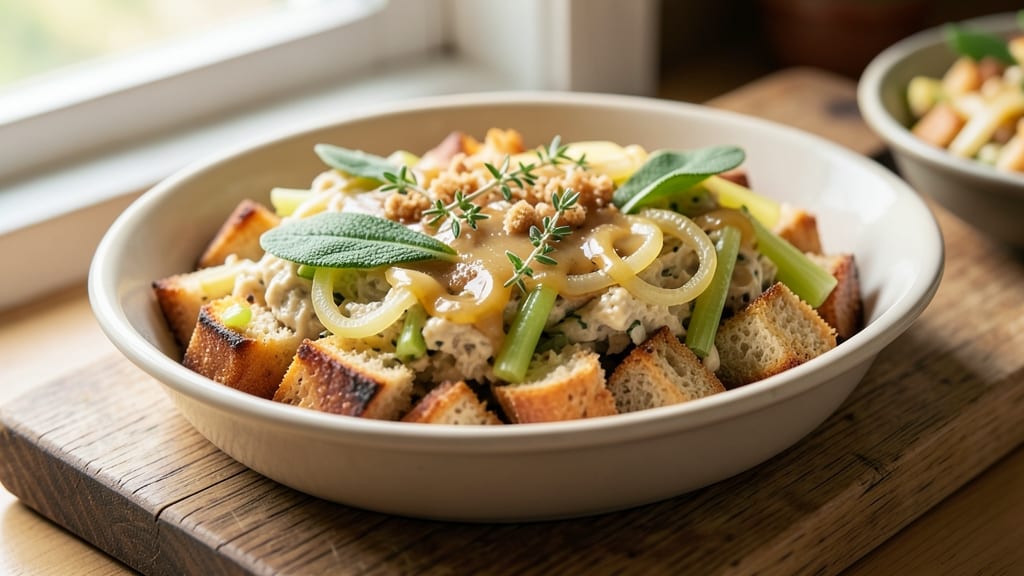
This artisan bread stuffing recipe transforms simple ingredients into a holiday centerpiece that's crispy-edged, herby-centered, and packed with flavor. The secret lies in toasting bread cubes to golden perfection and building layers of aromatic herbs that infuse every bite. After years of perfecting this technique, I've developed a method that delivers restaurant-quality texture and depth without sacrificing simplicity.
What sets this stuffing apart is the careful balance between crispy exterior and tender interior—achieved through precise baking times and strategic ingredient combinations. We start with a classic base of celery, onions, and herbs, then elevate it with toasted artisan bread cubes that develop irresistible crunch.
The addition of poultry seasoning and fresh thyme creates that signature holiday aroma that fills your kitchen.
By the time it emerges from the oven, you'll have a stuffing with caramelized edges that shatter slightly, a moist herby center that holds its shape, and a flavor profile that's rich yet balanced.
This isn't just a side dish—it's the star of your holiday table, worthy of centerpiece status alongside your main course. The best part? It's foolproof enough for first-time bakers but sophisticated enough for seasoned cooks.
Serve it alongside roasted turkey or as a standalone vegetarian dish with gravy for dipping. The crispy edges make every bite satisfying, while the herby center delivers complex flavor that lingers. This is the stuffing recipe that will have your guests asking for seconds—and requesting the recipe for next year.
Ingredients for artisan bread stuffing
Eight simple ingredients transform into a holiday showstopper with golden edges and herby heart.
| Ingredient | Amount | Notes |
|---|---|---|
| Artisan Bread Cubes 🍞 | 8 cups | Day-old sourdough or crusty bread, cut into 1-inch cubes |
| Unsalted Butter 🧈 | ¾ cup | Cold, cubed for even toasting |
| Celery Stalks 🧅 | 4 whole | Diced into small cubes (about 1 cup) |
| Yellow Onion 🧅 | 1 whole | Diced finely (about 1 cup) |
| Fresh Thyme Sprigs 🌿 | ¼ cup | Leaves only, stems removed |
| Fresh Sage Leaves 🌿 | ¼ cup | Chopped finely (about 12 leaves) |
| Poultry Seasoning 🌶️ | 2 tsp | Or homemade blend (thyme, sage, marjoram) |
| Kosher Salt 🧂 | 1 ½ tsp | Diamond Crystal preferred |
| Black Peppercorns 🌶️ | 1 tsp | Freshly cracked |
| Chicken or Vegetable Stock 💧 | 1 ½ cups | Low-sodium preferred |
| Large Egg 🥚 | 1 whole | Beaten for binding |
| Parmesan Cheese 🧀 | ½ cup | Freshly grated, optional |
The bread is everything here. Artisan sourdough or crusty baguettes work best—their sturdy texture holds up to toasting without turning mushy. Breads like Brioche or Challah add richness but can get gummy, so use them sparingly. For the best results, cube the day-old bread yourself (pre-cut cubes from the store lack texture). Toasting the cubes in butter until golden is non-negotiable—this creates that crispy exterior that makes every bite satisfying. Whole Foods or local bakeries often have perfect artisan loaves for this purpose.
No fresh thyme or sage? Dried works at one-third the amount, but the flavor won't be as vibrant. Short on stock? Low-sodium broth plus a splash of water gets you close. The Parmesan is optional but adds depth—use real Parmigiano-Reggiano if you're splurging. For a vegetarian version, skip the chicken stock and use vegetable stock instead. The egg is key for binding, but if you're avoiding it, 1 tbsp Dijon mustard works as a binder. The poultry seasoning can be swapped for 1 tsp each dried thyme, sage, and marjoram if you're making your own blend.
Toasted bread cubes stay crispy for 2-3 days if stored in an airtight container with a paper towel to absorb moisture. The herb mixture can be prepped 1 day ahead and kept in the fridge. For best results, assemble the stuffing just before baking. Leftovers reheat beautifully—350°F for 10-15 minutes until warmed through. This stuffing freezes well for up to 3 months, but the texture won't be quite as crispy after thawing. Portion into individual servings before freezing for easy reheating.
Why You'll Love This Recipe
- No Chopping Hassle: The celery and onion are prepped in minutes—just rough dice, no fancy knife work. Honestly, I toss everything raw into the pan with the bread cubes and let the butter melt them down together. Less mess, more flavor.
- Crispy-But-Creamy Magic: That golden crust on the edges? Pure satisfaction. The butter bastes the bread cubes until they’re toasty, while the thyme infuses just enough earthy warmth to make it taste like a Thanksgiving side—even on a weeknight.
- Leftovers That Work: Stuffing reheats beautifully, so I make a double batch. The bread stays soft, the celery stays crisp, and it’s perfect for sandwiches or a quick lunch the next day. (Yes, even on a Tuesday night.)
- Budget-Friendly Luxury: Artisan bread might sound fancy, but using day-old slices cuts costs—and turns something you’d toss into something extraordinary. A little butter and thyme stretch this recipe to feed four for under $10.
Step-by-step instructions for artisan bread stuffing
Here's how to craft the perfect holiday stuffing with golden, crispy edges and a fragrant, herby center.
Toast the Bread Cubes
Preheat your oven to 350°F and spread the 8 cups Artisan Bread Cubes evenly on two rimmed baking sheets. You want them in a single layer so they toast uniformly. Bake for 15-20 minutes, stirring halfway through, until they're golden brown and completely dry.
This step is crucial—it removes all moisture from the bread, which prevents a soggy stuffing later. You'll know they're ready when the edges look crisp and the cubes feel dry to the touch. Let them cool slightly before moving to the next step, but don't let them sit too long or they'll reabsorb moisture from the air.
Sauté the Vegetables and Herbs
Melt the 0.75 cup Unsalted Butter in a large skillet over medium heat. Add the 4 whole Celery Stalks and 1 whole Yellow Onion, both diced, and cook for 8-10 minutes until softened and lightly golden. This process draws out their natural moisture, which will be absorbed by the bread later.
Next, add the 0.25 cup Fresh Thyme Sprigs and 0.25 cup Fresh Sage Leaves, both finely chopped. Stir for 1-2 minutes until the herbs release their aromatic oils and the mixture becomes fragrant. Remove the skillet from heat and let it cool for a few minutes—this prevents the herbs from cooking down too much when mixed with the bread.
Mix the Dry Ingredients
In a large bowl, combine the toasted bread cubes with the sautéed vegetable and herb mixture. Sprinkle in the 2 tsp Poultry Seasoning, 1.5 tsp Kosher Salt, and 1 tsp Black Peppercorns. Gently stir everything together until the bread cubes are evenly coated and the flavors are well distributed.
Here's the thing—don't overmix. You want the bread to stay slightly irregular and rustic, not compacted. The goal is to create pockets of air that will expand and create a light, airy texture. If the mixture looks too dry, add 1-2 tablespoons of the 1.5 cups Chicken or Vegetable Stock to help bind it together.
Bind and Add Moisture
In a separate bowl, whisk together the 1 whole Large Egg and 0.5 cup Parmesan Cheese until smooth. Pour this mixture over the bread and stir gently until everything is evenly moistened. The egg acts as a binder, while the Parmesan adds a sharp, savory depth that complements the herbs.
Gradually add the remaining 1.5 cups Chicken or Vegetable Stock, mixing just until the bread is evenly dampened. You want the mixture to hold together when pressed, but still retain a slightly crumbly texture. If it feels too wet, add a few more toasted bread cubes to absorb the excess moisture.
Bake to Crispy Perfection
Transfer the stuffing to a greased 9x13-inch baking dish and spread it evenly. Bake at 375°F for 30-35 minutes until the top is golden brown and the edges are crispy. The center should still feel slightly moist but not wet—this ensures a perfect balance of texture.
If the top isn't browning enough, broil for 1-2 minutes at the end, keeping a close eye to avoid burning. Let the stuffing rest for 5-10 minutes before serving—this allows the juices to redistribute, ensuring every bite is moist and flavorful. Serve warm, straight from the oven, for the ultimate holiday experience.
Pro Tips For Making Artisan Bread Stuffing
- TOAST THE BREAD LOW: I learned this the hard way—crispy bread cubes turn soggy when you bake them at high heat. Start your stuffing at 325°F (165°C) for the first 15 minutes, even if the recipe says higher. The slow start locks in texture before the butter melts and steams the bread.
- SWEAT THE VEGETABLES FIRST: Don’t just chop celery and onion and toss them in raw. Sauté them in 1 tablespoon of the butter until the onion is translucent and celery softens—about 8 minutes. This builds flavor and prevents a watery stuffing when they release moisture later.
- SKIP THE OVERMIXING: Once you fold in the bread cubes, stop stirring after 2-3 turns. Overworking the stuffing compresses it, leaving a dense center. Lightly toss the ingredients so the bread absorbs the butter and herbs without compacting—your future self will thank you.
- USE THYME STEMS TOO: Sounds weird, but it works: strip the thyme sprigs of their leaves and save the woody stems for the stuffing. Toss them in with the bread cubes—they release more aroma during baking than just the leaves alone. (Yes, even if you’re impatient like me.)
Creative variations of this recipe
Herb-Infused Twist
Swap the classic thyme and sage for rosemary and tarragon—this Mediterranean-inspired variation adds a bright, piney aroma that pairs beautifully with roasted lamb or herb-roasted chicken.
Use 2 tbsp chopped fresh rosemary and 1 tbsp chopped tarragon instead of thyme and sage, and reduce the poultry seasoning to 1 tsp. The tarragon brings a subtle anise-like note that elevates the stuffing to restaurant-quality sophistication. 🌿
Truffle & Parmesan Luxe
For a decadent touch, fold in 1 tbsp truffle oil and an extra 0.5 cup freshly grated Parmesan after mixing the dry ingredients. The truffle oil adds an earthy, umami depth that makes this stuffing feel like a gourmet appetizer.
Use vegetable stock instead of chicken stock for a vegetarian-friendly version, and garnish with thinly sliced truffle shavings before serving. This version is perfect for impressing guests at holiday dinners. 💫
Citrus & Cranberry Bright
Brighten up your stuffing with 0.5 cup dried cranberries and 1 tbsp finely grated orange zest. Add the cranberries with the stock and the zest with the herbs for a sweet-tart contrast that cuts through the richness.
A splash of 2 tbsp orange juice in the stock keeps the flavors balanced. This variation works beautifully with turkey or as a standalone dish drizzled with honey-maple glaze. 🍊
Spiced Pumpkin & Sage
For an autumnal twist, stir in 1 cup cooked and mashed pumpkin puree with the sautéed vegetables and add 1 tsp pumpkin pie spice to the dry ingredients. The pumpkin adds natural sweetness and moisture, while the sage keeps the dish grounded.
This variation is especially lovely with roasted pork tenderloin or as a vegetarian main course. Garnish with extra sage leaves for a rustic touch. 🎃
Cheesy Gorgonzola & Walnut
Add 0.5 cup crumbled Gorgonzola cheese and 0.5 cup chopped walnuts to the dry ingredients for a bold, tangy flavor with satisfying crunch. The walnuts toast beautifully alongside the bread cubes, while the Gorgonzola adds a sharp, creamy contrast.
This variation pairs exceptionally well with beef dishes or as a vegetarian centerpiece. For extra richness, fold in 2 tbsp cream cheese with the egg mixture. 🧀
Global Fusion Variations
For a Spanish-inspired version, swap the herbs for smoked paprika, garlic, and parsley, and use chicken sausage instead of stock. A Moroccan twist includes ground cumin, coriander, and raisins, served with harissa for dipping.
Japanese-inspired stuffing uses shredded nori, sesame seeds, and mirin in place of stock, paired with teriyaki-glazed proteins. Each variation keeps the crispy texture while transporting your taste buds globally. 🌍
Nutrition facts
Frequently asked questions
Can I use any type of bread for this artisan stuffing?
While you can use many breads, artisan sourdough or crusty baguettes work best because their sturdy texture holds up to toasting without turning mushy. Avoid soft breads like Brioche or Challah—they'll absorb too much moisture and lose their crispy edges. For extra flavor, try a rustic whole-grain or seeded bread, but reduce the stock slightly to account for their natural oils.
Why does my stuffing turn out soggy?
Soggy stuffing usually happens from two things: under-toasted bread cubes or too much liquid. Always toast the bread until completely dry and golden, then let it cool before mixing. For the stock, start with 1.5 cups and add more only if absolutely necessary—press the mixture together to test consistency. If it's too wet, add a few extra toasted bread cubes to absorb excess moisture.
Can I make this stuffing ahead of time?
The toasted bread cubes and herb mixture can be prepped 1 day ahead and stored separately in airtight containers. Assemble the stuffing just before baking—this keeps the bread crispy. For leftovers, reheat at 350°F for 10-15 minutes until warmed through. If freezing, portion into individual servings before freezing for easy reheating (texture won't be as crispy after thawing).
What's the best way to achieve crispy edges?
Crispy edges come from proper toasting and high-heat baking. Toast the bread cubes in the oven until golden and dry, then spread the stuffing in a 9x13-inch baking dish for maximum surface area. Bake at 375°F and broil for 1-2 minutes at the end if needed. The key is ensuring the bread cubes are completely dry before mixing—this prevents moisture from steaming instead of browning.
Can I make this vegetarian?
Yes! Simply replace the chicken stock with vegetable stock and use vegetable broth instead of chicken broth. For extra depth, add 1 tbsp soy sauce or 1 tsp miso paste to the stock. The truffle variation also works beautifully as a vegetarian dish—just use vegetable stock and garnish with truffle shavings.