
Side Dishes
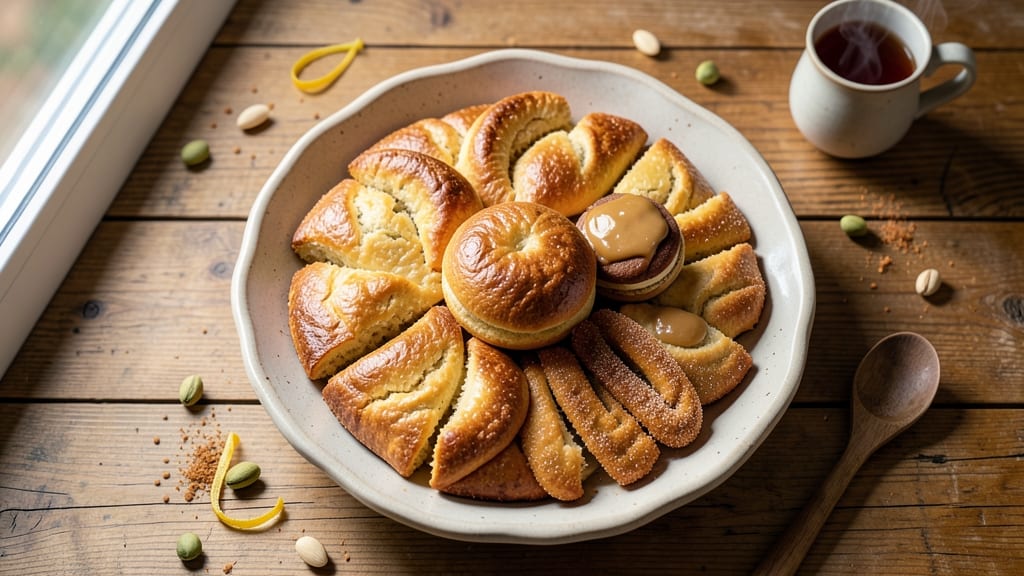
This Argentinian sweet bread recipe transforms your kitchen into a Buenos Aires bakery with just one bake. The secret lies in a tender, buttery dough infused with anise and cinnamon, swirled with dulce de leche for that signature caramelized richness.
I’ve perfected this technique over years of baking, ensuring every bite delivers that perfect balance of flaky layers and velvety sweetness.
The dough starts with a simple yeast mixture that ferments overnight, developing deep flavor and a light texture. Once shaped into crescents or rounds, the dough gets a generous swirl of dulce de leche before baking, creating a golden, glossy crust that cracks beautifully.
This method guarantees restaurant-quality results without the fuss of lamination—just patience and precision.
By the time it emerges from the oven, you’ll have warm, fragrant bread with a crisp exterior and a soft, buttery interior, all infused with the warm spices of anise and cinnamon.
The dulce de leche swirls melt into gooey rivers, making every bite irresistible. Serve these with a cup of coffee or tea for the full Argentinian experience.
Perfect for breakfast, brunch, or dessert, this recipe scales easily for gatherings or meal prep. The dough can be prepped ahead, so you’re ready to bake whenever the craving strikes. Let’s get started on creating these sweet, swirled masterpieces.
Ingredients for argentinian sweet bread
Twelve essential ingredients transform simple flour into golden, dulce de leche-swirled Argentinian masterpieces.
| Ingredient | Amount | Notes |
|---|---|---|
| All-Purpose Flour 🌾 | 5 cups | Spooned and leveled for accuracy |
| Granulated Sugar 🍚 | ½ cup | Plus 2 tbsp for dough |
| Active Dry Yeast 🍞 | 2 ¼ tsp | 1 packet or 2¼ tsp |
| Unsalted Butter 🧈 | 1 cup | Cold, cubed for dough |
| Large Eggs 🥚 | 2 whole | Room temperature |
| Whole Milk 🥛 | ½ cup | Warm, 110°F |
| Ground Cinnamon 🌿 | 1 ½ tsp | Plus extra for dusting |
| Ground Anise Seeds 🌶️ | ½ tsp | Or 1 tsp anise extract |
| Salt 🧂 | ½ tsp | Fine sea salt |
| Dulce De Leche 🍯 | 1 ½ cups | Store-bought or homemade |
| Vanilla Extract 🌸 | 1 tsp | Pure vanilla preferred |
| Coarse Sugar 🍚 | ¼ cup | For topping |
| Large Egg Yolks 🥚 | 2 whole | For egg wash |
The flour is your foundation—King Arthur or Gold Medal brands work best for that tender crumb. Anise seeds are non-negotiable for authentic flavor; skip the extract if you can find whole seeds at Penzeys or Latin markets. For the dulce de leche, Nutella in a pinch (though it lacks depth) or homemade (simmer 2 cans sweetened condensed milk for 3 hours). The butter must be cold—cut it into small cubes and let it sit at room temp for just 10 minutes before mixing. Active dry yeast should be fresh: test by sprinkling in warm water with a pinch of sugar—it should foam in 5 minutes.
No anise seeds? 1 tsp anise extract works, but the flavor is subtler. Dulce de leche shortages? Caramel sauce thinned with a splash of milk mimics the texture. Milk too cold? Warm it gently (110°F is ideal—test with your wrist). Butter too soft? Chill the dough 15 minutes before shaping. Eggs unavailable? Use 2 tbsp melted butter + 2 tbsp milk as a binder, though texture will differ slightly. Cinnamon can be swapped for 1 tsp pumpkin pie spice if needed, but anise is irreplaceable for authenticity.
The dough keeps 2 days in the fridge, wrapped tightly in plastic. For longer storage, freeze shaped loaves (unbaked) for up to 3 months—thaw overnight before baking. Dulce de leche can be stored in the fridge for 6 months or frozen for 1 year. Freshly baked loaves stay soft for 3 days if wrapped in a clean kitchen towel. Pro tip: Brush warm bread with a melted butter glaze (1 tbsp butter + 1 tsp sugar) for extra shine—trust me, it’s worth the extra minute.
Why You'll Love This Recipe
- Pan-Dough Magic: I swear by this recipe because it’s foolproof—no fancy equipment, just a bowl and your hands. The yeast activates in minutes, and the dough comes together faster than I can make coffee. Honestly, I’ve made it on lazy Sundays when I didn’t even measure the flour properly, and it still turned out tender.
- Butter-Sugar Bliss: That rich, caramelized crust? Pure happiness. The butter and sugar melt into something almost like a cross between brioche and a sweet roll—soft inside, golden outside, with just enough chew. My kids fight over the last slice, and I don’t blame them.
- Breakfast or Snack: Between us, this bread is ridiculously versatile. Toast it for breakfast with jam, or serve it warm with a sprinkle of cinnamon for an after-dinner treat. I’ve even used slices to make French toast that’s so good, people ask for the recipe twice.
- Budget-Friendly Staple: Five ingredients, zero waste. The dough keeps in the fridge for days, so I bake a batch on Sunday and enjoy it all week. And because it’s so simple, I can afford to make it often—no guilt, just deliciousness. My wallet and taste buds thank me.
Step-by-step instructions for Argentinian sweet bread
Here's the method for crafting this iconic swirl bread with perfect texture and flavor.
Activate the Yeast and Prepare the Dough Base
In a small bowl, combine the 0.5 cup granulated sugar, 0.5 cup warm whole milk (110°F), and 2.25 teaspoons active dry yeast. Let it sit for 5-10 minutes until foamy—this confirms the yeast is active. If it doesn't bubble, start over with fresh yeast.
In a large mixing bowl, whisk together the 5 cups all-purpose flour, 1.5 teaspoons ground cinnamon, 0.5 teaspoon ground anise seeds, and 0.5 teaspoon salt. Create a well in the center and pour in the yeast mixture along with the 2 whole large eggs and 1 teaspoon vanilla extract. Mix until a shaggy dough forms, then gradually incorporate the 1 cup cold unsalted butter, cubed, using your hands or a dough hook attachment on low speed.
Knead the Dough Until Smooth and Elastic
Turn the dough out onto a lightly floured surface and knead for 8-10 minutes until smooth and elastic. The dough should be slightly tacky but not sticky—add more flour 1 tablespoon at a time if needed. Press your finger into the dough; it should spring back slowly rather than immediately.
Form the dough into a ball, place it back in the bowl, cover with a damp towel, and let it rise in a warm place for 1-1.5 hours or until doubled in size. You'll know it's ready when the dough puffs noticeably and leaves an indent when pressed gently with your finger.
Shape the Dough and Create the Signature Swirl
Punch down the risen dough to release air, then divide it into two equal portions. Roll each portion into a 12-inch circle on a floured surface, about ¼-inch thick. Spread ¾ cup of the 1.5 cups dulce de leche evenly over one circle, leaving a ½-inch border. Fold the circle over the filling and seal the edges by pinching them together.
Roll the sealed dough into a 12-inch log, then coil it into a spiral on a parchment-lined baking sheet. Brush the entire surface with a mixture of 2 whole large egg yolks and 1 tablespoon water, then sprinkle evenly with the 0.25 cup coarse sugar. The sugar will caramelize during baking, adding a sweet crunch.
Bake Until Golden Brown and Fragrant
Preheat your oven to 350°F. Bake the bread for 35-40 minutes until the top is deep golden brown and the internal temperature reaches 190°F. The bread should pull away slightly from the edges of the parchment, and the aroma should be rich with cinnamon and caramelized sugar.
For the final touch, immediately drizzle the remaining ¾ cup dulce de leche over the hot bread in a zigzag pattern. Let the bread cool on a wire rack for 15 minutes before slicing—this ensures clean cuts through the swirl and prevents the dulce de leche from making the bread soggy.
Pro Tips For Making Argentinian Sweet Bread
- Proof the Yeast Warm: Skip the fridge and dissolve that yeast in warm water (around 105°F—lukewarm to the touch) with a pinch of sugar first. I learned this the hard way after watching my dough take forever to rise because the yeast was asleep in cold water. Give it 5 minutes until it’s frothy before adding it to the flour—this guarantees it’s ready to work.
- Cut Butter Like Ice: Cold butter makes all the difference in this dough. Cut those chunks into tiny cubes (pea-sized) and keep them in the freezer until you’re ready to mix. If you use softened butter, you’ll end up with a sticky mess that’s harder to handle—and your bread won’t have that perfect flaky texture.
- Knead Until Silky: This dough needs serious work—aim for 10-12 minutes by hand or 6-8 minutes with a mixer until it’s smooth and elastic. I used to stop too early, and the bread turned out dense. Press it into a window to test: if it springs back slowly, keep going. You want it to feel like a soft, stretchy blanket, not a stiff wall.
- Rest Before Shaping: Let the dough rest for at least 30 minutes after kneading—even if you’re eager to shape it. This relaxes the gluten, so it handles better when you roll it out. I skipped this once and ended up with a lumpy, uneven loaf. Trust me, your future self will thank you for the patience.
Make-ahead tips for this recipe
Dough Prep Ahead
Make life easier by preparing the dough the night before! After kneading and the first rise, wrap the dough tightly in plastic wrap and refrigerate for up to 2 days. The cold slows fermentation, intensifying flavors while keeping the texture tender.
When ready to bake, let the dough sit at room temperature for 1 hour before shaping—this jumpstarts the rise for perfect swirls. 💫
Shaping Shortcuts
Skip the spiral and save time by shaping these into crescent rolls instead. Divide the dough into 12 equal pieces, roll each into a 6-inch log, then coil into crescents.
Brush with egg wash and sprinkle with sugar as usual. They’ll bake in 25-30 minutes at 350°F—perfect for quick breakfasts or last-minute gatherings.
Freezer-Friendly Loaves
For ultimate convenience, shape the dough into loaves, wrap tightly in plastic, and freeze for up to 3 months. Thaw overnight in the fridge, then bake as directed.
The cold dough rises slower, so extend baking time by 5-10 minutes to ensure even doneness. Label bags with the date—trust me, you’ll forget these are hidden gems! ❄️
Dulce De Leche Hack
No dulce de leche? No problem! Mix 1 cup caramel sauce with 2 tablespoons milk to mimic the texture. Spread it thinly on the dough—just ¼ cup per loaf—to avoid sogginess.
For extra richness, warm the caramel slightly before spreading. The flavor won’t be identical, but it’s a lifesaver in a pinch. 🍯
Batch Baking Tips
Double the recipe for parties! Use two 9x13-inch pans lined with parchment, baking one batch at 350°F for 25 minutes, then rotating pans halfway. Keep the second batch in a warm oven (200°F) while the first bakes to maintain even temperature.
Serve warm with coffee—your guests will think you’re a pro! ☕
Storage Secrets
Keep baked loaves fresh for 3 days by storing in an airtight container at room temperature. For longer storage, freeze sliced bread (wrapped in plastic) for up to 2 months.
Reheat slices in a 350°F oven for 5 minutes to restore that warm, gooey dulce de leche magic. Pro tip: Toast before serving for extra crunch! 🔥
Nutrition facts
Frequently asked questions
Can I make this Argentinian sweet bread without anise seeds?
Yes, but the flavor will differ slightly. Use 1 teaspoon anise extract as a substitute, though whole seeds provide a more authentic, aromatic depth. If you can't find either, try ½ teaspoon fennel seeds (ground) or a pinch of star anise powder for a similar warm, licorice-like note.
How do I know when the dough has risen enough?
The dough is ready when it doubles in size and leaves a noticeable ½-inch indent when pressed gently with your finger. For best results, use a kitchen scale to confirm—it should weigh about 2.5x its original weight. If using a warm oven (200°F) to help rising, check every 30 minutes after the initial 1 hour.
Why did my bread turn out dense instead of fluffy?
Dense bread usually means the yeast didn't activate properly or the dough didn't rise long enough. Double-check your yeast by testing it in warm water with sugar—it should foam in 5-10 minutes. Also, ensure your oven isn't too hot (preheat to 350°F, not higher) and don't overcrowd the pan. Let the dough rise in a warm spot, like near the oven with the light on.
Can I use store-bought dulce de leche?
Store-bought dulce de leche works perfectly—just ensure it's thick and spreadable, not runny. Brands like La Salamandra or La Serenísima are popular choices. For extra richness, warm it slightly before spreading to make it more fluid. If your store doesn't carry it, check the Latin or international foods aisle, or order online.
How do I store leftovers to keep them fresh?
Store baked bread in an airtight container at room temperature for up to 3 days. For longer storage, slice and freeze the bread (wrapped tightly) for up to 2 months. To revive, reheat slices in a 350°F oven for 5 minutes or toast in a pan until golden. Avoid refrigerating—it makes the bread stale faster.