
Desserts
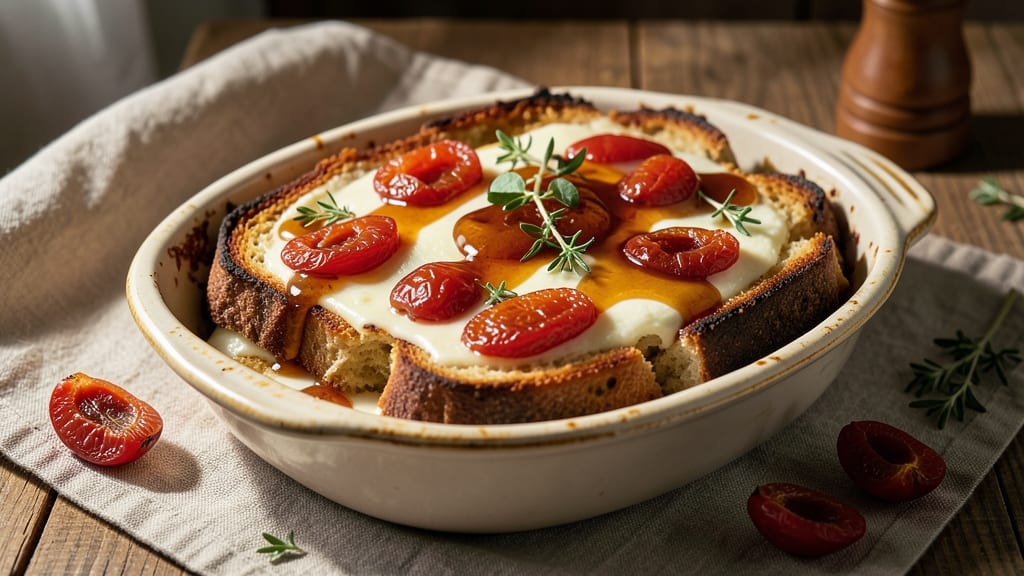
This apricot bread pudding recipe transforms stale bread into a spiced, custardy dessert with caramelized fruit—perfect for using up day-old loaves or impressing guests.
The secret lies in balancing warm cinnamon and nutmeg with the natural sweetness of apricots, creating layers of texture and flavor that feel both nostalgic and refined.
I developed this version after testing countless methods, and the result is a foolproof dish that bakes up golden and aromatic, with a velvety custard center that melts in your mouth.
What sets this recipe apart is the two-stage soaking process: first, the bread absorbs a vanilla-infused milk mixture for richness, while the apricots simmer in a spiced syrup to intensify their natural sweetness.
This ensures every bite delivers tender bread, juicy fruit, and a hint of warm spices—no dry edges or undercooked centers. The baking technique is equally critical: a low-and-slow approach in a water bath guarantees a creamy interior without over-browning the top.
By the time it emerges from the oven, you’ll have a restaurant-worthy dessert that’s surprisingly simple to make. The caramelized apricots add bursts of fruity brightness, while the spiced custard ties everything together into a comforting, golden masterpiece.
Serve it warm with a drizzle of honey or a scoop of vanilla ice cream for the full experience.
This recipe scales beautifully—whether you’re feeding a crowd or treating yourself to a decadent single serving. The method is adaptable too: swap in peaches or plums for fruit variations, or use whole-grain bread for added texture. Ready to turn stale bread into something extraordinary? Let’s get started.
Ingredients for apricot bread pudding
Sixteen ingredients transform stale bread into a restaurant-quality apricot dessert.
| Ingredient | Amount | Notes |
|---|---|---|
| Day-Old Bread Loaf 🍞 | 1 ½ lb | Crusts removed, cubed into 1-inch pieces |
| Dried Apricots 🍑 | 1 ½ cups | Chopped into small pieces, plus 2 tbsp syrup reserved |
| Large Eggs 🥚 | 6 whole | Room temperature, beaten |
| Whole Milk 🥛 | 2 cups | Full-fat for creaminess |
| Granulated Sugar 🍚 | 1 cup | Plus 2 tbsp for syrup |
| Unsalted Butter 🧈 | ½ cup | Cold, cubed |
| Ground Cinnamon 🌿 | 2 tsp | Freshly ground preferred |
| Ground Nutmeg 🌿 | ½ tsp | Freshly grated |
| Pure Vanilla Extract 🍯 | 1 tbsp | High-quality, Madagascar bourbon preferred |
| Light Brown Sugar 🍚 | ¼ cup | Packed, for apricot syrup |
| Orange Zest 🍊 | 1 tbsp | From 1 organic orange |
| Diamond Crystal Kosher Salt 🧂 | ½ tsp | For balancing sweetness |
| All-Purpose Flour 🌾 | ¼ cup | For thickening custard |
The bread is the foundation—crustless, day-old loaves absorb custard best, but fresh works in a pinch. For apricots, dried plump varieties from Trader Joe's or Whole Foods yield the best texture when rehydrated. The vanilla extract should be Madagascar bourbon for depth; imitation won't cut it here. Nutmeg is non-negotiable—freshly grated from a whole nut makes all the difference. For the orange zest, organic is ideal to avoid wax residue, and use a fine grater for even distribution. The butter must be cold and cubed to prevent premature melting during the custard phase.
No vanilla extract? Vanilla bean paste at half the amount works wonders. Substituting dried apricots? Peaches or plums require adjusting the syrup's sugar ratio downward by 1 tbsp. The brown sugar in the apricot syrup can be swapped for maple syrup, but reduce the liquid by 1 tbsp to maintain consistency. For a dairy-free option, almond milk and coconut oil replace the milk and butter, though texture will differ. If your bread is particularly dense, soak it 10 minutes longer in the custard mixture. The flour is optional but helps stabilize the custard for a silkier finish.
Store the custard mixture in the fridge for up to 24 hours before baking—this allows flavors to meld beautifully. Once baked, it reheats best in a 350°F oven for 10 minutes, covered with foil. Leftovers keep for 4 days refrigerated or 3 months frozen. For make-ahead convenience, assemble the pudding a day ahead and refrigerate; it'll be even more flavorful after resting. Always serve warm with a drizzle of honey or vanilla ice cream to complement the caramelized fruit.
Why You'll Love This Recipe
- No Waste Magic: I swear by this trick—day-old bread gets transformed instead of tossed. The crusty edges soak up the milk-egg custard while the dried apricots plump up like little bursts of sunshine in every bite. (Yes, even the crusts disappear.)
- Sweet Without Guilt: That caramelized sugar crust? It’s the star. The apricots add natural sweetness, so you don’t need extra sugar—just enough to make the custard silky and the whole thing taste like a cozy hug. Honestly, my kids ask for seconds before I even finish serving.
- Breakfast or Dessert: Serve it warm with a drizzle of honey for breakfast, or chill it overnight and enjoy it cold with vanilla ice cream. The custard sets just right—never too runny, never too dense. (Between us, it’s my go-to for lazy Sunday mornings.)
- Budget-Friendly Luxury: Eggs, milk, and stale bread? Check. Dried apricots in bulk? Even cheaper. This pudding costs pennies but feels like a restaurant dessert. Plus, leftovers reheat beautifully—so you’ll have a backup treat without extra effort.
Step-by-step instructions for apricot bread pudding
Transform simple ingredients into a velvety custard with caramelized fruit using this precise method.
Prepare the Apricot Syrup
In a small saucepan, combine the 1.5 cups dried apricots, 2 tablespoons reserved syrup (from the package), 2 tablespoons granulated sugar, and ½ cup water. Bring to a simmer over medium heat and cook for 8-10 minutes until the apricots soften and the liquid reduces to a thick syrup. Chop the apricots into small pieces with a sharp knife or food processor—you want them to break down slightly but maintain texture.
Here's the thing—this syrup is what transforms ordinary bread pudding into something extraordinary. The concentrated fruit flavor infuses every bite. Taste the syrup before removing from heat and adjust sweetness with a pinch more sugar if needed. Strain out any large pieces if you prefer a smoother texture, but I like the rustic bite of chopped fruit.
Assemble the Bread Pudding Mixture
In a large mixing bowl, whisk together the 6 room-temperature eggs, 2 cups whole milk, 1 cup granulated sugar, 2 teaspoons ground cinnamon, ½ teaspoon ground nutmeg, 1 tablespoon pure vanilla extract, and ½ teaspoon kosher salt until fully combined. This mixture should be smooth and pale yellow—no streaks of egg or flour.
Next, add the 1.5 lb cubed day-old bread and gently fold until each piece is coated in the custard mixture. The bread should absorb the liquid but remain distinct—don't overmix or the texture will become dense. Here's where it gets fun: fold in the prepared apricot mixture and 1 tablespoon orange zest, distributing evenly throughout. The orange zest adds a bright contrast to the warm spices and sweet fruit.
Bake Until Golden and Set
Preheat your oven to 350°F. Generously butter a 9x13-inch baking dish—this prevents sticking and adds extra richness. Transfer the bread pudding mixture to the prepared dish, pressing down gently to ensure even distribution. Dot the top with the ½ cup cold cubed butter and sprinkle with ¼ cup light brown sugar for caramelization.
Bake for 45-50 minutes until the top is golden brown and the center is just set (a knife inserted should come out clean with slight resistance). The edges should pull away from the pan easily, but the center should still have a slight wobble—this ensures a creamy texture. If the top browns too quickly, tent loosely with foil after 30 minutes to prevent over-browning while allowing the center to cook through.
Rest and Serve Warm
Remove the bread pudding from the oven and let it rest for 10-15 minutes before serving. This resting period allows the custard to fully set and the flavors to meld. The pudding will firm up slightly but remain tender—never let it cool completely or it will become rubbery.
Serve warm with a dusting of powdered sugar and an extra sprinkle of orange zest for brightness. Each bite should deliver a perfect balance of creamy custard, caramelized fruit, and warm spice notes. For an elevated presentation, drizzle with additional apricot syrup or serve with a scoop of vanilla ice cream to cut through the richness.
Pro Tips For Making Apricot Bread Pudding
- CHOP APRICOTS SMALL: Dried apricots need to soak, but they’ll stay chewy if you don’t cut them into ¼-inch pieces first—no one wants a mouthful of rubbery fruit. Toss them in warm water for 15 minutes, then drain well before folding into the batter, or they’ll make the bread soggy before it even hits the oven.
- USE ROOM-TEMP EGG MIX: Cold eggs make for a lumpy custard that won’t set properly. Whisk them with the milk and sugar at room temp—just 10 minutes out of the fridge does the trick. Trust me, your pudding will hold together like a dream instead of curdling like a science experiment gone wrong.
- BAKE LOW AND SLOW: Cranking the oven to 350°F is fine, but if you’re impatient like I used to be, you’ll end up with a crusty top and a gummy center. Cover the dish with foil for the first 20 minutes, then uncover and finish at 325°F—this guarantees a creamy interior without drying out the bread.
- SOAK BREAD UNIFORMLY: Dumping bread cubes into milk and letting them float is lazy, and it leads to uneven texture. Tear the loaf into 1-inch chunks, spread them in a single layer, and pour warm milk over them in a shallow dish. Let it sit for 5 minutes, then flip the cubes to soak both sides—this keeps every bite moist, not just the bottom layer.
Essential equipment for perfect results
Baking Dish Essentials
A 9x13-inch baking dish is non-negotiable for this recipe—it provides the perfect surface area for even baking and caramelization. I recommend a heavy-duty stainless steel pan like All-Clad or Calphalon for superior heat distribution.
For budget-friendly options, Ceramic CorningWare works beautifully, though it may need a few minutes longer in the oven. Always butter the dish generously before adding the mixture to prevent sticking and enhance flavor. 🧈
Mixing Tools
Use a large mixing bowl (at least 8-quart capacity) to accommodate the bread cubes and custard mixture without overflowing. A whisk is ideal for combining the eggs, milk, and sugar smoothly, while a spatula helps fold in the bread and apricots gently.
For chopping apricots, a sharp chef’s knife or food processor works best—just pulse briefly to avoid over-processing. 🍑
Measuring Precision
Accurate measurements are key to balancing the custard’s creaminess and the fruit’s sweetness. Invest in a stainless steel measuring set like OXO Good Grips for reliability. For spices, use a small coffee scoop to measure ground cinnamon and nutmeg precisely—too much can overpower the dish.
A microplane ensures fine orange zest without bitterness. Precision here makes all the difference in texture and flavor. 🌿
Oven Thermometer
Your oven’s temperature gauge can be off by 25°F or more, leading to under- or over-baked pudding. A digital oven thermometer like Thermoworks Oven Thermometer is a game-changer—it ensures your 350°F setting is accurate.
Place it near the baking dish during the 45-50 minute bake to confirm consistency. This small investment prevents dry edges or a runny center. ⏰
Optional: Water Bath
For an even more luxurious texture, bake the pudding in a water bath—a deep roasting pan with a trivet or rack underneath the baking dish. Fill the pan with hot water halfway up the dish’s sides.
This method creates a silky custard by trapping steam and gentle heat. Just ensure the dish fits snugly to avoid spills. It’s worth the extra effort for restaurant-quality results. 💫
Nutrition facts
Frequently asked questions
Can I use fresh apricots instead of dried?
Yes, but you'll need to adjust the recipe! Use 2 cups fresh apricots, peeled and chopped, and reduce the sugar in the syrup by 2 tablespoons since fresh fruit is less concentrated. Simmer them for 5-7 minutes instead of 8-10 to avoid mushiness. Fresh apricots add a brighter, juicier element to the pudding.
Why does my bread pudding come out dry?
Dry pudding usually means the bread absorbed too much liquid before baking. Try these fixes: use slightly older bread (2-3 days old), reduce milk by ¼ cup, or soak the bread for 5 minutes less in the custard mixture. Also ensure your baking dish is properly buttered to prevent sticking that might make the pudding appear dry.
Can I make this recipe without eggs?
but texture will change. Replace the 6 eggs with a mix of 1 cup unsweetened applesauce and 1 tablespoon baking powder for structure. The custard will be lighter but still delicious. For a vegan option, use ½ cup aquafaba (chickpea brine) whipped to stiff peaks plus 1 tablespoon cornstarch to stabilize.
How do I store leftovers?
Store in an airtight container in the fridge for up to 4 days. For longer storage, wrap tightly in plastic and freeze for 3 months. Reheat slices in a 350°F oven for 10-12 minutes covered with foil, or microwave for 30 seconds with a damp paper towel on top to restore moisture.
What bread works best for this recipe?
Day-old brioche or challah create the most luxurious texture, but any bread works! For heartier results, try sourdough or whole wheat. Avoid very dense breads like banana bread—they absorb liquid unevenly. The key is bread that's slightly stale but still soft enough to break into 1-inch cubes easily.