
Side Dishes
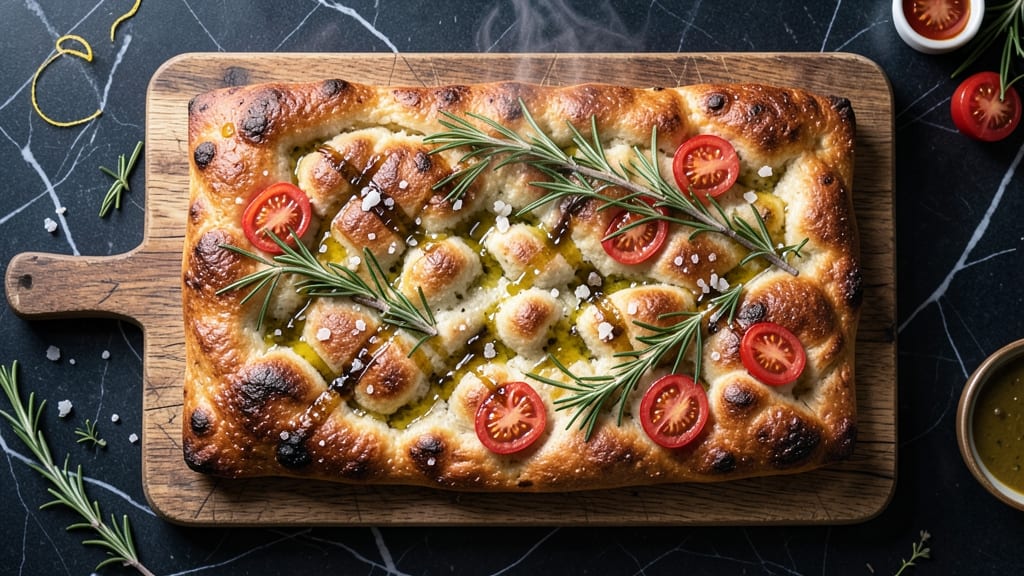
Anna Olson's focaccia bread recipe transforms your kitchen into a rustic Italian bakery with its signature olive oil-pooled crust and herbed pillows. This high-hydration dough creates a crispy, golden exterior with a tender crumb—perfect for soaking up dips or serving alongside soups. The secret lies in the dimpling technique, which creates those iconic air pockets while distributing olive oil evenly for maximum flavor.
The dough's magic happens during the proofing stage, where it develops a light, airy texture that contrasts beautifully with the caramelized crust. Fresh rosemary and coarse salt are non-negotiable for authentic flavor, but feel free to customize with garlic, cherry tomatoes, or even vegan cheese.
The result is a focaccia so impressive, it'll have everyone asking for seconds—without the restaurant price tag.
What sets this recipe apart is the balance of simplicity and technique—no special equipment needed, just patience and attention to detail. The aroma alone will have your kitchen smelling like a Tuscan countryside, while the texture delivers that perfect combination of crispy edges and pillowy centers.
This is the kind of bread that elevates any meal from ordinary to extraordinary.
Once baked, the focaccia develops a glossy, golden crust that pools with olive oil, creating pockets of herbed goodness in every bite. Serve warm with balsamic glaze, or let it cool slightly for slicing.
The versatility makes it ideal for meal prep, gifts, or impromptu gatherings—always a crowd-pleaser with minimal effort.
Ingredients for anna olson focaccia bread
Eight essential ingredients craft Anna Olson's signature focaccia with crispy crust and herbed pillows.
| Ingredient | Amount | Notes |
|---|---|---|
| All-Purpose Flour 🌾 | 4 cups | Sifted for even texture |
| Active Dry Yeast 🍞 | ¼ oz | Or 2 1/4 tsp (1 packet) |
| Granulated Sugar 🍚 | 1 tbsp | Feeds the yeast |
| Extra-Virgin Olive Oil 🫒 | 1 ½ cups | High quality, fruity |
| Warm Water 💧 | 1 ¼ cups | 110°F ideal temperature |
| Coarse Sea Salt 🧂 | 1 ½ tsp | Kosher or Maldon preferred |
| Fresh Rosemary 🌿 | ¼ cup | Finely chopped leaves |
| Garlic Cloves 🧄 | 4 cloves | Minced for flavor infusion |
The olive oil is non-negotiable here—Californian extra-virgin from Whole Foods or Trader Joe's delivers the best flavor. Look for oils labeled 'fruity' or 'robust' on the bottle. Fresh rosemary needs to be vibrant green with a strong aroma; Costco's bulk section often has the best deals. The yeast should be dated within the next few weeks for optimal freshness—check the expiration date on the packet. For the garlic, organic cloves from the produce section work best, but avoid those pre-minced jars—they're full of preservatives.
No fresh rosemary? Dried rosemary at one-third the amount works in a pinch, but it won't have that same bright flavor. Running low on olive oil? Avocado oil is a decent substitute, though it lacks the fruity notes. The garlic can be roasted whole for a sweeter flavor—just wrap the cloves in foil and bake at 400°F for 15 minutes before mincing. For the yeast, if your kitchen is chilly, warm the water to 110°F (test by touching a drop to your inner wrist—it should feel warm but not hot). The sugar can be swapped for honey if you prefer, but it won't feed the yeast as effectively.
The yeast mixture keeps for 24 hours in the fridge if covered tightly, but it's best used fresh. Store the remaining flour in an airtight container for up to 6 months—freeze it if you're not using it regularly. Rosemary sprigs can be wrapped in damp paper towels and refrigerated for 1 week, or frozen for 3 months to preserve their flavor. The garlic cloves stay fresh in the fridge for 2 weeks if stored in a sealed container. For meal prep, bake an extra focaccia and freeze it—it reheats beautifully in a 350°F oven for 10 minutes.
Why You'll Love This Recipe
- No-Knead Magic: The dough comes together in five minutes—just flour, yeast, sugar, and olive oil. No stand mixer, no overworking, just a bowl and your hands. Honestly, I’ve made this on lazy Sundays when I couldn’t even muster the energy to measure properly.
- Olive Oil Bliss: That rich, fruity EVOO soaks into every nook, creating a bread so tender it melts in your mouth. The sugar caramelizes just enough to give it a subtle sweetness that pairs perfectly with salty toppings.
- Meal Prep Hero: Bake a big pan on Sunday, slice it up, and you’ve got breakfast, sandwiches, or snacking covered all week. My kids still fight over the last piece—even after three days.
- Budget Stretch: Five ingredients, one pan, and enough leftovers to feed the whole block. I’ve used this to stretch a grocery budget, impress guests, and even donate extras to neighbors. Pure practicality.
Step-by-step instructions for Anna Olson's focaccia bread
This method delivers a crispy, olive oil-rich crust with soft herbed pillows—just like Anna Olson's signature focaccia.
Activate the Yeast and Mix the Dough
In a large mixing bowl, combine the 1.25 cups warm water (around 110°F) with the 1 tbsp granulated sugar and 0.25 oz active dry yeast. Let this sit for 5-10 minutes until it becomes frothy—this confirms the yeast is active. If it doesn't bubble, your yeast may be dead, and you'll need to start over.
Add the 4 cups all-purpose flour and 1.5 tsp coarse sea salt to the bowl. Using a wooden spoon or dough whisk, stir until a shaggy dough forms. Then, gradually drizzle in the 1.5 cups extra-virgin olive oil while mixing. The dough will be sticky and soft—this is normal for focaccia. Avoid adding extra flour, as it can make the bread dense.
Knead and Rest the Dough
Turn the dough onto a lightly floured surface and knead for 5-7 minutes until smooth and elastic. The dough should feel slightly tacky but not wet. If it's too sticky, wet your hands and continue kneading—adding flour at this stage will ruin the texture. Shape the dough into a rectangle about 12x16 inches and place it in a lightly oiled 9x13-inch baking pan. Cover with a damp towel and let it rest for 1 hour at room temperature.
During this rest, the dough will rise slightly and relax, making it easier to stretch later. I like to place the pan in a warm spot, like near the oven with the light on, to encourage gentle expansion without overproofing.
Stretch and Dimple the Dough
After the rest, remove the towel and use your fingers to gently stretch the dough to fit the pan, pressing lightly to fill any gaps. This step is all about creating surface area for that signature crispy crust. Once stretched, use your fingertips to dimple the dough all over, creating small wells about 1 inch apart. Press down firmly but not so hard that you tear the dough.
Drizzle the remaining olive oil (about 2-3 tablespoons) evenly over the dough, letting it pool in the dimples. Sprinkle the 0.25 cup finely chopped fresh rosemary and 4 minced garlic cloves evenly over the top, pressing lightly so they stick. Let the dough rest uncovered for 30 minutes while you preheat the oven to 425°F. This allows the flavors to meld and the oil to absorb slightly.
Bake to Golden Perfection
Bake the focaccia for 20-25 minutes until the edges are deep golden brown and the crust is crispy. The center should still feel slightly soft to the touch—focaccia is meant to be tender inside. If the top browns too quickly, tent the pan with foil after 15 minutes to prevent over-browning.
Remove from the oven and let it cool for 10 minutes before slicing. The bread will continue to crisp up as it cools, and the olive oil will pool beautifully in the dimples. Serve warm, sliced into squares, and enjoy the contrast of crispy crust and soft, herbed interior.
Pro Tips For Making Anna Olson Focaccia Bread
- STRETCH THE DOUGH LONG: I learned this the hard way—Anna Olson’s recipe calls for a 15-minute stretch, but I’d rush it to 10. That’s how you end up with dense, uneven bubbles. Grab opposite sides of the dough, pull slowly toward the center, then rotate 45 degrees and repeat. Think of it like a slow-motion tug-of-war with your future crispy crust.
- USE COLD WATER FOR YEAST: The recipe says warm water, but I’ve found cold water (around 70°F) works better when my kitchen’s already hot. It gives the yeast more control over fermentation, so the dough rises smoother and doesn’t overproof. Just let it sit 5 minutes after mixing—you’ll see the yeast wake up without the risk of a wild, sticky mess.
- SALT THE OIL FIRST: This isn’t just about flavor—it’s about structure. Before dimpling, sprinkle that extra-virgin olive oil over the dough and then add the salt. The salt dissolves into the oil, creating tiny pockets that help the focaccia puff up higher. Skip this, and you’ll get flat, greasy pockets instead of those airy, golden dimples.
- BAKE UNTIL GOLDEN, NOT JUST BROWN: I used to pull the focaccia out at 375°F when the edges looked done, only to have it turn gummy. The real test? The top should be deep golden, almost honey-colored, with crisp edges. If it’s just brown, crank the heat to 400°F for the last 5 minutes—your future self will thank you for that extra crunch.
Creative variations of this recipe
Herb Variations
Swap rosemary for thyme or oregano for a Mediterranean twist—both pair beautifully with olive oil. I love using fresh thyme sprigs (about ¼ cup) for a bright, citrusy note. For a more robust flavor, add 1 tbsp lemon zest to the dough before proofing. 🌿
Cheese Additions
Add ½ cup grated Pecorino Romano or Parmigiano-Reggiano after dimpling for a salty, umami depth. Sprinkle it evenly and press lightly so it melts slightly during baking. For a vegan option, use nutritional yeast (about 2 tbsp) mixed with 1 tbsp olive oil for a cheesy flavor without dairy.
Veggie Toppings
Toss cherry tomatoes (halved) or sliced zucchini into the dimples before baking for a fresh, slightly sweet contrast. I often add 4-5 tomatoes or ½ cup zucchini ribbons—just press them gently into the dough so they stick. For a smoky touch, add ¼ cup caramelized onions (sautéed until golden).
Sweet Twist
Transform focaccia into a dessert by adding ¼ cup honey to the dough and topping with ½ cup pitted cherries or chopped figs. Bake as usual, then drizzle with melted honey after baking for a sticky, caramelized finish.
This version pairs perfectly with vanilla ice cream or whipped cream. 🍯
Global Flavors
For a Moroccan-inspired version, add 1 tsp ground cumin and ½ tsp smoked paprika to the dough, then top with ¼ cup chopped cilantro and 2 tbsp crumbled feta.
For a Mexican twist, swap rosemary for cilantro and add ½ tsp chili powder plus ¼ cup cotija cheese on top.
Protein Boost
Turn focaccia into a meal by adding ½ cup cooked shrimp or diced prosciutto to the dimples before baking. For a heartier option, press 4 oz shredded rotisserie chicken into the dough.
These additions work best when added after the dough has rested but before the final bake—just press them gently into the dimples. 🍗
Nutrition facts
Frequently asked questions
Why is Anna Olson's focaccia dough so sticky?
The high hydration level (thanks to the 1.5 cups olive oil) creates a soft, tacky dough that's essential for that signature crispy crust. This texture is normal—resist adding extra flour, as it can make the bread dense. Wet your hands when handling to prevent sticking.
Can I make this focaccia without a 9x13-inch pan?
Yes! Use a 10x15-inch pan for a thinner focaccia or a 9-inch round pan for a focaccia pizza. Adjust baking time by 2-3 minutes—smaller pans may need slightly longer. The key is maintaining the same dough thickness (1-inch deep) for even baking.
What if my focaccia doesn't rise enough?
Underproofing happens when the dough rests too short or the kitchen is cold. Let it rise in a warm spot (like a turned-off oven with the light on) for 1.5 hours instead. For extra lift, add 1 extra teaspoon sugar to feed the yeast. If it still doesn't rise, your yeast may be old—try fresh active dry yeast.
How do I store leftover focaccia?
Wrap cooled focaccia tightly in plastic wrap or foil to keep it fresh for 3 days at room temperature. For longer storage, freeze slices in a sealed bag for up to 3 months. Reheat frozen slices in a 350°F oven for 5-7 minutes until crispy again.
Can I make this recipe gluten-free?
Yes, but texture will differ. Use a 1:1 gluten-free flour blend (like King Arthur's) and add 1 tsp xanthan gum to mimic elasticity. Reduce olive oil to 1 cup (gluten-free dough absorbs less) and expect a denser crumb. Proofing may take 30-50% longer—monitor closely.