
Side Dishes
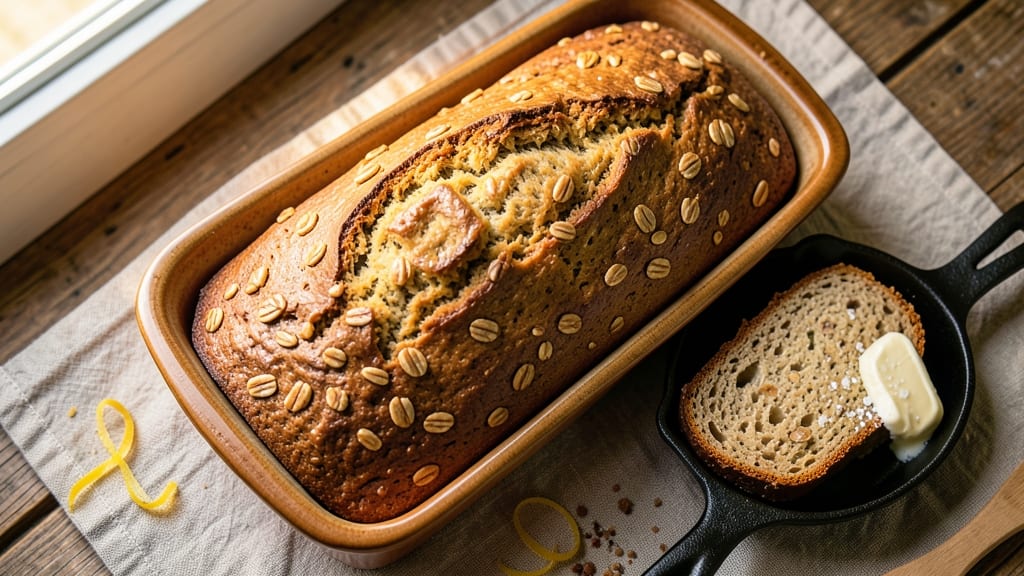
This Amish oatmeal bread recipe delivers the nutty, crusty-hearty loaves that define traditional homestyle baking—no fuss, no kneading, just hands-off rising and a golden-brown crust that cracks open to reveal tender crumb.
The secret lies in the combination of rolled oats and whole wheat flour, which create that signature texture and deep, earthy flavor that’s become a breakfast staple across generations.
What makes this recipe truly foolproof is the overnight cold rise, which develops flavor and creates that signature open crumb structure without requiring any special skills.
The dough comes together in just 10 minutes, then does all the work for you while you sleep—resulting in a loaf that’s crusty on the outside, soft and chewy inside, with pockets of air that make every slice satisfying.
The aroma alone—warm, toasty, and faintly sweet—will have your kitchen feeling like a country kitchen from a bygone era. This bread pairs perfectly with butter, jam, or even as a side to hearty soups and stews, making it a versatile staple that belongs in any home baker’s rotation.
Ready in just 2 hours (including rising time), this recipe proves you don’t need complicated techniques to achieve restaurant-quality results at home. The best part?
It’s beginner-friendly, so even if you’ve never baked bread before, you’ll end up with a loaf that tastes like it came from a small-town bakery.
Ingredients for amish oatmeal bread
Twelve simple ingredients for a loaf that tastes like a country kitchen's secret.
| Ingredient | Amount | Notes |
|---|---|---|
| All-Purpose Flour 🌾 | 3 ½ cups | Unbleached, for tender crumb |
| Rolled Oats 🥣 | 1 cup | Old-fashioned, not quick oats |
| Whole Wheat Flour 🌾 | 1 cup | For earthy flavor and texture |
| Active Dry Yeast 🍞 | 2 ¼ tsp | Ensure yeast is fresh |
| Granulated Sugar 🍚 | ¼ cup | Brown sugar works too |
| Unsalted Butter 🧈 | ½ cup | Cold, cubed for easier mixing |
| Large Eggs 🥚 | 1 whole | Room temperature for best results |
| Milk 🥛 | ¾ cup | Warm, not hot |
| Salt 🧂 | 1 tsp | Diamond Crystal preferred |
| Honey 🍯 | 2 tbsp | For subtle sweetness |
| Vanilla Extract 🌸 | 1 tsp | Pure vanilla for aroma |
| Water 💧 | ¼ cup | Warm, not boiling |
The rolled oats are non-negotiable here—they create that signature chewy texture and nutty flavor. Bob's Red Mill or store-brand old-fashioned oats work perfectly, but avoid quick oats (they’re too processed). Whole wheat flour adds depth, so grab a high-quality brand like King Arthur if you can. For the yeast, check the expiration date—old yeast won’t activate properly. If your kitchen’s cold, warm the milk and water slightly to help the yeast wake up faster. The butter should be cold when you mix it in, but not rock-hard—just soft enough to cut with a knife.
No rolled oats? Steel-cut oats blended into a coarse flour works in a pinch, though texture will differ slightly. Substituting white flour for the whole wheat? Use all-purpose instead of bread flour—it’s lighter and won’t overdevelop gluten. Out of vanilla? Almond extract at half the amount gives a similar aroma, though less sweet. The honey can be swapped for maple syrup, but reduce other liquids slightly since it’s thicker. For a dairy-free version, use unsweetened almond milk and vegan butter, though the bread may be slightly denser. And if your dough feels too sticky? Add 1 tbsp more flour—this bread is forgiving.
This dough is designed to rise overnight in the fridge, so shape it into a loaf in a greased pan and cover it tightly with plastic wrap. It’ll keep in the fridge for up to 3 days before baking, which is perfect for lazy mornings. Once baked, cool completely on a wire rack—cutting it warm makes it gummy. The loaf freezes beautifully: wrap it in foil and store for up to 3 months. To reheat, wrap a slice in foil and warm for 20 seconds in the microwave, or toast it in a dry pan for crispy edges. Leftovers? Toss them in a toaster bag and freeze for quick toast later.
Why You'll Love This Recipe
- No-Knead Magic: I swear by this—just mix, let it rise, and bake. The rolled oats and whole wheat flour do the heavy lifting while I sip coffee, no stand mixer required.
- Sweet & Hearty Crunch: That caramelized sugar from the rolled oats? It’s like a warm hug in every bite—crunchy exterior, soft center, and just enough sweetness to keep me reaching for seconds.
- Breakfast or Snack Star: Honestly, this bread works everywhere. Toast it for breakfast, pack slices for lunch, or serve warm with butter at dinner—it’s my go-to for lazy mornings or unexpected company.
- Budget-Friendly Stretch: A loaf costs pennies to make and lasts a week. Freeze extras for quick toast, and the yeast keeps it fresh longer than store-bought—my wallet (and my family) thank me every time.
Step-by-step instructions for Amish oatmeal bread
Here's how to craft that signature Amish oatmeal bread with a hands-off rise and perfect crust.
Activate the Yeast and Prepare Wet Ingredients
In a small bowl, combine the 0.25 cup warm water (about 110°F—too hot kills yeast) with the 2.25 tsp active dry yeast and 2 tbsp honey. Let this sit for 5-10 minutes until frothy. This proves your yeast is alive and ready to work its magic.
In a separate large bowl, whisk together the 0.75 cup warm milk, 1 whole large egg, 0.25 cup granulated sugar, 1 tsp vanilla extract, and 1 tsp salt. The milk should be warm to the touch but not hot—just warm enough to melt the butter easily. Mix until fully combined, creating a smooth base for your dough.
Mix the Dough and Incorporate Oats
Cut the 0.5 cup unsalted butter into small cubes and add them to the wet ingredients. Let them soften slightly from the warm milk—this helps create a tender crumb. Gradually add the 3.5 cups all-purpose flour and 1 cup whole wheat flour, mixing just until combined. Avoid overmixing here; you want a shaggy, sticky dough.
Now stir in the 1 cup rolled oats and the yeast mixture. The oats will give your bread that signature nutty texture while keeping it moist. Use a wooden spoon to scrape down the sides of the bowl and mix until everything comes together. The dough should be soft and slightly tacky—this is perfect for Amish-style bread.
Knead by Hand for Maximum Flavor Development
Transfer the dough to a lightly floured surface and knead for 8-10 minutes until smooth and elastic. I like to use the "fold and turn" method: fold one-third of the dough toward the center, rotate the bowl, and repeat. This builds strength without overworking the gluten, which keeps the bread tender yet sturdy.
Look for the "windowpane test" to check doneness: stretch a small piece of dough thin enough to see light through it. If it doesn't tear immediately, your dough is ready. Shape into a round loaf and place it in a lightly greased bowl. Cover with a damp towel and let rise in a warm place for 1-1.5 hours, or until doubled in size. The dough should feel light and springy when pressed gently.
Shape and Proof for Optimal Crust
Punch down the risen dough to release air, then shape it into a round loaf on a parchment-lined baking sheet. This traditional Amish shape creates a beautiful, even crust. Cover loosely with the towel again and let proof for another 30-45 minutes until it rises slightly and looks puffy. The surface should have small bubbles and feel firm when pressed.
Preheat your oven to 375°F while the bread proofs. Brush the top with a little milk or water for a golden finish. Bake for 30-35 minutes until the crust is deep golden brown and the internal temperature reaches 190°F. Tap the bottom—it should sound hollow.
Cool and Slice for Perfect Texture
Remove the bread from the oven and transfer it to a wire rack to cool completely. This step is crucial—cutting too soon releases steam and makes the bread gummy. The crust will firm up as it cools, giving you that satisfying crunch with a tender, moist interior.
Slice with a serrated knife for clean cuts that reveal the oatmeal flecks throughout. Serve warm with butter or jam, or store in an airtight container for up to 5 days. The flavor improves as it sits, developing deeper nutty notes from the oats and whole wheat.
Pro Tips For Making Amish Oatmeal Bread
- Toast the Oats: I learned this the hard way—skipping this step makes the texture gummy. Lightly toast the rolled oats in a dry pan over medium heat for 3-4 minutes until they smell nutty. This caramelizes their starches and gives the bread that classic Amish crunch without overpowering the dough.
- Mix Yeast with Warm Water: Don’t just toss the yeast into flour like it’s an afterthought. Bloom it first in warm (110°F) water with a pinch of sugar for 5 minutes until foamy. This guarantees it’s active before mixing—no more waiting around for a dough that refuses to rise.
- Avoid Over-Kneading Whole Wheat: Whole wheat flour behaves differently than all-purpose. Once the dough starts pulling away from the bowl after 6-8 minutes of kneading, stop. Overworking it turns the bread dense and chewy, not the tender, slightly rustic texture you want.
- Use a Thermometer for Proofing: The dough is ready when it’s springy and leaves a faint indent—but don’t guess. Test its temperature: it should reach 75-78°F before baking. Too cold? It’ll bake unevenly. Too warm? It’ll rise too fast and collapse. A cheap thermometer solves this every time.
Health benefits of this dish
Whole Grain Goodness
This bread packs a nutritional punch thanks to its whole wheat flour and rolled oats, delivering fiber-rich goodness that supports digestive health. A single slice provides about 4 grams of fiber, which is 14% of your daily needs—perfect for keeping you full and energized.
The oats also add beta-glucan, a soluble fiber that helps lower cholesterol levels naturally. 💪
Protein-Packed Perfection
With 12 grams of protein per serving, this bread is a powerhouse for muscle maintenance and repair. The combination of whole wheat flour, eggs, and milk creates a balanced amino acid profile that keeps you satisfied longer than refined white bread.
It’s especially great for breakfast or post-workout meals when you need sustained energy.
Natural Sweetness
Instead of refined sugar, this recipe uses honey and a touch of vanilla for subtle sweetness. Honey contains trace minerals like zinc and iron, while vanilla adds antioxidant-rich benefits. The result is a bread that satisfies sweet cravings without the blood sugar spikes of commercial loaves. 🍯
Yeast Benefits
The active dry yeast in this recipe isn’t just for rising—it contains B vitamins, including B6 and folate, which support metabolism and red blood cell production. A small amount of yeast also provides probiotic benefits that promote gut health, making this bread a gut-friendly choice.
Low-Glycemic Advantage
The whole grains and oats give this bread a low-glycemic index, meaning it won’t cause rapid blood sugar spikes. This makes it an excellent option for anyone managing diabetes or insulin sensitivity. The slow-release carbs provide steady energy without the crash, keeping you focused and satisfied all morning.
Rich in Micronutrients
This bread is a hidden source of essential minerals like magnesium (from whole wheat), selenium (from oats), and calcium (from milk). These nutrients support bone health, immune function, and even thyroid regulation. It’s a simple way to sneak in nutrients without sacrificing flavor or texture. ✨
Nutrition facts
Frequently asked questions
Why does Amish oatmeal bread have rolled oats instead of quick oats?
Rolled oats create that signature chewy texture and nutty flavor that defines this bread. Quick oats are steamed and rolled thinner, which makes them softer and more processed. The larger, coarser texture of rolled oats adds heartiness while keeping the bread moist—plus, they retain their shape beautifully when baked, giving each slice those satisfying flecks.
Can I make this bread without whole wheat flour?
Replace the 1 cup whole wheat flour with 1 cup all-purpose flour for a lighter texture. The bread will still be delicious, though you’ll lose some of the earthy depth from the whole grains. For extra flavor, add 1 tbsp ground flaxseed or wheat germ to mimic the whole wheat’s nuttiness.
What’s the best way to store leftover Amish oatmeal bread?
Wrap the cooled loaf tightly in plastic wrap or foil, then store at room temperature for up to 5 days. For longer storage, freeze slices in a toaster bag for 3 months. To reheat, wrap a slice in foil and warm for 20 seconds in the microwave, or toast it in a dry pan for crispy edges. The bread actually tastes better the next day as the flavors meld!
Why does my dough feel too sticky?
This bread is intentionally slightly sticky—it’s part of its charm! If it’s extremely sticky, add 1 tbsp more flour at a time until it’s manageable. Over-kneading can also make dough sticky, so stick to the 8-10 minute kneading time. For extra insurance, chill the dough for 30 minutes before shaping to firm it up.
Can I use this recipe for dinner rolls instead of a loaf?
Yes! Divide the dough into 12 equal portions and shape into balls. Place them on a baking sheet, cover, and let rise for 1 hour. Bake at 375°F for 12-15 minutes until golden. Brush with melted butter while warm for extra richness. The overnight rise still works—just shape the rolls in the morning and bake as directed.