
Side Dishes
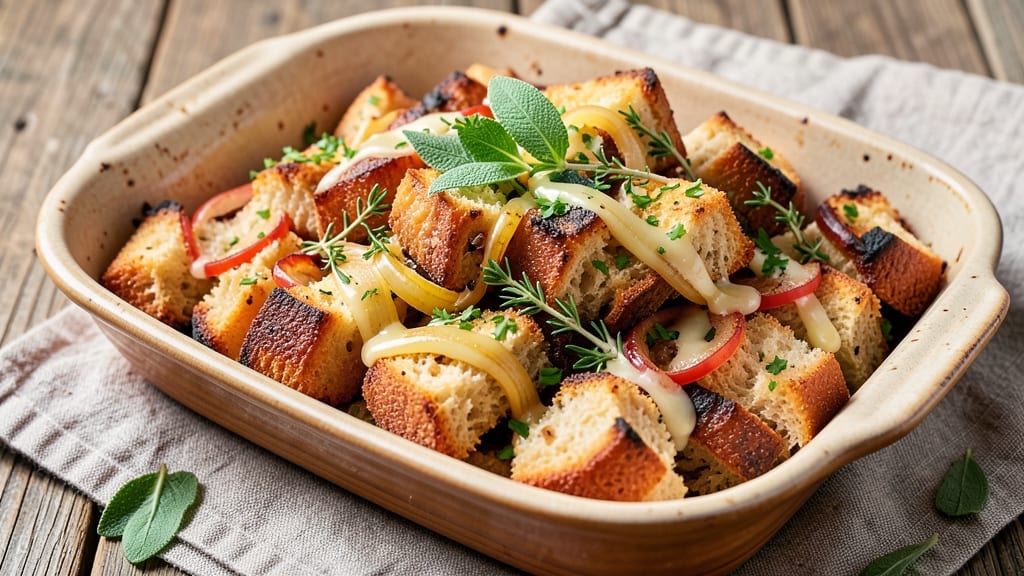
This Amish bread stuffing recipe delivers the perfect balance of crispy edges and herby softness—just like Grandma used to make. The secret lies in toasting the bread until golden and golden, then mixing it with savory broth, fresh herbs, and rich butter for that signature texture.
This isn’t just stuffing; it’s a comforting centerpiece for holiday tables that transforms any meal into a celebration.
The process is straightforward but requires patience—dry toasting the bread cubes ensures they stay crispy while absorbing the flavorful broth. Sautéing onions, celery, and sage first builds a fragrant base that ties everything together.
Baking at 350°F for 30-35 minutes guarantees a golden, aromatic stuffing that’s tender inside with just the right crunch.
What sets this apart is the herb-forward flavor—a mix of thyme, parsley, and sage that infuses every bite with warmth. The result? A stuffing so rich and satisfying it pairs perfectly with roasted turkey, ham, or even as a standalone side.
It’s the kind of dish that makes gatherings feel special, no matter the occasion.
For extra depth, consider adding cooked sausage or a splash of apple cider to the broth. Leftovers reheat beautifully, making this recipe a holiday hero that keeps giving. Let’s get baking—your table deserves this classic.
Ingredients for amish bread stuffing
Golden bread cubes, fragrant herbs, and rich broth create this classic Amish stuffing.
| Ingredient | Amount | Notes |
|---|---|---|
| Day-Old Bread Cubes 🍞 | 8 cups | Stale or lightly toasted cubes |
| Unsalted Butter 🧈 | ½ cup | Cold, cubed for texture |
| Fresh Sage Leaves 🌿 | ½ cup | Chopped, stems removed |
| Fresh Thyme Leaves 🌿 | 2 tbsp | Or 1 tsp dried thyme |
| Fresh Parsley Leaves 🌿 | ¼ cup | Chopped, for brightness |
| Yellow Onion 🧅 | 1 whole | Diced, medium size |
| Celery Stalks 🥬 | 3 whole | Diced, fresh preferred |
| Chicken Broth 💧 | 2 cups | Low-sodium, homemade or store-bought |
| Egg 🥚 | 1 whole | Beaten, for binding |
| Salt 🧂 | 1 ½ tsp | Kosher or sea salt |
| Black Pepper 🌶️ | 1 tsp | Freshly cracked |
| Garlic Cloves 🧄 | 3 cloves | Minced, for depth |
The bread is everything here—day-old loaves work best for texture, but lightly toasted cubes add extra crunch. Sourdough or rye adds depth if you want to get fancy, but basic white or wheat bread is perfect for everyday use. For herbs, fresh is ideal, but dried thyme and parsley work in a pinch (use half the amount). The Costco or Trader Joe's bulk herb sections are great for stocking up. Sage is non-negotiable though—it’s the heart of that Amish flavor. If you can’t find fresh, dried sage works at one-third the amount.
No chicken broth? Vegetable broth with a splash of apple cider keeps it flavorful. The egg is crucial for binding—omit if vegan, but the texture will be softer. For extra richness, add cooked sausage or bacon crumbles to the mix. The onions and celery should be finely diced (about 1/4-inch pieces) so they blend seamlessly. If you’re prepping ahead, toast the bread and chop the veggies the day before—just store them separately until mixing.
This stuffing reheats beautifully—just add a splash of broth if it’s dry. Keeps 3-4 days in the fridge, 3 months frozen. For freezing, portion into greased loaf pans or individual containers. The egg makes it sturdy enough to handle reheating without falling apart. Double the recipe—it’s always better the next day as flavors meld.
Why You'll Love This Recipe
- No-Waste Ingredients: I always use day-old bread—no sad soggy scraps here. That butter? Just melt it in, no fancy techniques. Honestly, the herbs (sage, thyme, parsley) are the stars, and they’re cheap at the grocery store.
- Herb-Packed Punch: That crispy bread crust meets tender, buttery centers with layers of fresh herbs. I’ll be real: the first time I added extra sage, my family begged for seconds. It’s the kind of flavor that sticks around.
- Leftovers? No Problem: This stuffing reheats like a dream—crispy edges, soft middle, all the herbs still bright. I’ve turned it into sandwiches, fried it into croutons, even tossed it with eggs for breakfast. (Yes, even on a Tuesday night.)
- Budget-Friendly Crowd-Pleaser: A loaf of bread, a stick of butter, and a handful of herbs feed six for less than $10. Between us, this is the dish that makes holiday meals feel special without breaking the bank—or my sanity.
Step-by-step instructions for Amish bread stuffing
Here's how to create the perfect balance of crispy edges and tender interior in your homemade stuffing.
Prep the Bread for Maximum Crunch
Spread the 8 cups of day-old bread cubes on a baking sheet and toast them in a 350°F oven for 10-12 minutes until completely dry and lightly golden. This step is crucial—it prevents the stuffing from becoming soggy. Stir halfway through for even toasting. You want each cube to feel dry to the touch when you handle them.
While the bread toasts, melt the 0.5 cup unsalted butter in a large skillet over medium heat. As it melts, add the 1 whole yellow onion and 3 whole celery stalks, both diced into ¼-inch pieces. Cook for 8-10 minutes until the onions are translucent and the celery softens slightly. This aromatic base will form the flavor foundation of your stuffing.
Sauté Herbs and Garlic for Depth of Flavor
Add the 3 minced garlic cloves to the skillet and cook for 30 seconds until fragrant. This quick cooking prevents the garlic from burning while maximizing its flavor. Immediately remove the skillet from heat and stir in the 0.5 cup chopped fresh sage leaves, 2 tbsp fresh thyme leaves, and 0.25 cup chopped fresh parsley leaves. Let the mixture cool for 5 minutes—this preserves the vibrant colors and prevents the herbs from losing their potency in the oven.
In a large mixing bowl, combine the toasted bread cubes with the cooled herb mixture. The bread should absorb the buttery aroma completely. Sprinkle over the 1.5 tsp salt and 1 tsp freshly cracked black pepper, then gently toss everything together with your hands until evenly distributed. This is where the magic happens—the herbs release their oils into the bread, creating that signature Amish stuffing flavor.
Bind and Assemble for Perfect Texture
In a separate bowl, beat the 1 whole egg until frothy. Pour it over the bread mixture and gently fold together with a wooden spoon. The egg acts as a binder, holding the stuffing together while allowing it to stay moist. Add the 2 cups chicken broth gradually, mixing just until combined. You want the mixture to be damp but not wet—it should hold its shape when pressed gently but still feel slightly crumbly.
Transfer the stuffing to a greased 9x13-inch baking dish and spread it evenly. The stuffing should come up about ¾ of the way up the sides of the dish. This shape allows for maximum crisping on top while keeping the interior tender. Cover the dish loosely with aluminum foil and bake in a 375°F oven for 25 minutes. This initial baking helps the stuffing set without over-browning.
Finish with Crispy Top and Golden Edges
Remove the foil and increase the oven temperature to 400°F. Return the stuffing to the oven for 15-20 minutes until the top is deep golden brown and the edges are crispy. You'll see the color transform from pale to rich amber—this is your cue that the stuffing is perfectly done. The center should still feel slightly moist when checked with a fork, but the exterior should be firm and crisp.
Let the stuffing rest for 10 minutes before serving. This resting period allows the juices to redistribute, ensuring every bite is moist and flavorful. The contrast between the crispy top and tender interior is what makes this Amish bread stuffing truly special. Serve warm alongside your holiday meal for the ultimate savory experience.
Pro Tips For Making Amish Bread Stuffing
- Dry the Cubes First: Skip the soggy mess by spreading your day-old bread cubes on a baking sheet and letting them sit for at least 30 minutes—preferably an hour. I learned this the hard way after making stuffing that turned into a wet brick in the oven.
- Use Cold Butter: Cut your unsalted butter into small cubes and chill them before mixing into the bread. This prevents the butter from melting too soon and keeps your stuffing light instead of greasy. Trust me, your stuffing will thank you.
- Chop Herbs Fine: Don’t just toss in whole sage and thyme leaves—chop them into tiny pieces so they distribute evenly. I was skeptical until I tried it, and now I can’t imagine anything else. The flavor becomes way more consistent.
- Toast the Bread: Before adding any liquid, spread the bread cubes in a skillet over medium heat for 5-7 minutes until they’re golden and crisp. This step locks in moisture and gives your stuffing a deeper, nuttier flavor—no one will guess it’s a shortcut.
Dietary considerations for this dish
Gluten-Free Adaptation
For a gluten-free version, swap the bread cubes for gluten-free bread like Canyon Bakehouse or Schar brands. Toast the cubes thoroughly in a 375°F oven for 15 minutes to ensure they stay crispy.
Use a gluten-free chicken broth (like Pacific Foods) to avoid cross-contamination. The texture will be slightly denser, but the herby flavor remains intact. 🌾
Dairy-Free Options
Replace the 0.5 cup unsalted butter with vegan butter like Miyoko's or Earth Balance. For extra richness, add 2 tbsp olive oil when sautéing the onions and celery. The egg can be omitted or replaced with 1 tbsp ground flaxseed mixed with 3 tbsp water as a binder.
The result is just as flavorful but completely dairy-free. 🥛
Vegetarian Modifications
Skip the egg entirely and use 2 tbsp nutritional yeast mixed with 1 tbsp water as a binder. Boost umami by adding 1 tbsp soy sauce or 1 tsp miso paste to the broth.
For extra protein, stir in ½ cup cooked quinoa or chickpeas (drained and rinsed) when mixing the stuffing. The texture stays hearty and satisfying. 🌱
Low-Carb Adjustments
Replace bread cubes with cauliflower rice (about 8 cups, toasted in the oven for 10 minutes at 400°F). Use low-carb chicken broth and reduce the butter to 2 tbsp.
Add 1 tbsp psyllium husk powder to the broth mixture to help bind the cauliflower. The result is a lighter, still-crispy stuffing with fewer carbs. 🥬
Allergen-Friendly Tips
Always check labels for hidden allergens—some breads contain dairy or eggs. For nut allergies, avoid adding walnuts or pecans (common in some stuffing variations). If using fresh herbs, wash them thoroughly to remove any pesticide residues.
For a soy-free version, skip soy-based broths and use a homemade vegetable broth instead. 🚫🥜
Nutrition facts
Frequently asked questions
Can I use fresh bread instead of day-old bread for this stuffing?
Fresh bread works, but it won't have the same texture. If using fresh, spread the cubes on a baking sheet and toast at 350°F for 15-20 minutes until completely dry. This ensures your stuffing stays crispy rather than turning soggy. For best results, use bread that's at least 1-2 days old.
How do I keep my stuffing from getting dry or crumbly?
The key is moisture balance! Use 2 cups broth (not water) for the recipe and add it gradually. Also, don't overbake—remove the stuffing when the center reaches 165°F and the top is golden. The internal temperature should be 160°F for perfect moisture. Covering with foil during baking helps too.
Can I make this stuffing ahead of time?
This stuffing actually tastes better the next day. Assemble it completely (up to baking) and refrigerate for up to 24 hours. When ready to bake, add 1-2 tbsp extra broth before baking. For freezing, bake the stuffing, cool completely, then wrap tightly and freeze for up to 3 months. Reheat covered with foil at 350°F for 20-25 minutes.
What's the secret to getting crispy edges on my stuffing?
Three things: dry bread, high heat, and time. First, toast your bread cubes thoroughly. Then, bake uncovered at 400°F for the final 15-20 minutes of baking. The high heat creates that perfect golden crust while keeping the inside tender. Don't skip the resting time either—it helps set the texture.
Can I make this stuffing without eggs?
Yes! For binding, try 1 tbsp ground flaxseed mixed with 3 tbsp water (let sit for 5 minutes to thicken) or 2 tbsp cornstarch mixed with 2 tbsp cold water. These alternatives work well for vegan versions. Just be aware the texture will be slightly softer. The egg helps create that classic Amish stuffing structure and crunch.