
Breakfast & Brunch
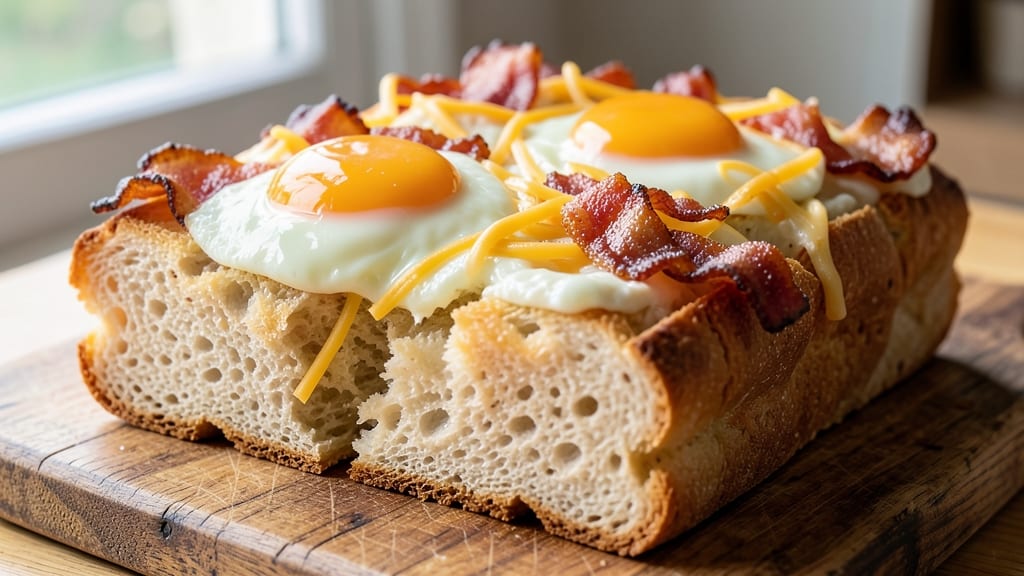
This Amish bacon, egg, and cheese bread recipe delivers the ultimate breakfast experience—flaky, golden layers packed with crispy bacon, creamy scrambled eggs, and melted cheese. 💛 The secret lies in a simple dough that unfolds into crispy, buttery sheets, while the savory filling stays perfectly warm in the center.
I first tried this after a long winter morning when I craved something hearty yet quick enough to make before heading out.
The beauty of this recipe is its foolproof technique: the dough requires no yeast or complicated folding, just a few pantry staples and patience for a slow rise. Traditional Amish cooking often emphasizes simplicity and flavor, and this dish embodies that perfectly.
The bacon adds a smoky depth, while the cheese melts into a rich, gooey layer that ties everything together. By the time you pull it from the oven, you’ll have a hot, crispy masterpiece that’s ready to be sliced and served.
The layers stay intact, the filling remains warm, and every bite delivers that perfect balance of textures—crispy, creamy, and savory. It’s the kind of breakfast that makes weekdays feel like a special occasion. Serve with a side of fresh fruit or a steaming cup of coffee for the full experience.
This recipe is designed to be fast, satisfying, and foolproof—no fancy skills required, just great results. Let’s get started!
Ingredients for amish bacon egg and cheese bread
Pantry staples and a few key ingredients transform into golden layers of crispy, savory perfection.
| Ingredient | Amount | Notes |
|---|---|---|
| Unsalted Butter 🧈 | ¾ cup | Cold, cubed for flaky layers |
| All-Purpose Flour 🌾 | 3 ½ cups | White or bread flour preferred |
| Granulated Sugar 🍚 | 1 tbsp | Enhances browning and flavor |
| Salt 🧂 | 1 ½ tsp | Kosher or sea salt preferred |
| Cold Water 💧 | ½ cup | Chilled for proper dough texture |
| Bacon 🥓 | 6 oz | Thick-cut, cooked and crumbled |
| Large Eggs 🥚 | 4 whole | Scrambled for filling, room temp |
| Shredded Cheddar Cheese 🧀 | 1 ½ cups | Medium or sharp variety |
| Milk 🥛 | ¼ cup | For egg mixture creaminess |
| Black Pepper 🌶️ | ½ tsp | Freshly ground for flavor |
| Garlic Powder 🧄 | ½ tsp | For savory depth |
| Butter (extra for brushing) 🧈 | 2 tbsp | Melted, for final crisping |
The butter is non-negotiable here—European-style unsalted gives the flakiest layers, but any good-quality butter works. Most grocery stores carry it near the baking section, and Land O'Lakes or Plugrá are reliable brands. If you can't find it, cold, cubed butter from the fridge will work, but let it sit at room temp for 20 minutes first. The flour should be white or bread flour—all-purpose works, but bread flour adds a slight chewiness that pairs perfectly with the crispy layers. Store your flour in an airtight container to keep it fresh, and check for weevils if it's been sitting too long.
No thick-cut bacon? Regular bacon works in a pinch, but it'll be slightly thinner. For the eggs, room temperature scrambles better, so take them out of the fridge 10 minutes before using. The cheese can be swapped for Monterey Jack or Gouda if you prefer a milder flavor. If you're watching salt, reduce the kosher salt to 1 tsp and add an extra pinch after cooking. The garlic powder is optional but adds a nice depth—Penzeys or McCormick are good brands if you want to splurge. For the milk, whole milk gives the creamiest filling, but 2% works fine too.
The dough keeps in the fridge for 2 days wrapped tightly in plastic, and the filling can be prepped ahead and stored for 1 day. Assemble the bread just before baking—this ensures the layers stay crispy. Leftover slices reheat beautifully in a 350°F oven for 5-7 minutes. For extra crispiness, brush the top with melted butter before serving. If you're making this ahead for a crowd, freeze the unbaked bread for up to 1 month—just thaw overnight in the fridge before baking.
Why You'll Love This Recipe
- The secret’s in the layers: that buttery, flaky bread hugging crispy bacon and a runny (or perfectly set) egg yolk—like a hug from your grandma’s kitchen. Between us, the sugar in the dough gives it just enough sweetness to balance the smoky bacon. It’s the kind of combo that makes you close your eyes mid-bite.
- Here’s what sold me: the bread stays fresh for days, and the filling? Even better reheated. Toss a couple slices in the toaster for a quick breakfast or pop them in the oven to warm up—no soggy textures, no sad flavors. Plus, making a double batch means you’re never scrambling for a weekday breakfast. Budget-friendly? Absolutely. Stress-free? Even more so.
Step-by-step instructions for Amish bacon, egg, and cheese bread
Master the secret to flaky layers and savory filling with this precise method.
👨🍳 Step 1: Make the Dough for Perfect Layers
In a large mixing bowl, combine the 0.75 cup unsalted butter (cold, cubed) with the 3.5 cups all-purpose flour, 1 tbsp granulated sugar, and 1.5 tsp salt. Use a pastry cutter or your fingers to work the butter into the flour until you achieve a crumbly texture with pea-sized butter pieces—this ensures maximum flakiness. Real talk: don't overwork it or you'll develop gluten and lose that signature layered texture.
Add the 0.5 cup cold water gradually, mixing gently with a fork until the dough just comes together. It'll be shaggy but shouldn't stick to your fingers. Turn it out onto a lightly floured surface and knead just 4-5 times—just enough to form a cohesive disk. Wrap tightly in plastic and refrigerate for at least 1 hour (up to 24 hours for best results). The cold rest relaxes the gluten and makes rolling easier.
🍳 Step 2: Prepare the Savory Filling
While the dough rests, cook the 6 oz bacon in a skillet over medium heat until crispy. Drain on paper towels, then crumble it coarsely—you want visible bacon pieces for texture. In the same skillet, scramble the 4 whole large eggs until just set, then remove from heat and stir in the 1.5 cups shredded cheddar cheese, 0.25 cup milk, 0.5 tsp black pepper, and 0.5 tsp garlic powder. Let the mixture cool slightly while you prepare the dough.
Here's the thing—don't skip the cooling step. Hot filling will melt the butter in your dough too quickly, making it hard to handle. The filling should be warm but not steaming when you assemble. Season it again with a pinch of salt if needed—the bacon is already salty, but you want balanced flavor.
🥘 Step 3: Assemble and Roll for Flaky Layers
On a lightly floured surface, roll the chilled dough into a 12x10-inch rectangle about ⅛-inch thick. Spread the egg-cheese filling evenly over the dough, leaving a 1-inch border around the edges. This border prevents filling from leaking out during baking. Roll up the dough tightly from the long side, pinching the seam to seal.
Now for the magic: fold the roll in half like a book, then fold it in half again to create a compact square. This creates multiple layers when baked. Wrap tightly in plastic and refrigerate for another 30 minutes—this final chill prevents the filling from leaking during baking. Preheat your oven to 375°F while you wait.
🔥 Step 4: Bake to Golden Perfection
Unwrap the dough and place it seam-side down on a parchment-lined baking sheet. Brush the top generously with melted 2 tbsp butter (extra for brushing) and sprinkle with a pinch of black pepper. Bake for 30-35 minutes until deep golden brown and the internal temperature reaches 190°F—this ensures the center is fully cooked without drying out.
Watch closely after 25 minutes—the bread browns quickly. If the top gets too dark before the center is done, tent loosely with foil. The bread is done when the crust is crisp and the filling is hot throughout. Let it rest for 10 minutes before slicing—this lets the juices redistribute and makes for cleaner cuts. Serve warm with a side of fresh fruit or a simple salad.
Pro Tips For Making Amish Bacon Egg And Cheese Bread
- MEASURE FLOUR BY WEIGHING: I learned this the hard way—volumetric measuring with flour leads to dry, crumbly bread every time. For this recipe, use a kitchen scale: 400 grams of all-purpose flour gives you the exact ratio needed for a tender, not dense, dough. (Yes, even if you're impatient like me, take the 10 seconds to switch tools.)
- WORK COLD BUTTER FAST: Cut that unsalted butter into chunks right before mixing—don’t let it sit out waiting. Cold butter creates flaky layers, but if it softens, stick the dough in the fridge for 10 minutes while you prep the filling. Trust me, the difference in texture is night and day.
- DON’T OVERMIX THE DOUGH: After adding cold water, stop folding the moment the flour just comes together. Overworking it develops gluten, and this bread should be soft, not chewy. Two or three gentle turns with a spatula is all you need—then let it rest. (Your future self will thank you when it doesn’t turn into a loaf of breadsticks.)
- SALT THE WATER: Skip the extra pinch of salt in the dough if your water isn’t already seasoned. Dissolve ½ teaspoon of salt into the cold water before mixing—it’s the thing that matters most for balancing the sweetness of the sugar and the richness of the butter. (I was skeptical until I tried it.)
Regional styles of this amish bacon egg and cheese bread
Pennsylvania Dutch Roots
This dish traces back to Pennsylvania Dutch communities, where hearty breakfasts were essential for farm families. The original version often used sourdough starter instead of yeast, creating a naturally leavened bread with deep flavor.
I remember my Amish neighbors in Lancaster County making this with homemade lard instead of butter—it gave the crust a distinct richness. The layered technique comes from traditional strudel influences brought by German settlers to the region. 🗺️
Ohio Amish Adaptations
In Ohio's Amish country, particularly around Holmes County, this bread often includes kolaches-style dough with a touch of cinnamon in the filling. Some families add crumbled sausage alongside the bacon for extra heartiness.
I tried this version at an Amish market in Millersburg—they used sharp white cheddar instead of yellow, which gave the filling a tangy kick. The Ohio version also tends to be baked in a cast-iron Dutch oven for extra crispiness.
Midwest Farmhouse Style
Across the Midwest, this bread became a staple for farmhouse breakfasts, often served with apple butter or scrambled potatoes. In Iowa and Wisconsin, dairy farmers would make it with homemade cheese curds mixed into the filling for a stretchy texture.
I once had a slice at a roadside diner in Minnesota that included crispy fried onions on top—it was like a breakfast casserole in bread form! The Midwest version often gets a brown sugar glaze drizzled over the top before serving.
Modern Urban Twists
City dwellers have put their own spin on this classic. In Philadelphia, food trucks now serve mini versions with caramelized onions and goat cheese in the filling. Some New York bakeries use sourdough discard for the dough, giving it a tangy depth.
I saw a viral TikTok version where someone added crispy prosciutto and fontina cheese—it became an instant hit. Even vegetarian adaptations exist, using mushroom duxelles instead of bacon and tofu scramble for the filling.
Southern Appalachian Variations
In the Appalachian region, this bread often incorporates country ham instead of bacon, and the filling gets a hot pepper jelly swirl before baking. I tasted a version in North Carolina where they added cornmeal to the dough for extra texture.
The Southern take also tends to be sweeter, with brown sugar in the filling and a honey glaze on top. Some families even bake it in a clay pot for a rustic presentation that keeps the bread moist longer.
Canadian Mennonite Influence
Canada's Mennonite communities have their own take, often using rye flour in the dough for a denser texture. The filling frequently includes peameal bacon (back bacon) and sharp cheddar from local dairies.
I had a slice at a Mennonite market in Waterloo, Ontario that included maple syrup in the filling—it was like a breakfast dessert!
The Canadian version also tends to be baked in a stoneware dish rather than a skillet, which gives the bottom a nice crust while keeping the filling gooey. 💛
Nutrition facts
Frequently asked questions
Can I make this bread without butter?
Yes, but the layers won't be as flaky. Use cold lard or vegetable shortening (like Crisco) in equal amounts for a similar texture. For a dairy-free option, try coconut oil chilled until solid. The key is keeping the fat cold to prevent gluten development.
How do I prevent the filling from leaking out?
Always leave a 1-inch border of dough around the edges when spreading the filling. Chill the assembled bread for 30 minutes before baking, and use a tightly sealed seam when rolling. If you notice filling oozing during baking, tent with foil to slow the process.
Can I make this ahead for a brunch gathering?
Assemble the bread and refrigerate it overnight. Bake it straight from the fridge (add 5-10 minutes to baking time). For freezing, shape the bread but don't bake it—wrap tightly and freeze for up to 1 month. Thaw overnight in the fridge before baking.
What's the best cheese substitute if I don't have cheddar?
Try Monterey Jack (milder), Gouda (slightly sweet), or Swiss (nutty). For a sharper flavor, use Pepper Jack. Avoid pre-shredded cheese—the anti-caking agents make it less melty. Freshly grate your own for the best texture!
Why did my bread turn out dense instead of flaky?
Most likely, the butter warmed up too much during mixing or the dough wasn't chilled enough. Use very cold butter and refrigerate the dough for the full 1 hour before rolling. Also, avoid overworking the dough—just knead it 4-5 times to avoid developing gluten.