
Side Dishes
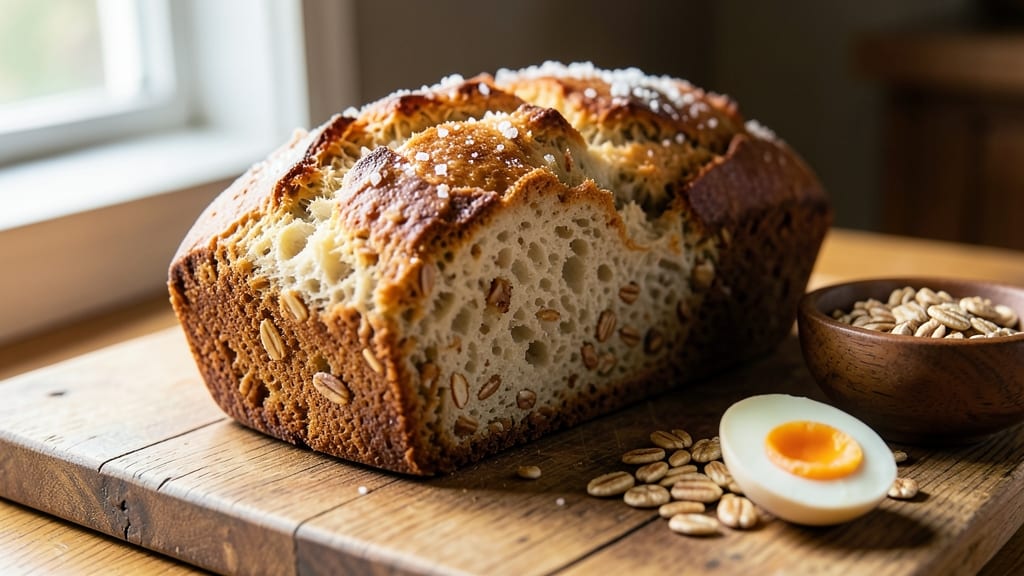
Alton Brown's oat bread recipe delivers that signature nutty crust and open crumb that makes every slice worth savoring. 💛 The secret lies in blending whole-grain oats with yeasted dough for a texture that's both hearty and tender—perfect for toast lovers and sandwich enthusiasts alike.
This isn’t your average bread; it’s a science-backed masterpiece with a crust that crackles and a crumb that practically melts in your mouth.
What sets this recipe apart is Alton’s approach to open crumb structure, achieved through precise kneading and proofing techniques. You’ll work with a dough that’s just firm enough to hold its shape while developing that signature airy interior.
The oats add a subtle crunch and depth of flavor that transforms ordinary bread into something extraordinary—ideal for pairing with soups, butter, or jam.
Baking this bread requires patience but delivers restaurant-quality results at home. The dough rises twice—once to develop flavor, again to achieve that perfect open crumb—before baking in a Dutch oven for an even, golden-brown crust.
Every step is designed to ensure your loaf turns out foolproof, with a texture that’s both sturdy and tender.
Once baked, the aroma alone will have everyone gathering around your table. Slice it thick for toast, use it to soak up gravy, or serve it warm with honey—this bread is versatile enough to elevate any meal.
Let’s get started on creating your own loaf of Alton Brown’s signature oat bread.
Ingredients for alton brown oat bread
Pantry staples plus a few specialty touches—this is where the magic begins for Alton's signature oat bread.
| Ingredient | Amount | Notes |
|---|---|---|
| All-Purpose Flour 🌾 | 3 ½ cups | Spooned and leveled for accuracy |
| Old-Fashioned Rolled Oats 🥣 | 1 cup | Not instant or quick oats |
| Active Dry Yeast 🍞 | ¼ oz | Or 2 1/4 tsp (1 packet) |
| Granulated Sugar 🍚 | ½ cup | Light brown sugar works too |
| Salt 🧂 | 1 ½ tsp | Diamond Crystal preferred |
| Large Eggs 🥚 | 2 whole | Room temperature for best mixing |
| Whole Milk 🥛 | ½ cup | Warmed to room temp |
| Unsalted Butter 🧈 | ½ cup | Cold, cubed for easier mixing |
| Water 💧 | 1 cup | Room temperature preferred |
| Cornmeal 🌽 | ½ cup | For Dutch oven lining |
| Coarse Sea Salt 🧂 | ¼ tsp | For sprinkling on crust |
The oats are non-negotiable here—old-fashioned rolled oats from the bulk section at Whole Foods or Trader Joe's give that perfect crunch. If you're in a pinch, Bob's Red Mill works great too. The yeast? Always check the expiration date—fresh is key for that perfect rise. For the flour, I grab King Arthur because it's reliable, but any all-purpose works. The butter should have good marbling—Land O'Lakes or Plugrá are my go-tos, but nothing fancy needed. Pro tip: warm your milk and water slightly to help the yeast activate faster.
No eggs? Flax eggs (1 tbsp ground flax + 3 tbsp water = 1 egg) work in a bind, though texture might differ slightly. Short on butter? Coconut oil at the same amount keeps things vegan-friendly. The cornmeal is optional but worth it—it creates that perfect crust when baked in the Dutch oven. No Dutch oven? A heavy oven-safe pot with a lid works too. For the sugar, light brown sugar adds subtle molasses notes if you want extra depth. And if you're making this ahead, freeze the shaped loaf before baking—it keeps beautifully for up to 3 months.
This dough is a beast—it needs time to develop flavor. First rise takes 1-2 hours, second rise 45-60 minutes. Don't rush it! The baked loaf keeps 3-4 days wrapped at room temp, or 1 week in the fridge. For reheating, wrap in foil and warm in a 350°F oven for 10 minutes. Slice it thick—this bread is meant to be savored. Leftovers? Toss in the toaster for crispy toast or freeze for future sandwiches. Every slice has that perfect open crumb structure Alton promises.
Why You'll Love This Recipe
- No-Knead Nightmare Solved: The oats handle all the texture work for you—no punchy arm muscles required. Just mix, let it rise, and bake. Honestly, I’ve made bread that should have been harder, and this one’s the only one that never lets me down.
- Taste Like a Bakery: That caramelized edge from the oats? It’s the star. The yeast gives it a light crumb, but the toasty oat flavor makes it taste like you slaved over it—even though you didn’t. (Yes, even on a Tuesday night.)
- Leftovers That Don’t Suck: This bread stays fresh for days, and toasted slices are way better than day-old store-bought. I freeze half the loaf right after baking—no sad, dry bread here. Just reheat and enjoy.
- Pantry Staple Power: Five ingredients, zero specialty items. If you’ve got flour, oats, and yeast, you’ve got a loaf. Between us, I’ve made this with whatever oats were on sale, and it’s still spot-on every time. Budget-friendly? More like pantry-friendly.
Step-by-step instructions for Alton brown's oat bread
Here's the science-backed method for that perfect nutty crust and open crumb structure.
👨🍳 Step 1: Activate the Yeast and Mix the Dough Base
In a small bowl, combine the 1 cup warm water (about 110°F—test by touching your wrist, it should feel warm but not hot), 0.5 cup granulated sugar, and 0.25 oz active dry yeast. Let it sit for 5-10 minutes until frothy—that's your signal the yeast is alive and ready to work. If it doesn't bubble, your yeast might be dead.
In a large bowl, whisk together the 3.5 cups all-purpose flour, 1 cup old-fashioned rolled oats, 1.5 tsp salt, and 0.5 cup unsalted butter (cold and cubed). Pour in the yeast mixture and 0.5 cup warm whole milk, then mix with a wooden spoon until a shaggy dough forms. This step builds the foundation for that signature open crumb structure.
🍳 Step 2: Knead Until Elastic and Windowpane-Ready
Turn the dough onto a lightly floured surface and knead for 8-10 minutes until smooth and elastic. You'll know it's ready when you can stretch it thin enough to see light through it (the windowpane test). This kneading develops gluten, which gives the bread its structure and chewiness.
If the dough feels too sticky, add 1 tablespoon flour at a time—but don't overdo it, or you'll lose that tender crumb. Shape into a round loaf and place in a lightly oiled bowl. Cover with a damp towel and let rise in a warm spot for 1-2 hours or until doubled in size. The warmth helps the yeast work faster, and the doubled size means it's ready for baking.
🔥 Step 3: Shape and Proof for Maximum Rise
Punch down the risen dough and shape it into a round loaf again. This second shaping tightens the gluten structure for that perfect open crumb. Place it seam-side up in a bowl and let it proof for another 30-60 minutes until it's just about ready to pop out of the bowl. The dough should feel springy when pressed gently.
Preheat your oven to 425°F and place a Dutch oven with the 0.5 cup cornmeal in the bottom on the middle rack. This preheating ensures even heat distribution for that classic crust. While the oven heats, brush the loaf with a little water and sprinkle with 0.25 tsp coarse sea salt—this creates steam and enhances browning.
🔥 Step 4: Bake in the Dutch Oven for Crispy Crust
Carefully transfer the dough to the hot Dutch oven (use a baking sheet if needed). Bake uncovered for 25 minutes, then remove the lid and bake for another 10-15 minutes until the crust is deep golden brown and the internal temperature reaches 190-200°F. The open crumb should be visible through the sides, and it should sound hollow when tapped on the bottom.
This two-stage baking process is key—steam builds in the covered phase for a tender crumb, while the uncovered phase creates that crispy, nutty crust. If the top browns too quickly, tent loosely with foil. Let the bread cool on a wire rack for at least 30 minutes before slicing—this prevents a gummy interior.
Pro Tips For Making Alton Brown Oat Bread
- Toast the Oats First: I learned this the hard way—skipping the toasting step means your bread will taste flat and mealy. Pulse the oats in a food processor for 10 seconds, then toast them in a dry skillet over medium heat until they’re golden and smell nutty (about 5 minutes). That extra flavor makes all the difference.
- Proof Yeast in Warm Milk: The recipe calls for warm water, but I’ve found yeast activates faster and more reliably in warm milk (or even warm buttermilk). Heat it to 105°F—just warm to the touch—and let the yeast sit for 5 minutes until foamy. This guarantees your dough rises properly the first time.
- Don’t Overmix the Dough: After adding the oats and flour, resist the urge to knead like you’re making pizza dough. Mix just until combined—overworking it turns the bread dense and tough. The recipe’s texture relies on a light, airy crumb, so stop when the ingredients barely come together.
- Use a Thermometer for Baking: This isn’t the prettiest method, but it’s the tastiest: pull the bread out at 190°F, not when the top looks done. The internal temp ensures even baking—no more dry crust or gummy centers. (Yes, even if you’re impatient like me.)
Wine and beer pairings for this dish
Crisp White Wine
Alton Brown’s oat bread pairs beautifully with a dry Riesling or Sauvignon Blanc—their bright acidity cuts through the bread’s nutty richness while highlighting the oats’ subtle sweetness. I love a German Riesling like Dr. Loosen Blue Slate—its crisp finish and hint of honey complement the bread’s caramelized crust.
For something lighter, a New Zealand Sauvignon Blanc adds zesty citrus notes that refresh the palate. 🍷
Malty Amber Ale
Beer lovers should reach for a Belgian-style amber ale or American brown ale—the caramel and toasty malt notes mirror the bread’s oat flavor profile. Try Allagash Amber or Goose Island Bourbon County Stout (yes, stout works too!) for a deeper, almost chocolatey contrast.
The bread’s crusty texture soaks up the beer’s body beautifully, making every bite a flavorful experience.
Creamy Stout
A dry Irish stout like Guinness or Murphy’s brings out the bread’s nutty depth with its roasted coffee and chocolate undertones. The stout’s creamy texture pairs surprisingly well with the bread’s open crumb, creating a satisfying contrast.
For a non-alcoholic option, try a root beer—the vanilla and spice notes enhance the oat’s natural sweetness without overpowering it.
Seasonal Pairings
In fall, a Burgundy Pinot Noir (light-bodied and fruity) elevates the bread’s warm spices. For summer, a crisp Italian Pinot Grigio keeps things refreshing. Winter calls for a dark Belgian ale or Port wine—both add richness that stands up to the bread’s hearty texture.
The key is balancing the bread’s nutty, slightly sweet profile with complementary flavors in your drink. ✨
Nutrition facts
Frequently asked questions
Why does Alton Brown's oat bread have an open crumb structure?
The open crumb comes from a combination of proper kneading (developing gluten) and controlled fermentation. The dough rises twice—first to build flavor, then again before baking—which creates those signature air pockets. Using rolled oats also adds texture that prevents a dense crumb while maintaining structure.
Can I make this bread without a Dutch oven?
Yes! Use a heavy oven-safe pot with a lid or even a baking stone. Line your pan with parchment paper for easy removal. The key is maintaining steam during the first 25 minutes of baking—cover tightly with foil if needed. Your crust won't be quite as crispy, but the open crumb will still develop.
How long should I knead the dough?
Aim for 8-10 minutes by hand until the dough passes the windowpane test (you can stretch it thin enough to see light through it). If using a stand mixer, knead on medium speed for 5-6 minutes. Over-kneading can make the bread tough, while under-kneading results in a dense crumb. The goal is elastic, smooth dough that springs back slowly when pressed.
What's the best way to store leftovers?
Wrap the cooled loaf tightly in plastic wrap or store in an airtight container. It stays fresh at room temperature for 3-4 days, or freeze for up to 3 months. For reheating, wrap slices in foil and warm at 350°F for 5-7 minutes to restore crispiness. The crust gets softer over time, so enjoy it fresh when possible!
Can I substitute instant oats for rolled oats?
Not recommended! Rolled oats provide the perfect texture—chewy yet crispy—that complements the bread's structure. Instant oats will make the bread denser and less flavorful. If you must substitute, use steel-cut oats (toasted lightly in a dry pan first) for a similar texture, but rolled oats are truly the star ingredient here.