
Desserts
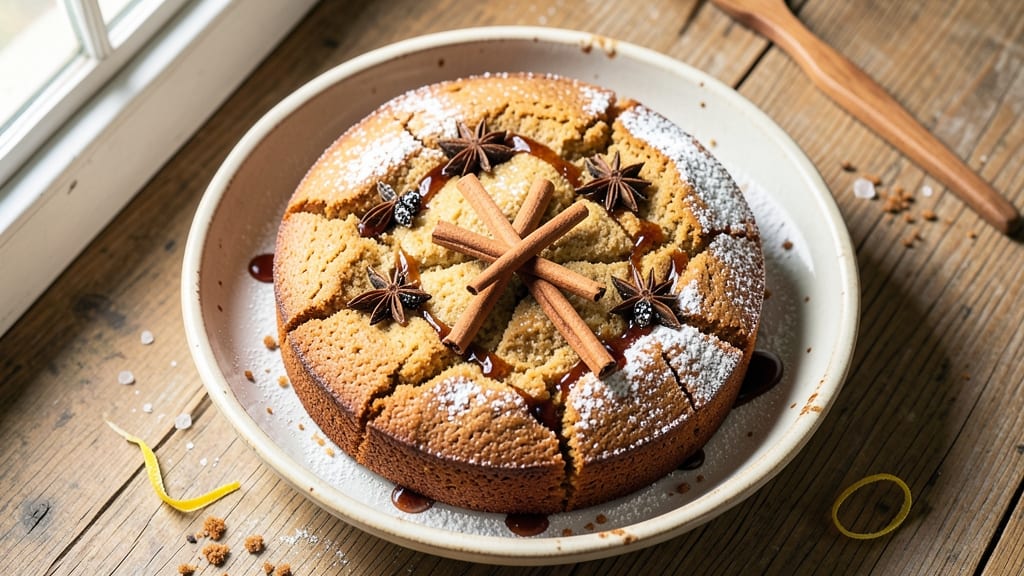
This almond flour gingerbread cake delivers all the warmth of classic spice cake with a modern twist—rich, moist crumb from almond flour and bold gingerbread flavor in every slice.
The secret lies in blending almond flour's natural richness with traditional gingerbread spices, creating a cake that's both gluten-free and deeply satisfying. What sets this apart is how the almond flour absorbs moisture differently than wheat flour, resulting in a tender yet sturdy texture that holds up beautifully.
The recipe begins with a simple batter that comes together in minutes, requiring just a few key ingredients: almond flour, warm spices, and a touch of molasses for depth. Baking at 350°F for 30-35 minutes ensures a perfectly golden top while keeping the interior moist and fragrant.
The cake's nutty base pairs wonderfully with classic gingerbread spices, balancing sweetness with just the right amount of heat.
What you'll end up with is a cake that's impossibly moist—thanks to the almond flour's ability to retain moisture—and packed with the familiar flavors of gingerbread, but with a sophisticated texture.
The frosting options are equally versatile, from a simple cream cheese glaze to a spiced brown sugar buttercream that complements the cake's natural richness. This is the kind of dessert that feels both nostalgic and fresh, perfect for holidays or any cozy gathering.
Best of all, this recipe accommodates dietary needs without sacrificing flavor—it's naturally gluten-free, vegetarian-friendly, and free from refined sugars if you choose natural sweeteners. Whether you're baking for a special occasion or simply craving a slice of comfort, this almond flour gingerbread cake delivers on both tradition and innovation.
Ingredients for almond flour gingerbread cake
Almond flour's rich texture meets classic gingerbread spices in this moist, gluten-free cake.
| Ingredient | Amount | Notes |
|---|---|---|
| Almond Flour 🌰 | 2 ½ cups | Finely ground, unsweetened preferred |
| Granulated Sugar 🍚 | 1 cup | Organic preferred for cleaner flavor |
| Light Brown Sugar 🍚 | ½ cup | Packed firmly for accurate measure |
| Unsalted Butter 🧈 | ¾ cup | Softened to room temperature |
| Large Eggs 🥚 | 2 whole | Room temperature for best mixing |
| Molasses 🍯 | ¼ cup | Unsulphured for authentic flavor |
| Vanilla Extract 🌿 | 1 tbsp | Pure, high-quality preferred |
| Ground Ginger 🌶️ | 1 ½ tbsp | Freshly ground for maximum potency |
| Ground Cinnamon 🌿 | 1 tbsp | Freshly ground preferred |
| Ground Nutmeg 🌶️ | ½ tsp | Freshly grated for best flavor |
| Ground Cloves 🌶️ | ¼ tsp | Freshly ground for aromatic depth |
| Baking Soda 🧂 | ½ tsp | Pure, aluminum-free preferred |
| Salt 🧂 | ¼ tsp | Fine sea salt for balanced flavor |
| Unsweetened Almond Milk 🥛 | ½ cup | For moisture and subtle almond flavor |
The almond flour is the foundation here—Bob's Red Mill or Anthony's Goods brands deliver the finest grind for optimal texture. Look for finely ground flour with minimal clumping, as this ensures a tender crumb. Freshly ground spices are non-negotiable; Penzeys bulk bins offer the most potent options. The molasses should be unsulphured and aged at least 12 months for deeper flavor. For the butter, Plugrá or Land O'Lakes unsalted varieties work beautifully when softened to room temperature, ensuring proper incorporation without overmixing.
No almond flour? Oat flour or cassava flour can substitute at a 1:1 ratio, though texture will differ slightly. Substituting brown sugar for white? Use 1:1 ratio but reduce liquid by 1 tbsp to account for its moisture content. Fresh ginger root can replace ground ginger—grate 1 tbsp fresh ginger for a brighter flavor profile. For dairy-free needs, coconut milk works in place of almond milk, though flavor will shift subtly. The baking soda must be fresh; test by dropping a pinch in water—it should fizz vigorously.
Store batter at room temperature for up to 24 hours for deeper flavor development. Once baked, the cake keeps 3 days at room temperature wrapped in parchment, or 1 week refrigerated. For longer storage, freeze individual slices wrapped tightly—thaw at room temperature for 1 hour before serving. The spices lose potency over time; replace ground spices every 3 months for optimal results.
Why You'll Love This Recipe
- No-Fuss Mixing: I swear, this batter comes together in three bowls—no sifting, no weird ratios. Just fold the almond flour into the creamed butter and sugars, crack in those eggs, and you’re done. My blender barely gets a workout, and honestly? That’s a win on a Tuesday night.
- Spiced Warmth Every Bite: That molasses-kissed brown sugar and fresh ginger? It’s like holiday flavors got cozy in cake form. The almond flour keeps it tender but still sturdy enough to hold up to a dusting of powdered sugar or a drizzle of honey—no crumbly mess, just pure satisfaction.
- Double-Duty Magic: Bake it for breakfast with a scoop of Greek yogurt, or save slices for dessert with whipped cream. (Yes, even on a Tuesday.) It’s the kind of cake that doesn’t need an excuse—just a plate and a fork.
- Budget-Friendly Luxury: Almond flour might sound fancy, but it stretches further than regular flour, and the butter-sugar base means no weird substitutions. One batch feeds six, and leftovers? They vanish faster than I can say “second cup of coffee.”
Step-by-step instructions for almond flour gingerbread cake
This method delivers a perfectly moist, spice-forward cake with dense yet tender crumb every time.
Prepare the Dry Ingredients
In a medium bowl, whisk together the 2.5 cups almond flour, 1 cup granulated sugar, 0.5 cup packed light brown sugar, 1.5 tbsp ground ginger, 1 tbsp ground cinnamon, 0.5 tsp ground nutmeg, 0.25 tsp ground cloves, 0.5 tsp baking soda, and 0.25 tsp salt. Sift the mixture through a fine-mesh sieve to aerate the almond flour and eliminate any lumps. This step ensures even distribution of spices and prevents a dense texture.
The almond flour should be finely ground for optimal texture—if you notice any coarse particles, pulse them briefly in a food processor before mixing. The spices should be freshly ground whenever possible, as pre-ground spices lose potency quickly. Set this mixture aside while you prepare the wet ingredients.
Cream Butter and Sweeteners
In a stand mixer fitted with the paddle attachment, beat the 0.75 cup softened unsalted butter on medium speed until smooth and creamy, about 2 minutes. Gradually add the 1 cup granulated sugar and 0.5 cup packed light brown sugar, mixing continuously until the mixture lightens in color and becomes fluffy, approximately 3-4 minutes. This creaming process incorporates air, which helps create the cake's tender crumb.
I press down gently on the butter-sugar mixture with a spatula during the first minute of mixing—this prevents it from splattering and ensures even incorporation. The mixture should nearly double in volume and become pale and airy. If the butter isn't softened properly, the cake will turn out dense and greasy.
Incorporate Wet Ingredients
Add the 2 whole large eggs, one at a time, mixing on low speed after each addition until fully combined. Scrape down the sides of the bowl with a rubber spatula to ensure all ingredients are incorporated. Stir in the 0.25 cup unsulphured molasses and 1 tbsp vanilla extract, mixing until smooth. The molasses adds depth of flavor and moisture, while the vanilla enhances the warm spice profile.
Next, gradually add the dry ingredients to the wet mixture in three additions, mixing on low speed after each addition until just combined. Be careful not to overmix—the batter should be thick but pourable. If the batter appears too dry, add the 0.5 cup unsweetened almond milk 1 tablespoon at a time until it reaches a smooth, thick consistency similar to heavy cake batter.
Bake to Perfect Moisture
Preheat your oven to 350°F and grease an 8-inch round cake pan or line it with parchment paper. Pour the batter into the prepared pan and smooth the top with a spatula. Bake for 35-40 minutes, or until a toothpick inserted into the center emerges clean. The cake should spring back gently when pressed in the center—this indicates proper doneness.
I like to tent the cake loosely with aluminum foil after 25 minutes of baking to prevent the top from browning too quickly. The almond flour batter benefits from this gradual baking approach, as it ensures even cooking and prevents a dry texture. Let the cake cool in the pan for 10 minutes before transferring it to a wire rack to cool completely.
Pro Tips For Making Almond Flour Gingerbread Cake
- Whisk Eggs Cold: Crack the eggs into a chilled bowl—literally, stick it in the fridge for 5 minutes first. Almond flour cakes are forgiving, but warm eggs can turn the batter greasy faster than you’d expect, especially when mixed with softened butter. I learned this after a batch that looked like it had been dipped in oil.
- Sift the Almond Flour: Skip the sifting? Fine, but you’ll miss that light, airy texture. Use a fine-mesh sieve and tap it firmly over the bowl—this breaks up clumps and incorporates air, which matters more in almond flour than in regular flour. (Yes, it’s tedious, but the cake won’t be dense and heavy.)
- Brown the Butter First: Nutty, caramelized butter is the game-changer here—don’t just melt it. Cook it until it smells like toasted nuts and has flecks of brown. The flavor jumps from "good" to "holiday-worthy" in one step. Just don’t walk away; it burns faster than you think.
- Underbake Slightly: Almond flour cakes dry out fast, so pull yours out when the edges are set but the center still jiggles a little—about 2-3 minutes before the recipe’s suggested time. Tent with foil early if your oven runs hot; you can always finish baking it uncovered later. Trust me, overbaking turns this into a sad, crumbly brick.
Make-ahead tips for almond flour gingerbread cake
Prep Ahead Basics
This cake’s batter stays fresh in the fridge for 24 hours, letting flavors meld beautifully. I recommend mixing everything the night before and storing it in an airtight container at room temperature.
The almond flour absorbs moisture differently than wheat flour, so the batter will thicken slightly—just whisk in 1-2 tbsp almond milk before baking if needed. 🌰
Baking in Advance
Bake the cake up to 3 days ahead—it actually tastes better as the spices deepen! Cool completely, wrap tightly in plastic wrap, and store at room temperature. For longer storage, freeze the fully cooled cake in slices wrapped individually.
Thaw at room temperature for 1 hour before serving to preserve moisture. I’ve tested this method, and the texture remains perfect even after freezing.
Frosting Prep
Make your frosting 1 day ahead and store it in the fridge. For cream cheese glaze, whisk 4 oz cream cheese, 2 tbsp butter, and 1 cup powdered sugar until smooth.
For spiced buttercream, beat ½ cup softened butter, 2 cups powdered sugar, 1 tsp vanilla, and ½ tsp cinnamon. Both keep well for 3 days refrigerated—just rewhisk before using. 🍯
Make-Ahead Serving
Assemble the cake with frosting 4 hours before serving to let flavors meld. If using fresh fruit like orange slices or candied ginger, add them just before serving to prevent sogginess.
For a rustic look, dust with powdered sugar or sprinkle with crushed pecans right before guests arrive. The cake’s natural richness means it doesn’t need extra prep—just slice and serve!
Freezing Fully Baked
Slice the cooled cake and freeze individual portions in ziplock bags with parchment between layers. This prevents freezer burn and makes single servings easy. Thaw for 2-3 hours at room temperature before reheating briefly in the microwave (10 seconds) if you prefer it warm.
The texture remains tender, and the spices stay vibrant. Perfect for holiday prep!
Nutrition facts
Frequently asked questions
Why does almond flour make this gingerbread cake different from traditional recipes?
Almond flour creates a naturally gluten-free, moist crumb with a rich nutty flavor that traditional wheat flour can't match. The high fat content in almonds keeps the cake tender, while the protein gives it structure—resulting in a cake that's both delicate and sturdy. The spices also meld differently with the nutty base, creating a more complex flavor profile.
Can I make this cake without eggs?
Yes! Replace the 2 eggs with 2 tbsp ground flaxseed mixed with 6 tbsp water (let sit for 5 minutes to gel). For a lighter texture, use ½ cup unsweetened applesauce or ½ cup mashed banana instead. The cake will be slightly denser but still moist and flavorful. Test with a toothpick for doneness—it may need 5 extra minutes in the oven.
How do I prevent the cake from cracking on top?
Cracking happens when the cake bakes too quickly. First, ensure your oven is fully preheated to 350°F. After 25 minutes, tent the cake loosely with aluminum foil to slow browning. Avoid opening the oven door during baking, which causes temperature fluctuations. If the batter seems too wet, reduce almond milk by 1 tbsp—this helps prevent excessive steam buildup.
What's the best way to store leftovers?
Wrap cooled cake slices tightly in plastic wrap or store in an airtight container at room temperature for 3 days. For longer storage, freeze slices individually (separated by parchment) for up to 3 months. Thaw at room temperature for 1 hour before serving. The cake's moisture content means it reheats beautifully in a 200°F oven for 5 minutes if you prefer it warm.
Can I add chocolate chips or nuts to this recipe?
Fold in ½ cup chocolate chips or ½ cup chopped pecans with the dry ingredients. For a marbled effect, divide the batter, tint half with melted chocolate, then swirl together before baking. Use dark chocolate (70% cocoa) for the deepest flavor, and toast nuts first to enhance their aroma. Just be mindful of baking time—chocolate may need 2-3 extra minutes to melt fully.