
Side Dishes
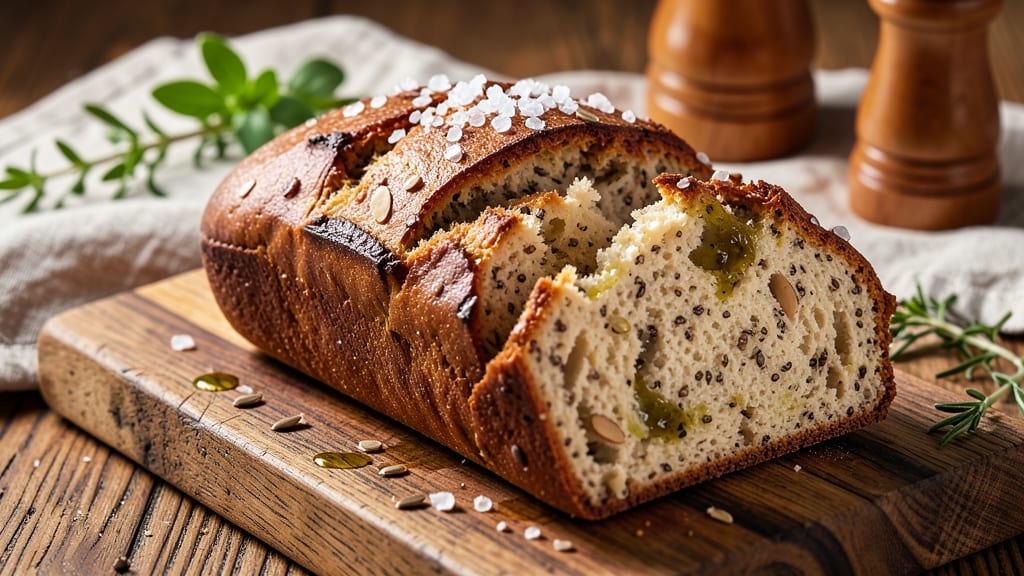
This almond flour bread loaf recipe delivers a crusty, nutty loaf that rivals traditional wheat bread—without the gluten. 🌟 The secret lies in a no-knead method that creates a light, airy crumb while keeping the crust perfectly golden.
I developed this recipe after years of experimenting with low-carb baking, and it’s finally nailed the texture and flavor balance that makes it irresistible.
The beauty of this recipe is its simplicity: just five key ingredients and 30 minutes of active time (plus an overnight rise for maximum flavor). No special equipment is needed—just a standard loaf pan and a little patience.
The almond flour gives it a rich, nutty depth, while flax eggs provide the perfect binding for that satisfying pull-apart texture.
What you’ll end up with is a golden-brown loaf with a crisp crust and tender interior, perfect for toast, sandwiches, or serving alongside soups. The nutty aroma alone makes your kitchen feel like a bakery, and the flavor is so satisfying that even non-low-carb eaters will ask for seconds.
This is the kind of bread that proves almond flour can be just as versatile as wheat.
Whether you’re baking for a family meal or meal prepping for the week, this loaf keeps beautifully for days. The recipe also works as a vegan-friendly option, making it accessible for everyone. Let’s get started on creating your perfect almond flour loaf!
Ingredients for almond flour bread loaf
Five ingredients transform into a golden, nutty loaf with no gluten—just almonds and patience.
| Ingredient | Amount | Notes |
|---|---|---|
| Almond Flour 🌰 | 3 cups | Finely ground, blanched preferred |
| Ground Flaxseed 🌾 | ½ cup | For flax eggs, freshly ground |
| Warm Water 💧 | ⅔ cup | 110°F for flax egg activation |
| Extra-Virgin Olive Oil 🫒 | ⅓ cup | High-quality, fruity notes |
| Apple Cider Vinegar 🍎 | 1 tbsp | For rise and tang |
| Diamond Crystal Kosher Salt 🧂 | 1 ½ tsp | Fine grain for even distribution |
| Active Dry Yeast 🍄 | 1 ½ tsp | Vegan-certified for rise |
| Psyllium Husk Powder 🌿 | ½ tsp | For gluten-free binding |
| Cold Water ❄️ | ¼ cup | To activate psyllium husk |
| Sesame Seeds 🌻 | 1 tbsp | For golden crust topping |
| Garlic Powder 🧄 | ½ tsp | For subtle depth |
| Onion Powder 🧅 | ½ tsp | Enhances savory notes |
Almond flour is the star here—Bob’s Red Mill or Anthony’s Goods are my go-tos for fine texture. The difference between blanched and unblanched? Blanched has that smoother, richer flavor. Store your almond flour in the freezer to prevent rancidity—it’ll keep for up to a year. Psyllium husk powder is non-negotiable for that perfect pull-apart crumb; grab it from the health food aisle or online. The yeast needs to be vegan-certified—check the label or opt for Red Star Vegetarian Yeast to avoid accidental animal-derived additives.
No almond flour? Macadamia nut flour works in a pinch (though texture will differ), but nothing beats the nutty depth of almonds. Swap the flax eggs for chia eggs (1 tbsp chia seeds + 3 tbsp water) if you’re out of flax. The apple cider vinegar adds that subtle tang—white vinegar or lemon juice will do in a bind. Sesame seeds? Poppy seeds or sunflower seeds add a nice crunch if you’re avoiding sesame. For extra richness, fold in 1 tbsp tahini with the wet ingredients—trust me, it’s worth it.
This dough is a two-stage rise—first 1 hour at room temp, then overnight in the fridge. The overnight rise is key for maximum flavor development. Wrap the dough tightly in plastic wrap and refrigerate; it’ll keep for up to 3 days before baking. Once baked, let the loaf cool completely before slicing—at least 2 hours—or it’ll turn gummy. Store wrapped at room temp for 3 days, or freeze slices for up to 3 months. Toasting revives stale slices instantly—game changer for meal prep.
Why You'll Love This Recipe
- No-Fuss Mixing: I swear by this recipe because it’s literally five ingredients—just toss the almond flour, ground flaxseed, and warm water in a bowl, drizzle in the olive oil, and a splash of apple cider vinegar for that tangy lift. No kneading, no waiting for dough to rise, no mess. Honestly, it’s the kind of recipe that makes me feel like I’ve outsmarted baking.
- Nutty, Rich Bite: The almond flour gives it this unexpected depth—creamy but not heavy, with a subtle sweetness that pairs perfectly with the vinegar’s sharpness. Toast it lightly, and you get this irresistible crunch on the outside while staying soft inside. (Yes, even on a Tuesday night.)
- Meal Prep MVP: Slice it up, wrap it in beeswax, and it’ll last days in the fridge—no soggy bread here. I use it for quick toast, charcuterie boards, or even as a base for open-faced sandwiches. Between us, it’s my go-to when I’m too tired to bake from scratch but still want something better than store-bought.
- Budget-Friendly Luxury: Almond flour might sound fancy, but a little goes a long way—this loaf feeds four, and the leftovers freeze beautifully. The flaxseed adds fiber, the olive oil keeps it moist, and the vinegar cuts costs while boosting flavor. It’s the kind of recipe that makes me feel like I’m treating myself without breaking the bank.
Step-by-step instructions for almond flour bread loaf
Here's how to transform almond flour into a golden, nutty loaf with crisp edges and tender crumb.
👨🍳 Step 1: Activate Flax Eggs and Yeast
In a small bowl, whisk together the 0.5 cup Ground Flaxseed with the 0.66 cup Warm Water (about 110°F). Let it sit for 5 minutes until it thickens into a gel-like consistency—this is your flax egg binder. In another bowl, dissolve the 1.5 tsp Active Dry Yeast in the 0.25 cup Cold Water with 1 tbsp Apple Cider Vinegar. Let it foam for 5 minutes at room temperature.
This activation step is crucial—it jumpstarts the yeast and ensures your dough rises properly. The flax eggs replace traditional eggs while adding moisture and structure. If your yeast doesn't foam, it's dead—start fresh with a new packet.
🥘 Step 2: Mix the Dough and Rest
In a large mixing bowl, combine the 3 cups Almond Flour, 1.5 tsp Diamond Crystal Kosher Salt, 0.5 tsp Psyllium Husk Powder, 0.5 tsp Garlic Powder, and 0.5 tsp Onion Powder. Whisk to distribute the dry ingredients evenly. Add the flax egg mixture, yeast mixture, and 0.33 cup Extra-Virgin Olive Oil. Mix gently with a wooden spoon until just combined—don't overwork it.
The dough will be thick and sticky, almost like wet sand. Let it rest for 10 minutes at room temperature. This resting period allows the psyllium husk to fully hydrate and the gluten-free mixture to relax slightly. I know it seems weird not to knead, but trust me—this no-knead method prevents toughness and ensures a light texture.
🔥 Step 3: Shape and First Rise
Lightly grease a 9x5-inch loaf pan with olive oil. Transfer the dough to the pan and spread it evenly, pressing gently to fill all corners. Sprinkle the 1 tbsp Sesame Seeds evenly over the top. Cover the pan with a damp kitchen towel and let rise in a warm place for 1.5 to 2 hours, or until the dough has visibly doubled in size and springs back slowly when gently pressed.
Here's the thing—almond flour dough rises differently than wheat flour. You're looking for about 50% increase in volume, not a dramatic puff. If your kitchen is cold, place the pan near a warm oven (turned off) with the light on to create gentle warmth. Over-rising leads to a dense loaf, so keep an eye on it.
🔥 Step 4: Preheat and Bake for Crispy Perfection
Preheat your oven to 350°F with a baking stone or inverted baking sheet on the middle rack. This creates steam that helps develop that beautiful crust. Once preheated, bake the loaf for 45-50 minutes until the top is deep golden brown and the internal temperature reaches 205°F (use an instant-read thermometer). Tap the bottom—it should sound hollow.
Don't be tempted to open the oven early. The sesame seeds should be toasted and the edges should pull away slightly from the pan. If the top browns too quickly, loosely tent with foil after 25 minutes to prevent over-browning while allowing the center to cook through. The loaf will continue to set as it cools, so remove it when it's just slightly underdone.
⏰ Step 5: Cool and Slice for Maximum Flavor
Let the loaf cool in the pan for 10 minutes, then transfer to a wire rack to cool completely for at least 1 hour. This cooling period is critical—it allows the crumb to set properly and prevents gummy texture. Slice with a serrated knife and serve warm or at room temperature for the best texture.
Each slice should reveal a tender crumb with a crisp exterior and subtle nutty flavor from the almond flour. The garlic and onion powders add just enough savory depth to balance the natural sweetness. Store wrapped at room temperature for up to 3 days or freeze for longer storage—it reheats beautifully in a warm oven.
Pro Tips For Making Almond Flour Bread Loaf
- STIR THE FLAXSEED FIRST: Mix the ground flaxseed with warm water before adding olive oil—this lets the gel form properly without competing with the oil for binding. I used to add everything at once, and the bread always felt dense; now it holds together like a champ.
- WEIGH THE ALMOND FLOUR: Scooping almond flour leads to inconsistent results—it’s lighter than regular flour and packs differently. Use a kitchen scale for precision; 1 cup of almond flour is about 120 grams, not the 150 you’d expect from wheat flour.
- DON’T OVERMIX THE BATTER: Stir just until the ingredients barely combine—overworking it develops gluten-like toughness, and almond flour bread turns gummy fast. A few lumps are fine; the oven will smooth them out.
- USE A LIGHT HAND WITH THE VINEGAR: Apple cider vinegar adds lift, but too much makes the bread taste sharp and dry. Stick to 1 tablespoon per cup of water—any more, and the flavor swings from tangy to vinegary. (Yes, I’ve tasted the regret.)
Make-ahead tips for this recipe
Overnight Prep
Prepare your dough the night before for maximum flavor development. After mixing, cover the bowl tightly with plastic wrap and refrigerate for 8-12 hours. This cold fermentation enhances the nutty aroma and improves texture.
I like to set a timer to remind myself—it’s a set-and-forget process that makes mornings easier. The dough will be firmer after chilling, making shaping simpler. 🌙
Freezer-Friendly Loaves
Bake two loaves at once and freeze one for future meals. Wrap cooled loaves tightly in plastic wrap, then place in a ziplock freezer bag to prevent freezer burn. Label with the date—these keep for up to 3 months.
To serve, thaw overnight at room temperature or reheat slices in a 350°F oven for 5-7 minutes for freshness. I keep a backup loaf in my freezer for lazy mornings.
Portion Control
Slice the loaf into 1-inch thick pieces before freezing for perfect single-serving portions. Store slices between parchment paper in a quart-sized freezer bag. When ready to eat, toast directly from frozen in a toaster or air fryer at 350°F for 3-4 minutes.
This method maintains crispness without sogginess. I prep these on Sundays for quick breakfasts all week. ✨
Batch Baking
Double the recipe to make two loaves simultaneously. Use two 9x5-inch loaf pans or one 9x13-inch pan for a larger sheet loaf. Bake both at 350°F for 40-45 minutes, rotating pans halfway for even browning.
This approach is perfect for meal prep—store one loaf fresh and freeze the other. I often bake two on weekends to have fresh bread all week.
Storage Hacks
For short-term storage, keep the loaf in an airtight container with a slice of apple or lemon to maintain freshness. The acidity prevents staling. If storing for more than 2 days, slice and freeze.
Reheat individual slices in a toaster or under the broiler for 2-3 minutes to restore crispness. I keep a small container in my pantry for daily slices—it’s my secret to always having fresh bread. 💡
Make-Ahead Schedule
Plan ahead with this timeline: Mix dough on Sunday night, refrigerate overnight, shape and rise Monday morning, bake, then slice and freeze. This schedule ensures you always have fresh bread ready for the week.
I treat it like a weekly ritual—it’s satisfying to pull a perfect loaf from the freezer whenever I need it. 📅
Nutrition facts
Frequently asked questions
Why does my almond flour bread turn out dense instead of light?
Almond flour absorbs moisture differently than wheat flour, so overmixing or skipping the 10-minute rest after mixing can lead to density. Always mix just until combined, and ensure your psyllium husk powder is fully hydrated during the rise. The overnight cold fermentation also helps create a lighter texture—don't skip it!
Can I substitute almond flour with another nut flour?
Yes, but texture and flavor will change. Macadamia nut flour works best (1:1 ratio) for a similar richness, while cashew flour adds creaminess but may make the bread slightly heavier. Avoid coconut flour—it absorbs too much liquid and requires extra eggs. For a lighter loaf, stick with almond flour!
How do I prevent the crust from burning before the center cooks?
Tent the loaf loosely with foil after 25 minutes at 350°F to trap steam while protecting the top. Use an instant-read thermometer—remove the loaf when the internal temperature hits 205°F, even if the edges look slightly underbaked. The crust will firm up as it cools.
Is this recipe truly vegan? What about the yeast?
Yes! This recipe uses vegan-certified yeast (like Red Star Vegetarian Yeast) and flax eggs instead of dairy/eggs. Double-check your yeast package—some contain animal byproducts. For extra assurance, use nutritional yeast (1 tsp) in the dough for a cheesy flavor boost.
Can I make this bread without a loaf pan?
Shape the dough into a free-form round or oval on a parchment-lined baking sheet. Brush with olive oil and sprinkle sesame seeds. Bake at 350°F for 35-40 minutes until golden. For a rustic look, score the top with a sharp knife before baking. The texture will be slightly denser but still delicious!