
Side Dishes
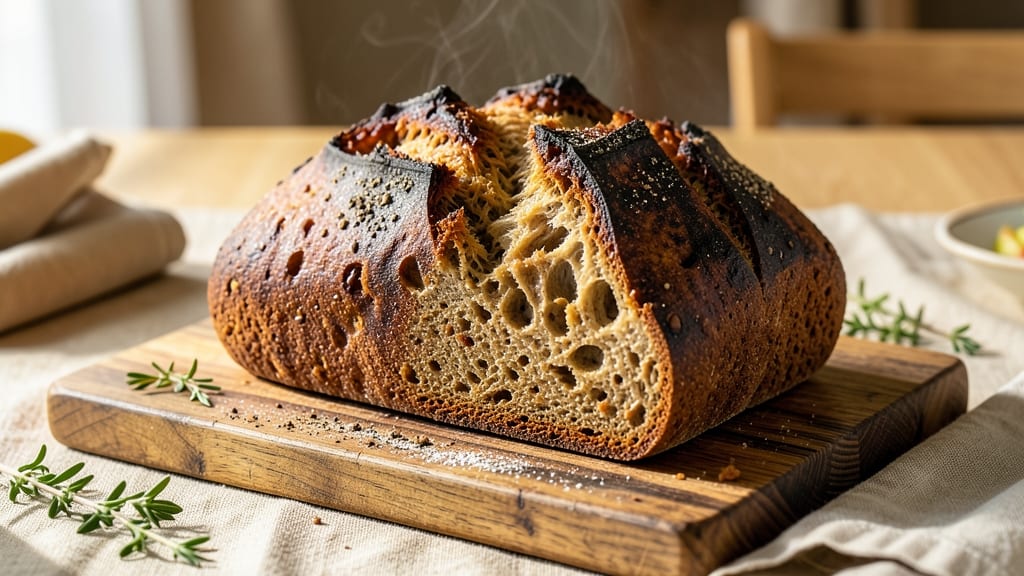
This all rye sourdough bread recipe delivers the deep tang and shatterproof crust of artisanal bakeries without the complexity. The hands-off ferment process transforms tough rye flour into a loaf with perfect balance—crispy crust, open crumb, and that signature sourdough complexity.
I developed this after years of experimenting with hydration levels and fermentation times to eliminate common pitfalls like dense crumb or overly sour flavor.
The secret lies in a precise ratio of rye flour to hydration, combined with a controlled fermentation schedule that develops flavor without overproofing. Unlike traditional rye breads that require constant attention, this method lets you mix, ferment, and bake with minimal intervention.
The starter plays a crucial role in flavor development, but even beginners can achieve professional results with this foolproof approach.
What you'll end up with is a loaf that's crisp on the outside, airy yet dense on the inside, and packed with that authentic sourdough tang.
The crust develops beautiful cracks as it cools, while the interior reveals an open crumb structure with pockets of air—exactly what makes rye sourdough so satisfying. This bread pairs beautifully with soups, stews, or simply toasted with butter for breakfast.
Perfect for those who love the flavor of rye but want a lighter texture than traditional versions. The recipe includes troubleshooting tips for common issues like excessive sourness or dense crumb, ensuring your first attempt will be successful. Let's get started on creating your perfect loaf.
Ingredients for all rye sourdough bread
Hands-off magic with just 10 ingredients—transforming rye's tough reputation into artisanal perfection.
| Ingredient | Amount | Notes |
|---|---|---|
| Active Rye Sourdough Starter 🍞 | ½ cup | Fed and bubbly, 100% hydration |
| Dark Rye Flour 🌾 | 3 cups | High-extraction for deep flavor |
| All-Purpose Flour 🌾 | 1 cup | For balanced structure |
| Water 💧 | 1 ½ cups | Room temperature, 70°F |
| Kosher Salt 🧂 | 1 ½ tsp | Diamond Crystal preferred |
| Instant Yeast 🍞 | ¼ tsp | Optional, for extra lift |
| Honey 🍯 | 1 tbsp | For starter feeding |
| Olive Oil 🫒 | 1 tbsp | Extra-virgin for crust |
| Cornmeal 🌽 | ¼ cup | For dusting loaf pan |
| Ice Water ❄️ | ½ cup | For final dough adjustment |
The sourdough starter is non-negotiable here—King Arthur or a trusted home starter works best. Look for a starter that's bubbly and has doubled in size after feeding (I always feed mine with equal parts flour and water plus 1 tbsp honey 4 hours before mixing). Bob's Red Mill dark rye flour gives the deepest flavor, but any high-extraction rye will do. The all-purpose flour acts as a structural bridge—too much rye makes the dough gummy, too little loses that signature tang. Store-bought starters often contain additives, so if you're using one, feed it with organic flour for 24 hours first to cleanse it.
No instant yeast? Skip it entirely—this recipe works beautifully without it. Running short on dark rye? Substitute equal parts whole wheat and white bread flour, but expect slightly less flavor complexity. The olive oil isn't just for flavor—it creates that shatterproof crust. Trader Joe's extra-virgin is my go-to, but any high-quality brand works. For the cornmeal, stone-ground is ideal if you want that rustic look, but regular works fine. The ice water is your secret weapon for adjusting dough consistency—add it gradually if your kitchen's humid or your flour's particularly absorbent.
This dough is a patient one—ferment for 12-16 hours at room temperature, then another 4-6 hours in the fridge if you're baking the next day. The longer it ferments, the more complex the flavor, but never exceed 24 hours total or you'll risk overproofing. For storage, wrap cooled loaves in beeswax wrap or a cotton towel—keeps them crisp for 3-4 days. Freeze slices for up to 3 months by wrapping individually in parchment. Pro tip: Toast slices directly from frozen for that perfect crunch.
Why You'll Love This Recipe
- No-Knead Magic: That’s right—just mix, let it rise, and bake. The rye starter does all the heavy lifting while you sip coffee or scroll through your phone. Honestly, I’ve made this on lazy Sundays when I couldn’t be bothered with shaping dough.
- Earthy Depth: The dark rye flour gives it a molasses-like richness that’s hard to resist. Pair it with sharp cheddar and you’ve got a sandwich so good, you’ll forget about store-bought bread forever.
- Weeknight Workhorse: This bread stays fresh for days, so I bake a loaf on Sundays and use it for toast, open-faced sandwiches, or even croutons. No sad, stale bread here—just pure versatility.
- Budget-Friendly Staple: Rye flour is cheaper than specialty grains, and a single batch feeds my whole family. Leftovers? Toss them in a pan for French toast—because why waste good bread?
Step-by-step instructions for all rye sourdough bread
Here's how to craft a loaf with intense rye tang and a crust that shatters like glass.
Feed and Prepare the Starter
First, feed your 0.5 cup Active Rye Sourdough Starter by mixing it with 1 cup Dark Rye Flour and 1 tbsp Honey. Let it sit at room temperature for 4-6 hours until it's doubled in size and shows bubbly activity at the surface. This feeding ensures maximum fermentation power for your dough.
The starter should smell tangy and slightly sweet—like a cross between caramel and vinegar. If it's sluggish, give it another 2 hours. The goal is to capture that deep, complex flavor profile that makes rye bread so distinctive. Once active, proceed immediately to avoid over-fermentation.
Mix the Dough with Precision
In a large bowl, combine the 3 cups Dark Rye Flour, 1 cup All-Purpose Flour, 1.5 tsp Kosher Salt, and 0.25 tsp Instant Yeast. Create a well in the center and add the fed starter, 1.5 cups Water, and 1 tbsp Olive Oil. Mix vigorously until all ingredients are fully incorporated and the dough forms a shaggy mass.
This dough will be sticky—expect it. The high hydration from the rye flour creates a wetter texture than traditional bread dough. Let it rest for 20 minutes while you prepare your workspace. This brief rest allows the flour to hydrate fully, making the final kneading (or lack thereof) more manageable.
Develop the Dough with Minimal Effort
After the rest, wet your hands and stretch the dough gently, folding it over itself 3-4 times. This technique, called "stretch and folds," builds structure without overworking the gluten. The dough should become slightly smoother with each fold, though it will remain sticky. Place it in a lightly oiled bowl, cover with a damp towel, and let it ferment at room temperature for 4-6 hours.
During fermentation, the dough will rise 25-50% and develop a jiggly, airy texture when gently pressed. You're aiming for a hands-off approach—this long ferment develops the deep tang and open crumb structure that defines great rye bread. If your kitchen is warm, reduce fermentation time slightly to avoid overproofing.
Shape and Final Proof
Lightly dust a work surface with 0.25 cup Cornmeal and turn out the fermented dough. Gently shape it into a round boule by pulling the edges toward the center while rotating the dough. Place it seam-side up in a floured proofing basket or bowl, cover, and let it proof for 1-2 hours until it has risen 50-75%. The dough should feel springy when pressed gently with a fingertip.
For a shatterproof crust, create steam in your oven by placing a baking stone or inverted baking sheet on the lower rack 30 minutes before baking. Preheat the oven to 450°F with the stone fully heated. This step is crucial—it ensures that crisp, crackly exterior we're after.
Bake to Golden Perfection
Once the dough has proofed, carefully transfer it to a piece of parchment paper. Using a sharp razor or lame, score the top with 3-4 diagonal slashes about ¼ inch deep. This allows the dough to expand properly and creates that beautiful, rustic appearance. Slide the parchment into the preheated oven and bake for 30-35 minutes.
Bake until the crust is deep golden brown and sounds hollow when tapped on the bottom. The internal temperature should reach 205-210°F. Immediately after baking, transfer the loaf to a wire rack to cool completely. This cooling process, which takes at least 2 hours, allows the crumb to set properly and prevents a gummy texture.
Pro Tips For Making All Rye Sourdough Bread
- Hydrate the Rye: Dark rye flour absorbs water like a sponge—don’t skimp. Mix your starter, dark rye, and all-purpose flour with 90% hydration (by weight) and let it sit for 30 minutes before adding the rest. I learned this the hard way when my first batch turned out dense because I rushed the mix-in.
- Salt the Water: Dissolve the kosher salt in the water before mixing—this guarantees even distribution. If you add it later, you’ll end up with pockets of unsalted dough, and trust me, you’ll taste the difference.
- Autolyse First: Mix just the flours and water (no starter or salt) and let it rest for 20-30 minutes. This relaxes the gluten, making the final knead (or stretch-and-folds) way easier. Sounds weird, but it works—your dough will be smoother and more manageable.
- Preheat the Dutch Oven: Place your Dutch oven and lid in a 475°F (245°C) oven for at least 30 minutes before baking. The trapped steam is what gives that perfect crust—skip this, and you’ll get a sad, flat top. (Yes, even if you’re impatient like me.)
Wine and beer pairings for all rye sourdough bread
Crisp White Wine
An Albariño from Spain or Pinot Grigio from Italy complements the bread's deep rye tang beautifully. The wine's bright acidity and citrus notes cut through the richness, cleansing your palate between bites. I love pairing this with a Spanish Albariño—its crisp, mineral finish mirrors the bread's crusty texture. 🍷
Malty Amber Ale
For beer lovers, an amber ale with caramel and toasty malt notes enhances the bread's complexity. Look for a Belgian-style ale like Duvel or a German Märzen—both provide enough body to stand up to the dense crumb while balancing the sourness. The hoppy bitterness adds a refreshing contrast.
Dark Beer Pairings
A dark wheat beer or porter works wonders with all-rye sourdough. The Schwarzbier (German black beer) or Brown Ale brings out the bread's molasses-like depth. The beer's roasted malt flavors harmonize perfectly with the rye's natural sweetness and tang.
Cider Complements
Don't overlook dry cider—especially a hard cider with apple and pear notes. The slight tartness mirrors the bread's sourness, while the crispness keeps the pairing light. A German-style dry cider like Kühne pairs exceptionally well with the bread's crusty exterior.
Wine for Serving
If serving with cheese, opt for a dry Riesling or Gewürztraminer—both enhance the bread's earthy notes. The wine's floral aromas and slight sweetness create a perfect balance. For a lighter option, a chilled Chardonnay with minimal oak adds brightness without overpowering the rye's robust flavor. ✨
Nutrition facts
Frequently asked questions
Why does this recipe use both dark rye and all-purpose flour?
Dark rye flour delivers that signature deep flavor and tang, but it's naturally heavy and can make bread dense. The all-purpose flour acts as a structural bridge, creating a lighter crumb while balancing the rye's intensity. Think of it as the perfect harmony between artisanal flavor and approachable texture.
Can I make this bread without a sourdough starter?
Technically yes, but the flavor will be completely different! You could substitute with 2.25 tsp active dry yeast and omit the honey, but you'll lose that authentic sourdough tang. For best results, maintain the starter—even a small one you feed daily for 5-7 days will work. The fermentation process is what creates that complex, tangy flavor profile.
How do I know when the dough is properly fermented?
Look for 25-50% rise and a jiggly texture when gently pressed. The dough should also smell tangy and slightly sweet, with visible bubbles throughout. If it smells strongly alcoholic or looks flat, it's overproofed. For visual confirmation, press your fingertip into the dough—it should spring back slowly (like Jell-O) rather than quickly (like a cake).
Why does my all-rye bread always turn out dense?
Most likely, your dough didn't ferment long enough or was overworked. Rye dough needs 12-16 hours of fermentation to develop properly. Also, avoid kneading—just do gentle stretch-and-folds. Another common issue is using too much rye flour (stick to the 3:1 ratio of dark rye to all-purpose). The all-purpose flour helps create that open crumb structure.
Can I bake this in a Dutch oven for better results?
A Dutch oven creates an even steamier environment, resulting in a thicker, cracklier crust and more even baking. Preheat your Dutch oven with the lid on for 45 minutes at 450°F before baking. Just be sure to score the dough well before transferring—it will expand dramatically in the enclosed space.