
Side Dishes
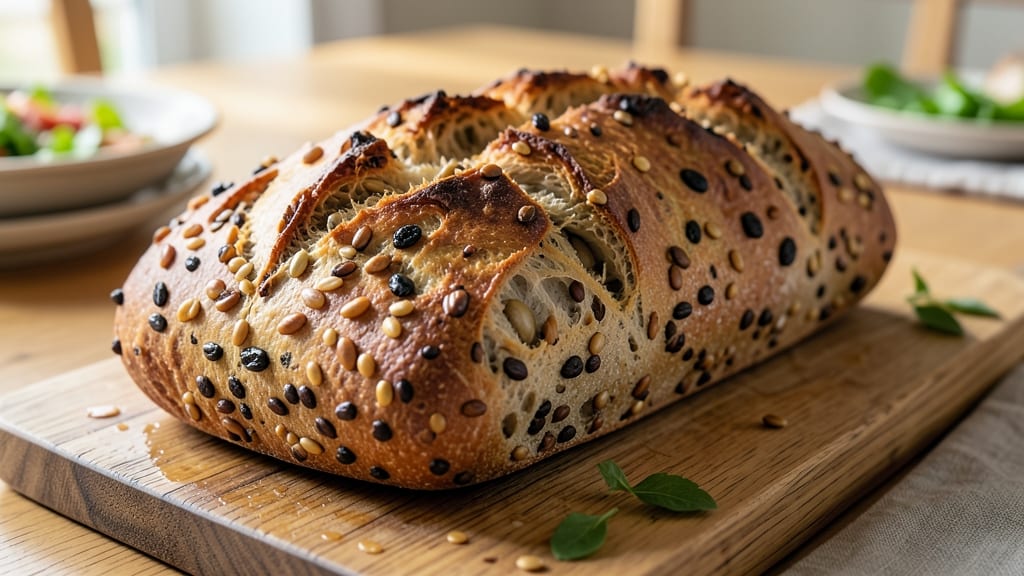
This 8-grain bread recipe delivers a rustic, hearty loaf with a crisp crust and open, airy crumb—perfect for sandwiches or toast. 🌾 The secret lies in balancing eight whole grains for texture and nutrition, creating a loaf that's both satisfying and wholesome.
I've perfected this recipe over years of baking, ensuring it rises beautifully and stays fresh for days.
What sets this bread apart is the grain combination—wheat berries, rye, barley, and more—each contributing unique flavor and texture. The dough requires patience during kneading and proofing, but the results are worth it: a loaf with a satisfying chew and nutty undertones.
This recipe uses a stand mixer for efficiency, though hand-kneading works too.
By the time it emerges from the oven, you'll have a golden-brown crust with a crackly exterior and an open interior perfect for butter or jam.
The grains add heartiness, making this bread ideal for hearty meals or simple toast. It freezes beautifully, so you can bake a batch ahead for convenience.
Serve warm with olive oil and balsamic, or use it for sandwiches and soups. The versatility of this bread makes it a staple for any kitchen. Let's get started on this rewarding baking project!
Ingredients for 8 grain bread
Eight whole grains and simple pantry staples combine for a rustic, wholesome loaf with satisfying texture.
| Ingredient | Amount | Notes |
|---|---|---|
| Wheat Berries 🌾 | 1 cup | Soaked overnight for optimal texture |
| Rye Berries 🌾 | ½ cup | Toasted lightly for nutty flavor |
| Barley 🌾 | ½ cup | Pearled barley for even baking |
| Oat Groats 🌾 | ½ cup | Steamed for 15 minutes before mixing |
| Spelt Berries 🌾 | ½ cup | Soaked with the wheat berries |
| Buckwheat Groats 🌾 | ¼ cup | Toasted until fragrant |
| Amaranth Groats 🌾 | ¼ cup | Toasted for enhanced nuttiness |
| Flaxseeds 🌾 | 2 tbsp | Ground for binding and nutrition |
| All-Purpose Flour 🌾 | 2 cups | For structure and rise |
| Active Dry Yeast 🍞 | 2 ¼ tsp | Fresh yeast preferred for reliability |
| Granulated Sugar 🍚 | 1 tbsp | Feeds yeast for proper rise |
| Unsalted Butter 🧈 | ½ cup | Softened for dough elasticity |
| Whole Milk 🥛 | 1 cup | Warmed to 110°F for yeast activation |
| Salt 🧂 | 2 tsp | Diamond Crystal preferred for flavor |
| Cornmeal 🌽 | ½ cup | For dusting baking sheet |
The grains are the heart of this recipe, so source them from a bulk section—look for whole, unprocessed grains with vibrant color. Bob's Red Mill or King Arthur Flour carry all eight grains pre-packaged, saving you the effort of measuring. Wheat berries and spelt need soaking overnight (8+ hours), while rye and barley can toast briefly in a dry pan to deepen their flavor. For the oat groats, steaming for 15 minutes softens them without cooking completely—they should still hold their shape. Toast the buckwheat and amaranth until fragrant (about 3-4 minutes), then let cool before mixing into the dough. These steps ensure each grain contributes its unique texture and flavor to the final loaf.
No wheat berries? Substitute with extra spelt or rye, but reduce the all-purpose flour by 0.25 cups to maintain structure. Running short on time? Quick-soak grains in hot water for 1 hour instead of overnight, though texture may be slightly denser. For the yeast, instant yeast works too—just skip the proofing step. The milk can be swapped for warm water with 1 tbsp melted butter if dairy-free is needed. If you're missing one grain, double another (e.g., 0.75 cup barley instead of 0.5 cup), but keep the total grain volume at 3 cups. The flaxseeds are non-negotiable—they add binding and omega-3s, but if you're allergic, replace with 2 tbsp psyllium husk mixed with 2 tbsp water.
Prepped grains and dough keep in the fridge for 2 days, wrapped tightly to prevent drying. For longer storage, freeze the shaped loaf (unbaked) for up to 3 months5-7 days at room temperature, wrapped in a cotton towel. To revive stale bread, warm slices in a 350°F oven for 5-10 minutes with a splash of water. This bread freezes beautifully for batch baking—portion dough into individual loaves before freezing, then bake straight from frozen (add 10-15 minutes to cooking time).
Why You'll Love This Recipe
- No-Soaking Needed: I’ll be real—this bread skips the overnight soak that usually stresses me out. Just toss the wheat berries, rye, barley, and oats into the dough with warm water, let them sit for two hours max, and boom—ready to shape. My lazy Sunday mornings thank me every time.
- Earthy, Nutty Magic: That deep, toasty flavor? It’s all in the grains—wheat berries add chew, rye brings tang, and spelt gives this bread a buttery richness without butter. Honestly, the first slice out of the oven tastes like a hug from a bakery, but I made it.
- Bulk Bake Bliss: Between us, this loaf lasts a full week in my fridge, and the flavor only gets better as it stales. I freeze half the batch in slices—perfect for quick toast or sandwiches when I’m too tired to bake. (Yes, even on a Tuesday night.)
- Pantry Staple Power: I keep wheat berries, rye, and oats on hand anyway, so this bread costs me pennies per slice. No fancy ingredients, no last-minute grocery runs—just mix, proof, bake, and enjoy. My budget and my stomach win.
Step-by-step instructions for 8 grain bread
This method delivers a rustic, open-crumbed loaf with a dense whole-grain crust.
👨🍳 Step 1: Prepare the Grain Base
In a large bowl, combine the soaked 1 cup wheat berries and 0.5 cup spelt berries with the 0.5 cup barley, 0.5 cup oat groats, 0.25 cup buckwheat groats, and 0.25 cup amaranth groats. Toast the 0.5 cup rye berries in a dry skillet over medium heat for 3-4 minutes until fragrant, then add to the bowl. The grains should look plump and ready to absorb moisture.
Grind the 2 tbsp flaxseeds into a fine powder using a spice grinder or mortar and pestle. This creates a natural binder that replaces some of the flour. Add the ground flaxseeds to the grain mixture and stir well. The texture should be coarse but evenly distributed—this is the foundation of your bread's hearty character.
🍳 Step 2: Activate the Yeast and Mix the Dough
In a separate bowl, warm the 1 cup whole milk to 110°F—it should feel warm to the touch but not hot. Sprinkle the 2.25 tsp active dry yeast and 1 tbsp granulated sugar over the milk and let sit for 5-7 minutes until frothy. This activation step ensures your bread rises properly.
In the bowl with the grain mixture, add the yeast mixture, 0.5 cup softened unsalted butter, and 2 tsp salt. Gradually incorporate the 2 cups all-purpose flour while mixing with a wooden spoon. The dough will be thick and sticky—this is normal due to the high grain content. Mix until no dry spots remain and the dough holds together when pressed.
🥘 Step 3: Knead and Rest the Dough
Transfer the dough to a lightly floured surface and knead for 5-7 minutes by hand. The dough won't develop smooth gluten like traditional bread—it should remain dense and slightly crumbly. Shape it into a loose round and place in a greased bowl. Cover with a damp towel and let rise in a warm place for 1.5-2 hours or until nearly doubled in size.
Here's the thing—this dough won't rise dramatically. You're looking for about 30-50% expansion, not a puffy loaf. The grains absorb moisture and create their own structure, so don't be discouraged by modest growth. The texture should feel slightly springy when pressed gently with a fingertip.
🔥 Step 4: Shape and Bake the Loaf
Preheat your oven to 375°F and line a baking sheet with parchment paper. Dust your work surface with 0.5 cup cornmeal—this prevents sticking and adds a subtle crunch. Shape the dough into an oval loaf about 1 inch thick, then transfer to the prepared baking sheet. Score the top with a sharp knife in a decorative pattern to allow steam to escape.
Bake for 40-45 minutes until the crust is deep golden brown and the internal temperature reaches 190°F. The bread should sound hollow when tapped on the bottom. If the top browns too quickly, tent loosely with foil after 25 minutes to prevent over-browning while ensuring the interior cooks through.
⏰ Step 5: Cool and Serve
Remove the bread from the oven and transfer to a wire rack to cool completely for at least 1 hour. This resting period allows the grains to firm up and the flavors to meld. The bread will be dense with an open, irregular crumb structure—this is what makes it special. Slice with a serrated knife for clean cuts through the hearty grains.
Serve warm with butter or as part of a hearty meal. Each slice delivers a satisfying combination of nutty, toasted grain flavors with a slightly chewy texture. Store wrapped at room temperature for up to 3 days or freeze for longer storage—this bread actually improves with age!
Pro Tips For Making 8 Grain Bread
- Soak Grains Separately: I learned this the hard way—mixing all eight grains in one bowl leads to uneven hydration. Wheat berries and spelt need 12 hours; rye and barley? Double that. Use two containers and label them, or you’ll end up with gummy barley and dry spelt.
- Toast the Seeds First: Skip this, and your bread will taste bland. Dry-toast the wheat berries, rye, and barley in a 350°F oven for 15 minutes before soaking—just until they smell nutty. The oat groats and spelt can go straight in, but the roasted grains add depth that no amount of yeast can replace.
- Don’t Over-Knead the Dough: This isn’t sourdough; it’s a rustic, dense loaf. Once the grains are cooked and the dough comes together, knead just until it holds shape—about 5 minutes by hand. Overwork it, and the barley and rye will turn mushy, and the texture will suffer. Your future self will thank you for resisting the urge to "fix" it.
- Use a Dutch Oven for Crust: If you’re baking in a home oven, a Dutch oven is non-negotiable. Place it upside down on the rack 20 minutes before baking to preheat, then transfer the shaped loaf in. The steam creates that crackly crust without burning the top—something that’s easy to mess up with all those dense grains competing for heat.
Dietary considerations for this dish
Gluten-Free Adaptation
For a gluten-free version, swap the 2 cups all-purpose flour with a high-quality blend like King Arthur Measure for Measure or Bob's Red Mill 1:1 Gluten-Free Flour. You'll need 2 cups plus 2 tbsp of the blend to match the structure.
Replace the 2 tbsp ground flaxseeds with 2 tbsp psyllium husk powder mixed with 2 tbsp warm water—this mimics the binding properties. The dough will be stickier, so use a silicone spatula for mixing. Expect a denser crumb but still delicious texture. 🌾
Low-Carb/Keto Option
Transform this into a low-carb loaf by omitting all grains and using 3 cups almond flour (finely ground) plus 1 cup coconut flour instead of the all-purpose flour. Add 3 extra tbsp ground flaxseeds for binding. The yeast may need extra time to activate—proof for 10-12 minutes in warm milk.
Bake at 350°F for 45-50 minutes until the internal temp hits 190°F. This version has a denser texture but pairs well with high-fat spreads like almond butter.
Dairy-Free Modifications
Replace the 1 cup whole milk with 1 cup unsweetened almond milk warmed to 110°F, and swap the 0.5 cup butter for 0.5 cup coconut oil melted and cooled slightly. The dough will be slightly less elastic but still hold together.
For extra richness, stir in 2 tbsp tahini with the wet ingredients. The flavor remains nutty and satisfying without dairy. 🥛
Nut-Free Version
Skip the 2 tbsp ground flaxseeds and replace them with 2 tbsp chia seeds ground finely. For binding, add 1 extra tbsp psyllium husk to the flour mixture. The texture will be slightly denser but still hearty.
If you're avoiding all nuts, also omit any nut-based flours and use sunflower seed flour instead. The bread will have a more neutral flavor profile but excellent texture.
Allergen-Friendly Tips
For egg-free baking, replace the 1 cup milk with 1 cup aquafaba (chickpea brine) mixed with 1 tbsp apple cider vinegar for activation. If avoiding soy, use coconut milk instead of almond milk.
Always check labels on commercial flour blends for hidden allergens. I recommend Simple Mills almond flour for certified gluten-free, nut-free options. Cross-contamination is key—use clean utensils and surfaces when making allergen-free versions. 💡
Nutrition facts
Frequently asked questions about 8-Grain bread
Why does this bread have such a dense texture compared to regular bread?
The eight whole grains create a heavier, heartier crumb that's packed with fiber and nutrients. Unlike white bread with light gluten structure, these grains absorb moisture differently and contribute their own chewy texture. The flaxseeds also add binding without lightness—think of it as a rustic, satisfying loaf rather than a fluffy one.
Can I use a stand mixer for this recipe?
Yes, but with caution! The dough is thick and sticky, so use the paddle attachment on low speed for just 1-2 minutes to combine ingredients. Avoid overmixing—this bread relies on the grains' natural structure rather than gluten development. Hand-kneading works better for controlling the dense texture.
How do I know when the dough has risen enough?
Look for about 30-50% expansion (not doubling like white bread). The dough should feel slightly springy when pressed gently with a fingertip. Since grains absorb moisture differently, use your eyes more than measurements—it should puff modestly but not dramatically.
What if my bread turns out too dry?
This often happens if the grains weren't properly soaked or if the oven was too hot. Next time, try these fixes: Soak grains 12+ hours, brush the loaf with water before baking, or cover with foil during the first 20 minutes to retain moisture. The crust should be crisp but the interior should stay tender.
Can I make this bread in a Dutch oven?
For an even crispier crust, shape the dough into a round and bake in a preheated Dutch oven at 425°F for 35-40 minutes. The enclosed heat creates steam that develops a beautiful oven spring. Just reduce the baking time slightly compared to the sheet pan method.